Free Daily Podcast Summary
Spybrary Spy Podcast: Daily Summaries Delivered
by Shane Whaley
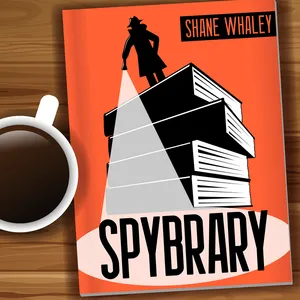
Spybrary is a podcast for fans of spy books, spy tv and spy movies since 2017. We bring you author interviews and reader discussions on our favorite spy books and novels.
Latest Episodes
The most recent episodes — sign up to get AI-powered summaries of each one.
- 1 weeks ago40 min
Lies, Spies and Suspense: Inside Traitors with Robert B. McCaw
A propulsive, high-stakes thriller—Robert McCaw delivers a gripping tale of espionage, betrayal, and deception amid the race to expose Russian moles at the highest levels of the US government. Tense, timely, and full of international intrigue, Traitors will keep you on the edge of your seat. Highly recommended. David McCloskey, former CIA analyst and author of The Persian Author Robert B McCaw joins us to discuss Traitors, a geopolitical thriller shaped by his background in law, Washington and international affairs. He reveals how real-world stories involving Russia, Ukraine, Finland, nuclear weapons and ballistic submarines helped inspire the novel—and how his legal experience taught him to think about lies, interrogation and the search for truth. Support Spybrary every month with a small donation and help us keep the lights on at the Spybrary Safehouse McCaw also explains why he believes a thriller writer has to "play fair" with the reader: the clues should be there, the twists should feel earned, and even the most dramatic developments need to feel possible. Along the way, we explore his unusual path to publication—from spending nearly 20 years on his first novel and self-publishing it, to a chance encounter on a Mediterranean cruise that led to a literary agent and, eventually, Traitors being published by W. W. Norton.
- 2 weeks ago37 min
From Bourne to le Carré: Jinwoo Park on The Oxford Soju Club
In this episode of Spybrary, host Matthew Hurst talks with author Jinwoo Park about his debut novel, The Oxford Soju Club. The book centres on North Korean spies and their Korean American adversaries, who are regulars at an Oxford restaurant run by an oblivious South Korean. It's as much about the psychology of their ethnic identities as shoot outs and chases. Jinwoo discusses how the book developed from a simple action thriller to drawing out parallels of how deep cover spies and immigrants share a need to to mould themselves to their surroundings. The conversation explores Jinwoo's influences, from the Bourne films and Robert Ludlum to John le Carré and The Sympathizer, to conversations with his uncle — a former deputy director in South Korea's National Intelligence Service. It also explains why spies should never be rude to taxi drivers. Support Spybrary on Patreon, every little helps us produce content for you.
- 3 weeks ago1h 9m
Sweden's Secret Cold War Spies: Dead Drops, Hidden Cells and the Stay Behinds
Cold War Spies Series with Shane Whaley For decades, Sweden presented itself as neutral and determined to remain outside the Cold War struggle between East and West. But behind that public image, the Swedish Stay Behind network was preparing for an altogether darker possibility: Soviet occupation. Shane Whaley is joined by Swedish historian and author Johan Wennström to uncover the extraordinary story of Sweden's secret Stay Behind resistance network — a clandestine organisation created in 1949 to operate behind enemy lines in the event of a Soviet invasion. Drawing on previously classified documents, archival research and first-hand testimony from surviving members, Johan reveals how ordinary Swedes — farmers, insurance brokers, businessmen and travelling salesmen — were secretly recruited into cells designed to survive occupation. They trained in intelligence gathering, clandestine communications, psychological warfare and resistance operations, all while keeping their involvement hidden from colleagues, friends and even their own families. We also explore Sweden's real relationship with NATO during the Cold War, Soviet submarine incursions, Cold War traitors, the human cost of living a secret life — and why one of Sweden's most important intelligence chiefs bears an uncanny resemblance to George Smiley. And, naturally, the conversation eventually turns to spy fiction, John le Carré, Len Deighton, Carl Hamilton, Jan Guillou and the surprisingly underdeveloped world of Swedish spy novels.
- Aug 17, 202626 min
Simon Conway Returns with The British Agent and a Brand-New Spy
Simon Conway returns to Spybrary to discuss his latest espionage thriller, The British Agent — a contemporary, globe-spanning story involving missing British-made surface-to-air missiles, Ukraine, American extremist militias, political conspiracy, and an audacious plot targeting.... Support Spybrary here and help us produce more spy author interviews. Spybrary's David Craggs talks with Simon Conway about the creation of his new protagonist, Chuff, why he decided to leave behind the recurring characters of his earlier novels, and how his real-world experience informs the weapons trafficking and intelligence elements of the story. The conversation also explores the complicated people drawn into extremist movements, the influence of algorithms and conspiracy theories, a fascinating connection between The British Agent and the Gunpowder Plot, and whether Chuff might return in a future novel. Simon also discusses the long, uncertain road from novel to screen adaptation.
- Jul 21, 202648 min
Graham Greene: The Novelist Who Never Stopped Spying
The novelist Graham Greene ranks at number 6 on Tim Shipman's infamous Best Spy Writers list — and yet we haven't given him enough airtime on the podcast. Time to put that right. Graham Greene didn't just write about spies — spying was the family business. His uncle founded Naval Intelligence. His sister recruited him into SIS. And Greene himself walked out of the Service the day before D-Day. Why? The answer may involve his boss and drinking companion: Kim Philby. Guest host Matt Hurst debriefs Professor Kevin Ruane — Greene scholar and Director of the Graham Greene International Festival — on the novelist's secret double life. In this episode: The Greene family spy business: an uncle in Naval Intelligence, a sister in SIS, a brother running black ops in Malaya, and another spying for three countries at once (badly) Why Greene quit SIS on the eve of D-Day — and the Philby theory "Recreational espionage": how Greene's letters reveal decades of meetings with "the old firm" before trips to Vienna, Cuba, Poland and Vietnam The Quiet American: the 1955 novel that predicted the Vietnam War, and why journalists like David Halberstam and Neil Sheehan carried it in their knapsacks Was Greene spying in Vietnam? The "Catholic solution" and the hunt for a third force The 1958 film Greene called a travesty — and his fan letter to Sean Connery for a remake that never happened Greene vs le Carré: the endorsement that made le Carré's name, and the letter that said "you're not my friend" Why Greene would love Slow Horses This is the first of what we hope will be many episodes exploring the great spy novelists — subscribe to Spybrary so you don't miss what's coming. The Graham Greene International Festival runs 24-27 September in Berkhamsted, UK — 30 minutes from London Euston. Spy highlights include Ben Brown's play A Splinter of Ice, Robert Verkaik on The Writer and the Traitor, and le Carré biographer Adam Sisman on Greene and le Carré. Tickets at grahamgreenebt.org All links at spybrary.com/306
- Jul 1, 202654 min
Charles Cumming Talks ICARUS 17, BOX 88 and Writing Modern Espionage
In this episode of the Spybrary Spy Podcast, Shane Whaley is joined by fellow Spybrarian and Head of Boston Station, Joe Modzelewski, to welcome bestselling espionage author Charles Cumming back to the show. Support us on Patreon for even more content. Charles joins Spybrary to discuss his new Lachlan Kite thriller, ICARUS 17, released on 2 July in the UK and 7 July in the United States. Billed as a nail-biting new entry in the BOX 88 series, ICARUS 17 sees Kite pulled back into fieldwork when Martha Rain, a woman from his past, asks for his help in finding her missing son, Max. Max and his girlfriend Yasmine have disappeared in Athens, but they are not simply missing. They are on the run, hunted by two rival agencies with orders to kill. The secret they are carrying could destabilise the Middle East for a generation, and if Kite fails to save them, the consequences will be catastrophic. Alongside the new novel, Shane and Joe talk with Charles about his writing process, his approach to writing modern espionage fiction, and his experiences working in the writers' rooms of some of the spy television shows and films enjoyed by Spybrary listeners.
- Jun 23, 202621 min
Nine Years, 300 Episodes – The Future of Spybrary Spy Podcast
Nine years after nervously recording episode one, Shane Whaley celebrates a major Spybrary Spy Podcast milestone: episode 300. In this reflective and forward-looking episode, Shane shares how Spybrary began, why the community has kept it going, and what comes next for the Spybrary spy podcast. Full shownotes at www.spybrary.com/300
- Jun 8, 202652 min
Bestselling Author Brad Thor on Choke Point, Netflix's Cold Zero, and Spy Fiction
Brad Thor has sold over 25 million thriller books. Tim Shipman welcomes Brad Thor on Spybrary to discuss Choke Point, the 25th Scot Harvath thriller, and the evolution of Scott Harvath from post-9/11 counterterrorism operator. Thor explains how the new novel uses Thailand, China's ambitions, the Strait of Malacca, sabotage, bomb-making, and geopolitical manipulation as the backdrop for a fast-moving thriller. The conversation also digs into Thor's writing process, his research network of intelligence, military, law enforcement, and diplomatic sources, and how he builds authentic detail even when he has not personally visited a location. Thor reflects on his early career as a travel show host, the honeymoon conversation that pushed him to write his first novel, his friendship with Vince Flynn, the collaborative thriller Cold Zero with Ward Larsen, and the Netflix film adaptation currently in development. Key Topics and Themes Brad Thor's 25th Scot Harvath thriller, Choke Point China's Belt and Road Initiative and global infrastructure influence Thailand, the Strait of Malacca, and the strategic value of a Thai canal The evolution of Scot Harvath Post-9/11 thriller fiction and the rise of the American action-spy hero Real-world tradecraft, bomb-making research, and responsible thriller detail Writing geopolitical thrillers that teach readers something without slowing the pace Bangkok as an underused spy-fiction setting Collaboration with Ward Larsen on Cold Zero The Netflix adaptation of Cold Zero British spy-fiction influences: Fleming, le Carré, Forsyth, MacLean, Deighton Brad Thor Official Website Follow Tim Shipman Buy Choke Point The Top 125 Spy Authors Ranked and Rated by Tim Shipman Join the Spybrary Community
Get Spybrary Spy Podcast summaries in your inbox
Free AI-powered daily recaps. Key takeaways, quotes, and mentions — in a 5-minute read.
Get Free Summaries →Free forever for up to 3 podcasts. No credit card required.
You Might Also Like
Listeners also like.
The Rest Is Classified
Former CIA analyst David McCloskey and journalist Gordon Corera examine real espionage cases and intelligence operations from the Cold War to present.
The Spy Who
Real spy stories from intelligence operatives who risked everything in high-stakes missions for national or personal interests.

Spyology Squad
Three young agents use science to complete spy missions and stop villains in adventures that make learning fun for kids.
Mission Implausible
Former CIA officers investigate the truth behind conspiracy theories and disinformation using their intelligence expertise.
True Criminals
Investigative journalists revisit high-profile and overlooked crime cases with firsthand sources and deep reporting insight.
The Langley Files: CIA's Podcast
Firsthand accounts from CIA officers about their real-life missions and experiences at the agency’s headquarters.

One Decision
Former intelligence leaders and journalists examine high-stakes decisions that shaped global events.
Good Assassins
Virginia Hall, a disabled American spy, sabotages Nazi operations in occupied France while evading capture by the Gestapo.
Deep Cover
Investigative stories about people leading double lives, uncovering deception, crime, and the truth behind hidden identities.
The Team House
Deep-dive conversations on national security with special operations veterans, intelligence professionals, and frontline reporters.

Bridgewater
A folklore professor investigates a supernatural mystery that forces him to confront his beliefs and the possibility of changing history.
Somewhere in the Skies
A weekly exploration of UFO phenomena and unexplained aerial encounters hosted by an author and investigator.
Customized Recaps
AI-powered recaps with compact key takeaways, quotes, and insights.
Straight to Your Inbox
Get key takeaways from Spybrary Spy Podcast in a 5-minute read.
Save Hours Every Week
Stay current on your favorite podcasts without falling behind.
Frequently Asked Questions
What is Podzilla's Spybrary Spy Podcast daily summary?
It's a free AI-powered email that summarizes new episodes of Spybrary Spy Podcast as soon as they're published. You get the key takeaways, notable quotes, and links & mentions — all in a quick read.
How does the Spybrary Spy Podcast podcast summary work?
When a new episode drops, our AI transcribes and analyzes it, then generates a personalized summary tailored to your interests and profession. It's delivered to your inbox every morning.
Is this an official Spybrary Spy Podcast product?
No. Podzilla is an independent service that summarizes publicly available podcast content. We're not affiliated with or endorsed by Shane Whaley.
Can I get summaries of other podcasts too?
Absolutely! The free plan covers up to 3 podcasts. Upgrade to Pro for 15, or Premium for 50. Browse our full catalog at /podcasts.
How often does Spybrary Spy Podcast release new episodes?
Spybrary Spy Podcast publishes weekly. Our AI generates a summary within hours of each new episode.
What topics does Spybrary Spy Podcast cover?
Spybrary Spy Podcast covers topics including Fiction, Arts, Books. Our AI identifies the specific themes in each episode and highlights what matters most to you.
Start getting Spybrary Spy Podcast summaries tomorrow morning.
Free forever for up to 3 podcasts. No credit card required.
Free forever for up to 3 podcasts. No credit card required.