Free Daily Podcast Summary
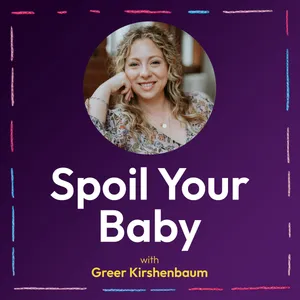
Spoil Your Baby: Daily Summaries Delivered
by Dr. Greer Kirshenbaum
As a mom, neuroscientist, and a long time expert to parents, almost every expert has it wrong when they say 'don't spoil your baby.' Up until the age of 3, your only job is to spoil your baby with affection, attention, and protection. I promise you it's the best chance for the long term mental health and success of your child. On my podcast, I will interview the leading experts to explain why you need to SPOIL YOUR BABY as well as those that may disagree for a spirited debate. I will also give you the most up to date science-backed tools and tips that will help you to raise your baby for lifelong health and success.
Latest Episodes
The most recent episodes — sign up to get AI-powered summaries of each one.
- Today59 min
Reclaiming Your Intuition in Motherhood feat. Sydney Blum | #70
How can tapping into your inner intuition transform the way you navigate motherhood and everyday life?Sydney Blum built her career bridging strategy and community impact with intuitive practice, helping people listen inwardly and lead from alignment. Early on, she noticed how much our society prioritizes left-brain efficiency, data, and endless doing over quiet inner wisdom. When she became a mother, she realized that this heavy focus on external proof leaves many parents feeling overwhelmed, disconnected from their bodies, and trapped in people-pleasing.Sydney faced the challenge of helping moms reconnect with their senses in a fast-paced world that lacks the traditional support of a village. Her key transformation came from treating intuition as a daily muscle that we can nurture through presence and intentional practice. She learned that even simple habits, like setting a gentle intention before getting out of bed, can shift our focus toward joy, playfulness, and unexpected gifts. Today, Sydney guides women to trust their inner authority, cultivate self-compassion, and embrace community support. Through her work, she shows us that we do not have to parent or live in isolation. By honoring our intuition, we can step out of fight-or-flight mode and make grounded, confident decisions for ourselves and our families.Key TakeawaysIntuition is information constantly flowing through our senses and nervous system, helping us make grounded and confident decisions every day.Modern society overemphasizes left-brain efficiency and data, often causing parents to ignore their own bodies and deep inner wisdom.Setting an intention before opening your eyes each morning helps focus your mind on playfulness, delight, and unexpected gifts throughout the day.Overcoming people-pleasing and setting healthy boundaries becomes much easier when you trust your inner authority as a parent.We were never meant to navigate growth alone, and seeking community guides helps us reconnect with our intuition and true self.Becoming The Nurtured Motherhttps://www.nurture-neuroscience.com/becoming-the-nurtured-motherNurture Neuroscience Professional Certificationhttps://nurture-neuroscience.com/pro-certification - for waitlist - this is visible from Feb 1 2027 to Oct 1 2027https://nurture-neuroscience.com/professional-certification-sales-page - to join - this can be visible until Feb 1 2027 ResourcesILI website: https://ili.sydneyblum.comOne on One consultations: https://sydneyblum.com/workwithmeSydney Blum's email: sydneyblum@gmail.comSydney Blum's Instagram: https://www.instagram.com/sydneyrebeccSydney Blum's LinkedIn: https://www.linkedin.com/in/sydneyblumGuests Bio:Sydney Blum helps people strengthen their ability to listen inwardly and lead from a deeper sense of alignment. She brings together her experience in community impact and strategy with intuitive practice to explore how inner knowledge shapes our relationships, leadership, and the future we create.Ready to Connect with Greer?"Nurture Neuroscience" Website: https://www.nurture-neuroscience.comInstagram: https://www.instagram.co
- 1 weeks ago43 min
Transformed by Birth: Embracing the Unknown in Parenthood ft Dr Britta Bushnell | #69
How can embracing the unknown and trusting our wild instincts transform our journey into parenthood?Dr. Britta Bushnell began her path in childbirth education over twenty-five years ago, rooted in her lifelong passion for storytelling and mythology. After years as a co-owner of Birthing From Within, she earned a PhD in mythology and psychology to understand how narrative shapes our readiness for life transformations.Throughout her career, she observed how modern culture pushes parents to rely heavily on technology, schedules, and strict information - an energy represented by the sun god Apollo. However, this hyper-focus on control often leaves new parents feeling underprepared and isolated when facing the messy reality of birth. Dr. Bushnell faced the challenge of helping parents navigate this gap between rigid expectations and unpredictable outcomes.Her key transformation came through connecting birth to the goddess Artemis, who represents our untamed, animal nature and the wilderness. She learned that "not knowing" is not a problem to fix, but a necessary part of any true rite of passage. Through her book *Transformed by Birth* and her teachings, she guides parents to step away from excessive control, listen to their quiet inner intuition, and embrace the messy middle of transformation. We believe her work shows us that when we trust the wild journey, we gain deep confidence in ourselves.Key TakeawaysFacing the unknown is an inherent and essential part of any true rite of passage, not something that needs to be fixed.Over-relying on strict control, technology, and schedules can leave new parents feeling unsupported when real labor and parenthood begin.Birth brings us deeply into our untamed animal nature, requiring us to move beyond rigid society rules into intuitive territory.Transformation is a gradual process that requires us to slow down and accept the uncomfortable, messy middle stage of growth.Developing discernment alongside intuition helps us filter out rigid parenting advice and honor our own quiet inner voice.Becoming The Nurtured Motherhttps://www.nurture-neuroscience.com/becoming-the-nurtured-motherNurture Neuroscience Professional Certificationhttps://nurture-neuroscience.com/pro-certification - for waitlist - this is visible from Feb 1 2027 to Oct 1 2027https://nurture-neuroscience.com/professional-certification-sales-page - to join - this can be visible until Feb 1 2027 ResourcesDr. Britta Bushnell's Website: https://brittabushnell.comDr. Britta Bushnell's LinkedIn: https://www.linkedin.com/in/britta-bushnell-phd-3062634Dr. Britta Bushnell's Instagram: https://www.instagram.com/brittabushnellphdGuests Bio:Dr. Britta Bushnell is a mother, veteran childbirth educator, celebrated speaker, podcast host, mythologist, and specialist in childbirth, couples, and parenting. For over 25 years, she has worked with individuals and couples as they prepare for birth, drawing from her doctoral work in mythology and psychology, her background as co-owner of Birthing From Within, and her study of brief therapy, storytelling, and relationship vibrancy.Ready to Connect with Greer?"Nurture Neuroscience" Website: https://www.nurture-neuroscience.comInstagram: https://www.ins
- 2 weeks ago17 min
TAKEAWAYS from Evolutionary Parenting: Beyond the Sleep Training Narrative feat. Tracy Cassel | #68
Why does our society place more value on controlled baby sleep than on maternal support, proper feeding, or comfort?Tracy Cassels began her influential work while pursuing her PhD in developmental psychology, coinciding with her pregnancy. She observed a profound contradiction between the widespread advice advocating for infant sleep training—even when pushed by some academics—and the robust findings found in developmental literature and her own research. This mismatch, which she initially felt was a foreign concept given her own background, became the critical momentum to start sharing her perspective publicly. This led to the launch of her extensive website, Evolutionary Parenting, roughly 15 years ago. This platform developed into an invaluable resource, providing detailed and thoroughly referenced information on nearly every topic related to infant brain development for parents. Tracy often interacts with families, some of whom bring along skeptical relatives or partners, seeking clarification on the evidence surrounding sleep practices. She approaches the topic by presenting an honest assessment of what the research confirms and what remains unknown, helping listeners discern the subtleties often missing from conventional advice. She argues that the findings against certain practices, such as sleep training, form an “incredibly strong circumstantial case” rather than a clear-cut legal link. Furthermore, Tracy contends that many sleep problems are misinterpreted as behavioral failures when they are actually symptoms of underlying issues like allergies, sleep apnea, or hormonal imbalances. Her most recent paper with Levita DeSousa advocates for researchers to adopt a much broader perspective, moving away from seeking a "one size fits all solution" and instead considering the full family dynamic, cultural influences, and health context when studying infant sleep.Key TakeawaysSleep problems are often symptoms of underlying physical or psychological issues, not always primary behavioral faults of the baby or parent.The research focusing specifically on mothers and babies, particularly concerning clinical interventions and emotional connection, is significantly lacking.An overemphasis on controlled sleep in modern society leads parents to prioritize it over other critical nurturing components like love, comfort, and proper feeding.Some research proposes methods to help mothers suppress the natural anxiety they feel when hearing their distressed baby cry, counteracting an essential evolutionary response.Infant sleep should be viewed as a family dynamic influenced by culture, general family preferences, health issues, and the need for connection.THIS EPISODE REVISITS THE KEY TAKEAWAYS FROM OUR EPISODE 43 - Evolutionary Parenting: Beyond the Sleep Training Narrative feat. Tracy Cassel - Go listen to the full episode if you want to learn more.Join The Nurture Neuroscience Practitioner Certificationhttps://nurture-neuroscience.com/professional-certification-sales-pageResourcesTracy’s Instagram: @tracycasselsphdhttps://www.instagram.com/tracycasselsphdBook by Tracy Cassels:Finding Daycare: Navigating the Murky World of Child Care in Today’s Societyhttps://www.amazon.com/Finding-Daycare-Navigating-Todays-Society-ebook/dp/B07PGDR6TCEvolutionary Parenting’s website: https://evolutionaryparenting.comGuest Bio: Tracy Cassels holds a PhD in developmental psychology and is the founder of Evolutionary Parenting. She co-authored a paper with Levita DeSousa, an attachment theory specialist at Monash University in Australia, focusing on how sleep training ignores the larger family dynamic. She is also a contributor to an upcoming academic book on sleep, edited by Jenny (who Greer has also written with), which includes chapters from Darshan Arves and LaVita DeSousa.Ready to Connect with Greer?"Nurture Neuroscience" Website:<a href="https://www.nurture-neuroscience.com/" rel="noopener noreferrer" target
- 3 weeks ago17 min
TAKEAWAYS from Why Maternal Love is a Neurobiological Craving feat. Kelly McDaniel | #67
What happens when we spend our adult lives searching for a quality of maternal love we never received as a child? Kelly McDaniel, a licensed professional counselor and author, introduced the concept of "Mother Hunger" in her first book, Ready to Heal. She identified Mother Hunger as an attachment injury stemming from maternal deprivation, noting that millions of women suffer a lifelong emotional burden that adversely affects self-worth, eating habits, and relational wellness. This profound attachment trauma, Kelly explains, is a neurobiological craving for unmet needs: nurturing, protection, and guidance. This "hunger" is often misunderstood and sought inappropriately from romantic partners, friends, or authority figures. Kelly's work illuminates how cultural forces, especially patriarchy, compromise a mother’s capacity to provide a consistent, safe caregiving environment, leading to generational trauma that impacts secure attachment. Kelly published her second book, Mother Hunger, in 2021, compiling research since 2008 to explore how adult daughters can understand and heal from these losses. She emphasizes that while we cannot go back in time, neuroscience shows that our brains can change throughout life, offering hope and opportunity for repair. Her clinical approach helps adult daughters identify this craving, understand the truth of their pain, and become "cycle breakers" in their own families.Key TakeawaysMother Hunger is a profound neurobiological craving for three essential elements of maternal care: nurturing, protection, and guidance.Unmet needs often arise from ancestral inheritance, cultural environments, and unhealed trauma, not necessarily a lack of maternal love.A mother can be physically present but emotionally absent due to unhealed trauma, leading to chronic, automatic dissociation.Healing Mother Hunger enables adult daughters to break epigenetic cycles of trauma, improving their self-worth and relational wellness outcomes.The spiritual component of mothering involves stretching our own capacity for love, loving unconditionally, and embracing personal growth. THIS EPISODE REVISITS THE KEY TAKEAWAYS FROM OUR EPISODE 42 - Why Maternal Love is a Neurobiological Craving feat. Kelly McDaniel - Go listen to the full episode if you want to learn more.Join The Nurture Neuroscience Practitioner Certificationhttps://nurture-neuroscience.com/professional-certification-sales-pageResourcesKelly’s website: https://kellymcdanieltherapy.comBooks by Kelly McDaniel:Ready to Heal: Helping Women Heal from Addictive Relationships.Mother Hunger: How Adult Daughters Can Understand and Heal from Lost Nurturance, Protection, and Guidance (Hay House, 2021).https://kellymcdanieltherapy.com/booksContribution: Making Advances; A Comprehensive Guide for Treating Female Sex and Love Addicts. https://www.amazon.com/Making-Advances-Comprehensive-Treating-Addicts/dp/098574720XMentioned in conversation: Mark Wolynn’s book, It Didn’t Start With You. https://a.co/d/3yJpvKwGuest Bio: Kelly McDaniel, LCMHC, is an author and licensed professional counselor who developed the term “Mother Hunger” to identify an attachment injury related to maternal deprivation. She specializes in nurturing insecure attachment and healing addictive relational patterns in adult women. She holds an MA in English Literature from Georgetown University (1991) and an MA in Counseling from St. Mary’s University (2004). Kelly is also a Certified Sex Addiction Therapist (CSAT). She has devoted herself to this work since naming Mother Hunger in 2008. Ready to Connect with Greer?"Nurture Neuroscience" Website:<a href="https://www.nurture-neuroscience.com/" rel="n
- 4 weeks ago17 min
TAKEAWAYS from Self-Mothering: Your Most Important Parenting Job feat. Dr. Gertrude Lyons | #66
What if the most crucial job we have in motherhood is learning to mother ourselves?Dr. Gertrude Lyons, a master coach and thought leader, developed the “Rewriting the Mother Code” framework after conducting an in-depth doctoral thesis. Her purpose is to help women rewrite outdated narratives surrounding motherhood, self-worth, and identity. Dr. Lyons was prompted to begin this work after realizing that even as an established coach, she had lost herself in motherhood, stopped mothering herself, and experienced deep regret and remorse. This experience motivated her to investigate what is possible when women put themselves in the picture.Her doctoral thesis centered on raising women's awareness of the possibility of personal growth and transformative experiences within motherhood. This included challenging personal norms. For example, when facing fertility issues, Dr. Lyons chose to listen to her intuition rather than immediately adopting the full medical model. By tuning in, she uncovered a deep, unconscious fear of being a mother and continuing generational trauma. Addressing this "unfinished business" proved to be a critical part of her healing journey.Dr. Lyons emphasizes that motherhood, despite being painful or chaotic—described as the “caterpillar to butterfly gelatinous mass period”—is the ripest time for transformation and rewiring. She champions the idea that we all mother (ideas, careers, relationships), and the most important person we need to mother is ourselves. Key TakeawaysRecognize that the challenging, chaotic early phase of new motherhood is the ripest time for profound personal transformation and rewiring.Challenge the traditional view of motherhood as pure sacrifice and duty, and instead embrace it as an opportunity for self-realization.The deepest form of self-mothering is self-actualization and awareness, requiring ongoing internal work to truly know yourself.We all express "mother energy" by nurturing careers, relationships, ideas, and dreams, not just children.Approach pain as informative and a natural vehicle for wisdom and transformation, rather than something to numb or simply avoid. THIS EPISODE REVISITS THE KEY TAKEAWAYS FROM OUR EPISODE 41 - Self-Mothering: Your Most Important Parenting Job feat. Dr. Gertrude Lyons - Go listen to the full episode if you want to learn more.Join The Nurture Neuroscience Practitioner Certificationhttps://nurture-neuroscience.com/professional-certification-sales-page ResourcesGuest Bio: Dr. Gertrude Lyons is a master coach, podcast host, and thought leader who helps women rewrite outdated narratives around motherhood and identity. She developed the "Rewriting the Mother Code" framework after completing an in-depth doctoral thesis. She offers retreats in Mexico and Ireland, and one-on-one immersive coaching experiences.References and Resources:Book: Rewrite the Mother Code: From Sacrifice to Stardust, a Cosmic Approach to Motherhood https://a.co/d/b4MU6hlWebsite: https://www.drgertrudelyons.com (includes her TEDx talk)Podcast: Rewrite the Mother Code with Dr. Gertrude Lyons https://podcasts.apple.com/us/podcast/rewrite-the-mother-code-with-dr-gertrude-lyons/id1534581166Instagram: @drgertrudelions https://www.instagram.com/drgertrudelyons/?hl=en Ready to Connect with Greer?"Nurture Neuroscience" Website: https://www.nurture-neuroscience.com/Instagram: https://www.instagram.com/drgreerkirshenbaum/LinkedIn: https://www.linkedin.com/in/greerkirshenbaum/FREE GUIDE, "Nurture Your Baby's Stress": <a href="https://www.
- Aug 17, 202634 min
Beyond the Rules: Responsive Feeding and Support feat. Emma Pickett | #65
Why is breastfeeding often a learned skill that requires a "village" rather than just a natural instinct?Emma Pickett began her professional life as a teacher before the birth of her own children sparked a deep passion for lactation. She quickly realized that breastfeeding is a continuing line from teaching, as both roles involve helping people reach their goals and feel successful. Emma transitioned from a volunteer breastfeeding counselor to a certified International Board Certified Lactation Consultant (IBCLC) in 2011. She has dedicated her career to supporting families and even helping grandmothers who wish they had better support in their younger years.One of her biggest challenges is navigating a modern society that lacks the "drip-drip" of evolutionary knowledge once passed down through generations. She observes that industrialization has separated families into nuclear pockets, leaving many new mothers holding a baby for the first time without ever seeing someone breastfeed. Emma transformed her approach by viewing breastfeeding not just as a set of statistics, but as a deeply personal goal and a relationship that needs nurturing. She advocates for "responsive feeding" over strict schedules and helps mothers reclaim their intuition. Today, she is a leading voice in maternal support, writing books on toddler feeding and providing a library of resources to ensure every mother feels capable and empowered during her matrescence.Key TakeawaysBreastfeeding is a learned skill that often requires a teacher, a model, and a safe environment rather than just biological instinct.We should prioritize responsive feeding by listening to the baby's needs and our environment instead of following strict app-based schedules or clocks.Preparing during pregnancy means gathering your support resources and finding a lactation consultant you personally click with for the postpartum period.Modern isolation means we must intentionally rebuild our "village" by including partners and family in our understanding of responsive feeding and milk supply.The breastfeeding journey can involve winding roads like difficult latches or medical complications, but these can be overcome with the right patient support.ResourcesEmma Pickett’s Website: https://www.emmapickettbreastfeedingsupport.comEmma Pickett’s Instagram: https://www.instagram.com/emmapickettibclcGuests Bio:Emma Pickett is a certified lactation consultant (IBCLC), author, and holistic sleep coach who has been supporting breastfeeding families since 2011. She was honored in 2022 with the Lactation Consultants of Great Britain award for outstanding contribution to breastfeeding.Ready to Connect with Greer?"Nurture Neuroscience" Website: https://www.nurture-neuroscience.comInstagram: https://www.instagram.com/drgreerkirshenbaumLinkedIn: https://www.linkedin.com/in/greerkirshenbaumFREE GUIDE, "Nurture Your Baby's Stress": https://www.nurture-neuroscience.com/nurture-your-babys-stressFREE GUIDE, "Manage the Stressors & Triggers of Parenting": https://www.nurture-neuroscience.com/manage-the-stressors-of-parentingOrder "The Nurture Revolution" Book:<a href="https://www.nurture-neuroscience.com/the-nurture-revo
- Aug 10, 202650 min
TAKEAWAYS from Why Nasal Breathing is Essential for Early Development with Dr. Shereen Lim | #64
How does optimal breathing and jaw development impact your child's sleep, mood, and ability to thrive? Dr. Shereen Lim, originally a general dentist for 26 years, first delved into the world of sleep apnea due to her husband’s persistent snoring. Her initial focus was on dental devices for adults, but this quickly shifted when she wondered why children’s jaws weren't helped to grow properly from the start. She came across research indicating that palate expansion could reduce snoring and obstructive sleep apnea in children. This led her to pursue early interceptive orthodontics. However, when she spoke to a pioneer in sleep medicine about palate expansion, she was told she was too late, which prompted a critical realization: form follows function. Her attention then shifted entirely to the earliest years of life, focusing on how to ensure a child's tongue and other oral muscles work well to promote optimal jaw development. Dr. Lim stresses that good airway health is defined by nasal breathing 24/7 and optimal jaw development, which serves as the foundation for thriving health and vitality across the ages. She emphasizes that sleep and breathing problems should be viewed as family health issues, often leading to attachment difficulties in infants and behavioral problems in older children, ultimately impacting the entire household.Key TakeawaysAirway health is defined as promoting nasal breathing 24/7 and optimal jaw development through effective oral function.Snoring, mouth breathing, and a lack of silence during sleep are signals that airflow difficulties may be present, leading to unrestorative sleep.Breastfeeding, with optimal latch mechanics, is crucial because it acts as nature’s palate expander, helping develop the jaws forward and wide.We must consider the outer borders of the airway—the jaw structures—not just tissue removal, to increase airflow and space for the tongue.Poor breathing quality during sleep can increase the risk of behavioral, learning problems, anxiety, and separation anxiety in children.THIS EPISODE REVISITS THE KEY TAKEAWAYS FROM OUR EPISODE 45 - Why Nasal Breathing is Essential for Early Development feat. Dr. Shereen Lim - Go listen to the full episode if you want to learn more.Join The Nurture Neuroscience Practitioner CertificationJoin our Program: https://nurture-neuroscience.com/professional-certification-sales-pageResourcesBook Breathe, Sleep, Thrive. https://breathesleepthrivebook.comWebsite: https://www.drshereenlim.com.auFacebook: https://www.facebook.com/drshereenlimInstagram: @dr.shereenlim https://www.instagram.com/dr.shereenlimGuest Bio: Dr Lim is a Perth, Australia, based dentist with a postgraduate diploma in dental sleep medicine from the University of Western Australia.She has been involved in the team management of snoring and obstructive sleep apnea for over a decade.Dr Lim is dedicated to promoting airway health from infancy as an alternative approach to minimize the development of these problems, and is author of the book “Breathe, Sleep, Thrive: Discover How Airway Health Can Unlock Your Child’s Greater Health, Learning and Potential.”Her work in private practice is restricted to tongue tie management from infancy to adulthood, early interceptive orthodontics and myofunctional therapy. Ready to Connect with Greer?"Nurture Neuroscience" Website:https://www.nurture-neuroscience.com/Instagram:https://www.instagram.com/drgreerkirshenbaum/LinkedIn:https://www.linkedin.com/in/greerkirshenbaum/FREE GUIDE, "Nurture Your Baby's Stress":<
- Aug 3, 202625 min
Prenatal Bonding: Building a Lifelong Relationship in the Womb feat. Ivana Lombardo | #63
How can building a relationship with your baby during pregnancy transform your experience of birth and early parenthood?Ivana Lombardo’s journey began after moving from Serbia and raising her family without her original community nearby. She faced the isolation many modern parents feel, navigating her first grueling 40-hour labor. Everything changed during her second pregnancy when she discovered HypnoBirthing, which was a "complete 180" from her first experience. This transformation led her to realize that parents in our high-pressure society don't need more rules; they need customized support to reclaim their inner wisdom. She observed that while many prepare the nursery, they often forget to prepare the actual relationship with their child. Ivana now guides families through prenatal bonding to help them find a stable anchor in the unpredictability of new parenthood. Her work bridges the gap between anxiety and confidence by helping mothers connect with their bodies and their babies before birth. We believe her story shows that when a mother feels truly supported, her baby feels it too, setting a ground-level foundation for lifelong health.Key TakeawaysPrenatal bonding is simply the act of having a conscious, interactive relationship with your baby before they are even born.Babies are active participants who can recognize specific songs, books, and family voices they heard during the pregnancy.Strengthening your maternal intuition during pregnancy helps you navigate the unpredictable chaos of life with a newborn with more confidence.Research on prenatal bonding shows significantly lower rates of C-sections, postpartum depression, and the occurrence of colicky babies.Simple daily practices like talking or visualizing your baby can help lower maternal stress and increase essential oxytocin levels.ResourcesGreat Beginnings Births Website: https://www.greatbeginningsbirths.com/prenatalbondingbaGreat Beginnings Births Instagram: https://www.instagram.com/greatbeginningsbirthsResearch Paper: Prenatal Bonding (BA) as a Breakthrough in Improving Pregnancy, Birth, and Postpartum OutcomesAnne Goertz-Schroth, Dr. Gerhard Schroth, Dr. Raylene Phillipshttps://birthpsychology.com/wp-content/uploads/2024/09/Z3sC25KO-1.pdfGuests Bio:Ivana Lombardo is a childbirth educator, HypnoBirthing instructor, women's mental health coach, and nurture neuroscience practitioner. With over 20 years of experience, she guides families through fertility struggles, pregnancy, birth, and postpartum, helping them trust their own wisdom.Ready to Connect with Greer?"Nurture Neuroscience" Website: https://www.nurture-neuroscience.comInstagram: https://www.instagram.com/drgreerkirshenbaumLinkedIn: https://www.linkedin.com/in/greerkirshenbaumFREE GUIDE, "Nurture Your Baby's Stress": https://www.nurture-neuroscience.com/nurture-your-babys-stressFREE GUIDE, "Manage the Stressors & Triggers of Parenting": https://www.nurture-neuroscience.com/manage-the-stressors-of-parenting<
About Spoil Your Baby
As a mom, neuroscientist, and a long time expert to parents, almost every expert has it wrong when they say 'don't spoil your baby.' Up until the age of 3, your only job is to spoil your baby with affection, attention, and protection. I promise you it's the best chance for the long term mental health and success of your child. On my podcast, I will interview the leading experts to explain why you need to SPOIL YOUR BABY as well as those that may disagree for a spirited debate. I will also give you the most up to date science-backed tools and tips that will help you to raise your baby for lifelong health and success.
Customized Recaps
AI-powered recaps with compact key takeaways, quotes, and insights.
Straight to Your Inbox
Get key takeaways from Spoil Your Baby in a 5-minute read.
Save Hours Every Week
Stay current on your favorite podcasts without falling behind.
Frequently Asked Questions
What is Podzilla's Spoil Your Baby daily summary?
It's a free AI-powered email that summarizes new episodes of Spoil Your Baby as soon as they're published. You get the key takeaways, notable quotes, and links & mentions — all in a quick read.
How does the Spoil Your Baby podcast summary work?
When a new episode drops, our AI transcribes and analyzes it, then generates a personalized summary tailored to your interests and profession. It's delivered to your inbox every morning.
Is this an official Spoil Your Baby product?
No. Podzilla is an independent service that summarizes publicly available podcast content. We're not affiliated with or endorsed by Dr. Greer Kirshenbaum.
Can I get summaries of other podcasts too?
Absolutely! The free plan covers up to 3 podcasts. Upgrade to Pro for 15, or Premium for 50. Browse our full catalog at /podcasts.
How often does Spoil Your Baby release new episodes?
Spoil Your Baby publishes weekly. Our AI generates a summary within hours of each new episode.
What topics does Spoil Your Baby cover?
Spoil Your Baby covers topics including Parenting, Kids & Family, Family. Our AI identifies the specific themes in each episode and highlights what matters most to you.
Start getting Spoil Your Baby summaries tomorrow morning.
Free forever for up to 3 podcasts. No credit card required.
Free forever for up to 3 podcasts. No credit card required.