Free Daily Podcast Summary
Spain Explained: Daily Summaries Delivered
by Marti Buckley
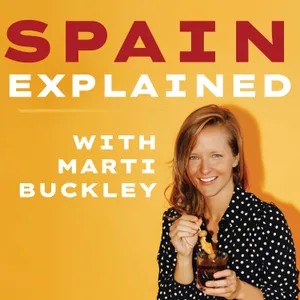
Spain Explained is the podcast for people who want to understand Spanish culture, Spanish food, and Spanish traditions beyond the guidebook basics. Hosted by award-winning author and cook Marti Buckley, who's lived in Spain since 2010, this show unpacks the concepts, rituals, and quirks that make Spain… Spain.Whether you're planning a trip to Spain, obsessed with Spanish cuisine, dreaming of moving there, or just curious why lunch can last four hours, this podcast translates the untranslatable. Each episode dives into one single part of Spanish life, from sobremesa to siesta, café con leche to jamón ibérico, and explains what it is and why it matters.Marti is the author of cookbooks including The Book of Pintxos and Basque Country, writes for Condé Nast Traveler, The Telegraph, and Food & Wine,, and founded the International Society for the Preservation and Enjoyment of Vermouth. She's your insider guide to Spanish culture, Spanish daily life, and Spanish food traditions.This podcas
Latest Episodes
The most recent episodes — sign up to get AI-powered summaries of each one.
- 4 days ago18 min
What is Horchata? (EP 42)
Horchata is one of Spain's most famous non-alcoholic drinks: a cold, milky beverage made from chufa, a small brown tuber that grows underground in the sandy huerta just north of Valencia. Every glass carrying the Chufa de Valencia seal comes from 339 hectares worked by 240 farmers. In this episode, we go deep (as always), tracing the word back to a Latin barley drink and follows the chufa from spring planting through months of drying in the growers' storage rooms. You'll hear exactly how horchata is made in Alboraya, the town known as its cradle, with soaked tubers, very cold water and no cooking at all. What does it taste like? What do you eat with it? How do you know you're getting the real thing? All your answers, including what makes it different than its Mexican cousin, in this episode. If you want more about Spain: ∙ Subscribe to Marti's Substack at https://substack.com/@martibuckley ∙ Follow her on Instagram @martibuckley ∙ Visit her blog at travelcookeat.com
- 1 weeks ago21 min
What is Todos Los Santos? (EP 41)
Every November 1, Spain marks Día de Todos los Santos, the All Saints' Day holiday when families fill the cemeteries to scrub their relatives' markers and leave chrysanthemums, and when pastry shop windows fill with little marzipan bones called huesos de santo. Marti Buckley explains where the feast came from and why November 1 and November 2 are two separate days but in Spain are folded into one. We'll talk (of course) what gets eaten: the huesos, the buñuelos de viento that are said to free a soul from purgatory, the panellets and roasted chestnuts of la Castanyada. And then we head north for the carved pumpkins of Galicia's Samaín and the Basque Gau Beltza, customs that nearly vanished before towns brought them back, plus a few other customs from the rest of Spain. If you want more about Spain: ∙ Subscribe to Marti's Substack at https://substack.com/@martibuckley ∙ Follow her on Instagram @martibuckley ∙ Visit her blog at travelcookeat.com
- 2 weeks ago33 min
What is Cava? (EP 40)
Cava is Spain's sparkling wine and one of the great bargains in the wine world. It's made the same way as Champagne, with a second fermentation inside the bottle. It's also the most exported wine in Spain: 190 million bottles last year, to more than 130 countries. Marti Buckley explains how the bubbles get into the bottle, why the word cava (which means cellar) replaced the old name xampany, and how a wine invented in Sant Sadurní d'Anoia came to be made as far away as Extremadura. She walks through the three local grapes behind it (macabeo, xarel·lo and parellada), how to read the aging and sweetness on a label, and how cava compares to Champagne and Prosecco. Then the split: why Recaredo and Gramona left the Cava DO to form Corpinnat, why Juvé & Camps is following them, and why a single valley's wine can go by five different names. Plus Marti gets into her 24 hour trip to Alella and what to pour on Nochevieja. If you want more about Spain: ∙ Subscribe to Marti's Substack at https://substack.com/@martibuckley ∙ Follow her on Instagram @martibuckley ∙ Visit her blog at travelcookeat.com
- 3 weeks ago18 min
What is A Propina? (EP 39)
La propina is the Spanish tip: a few voluntary coins left on a saucer, on top of a wage the waiter already earns by contract. Marti Buckley explains how much to leave at the bar and at a restaurant table, and why ten percent is the absolute ceiling. The word comes from a Greek toast meaning "I drink before you," and the first propina was the wine left in the cup. The history runs through Madrid in 1933, when waiters won the abolition of the tip, spent months handing coins back to customers, and then went on strike for a real salary. There's also the cash question, which directly affects HOW you should leave the tip: 97 percent of Spaniards usually tip in cash. The episode also goes into the current feeling around the tip: an August 2026 survey, 77 percent said they would eliminate the propina altogether. If you want more about Spain: ∙ Subscribe to Marti's Substack at https://substack.com/@martibuckley ∙ Follow her on Instagram @martibuckley ∙ Visit her blog at travelcookeat.com
- Oct 6, 202623 min
What is Valencia? (EP 38)
Spain Explained continues its series on all of Spain's autonomous communities with the Comunitat Valenciana (Comunidad Valenciana in Spanish, the Valencian Community in English), the birthplace of paella and Spain's sunny citrus-filled paradise. And it's out just in time for October 9, the Día de la Comunitat Valenciana, and makes a good way to celebrate the day. Marti Buckley starts with the map: three provinces stacked along 500 kilometers of Mediterranean coast. From there she explains region's history, the Valencian language and where it is spoken, the October 2024 flood, and what the rest of Spain pictures when it pictures Valencia. Then, of course, the food: the sanctioned ingredients of a paella valenciana, horchata with fartons, the mid-morning esmorzaret, and the marzipan Valencians give the people they love every October 9. If you want more about Spain: ∙ Subscribe to Marti's Substack at https://substack.com/@martibuckley ∙ Follow her on Instagram @martibuckley ∙ Visit her blog at travelcookeat.com
- Sep 29, 202630 min
What is a Pintxo? (EP 37)
A pintxo is a small bite of food, two or three mouthfuls, eaten standing at a bar in the Basque Country with a drink in your hand and someone to talk to. It started a hundred years ago in San Sebastián as something to line the stomach between rounds of wine, a hard-boiled egg or an anchovy on a toothpick, and it grew into miniature haute cuisine, with its own competitions, its own culture and, since 2019, its own institute to defend it. Marti Buckley, author of The Book of Pintxos, explains how a pintxo differs from a tapa, follows the story from the bulk wine shops of the 1920s to the chalkboard at La Cuchara de San Telmo in 1999 that turned the pintxo into a meal, talks about the different types of pintxos, walks through the etiquette on how to eat pintxos, and explains the entire, delicious tradition. If you want more about Spain: ∙ Subscribe to Marti's Substack at https://substack.com/@martibuckley ∙ Follow her on Instagram @martibuckley ∙ Visit her blog at travelcookeat.com
- Sep 22, 202618 min
What is Iberia? (EP 36)
Iberia is everywhere in Spain: the airline, the ham, the lynx, the wolf, the peninsula itself. So what is it? Iberia is the piece of land in the far southwest of Europe that Spain sits on. Spain covers most of it, Portugal covers most of the rest, and Andorra, Gibraltar, and a sliver of France take up the remainder. Iberia has never been a country. It's a geographic name, and it's older than Spain, older than Portugal, and older than the Romans. Greek sailors coined it around 2,600 years ago after a river they called the Iberus, which we know today as the Ebro. In this episode Marti Buckley explains where the name comes from, why the Romans replaced it with Hispania (the word that became España), who the original Iberians were, and why their language can be read aloud but still can't be translated. She also explains why Portugal is Iberian, why the ham and the lynx carry the name, and whether anyone in Spain thinks of themselves as Iberian. If you want more about Spain: ∙ Subscribe to Marti's Substack at https://substack.com/@martibuckley ∙ Follow her on Instagram @martibuckley ∙ Visit her blog at travelcookeat.com
- Sep 15, 202622 min
What is Bote? (EP 35)
In certain parts of Spain, a group of friends settles up before the night starts. Everyone puts the same amount of cash into one pile, usually ten euros a head. One person holds it and pays at every bar. Eight people can move through six bars over an evening and never once discuss who owes what. In the Basque Country, that pile is called the bote, and it runs on some very real rules. Marti Buckley explains where the word comes from. She covers how the system runs stop by stop, how not to be the person who wrecks it, what Bilbao does with the coins left at the bottom, which involves a slot in a wall in the Casco Viejo, and the version of bote you'll find in other parts of Spain, like Granada, Galicia, Pamplona and Madrid. If you want more about Spain: ∙ Subscribe to Marti's Substack at https://substack.com/@martibuckley ∙ Follow her on Instagram @martibuckley ∙ Visit her blog at travelcookeat.com
Get Spain Explained summaries in your inbox
Free AI-powered daily recaps. Key takeaways, quotes, and mentions — in a 5-minute read.
Get Free Summaries →Free forever for up to 3 podcasts. No credit card required.
You Might Also Like
Listeners also like.

Learn Spanish: Fluency in Real Life with Handyspanish
A Spanish teacher guides listeners to speak fluently and naturally through conversational lessons infused with humor and community.

¡Cuéntame! | Learn Spanish with Comprehensible Input
A Spanish teacher uses simple, engaging stories and everyday topics to help learners improve listening skills through comprehensible input.

Easy Spanish: Learn Spanish with everyday conversations | Conversaciones del día a día para aprender español
Learn Spanish through everyday conversations and cultural insights from native speakers.

Coffee Break Spanish
Short Spanish lessons designed for beginners, progressing in difficulty across seasons to help learners converse with native speakers.

Hungry for History with Eva Longoria and Maite Gomez-Rejón
Eva Longoria and Maite Gomez-Rejón explore the cultural history of food through family stories, expert interviews, and on-location tasting.

New Books Network en español
New Books Network

A Zero To A Hero: Learn Spanish!
A beginner learns Spanish through guided lessons and conversational practice, documenting the journey from basics to fluency.

Immersive Spanish
A language-learning podcast that teaches Spanish through immersive storytelling and sound design set on a journey across Spain.

The Splendid Table: Conversations & Recipes For Curious Cooks & Eaters
A weekly exploration of food through recipes, cooking techniques, and cultural conversations with chefs, writers, and experts.

Eat Your Spanish: A Spanish Learning Podcast for Kids and Families!
A Spanish learning podcast designed for kids and families to learn the language through interactive content.

Muy Excited with Maria Garcia
Maria Garcia explores nostalgic and contemporary cultural moments, unpacking their meaning and impact with humor and insight.
The Sporkful
Explores how food shapes human experiences, identities, and connections through curious, everyday eating.
About Spain Explained
Spain Explained is the podcast for people who want to understand Spanish culture, Spanish food, and Spanish traditions beyond the guidebook basics. Hosted by award-winning author and cook Marti Buckley, who's lived in Spain since 2010, this show unpacks the concepts, rituals, and quirks that make Spain… Spain.Whether you're planning a trip to Spain, obsessed with Spanish cuisine, dreaming of moving there, or just curious why lunch can last four hours, this podcast translates the untranslatable. Each episode dives into one single part of Spanish life, from sobremesa to siesta, café con leche to jamón ibérico, and explains what it is and why it matters.Marti is the author of cookbooks including The Book of Pintxos and Basque Country, writes for Condé Nast Traveler, The Telegraph, and Food & Wine,, and founded the International Society for the Preservation and Enjoyment of Vermouth. She's your insider guide to Spanish culture, Spanish daily life, and Spanish food traditions.This podcas
Customized Recaps
AI-powered recaps with compact key takeaways, quotes, and insights.
Straight to Your Inbox
Get key takeaways from Spain Explained in a 5-minute read.
Save Hours Every Week
Stay current on your favorite podcasts without falling behind.
Frequently Asked Questions
What is Podzilla's Spain Explained daily summary?
It's a free AI-powered email that summarizes new episodes of Spain Explained as soon as they're published. You get the key takeaways, notable quotes, and links & mentions — all in a quick read.
How does the Spain Explained podcast summary work?
When a new episode drops, our AI transcribes and analyzes it, then generates a personalized summary tailored to your interests and profession. It's delivered to your inbox every morning.
Is this an official Spain Explained product?
No. Podzilla is an independent service that summarizes publicly available podcast content. We're not affiliated with or endorsed by Marti Buckley.
Can I get summaries of other podcasts too?
Absolutely! The free plan covers up to 3 podcasts, any in the catalog. Basic raises that to 15, Pro to 40 and Max to 100. Browse our full catalog at /podcasts.
What topics does Spain Explained cover?
Spain Explained covers topics including Arts, Food, Culture, Society & Culture, Travel, Places & Travel. Our AI identifies the specific themes in each episode and highlights what matters most to you.
Start getting Spain Explained summaries tomorrow morning.
Free forever for up to 3 podcasts. No credit card required.
Free forever for up to 3 podcasts. No credit card required.