Free Daily Podcast Summary
Simpsons Declassified with Nancy Cartwright: Daily Summaries Delivered
by Audacy & CRE84U Entertainment
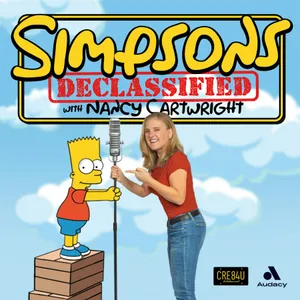
Simpsons fans, this is the one you’ve been waiting for. I’m Nancy Cartwright, as the voice of Bart Simpson for over 35+ years—I am finally “spilling the donut crumbs”. My partners and I are here to announce Simpsons Declassified—a weekly podcast that will pull back the curtain on the longest-running, eeriest, most yellow-tinted pop culture phenomenon…EVER! Each week, my co-host, Sofy Kurtz and I will crack open the wild predictions, mind-bending coincidences, fan conspiracies and untold stories from 800+ episodes — jokes that died, lines that lived and moments that shocked even us! Oh and don’t miss our Simpsons-themed games with our guests! Play along and test your Springfield IQ. We will take you behind-the-scenes with writers, directors, guest stars and famous fans. I’ll share how Bart started mirroring my life, the scenes that almost never aired and the surprises that still get me at the mic. Produced and showrun by Monica Gil-Rodriguez.
Latest Episodes
The most recent episodes — sign up to get AI-powered summaries of each one.
- Sep 4, 202654 min
Chris Parnell: SNL’s More Cowbell, Rick and Morty, Archer & the Stories Behind His Comedy Career
Chris Parnell joins Nancy Cartwright for a hilarious conversation spanning Saturday Night Live, Rick and Morty, Archer, voice acting, comedy, and the unforgettable sketches and characters that have defined his career. From the truth behind SNL’s legendary “More Cowbell” sketch to playing Jerry Smith across the multiverse, Chris shares stories from a career that has made him one of comedy and animation’s most recognizable voices.Chris takes Nancy behind the scenes of “More Cowbell,” revealing how Will Ferrell wrote the sketch, why Christopher Walken was the perfect host for it, and how Ferrell made one very important wardrobe choice: getting his famous shirt a size or two too small. Chris remembers struggling to keep a straight face as Ferrell played the cowbell inches away from him, while Jimmy Fallon famously cracked up in the background. He also clears up one important piece of SNL history: no, that wasn’t actually Chris singing the Blue Öyster Cult track.The conversation also explores Chris’s years on Saturday Night Live, including the painful experience of being fired—and the remarkable story of fellow cast members reportedly going to bat for him before he was eventually rehired. Chris discusses why he memorized his scripts instead of relying heavily on cue cards, how that once backfired when a sketch was rewritten without anyone telling him, and why live television leaves very little room for improvisation.Animation fans get plenty, too. Chris talks about recording multiple versions of Jerry Smith in Rick and Morty, his early exposure to voiceover through his father’s home recording studio, and landing Archer, where he spent 14 years playing Cyril Figgis. He also reflects on conventions, his castmates, and the strange experience of people recognizing Jerry’s voice without necessarily recognizing the man behind it.Chris and Nancy also compare the worlds of The Simpsons, SNL, and animated television, talk about raising kids around video games, auditions, anonymity, musical comedy, and what it takes to stay working in entertainment for decades. And naturally, there are donuts—including an extremely serious debate over whether Chris is more of a ghoul or a pastry.Chris also looks ahead to new projects, including the animated series Breaking Bear and a dramatic role in the film Wake, offering a glimpse at a performer who continues to find new territory after decades of making audiences laugh.Whether you know Chris Parnell from SNL, Rick and Morty, Archer, Anchorman, “Lazy Sunday,” or “More Cowbell,” this episode is packed with behind-the-scenes stories, comedy history, voice acting insight, and plenty of laughs.
- Sep 4, 202656 min
Chris Parnell: SNL’s More Cowbell, Rick and Morty, Archer & the Stories Behind His Comedy Career
Chris Parnell joins Nancy Cartwright for a hilarious conversation spanning Saturday Night Live, Rick and Morty, Archer, voice acting, comedy, and the unforgettable sketches and characters that have defined his career. From the truth behind SNL’s legendary “More Cowbell” sketch to playing Jerry Smith across the multiverse, Chris shares stories from a career that has made him one of comedy and animation’s most recognizable voices.Chris takes Nancy behind the scenes of “More Cowbell,” revealing how Will Ferrell wrote the sketch, why Christopher Walken was the perfect host for it, and how Ferrell made one very important wardrobe choice: getting his famous shirt a size or two too small. Chris remembers struggling to keep a straight face as Ferrell played the cowbell inches away from him, while Jimmy Fallon famously cracked up in the background. He also clears up one important piece of SNL history: no, that wasn’t actually Chris singing the Blue Öyster Cult track.The conversation also explores Chris’s years on Saturday Night Live, including the painful experience of being fired—and the remarkable story of fellow cast members reportedly going to bat for him before he was eventually rehired. Chris discusses why he memorized his scripts instead of relying heavily on cue cards, how that once backfired when a sketch was rewritten without anyone telling him, and why live television leaves very little room for improvisation.Animation fans get plenty, too. Chris talks about recording multiple versions of Jerry Smith in Rick and Morty, his early exposure to voiceover through his father’s home recording studio, and landing Archer, where he spent 14 years playing Cyril Figgis. He also reflects on conventions, his castmates, and the strange experience of people recognizing Jerry’s voice without necessarily recognizing the man behind it.Chris and Nancy also compare the worlds of The Simpsons, SNL, and animated television, talk about raising kids around video games, auditions, anonymity, musical comedy, and what it takes to stay working in entertainment for decades. And naturally, there are donuts—including an extremely serious debate over whether Chris is more of a ghoul or a pastry.Chris also looks ahead to new projects, including the animated series Breaking Bear and a dramatic role in the film Wake, offering a glimpse at a performer who continues to find new territory after decades of making audiences laugh.Whether you know Chris Parnell from SNL, Rick and Morty, Archer, Anchorman, “Lazy Sunday,” or “More Cowbell,” this episode is packed with behind-the-scenes stories, comedy history, voice acting insight, and plenty of laughs.
- Aug 28, 20261h 11m
Steve Blum: Cowboy Bebop, Wolverine, Star Wars & the Voice Acting Legend Behind Thousands of Characters
Voice acting legend Steve Blum joins Nancy Cartwright for a hilarious, heartfelt, and deeply personal conversation about Cowboy Bebop, Wolverine, Venom, Star Wars, anime, video games, and the extraordinary career that made him one of the most prolific voice actors in the world. From painful character voices and wild recording sessions to vulnerability, mentorship, and finding purpose through fans, this episode goes far beyond the microphone.Steve opens up about his Guinness World Record for voice acting, explaining how a career he never planned grew into thousands of performances across games, animation, and anime. He shares how he first discovered that voices could be a kind of superpower while dealing with bullies as a kid, then accidentally stumbled into voice acting years later after being offered free pizza to perform a creature in a Japanese animated project.The conversation dives deep into Cowboy Bebop and the role of Spike Spiegel, one of the performances that changed Steve's life. He explains how director Mary Elizabeth McGlynn pushed him to access a level of vulnerability he had never been comfortable showing before, and how that breakthrough changed both his acting and his personal life. Steve also shares how the English dub of Cowboy Bebop came together with unusual creative freedom, helping turn the series into a landmark title for generations of anime fans.Steve also reveals the physical demands behind characters like Venom, Green Goblin, and Wolverine, including why some sessions are limited to just an hour or two to protect his voice. He recalls an audition where he screamed so hard that he actually passed out in the booth, only to discover weeks later that the recording of the incident had been passed around among engineers.Nancy and Steve also talk about Star Wars, Call of Duty, Digimon, Transformers, fan encounters, conventions, their shared love of animals, and the importance of keeping creativity playful. Steve explains why imagination is still at the heart of his process and why he teaches aspiring actors to rediscover the kind of fearless play they had as children.Along the way, Steve shares stories about being recognized in bathrooms and hardware stores, an underwater wedding in Hawaii, disastrous stunt burps, elaborate donuts, and the unexpected moments with fans that gave his career a deeper sense of purpose. He also talks about Blumvox Studios, where he mentors aspiring voice actors and brings in working professionals from across the entertainment industry.Whether you're a fan of Cowboy Bebop, Wolverine, Star Wars, anime, video games, or voice acting, this episode is packed with unforgettable stories, laughter, hard-earned wisdom, and a rare look inside the life of one of the most iconic voices in entertainment.
- Aug 28, 20261h 12m
Steve Blum: Cowboy Bebop, Wolverine, Star Wars & the Voice Acting Legend Behind Thousands of Characters
Voice acting legend Steve Blum joins Nancy Cartwright for a hilarious, heartfelt, and deeply personal conversation about Cowboy Bebop, Wolverine, Venom, Star Wars, anime, video games, and the extraordinary career that made him one of the most prolific voice actors in the world. From painful character voices and wild recording sessions to vulnerability, mentorship, and finding purpose through fans, this episode goes far beyond the microphone.Steve opens up about his Guinness World Record for voice acting, explaining how a career he never planned grew into thousands of performances across games, animation, and anime. He shares how he first discovered that voices could be a kind of superpower while dealing with bullies as a kid, then accidentally stumbled into voice acting years later after being offered free pizza to perform a creature in a Japanese animated project.The conversation dives deep into Cowboy Bebop and the role of Spike Spiegel, one of the performances that changed Steve's life. He explains how director Mary Elizabeth McGlynn pushed him to access a level of vulnerability he had never been comfortable showing before, and how that breakthrough changed both his acting and his personal life. Steve also shares how the English dub of Cowboy Bebop came together with unusual creative freedom, helping turn the series into a landmark title for generations of anime fans.Steve also reveals the physical demands behind characters like Venom, Green Goblin, and Wolverine, including why some sessions are limited to just an hour or two to protect his voice. He recalls an audition where he screamed so hard that he actually passed out in the booth, only to discover weeks later that the recording of the incident had been passed around among engineers.Nancy and Steve also talk about Star Wars, Call of Duty, Digimon, Transformers, fan encounters, conventions, their shared love of animals, and the importance of keeping creativity playful. Steve explains why imagination is still at the heart of his process and why he teaches aspiring actors to rediscover the kind of fearless play they had as children.Along the way, Steve shares stories about being recognized in bathrooms and hardware stores, an underwater wedding in Hawaii, disastrous stunt burps, elaborate donuts, and the unexpected moments with fans that gave his career a deeper sense of purpose. He also talks about Blumvox Studios, where he mentors aspiring voice actors and brings in working professionals from across the entertainment industry.Whether you're a fan of Cowboy Bebop, Wolverine, Star Wars, anime, video games, or voice acting, this episode is packed with unforgettable stories, laughter, hard-earned wisdom, and a rare look inside the life of one of the most iconic voices in entertainment.
- Aug 21, 20261h 13m
Bill Farmer: 40 Years of Goofy, A Goofy Movie, Disney Legends & the Voice That Changed Lives
Disney Legend Bill Farmer, the voice of Goofy and Pluto for nearly 40 years, joins Nancy Cartwright for a funny, nostalgic, and surprisingly moving conversation about A Goofy Movie, Disney history, voice acting, and the extraordinary journey that took him from small-town Kansas to becoming one of the most recognizable voices in animation.Bill shares how he started out studying broadcast journalism and electronics, worked in small-town radio, became a stand-up comedian, and eventually took a chance on Hollywood. Just months after arriving, he was asked if he could do any Disney characters. He chose his childhood favorite, Goofy, studied the original performance by Pinto Colvig, and walked into an audition without knowing that roughly 1,100 other actors had tried out. Nearly four decades and thousands of performances later, he's still Goofy.The conversation dives deep into A Goofy Movie and the unexpected emotional legacy it has built across generations. Bill reveals how Disney originally experimented with changing Goofy's voice to make him a more conventional father before ultimately finding the balance between the classic character and the emotional performance the story needed. He also shares the touching memory of watching an early pencil-test screening with his five-year-old son, Austin, who burst into tears when Goofy went over the waterfall because he thought it was actually his dad.Bill and Nancy reminisce about their early years together in animation, including Goof Troop and Who Framed Roger Rabbit, while Bill shares memories of Wayne Allwine and Russi Taylor, working with celebrities like Alice Cooper, and performing as Goofy before 17,500 people at the Hollywood Bowl.The episode also explores the craft behind the characters. Bill credits legendary voice acting teacher Daws Butler with teaching him one of the most important lessons of his career: voice acting is acting. He and Nancy discuss performance, emotion, confidence, improvisation, and why aspiring voice actors need more than the ability to imitate a voice.But some of the most powerful moments come from Bill's encounters with fans. He recalls meeting Muhammad Ali, who called Bill his hero after learning about his work with children, and tells the emotional story of a fan who said A Goofy Movie helped him through an extremely dark period and ultimately gave him hope to keep going. Those experiences changed how Bill views his work: it's not simply about performing a character—it's about what that character can mean to someone else.Of course, there are plenty of laughs along the way, including Goofy and Bart swapping famous lines, Pluto impressions, wild Disney recording stories, fan questions, and a strawberry cronut so good that the usual 1-to-10 donut rating system completely falls apart.Whether you're a fan of Goofy, Pluto, A Goofy Movie, Disney, The Simpsons, or the art of voice acting, this episode is packed with animation history, laughter, heart, and unforgettable stories from a true Disney legend.
- Aug 21, 20261h 14m
Bill Farmer: 40 Years of Goofy, A Goofy Movie, Disney Legends & the Voice That Changed Lives
Disney Legend Bill Farmer, the voice of Goofy and Pluto for nearly 40 years, joins Nancy Cartwright for a funny, nostalgic, and surprisingly moving conversation about A Goofy Movie, Disney history, voice acting, and the extraordinary journey that took him from small-town Kansas to becoming one of the most recognizable voices in animation.Bill shares how he started out studying broadcast journalism and electronics, worked in small-town radio, became a stand-up comedian, and eventually took a chance on Hollywood. Just months after arriving, he was asked if he could do any Disney characters. He chose his childhood favorite, Goofy, studied the original performance by Pinto Colvig, and walked into an audition without knowing that roughly 1,100 other actors had tried out. Nearly four decades and thousands of performances later, he's still Goofy.The conversation dives deep into A Goofy Movie and the unexpected emotional legacy it has built across generations. Bill reveals how Disney originally experimented with changing Goofy's voice to make him a more conventional father before ultimately finding the balance between the classic character and the emotional performance the story needed. He also shares the touching memory of watching an early pencil-test screening with his five-year-old son, Austin, who burst into tears when Goofy went over the waterfall because he thought it was actually his dad.Bill and Nancy reminisce about their early years together in animation, including Goof Troop and Who Framed Roger Rabbit, while Bill shares memories of Wayne Allwine and Russi Taylor, working with celebrities like Alice Cooper, and performing as Goofy before 17,500 people at the Hollywood Bowl.The episode also explores the craft behind the characters. Bill credits legendary voice acting teacher Daws Butler with teaching him one of the most important lessons of his career: voice acting is acting. He and Nancy discuss performance, emotion, confidence, improvisation, and why aspiring voice actors need more than the ability to imitate a voice.But some of the most powerful moments come from Bill's encounters with fans. He recalls meeting Muhammad Ali, who called Bill his hero after learning about his work with children, and tells the emotional story of a fan who said A Goofy Movie helped him through an extremely dark period and ultimately gave him hope to keep going. Those experiences changed how Bill views his work: it's not simply about performing a character—it's about what that character can mean to someone else.Of course, there are plenty of laughs along the way, including Goofy and Bart swapping famous lines, Pluto impressions, wild Disney recording stories, fan questions, and a strawberry cronut so good that the usual 1-to-10 donut rating system completely falls apart.Whether you're a fan of Goofy, Pluto, A Goofy Movie, Disney, The Simpsons, or the art of voice acting, this episode is packed with animation history, laughter, heart, and unforgettable stories from a true Disney legend.
- Aug 14, 20261h 0m
Felicia Day: The Guild, Buffy, Breaking Hollywood’s Rules & Betting on Yourself
Geek culture icon Felicia Day joins Nancy Cartwright for a hilarious, heartfelt, and candid conversation about The Guild, Buffy the Vampire Slayer, Supernatural, voice acting, anxiety, independent filmmaking, and what happens when creators stop waiting for Hollywood's permission.Felicia looks back at how The Guild helped prove that creators could make their own shows, build their own communities, and succeed outside the traditional entertainment system. Nearly two decades later, she reflects on seeing a new generation of filmmakers follow that path and why she believes creators have more opportunities than ever to connect directly with audiences.She also opens up about the Kickstarter behind her return to The Guild, the realities of financing an independent movie, and why she's putting the project directly in the hands of fans rather than changing her creative vision to satisfy executives or industry expectations.Felicia shares the incredible story of how a nerve-racking audition for Buffy the Vampire Slayer unexpectedly became one of the most important breaks of her career. After struggling with her original audition, a spontaneous cold read landed her the role of a Potential Slayer and helped her realize that her wonderfully nerdy, unconventional self had a home in Hollywood.The conversation gets personal as Felicia discusses the anxiety that followed her through the early years of her career and the pressure she put on herself as both an actor and creator. She reveals what she wishes she could tell the younger version of herself making The Guild on a tiny budget and why learning to stop anticipating disaster changed her perspective on creativity and success.She also tells a brutal-but-transformative Hollywood story about showing up to work on a major network comedy pilot only to discover that her character had been written out—and nobody had told her. That painful experience ultimately helped push Felicia toward investing in The Guild, her own creative work, and the community already waiting for what she wanted to make.Meanwhile, Felicia turns the tables and interviews Nancy about the origins of Bart Simpson, including Nancy's original audition for Lisa, recognizing herself in Bart instead, and landing the role on the spot. They also revisit the earliest Tracey Ullman Show recording sessions and how those tiny animated shorts eventually became a television phenomenon.And, of course, things get wonderfully ridiculous. Felicia shares the hilariously humbling experience of seeing her "Do You Want to Date My Avatar" costume displayed at the Smithsonian, only to stand beside it unnoticed while museum visitors focused on Xena. Nancy and Felicia also talk My Little Pony, memorable fan encounters, rate donuts, and perform an unexpected crossover featuring Nelson Muntz applying to join The Guild.Felicia also discusses her graphic novel The Lost Daughter of Sparta, what's next for The Guild, and why creating art can have an impact far beyond anything its creator could ever predict.Whether you're a longtime fan of The Guild, Buffy, Supernatural, My Little Pony, The Simpsons, or simply someone chasing a creative dream, this episode is packed with laughs, behind-the-scenes stories, hard-earned wisdom, and a powerful reminder that sometimes the best response to a closed door is to build your own.
- Aug 14, 20261h 1m
Felicia Day: The Guild, Buffy, Breaking Hollywood’s Rules & Betting on Yourself
Geek culture icon Felicia Day joins Nancy Cartwright for a hilarious, heartfelt, and candid conversation about The Guild, Buffy the Vampire Slayer, Supernatural, voice acting, anxiety, independent filmmaking, and what happens when creators stop waiting for Hollywood's permission.Felicia looks back at how The Guild helped prove that creators could make their own shows, build their own communities, and succeed outside the traditional entertainment system. Nearly two decades later, she reflects on seeing a new generation of filmmakers follow that path and why she believes creators have more opportunities than ever to connect directly with audiences.She also opens up about the Kickstarter behind her return to The Guild, the realities of financing an independent movie, and why she's putting the project directly in the hands of fans rather than changing her creative vision to satisfy executives or industry expectations.Felicia shares the incredible story of how a nerve-racking audition for Buffy the Vampire Slayer unexpectedly became one of the most important breaks of her career. After struggling with her original audition, a spontaneous cold read landed her the role of a Potential Slayer and helped her realize that her wonderfully nerdy, unconventional self had a home in Hollywood.The conversation gets personal as Felicia discusses the anxiety that followed her through the early years of her career and the pressure she put on herself as both an actor and creator. She reveals what she wishes she could tell the younger version of herself making The Guild on a tiny budget and why learning to stop anticipating disaster changed her perspective on creativity and success.She also tells a brutal-but-transformative Hollywood story about showing up to work on a major network comedy pilot only to discover that her character had been written out—and nobody had told her. That painful experience ultimately helped push Felicia toward investing in The Guild, her own creative work, and the community already waiting for what she wanted to make.Meanwhile, Felicia turns the tables and interviews Nancy about the origins of Bart Simpson, including Nancy's original audition for Lisa, recognizing herself in Bart instead, and landing the role on the spot. They also revisit the earliest Tracey Ullman Show recording sessions and how those tiny animated shorts eventually became a television phenomenon.And, of course, things get wonderfully ridiculous. Felicia shares the hilariously humbling experience of seeing her "Do You Want to Date My Avatar" costume displayed at the Smithsonian, only to stand beside it unnoticed while museum visitors focused on Xena. Nancy and Felicia also talk My Little Pony, memorable fan encounters, rate donuts, and perform an unexpected crossover featuring Nelson Muntz applying to join The Guild.Felicia also discusses her graphic novel The Lost Daughter of Sparta, what's next for The Guild, and why creating art can have an impact far beyond anything its creator could ever predict.Whether you're a longtime fan of The Guild, Buffy, Supernatural, My Little Pony, The Simpsons, or simply someone chasing a creative dream, this episode is packed with laughs, behind-the-scenes stories, hard-earned wisdom, and a powerful reminder that sometimes the best response to a closed door is to build your own.
Get Simpsons Declassified with Nancy Cartwright summaries in your inbox
Free AI-powered daily recaps. Key takeaways, quotes, and mentions — in a 5-minute read.
Get Free Summaries →Free forever for up to 3 podcasts. No credit card required.
You Might Also Like
Listeners also like.

That Sounds Like A Lot with Matt Buechele
A weekly monologue and conversation unpacking culture, politics, and modern life with humor and insight.
Gilbert Gottfried's Amazing Colossal Podcast
Gilbert Gottfried and Frank Santopadre interview show business legends and behind-the-scenes figures about Hollywood history and comedy.

Clown Parade
Comedians invent original characters and new formats in a monthly anthology series curated by Will Ferrell, Bowen Yang, and Matt Rogers.
Funny You Ask with Ike Barinholtz
Ike Barinholtz hosts a comedy-trivia show where guests answer quirky questions and discuss odd obsessions in a lighthearted, fact-filled format.
Lovett or Leave It
Jon Lovett breaks down the week's political news with humor and high-profile guests.
Comedy Bang Bang: The Podcast
A comedian interviews celebrities and performs improvised comedy with eccentric characters in unscript游戏副本
Deep Thoughts About Stupid Sh*t: A Pop-Culture Comedy Podcast
Two sisters analyze 80s and 90s pop culture through a feminist lens, finding deeper meaning in nostalgic films and TV shows.

Inside of You with Michael Rosenbaum
An actor hosts candid conversations with fellow entertainers, revealing their personal struggles and vulnerabilities.
supermegashow
Matt Watson & Ryan Magee
An Old Timey Podcast
Two siblings blend well-researched history with absurd humor, turning historical events into deeply silly yet insightful stories.

Slow Burn
Examines pivotal political and cultural moments in American history through archival audio and firsthand accounts.

Public Figures
Audioboom Studios
About Simpsons Declassified with Nancy Cartwright
Simpsons fans, this is the one you’ve been waiting for. I’m Nancy Cartwright, as the voice of Bart Simpson for over 35+ years—I am finally “spilling the donut crumbs”. My partners and I are here to announce Simpsons Declassified—a weekly podcast that will pull back the curtain on the longest-running, eeriest, most yellow-tinted pop culture phenomenon…EVER! Each week, my co-host, Sofy Kurtz and I will crack open the wild predictions, mind-bending coincidences, fan conspiracies and untold stories from 800+ episodes — jokes that died, lines that lived and moments that shocked even us! Oh and don’t miss our Simpsons-themed games with our guests! Play along and test your Springfield IQ. We will take you behind-the-scenes with writers, directors, guest stars and famous fans. I’ll share how Bart started mirroring my life, the scenes that almost never aired and the surprises that still get me at the mic. Produced and showrun by Monica Gil-Rodriguez.
Customized Recaps
AI-powered recaps with compact key takeaways, quotes, and insights.
Straight to Your Inbox
Get key takeaways from Simpsons Declassified with Nancy Cartwright in a 5-minute read.
Save Hours Every Week
Stay current on your favorite podcasts without falling behind.
Frequently Asked Questions
What is Podzilla's Simpsons Declassified with Nancy Cartwright daily summary?
It's a free AI-powered email that summarizes new episodes of Simpsons Declassified with Nancy Cartwright as soon as they're published. You get the key takeaways, notable quotes, and links & mentions — all in a quick read.
How does the Simpsons Declassified with Nancy Cartwright podcast summary work?
When a new episode drops, our AI transcribes and analyzes it, then generates a personalized summary tailored to your interests and profession. It's delivered to your inbox every morning.
Is this an official Simpsons Declassified with Nancy Cartwright product?
No. Podzilla is an independent service that summarizes publicly available podcast content. We're not affiliated with or endorsed by Audacy & CRE84U Entertainment.
Can I get summaries of other podcasts too?
Absolutely! The free plan covers up to 3 podcasts, any in the catalog. Basic raises that to 15, Pro to 40 and Max to 100. Browse our full catalog at /podcasts.
How often does Simpsons Declassified with Nancy Cartwright release new episodes?
Simpsons Declassified with Nancy Cartwright publishes weekly. Our AI generates a summary within hours of each new episode.
What topics does Simpsons Declassified with Nancy Cartwright cover?
Simpsons Declassified with Nancy Cartwright covers topics including Comedy, Film, TV & Film. Our AI identifies the specific themes in each episode and highlights what matters most to you.
Start getting Simpsons Declassified with Nancy Cartwright summaries tomorrow morning.
Free forever for up to 3 podcasts. No credit card required.
Free forever for up to 3 podcasts. No credit card required.