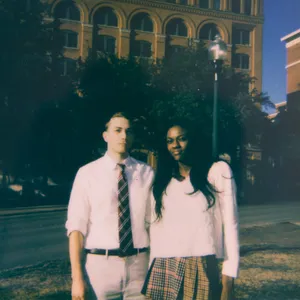
Free Daily Podcast Summary
Silent Generation: Daily Summaries Delivered
by Silent Generation
Silent Generation is a Chicago-based cultural analysis podcast that surveys the cultural consequences of car-oriented development in the mid-20th century. It explores what was lost between the Silent Generation and Generation Z. Topics discussed include aesthetics, fashion, history, and urbanism.Find us on Instagram: silent.generation
Latest Episodes
The most recent episodes — sign up to get AI-powered summaries of each one.
- 5 days ago1h 18m
Ep. 120: Frasurbane
Frasurbane is a consumer aesthetic popular from the late-1980s to mid-1990s best exemplified by the 1993 sitcom Frasier. It was first identified by CARI co-founder Evan Collins, who jokingly coined the term “Frasurebane” by combining “Frasier” and “urbane" in 2018. Since then, Frasurbane has been overshadowed by “louder” consumer aesthetics like Utopian Scholastic and Global Village Coffeehouse, but is it as dull as it is perceived to be? On this week’s episode of Silent Generation, Nathan and Sebastien begin by discussing why the aesthetic first emerged: baby boomers aged and became refined, yuppies expanded their tastes beyond what was considered “highbrow,” and the early 1990s recession caused neutral colors to surge in popularity. They then identify the elements of Frasurbane (sepia tones, serif fonts, academic motifs, references to the humanities, and surrealist imagery) and use them to examine the TV show Frasier. The episode concludes with a discussion about how the music video for Parasite by Melody English is the sole example of “Neo-Frasurbane.” Links: Pinterest Board: https://www.pinterest.com/silentgeneration/frasurbane/ Frasurbane CARI Page Frasurbane Are.na Page Frasurbane Aesthetics Wiki Page Frasurbane: An Aesthetic We All Once Knew But Probably Forgot - Em’s Wild World 'Frasurbane' Is the New 90s Decor Trend Based on... the Show 'Frasier'? by Mary Frances Knapp Frasier: Apartment Tour [CG Tour] Frasier Crane the OG of MLS r/malelivingspace Frasier: A Cultural History by By Joseph J. Darowski and Kate Darowski Premodernism/ modernism/ postmodernism floating duck meme Let's end this once and for all. Which ornament was most worthy of Frasier's apartment? The Chihuly glass sculpture or the 'Froggy' statue? Public Art: A Return to Ornament by Carol Diehl “Parasite” by Melody English MELODY ENGLISH - House of Ornament Global Village Coffeehouse Facebook Group - First Ever Post Ep. 72: Utopian Scholastic Ep. 73: Normcore w/ Solana Artwork: Photo by William Whitehurst Record on 10/26/2026
- 3 weeks ago30 min
Ep. 119: Transplant Culture [EXTENDED TEASER]
Full episode available on Patreon: https://www.patreon.com/SilentGeneration The term “transplant” refers to domestic migrants who move to major cities from small towns and suburbs. Closely related terms like “yuppie,” “PMC,” and “gentrifier” suggest high salaries, but the term “transplant” is indifferent to wealth, getting applied to anyone viewed as an outsider by locals. Failing to immediately integrate into their newfound communities, transplants quickly form bonds with one another and create their own “transplant culture.” But what does “transplant culture” look like? On this week’s episode of Silent Generation, Nathan and Sebastien begin by identifying several important components of transplant culture: city subreddits, localisms, meetup groups, neighborhood nicknames, and urbanism. Particular focus is paid to Jeppson's Malört and Red Hot Ranch, with the two pointing to them as evidence of transplants’ propensity to overstate the importance of most local traditions to local culture. Nathan then coins the term “neighborhood classism” to describe the prejudice that transplants feel toward people who live in non-transplant neighborhoods. The episode rounds out with a survey of the most popular transplant neighborhoods in Chicago (Lincoln Park, Lake View, West Loop, and Wrigleyville) followed by a discussion about “nashvillification.” Links: Transplant - Urban Dictionary What we really mean when we call someone a "transplant" by Cece Xie HEY CHICAGO - There is a difference between being a transplant and having grown up in the suburbs Chicago Party Aunt - Twitter Chicago Party Aunt Tweets How ‘Chicago Party Aunt’ made the jump from Twitter to Netflix by Zach Long Searching for Local Identity in “The Bear” and “Chicago Party Aunt” by Ryan Zickgraf How Swedish Malort Became Chicago's Mascot Bitter Drink by Melissa McEwen How Jeppson’s Malört became Chicago’s drink by Adriana Cardona-Maguigad Malört’s unlikely rise from a joke to Chicago’s drink by Adriana Cardona-Maguigad Why is Malört such a cultural thing in Chicago? malort.com Dollar Store Vernacular - CARI Chicago neighborhood names but if a transplant came up with them Artist dreams up 'A New Yorker's Guide to Chicago' by Blanca Rios A New Yorker’s Guide to Chicago A New Yorker’s Guide to Los Angeles A New Yorker's guide to DC A New Yorker's guide to SF People when they find out you don’t live in the “cool young” part of town <a href='https://reductress.com/post/i-could-really-see-myself-living-
- Sep 29, 20261h 16m
Ep. 118: Yuppies 2 w/ Dylan Gottlieb
This week’s episode of Silent Generation revisits the subject of one of our most popular episodes: yuppies. These are the “young urban professionals” who flooded into finance, law, and politics during the 1980s. While the original episode on yuppies (Ep. 116: Yuppies) offered a comprehensive analysis of yuppie fashion, it neglected to address other important signifiers of yuppie taste like jogging and fine dining. To dive deeper into the topic, Nathan interviews college professor and historian Dylan Gottlieb about his recent book Yuppies: The Bankers, Lawyers, Joggers, and Gourmands Who Conquered New York. Nathan begins by asking Dylan about the inspiration behind the book and the story behind the “yuppie couple” featured on the cover. Dylan then offers insights into why deregulation (rather than individual greed) was responsible for the emergence of yuppies, why yuppies drew parallels between their arduous careers and the marathons that they ran, and why fine dining became such an important way for yuppies to express their identity and status. Links: Yuppies: The Bankers, Lawyers, Joggers, and Gourmands Who Conquered New York by Dylan Gottlieb Dylan Gottlieb’s Website Dylan Gottlieb’s Twitter Making Cents Podcast Artwork: Michael Douglas as Gordon Gekko and Daryl Hannah as Darien Taylor in Wall Street (1987) from The Style of Wall Street by Victor Besnard Recorded on 9/18/2026
- Sep 22, 20261h 10m
Ep. 117: São Paulo
On this week’s episode of Silent Generation, Sebastien interviews Nathan about his most recent trip to Brazil. Nathan begins by sharing his impressions of São Paulo’s metro system and of the nearby railroad town of Paranapiacaba. He then details his time in Curitiba, where he rode the city’s bus rapid transit system, took the Serra Verde Express to Morretes, and saw capybaras in Parque Barigui. He concludes by sharing his insights into Florianópolis, a picturesque capital city in the south of Brazil, where he went on a disastrous hike. Links: Silent Generation 3rd Anniversary Party: https://partiful.com/e/0s2nRB7Xgo99JPjMnd5m? Artwork: São Paulo, 1970 by Cartorama Recorded on 9/15/2026
- Sep 8, 20262 min
Checking In
In this announcement Nathan shares some recent health changes that are going to affect podcast output in the short term. Links: Ep. 1: Flâneur [UNLOCKED] Ep. 37: Male Desire w/ Charles Livingston [UNLOCKED] Ep. 59: Outerwear [UNLOCKED] Artwork: Photographed by Katie Recorded on 8/24/2026
- Sep 1, 20263 min
Ep. 116: Settling Down w/ Sam [TEASER]
Full episode available on Patreon: https://www.patreon.com/SilentGeneration What does it mean to “settle down”? What is the difference between “settling down” and “committing”? Does the phrase “settling down” have negative connotations, and do those negative connotations come from men? Do men fear “settling” down more than women? How does “settling down” differ between straight men and gay men? Why do so few gay men struggle to find partners, let alone get married? Are fewer and fewer people achieving these milestones because of structural reasons, or because they don’t actually want to? On this week’s episode of Silent Generation, Nathan is joined by a listener named Sam to try and answer these questions. Links: Sam’s Instagram Ever Heard of the Taxi Cab Theory? Here's the Research That Backs It Up by Sydney Meister The Epidemic of Gay Loneliness by Michael Hobbes Artwork: The mystery of the gay wedding photos Recorded on 8/9/2026
- Aug 25, 20261h 21m
Ep. 115: Landscape Architecture
Over the course of the 19th century, the field of landscape architecture emerged as the practice of gardening became increasingly professionalized. The first person to call themselves a “landscape architect” and popularize the term in the United States remains the only landscape architect that most Americans know by name: Frederick Law Olmsted. Unbeknownst to many, his career was heavily intertwined with the English-American landscape architect Calvert Vaux, with the two having collaborated on many of America’s most famous parks. On this week’s episode of Silent Generation, Nathan and Sebastien begin by examining two of Olmsted and Vaux’s most well-known projects: Central Park and the Buffalo Parks System. They then compare the development around Golden Gate Park to Central Park, debating the degree to which the development surrounding urban parks factors into their greatness. Next they detail how Park Avenue in New York City once sported 56 feet of greenspace for pedestrians, only for it to get whittled down to 20 feet to accommodate car traffic in the late 1920s. The episode concludes with a deep dive into the Brazilian landscape architect Roberto Burle Marx, with an examination of two of his modernist landscapes: the Copacabana Promenade and the Edmundo Cavanelas Residence. Links: Pinterest board: https://www.pinterest.com/silentgeneration/landscape-architecture/ Frederick Law Olmsted | Designing America The Seven S’s of Olmsted Design by Dr. Charles E. Beveridge Photograph of 2nd Ave and 42nd St in NYC in 1861 Stunning pictures that show how Central Park has drastically changed since the 1980s by Asta Thrastardottir Just how bad was Central Park in the 1970s? About Buffalo Park System - Olmsted Network Buffalo: Delaware Park - Segregation by Design Comparing Golden Gate Park to Other Major Urban Parks by Tessa McLean Casting Shade on Shadows: S.F. Supervisor Targets a Favorite Tool for Blocking Housing by Io Yeh Gilman San Francisco Family Zoning Plan - San Francisco Planning New York City Wants to Bring More Park to Park Avenue by John Surico Park Avenue’s Park Is Coming Back. Partially. Eventually. by Christopher Bonanos Manhattan's Park Avenue would look more like a park under plan pushed by Mamdani by Liam Quigley Mayor Mamdani Unveils Design Concepts to Put the ‘Park’ Back in Park Avenue Landscape Film, Roberto Burle Marx (2018) Revisiting the Constructed Edens of Roberto Burle Marx by Holland Cotter Re-Thinking Roberto Burle Marx by Edward J. Sullivan The Full Brazilian by Isabela Ono Brazilian Artist Roberto Burle Marx’s Most Mesmerizing Gardens by Madeleine Luckel The History of the Copacabana Sidewalk: From Its Origin in Portugal to Burle Marx's Intervention by Nicolás Valencia Th
- Aug 11, 202656 min
Ep. 114: National Park Service Rustic
National Park Service Rustic, also known as “parkitecture,” was the dominant architectural style of national parks from roughly 1916 to 1942. Many early examples of the “rustic” style were commissioned by private railroad companies, such as the Fred Harvey company, in order to lure tourists out west to fledgling national parks. The style came to be characterized by harmony with the natural environment, locally sourced materials, and vernacular features. On this week’s episode of Silent Generation, Nathan and Sebastien begin by synopsizing the early history of the National Park Service. They then discuss famous examples of National Park Service Rustic such as the Old Faithful Inn in Yellowstone, Desert View Watchtower in the Grand Canyon, and the Ahwahnee Hotel in Yosemite. Particular attention is paid to the work of Mary Colter, one of the first female architects, who is notable for designing her buildings to harmonize with both the natural environment and the cultural heritage of the places she built them. The episode concludes with an examination of how car-oriented development caused the National Park Service to abandon the style after WWII. Links: Pinterest Board: https://www.pinterest.com/silentgeneration/national-park-service-rustic/ Old Faithful Inn Architecture in the Parks: A National Historic Landmark Theme Study: Old Faithful Inn Inside Yellowstone's Old Faithful Inn Inside Yellowstone’s Old Faithful Inn — “The Beginning of Rustic Architecture in National Parks” by Kate Daniel Mary Elizabeth Jane Colter Mary Colter and Her Buildings at Grand Canyon Mary Colter's Bright Angel Lodge Mary Colter and the Grand Canyon - Parkography Podcast Mary Colter: The forgotten architect of the US Southwest by Erin Van Rheenen Mary Colter, Builder Upon the Red Earth by Virginia Grattan Mary Colter’s ”Geologic Fireplace” The Architect Behind Parkitecture by Teresa Bitler Building History: Mary E. J. Colter at Grand Canyon - Linda Reeder On The Trail: Grand Canyon Architecture Tracing the Yosemite Valley Railroad Post Cards Related to the Yosemite Valley Railroad Parkitecture: A Rustic Back-to-Nature Architectural Aesthetic 19: Parkitecture and Historic Hotels - Exploring the National Parks US national parks told to remove signs on mistreatment of Native Americans, climate, Wash Post reports - Reuters America’s National Parks at 100 (2016) Artwork: Ahwahnee Hotel, Yosemite NP, 1960 Recorded on 8/7/2026
Get Silent Generation summaries in your inbox
Free AI-powered daily recaps. Key takeaways, quotes, and mentions — in a 5-minute read.
Get Free Summaries →Free forever for up to 3 podcasts. No credit card required.
You Might Also Like
Listeners also like.

Generation Why: True Crime
Explores true crime cases, mysteries, and conspiracies through detailed research and analysis by hosts Justin and Aaron.

Archive 81
A fiction podcast exploring horror, cities, and the subconscious through found audio recordings.

So, Get This
iHeartPodcasts and Bubbler

Yestergays with Justin Sylvester and Blakely Thornton
Two friends revisit iconic pop culture moments from the past with humor and personal memories, exploring how they shaped a generation.

The Greatest Generation
Two fans review every episode of Star Trek: Enterprise after previously covering The Next Generation, Deep Space Nine, and Voyager.
In Retrospect with Susie Banikarim and Jessica Bennett
Revisits 1980s and 1990s pop culture moments to examine how they shaped societal views of women and the world.

Slate Culture Feed
Slate Podcasts

Seamossgirlies
A Gen-Z–focused wellness podcast that critiques the wellness industry and unpacks health misinformation through a social and political lens.

Nymphet Alumni
Nymphet Alumni explores topics in fashion and culture.

NOISEXTRA - The noise podcast.
A weekly exploration of noise, industrial, and experimental music, featuring album analyses and interviews with key figures in the genre.

Super Retro
A nostalgic look at retro gaming, movies, TV, music, and pop culture from the 1980s, 1990s, and early 2000s.

Reply All
A podcast that explores the internet and its impact on modern life through investigative stories and personal narratives.
About Silent Generation
Silent Generation is a Chicago-based cultural analysis podcast that surveys the cultural consequences of car-oriented development in the mid-20th century. It explores what was lost between the Silent Generation and Generation Z. Topics discussed include aesthetics, fashion, history, and urbanism.Find us on Instagram: silent.generation
Customized Recaps
AI-powered recaps with compact key takeaways, quotes, and insights.
Straight to Your Inbox
Get key takeaways from Silent Generation in a 5-minute read.
Save Hours Every Week
Stay current on your favorite podcasts without falling behind.
Frequently Asked Questions
What is Podzilla's Silent Generation daily summary?
It's a free AI-powered email that summarizes new episodes of Silent Generation as soon as they're published. You get the key takeaways, notable quotes, and links & mentions — all in a quick read.
How does the Silent Generation podcast summary work?
When a new episode drops, our AI transcribes and analyzes it, then generates a personalized summary tailored to your interests and profession. It's delivered to your inbox every morning.
Is this an official Silent Generation product?
No. Podzilla is an independent service that summarizes publicly available podcast content. We're not affiliated with or endorsed by Silent Generation.
Can I get summaries of other podcasts too?
Absolutely! The free plan covers up to 3 podcasts, any in the catalog. Basic raises that to 15, Pro to 40 and Max to 100. Browse our full catalog at /podcasts.
How often does Silent Generation release new episodes?
Silent Generation publishes weekly. Our AI generates a summary within hours of each new episode.
What topics does Silent Generation cover?
Silent Generation covers topics including History, Arts, Culture, Society & Culture. Our AI identifies the specific themes in each episode and highlights what matters most to you.
Start getting Silent Generation summaries tomorrow morning.
Free forever for up to 3 podcasts. No credit card required.
Free forever for up to 3 podcasts. No credit card required.