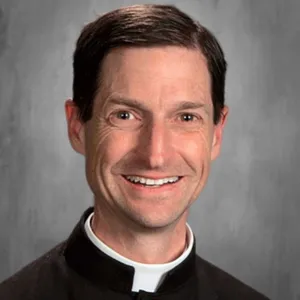
Free Daily Podcast Summary
Sermons of Fr Paul Robinson SSPX: Daily Summaries Delivered
by Fr Paul Robinson
Sermons of Fr Paul Robinson SSPX (Society of St Pius X)
Latest Episodes
The most recent episodes — sign up to get AI-powered summaries of each one.
- 1 weeks ago19 min
Worldly Illusions about the Cross, Sermon by Fr. Paul Robinson, SSPX
Tomorrow and the next day, we have two special feast days: the Exaltation of the Holy Cross and Our Lady of Sorrows. Both of these feast days are celebrations of the triumph that comes through the Cross. It was through the Cross that Our Lord redeemed the human race. It was by standing at the foot of the Cross and offering her Son that Our Lady became the Co-Redemptrix of the human race and Mediatrix of All Graces.As Catholics, we celebrate these feast days because we believe in what they represent for Our Lord and Our Lady, and also what they represent for us. What do they teach us? That the good bearing of the Cross in this life is what makes for heavenly glory in the life to come.We have these feasts to represent this to us, and we place crucifixes everywhere to remind us that victory comes from the Cross. At the same time, however, we have trouble believing it.Catechism of Trent: “if one thing more than another presents difficulty to the mind and understanding of man, assuredly it is the mystery of the cross, which, beyond all doubt, must be considered the most difficult of all; so much so that only with great difficulty can we grasp the fact that our salvation depends on the cross”.This is harder for us to understand than the Trinity, harder to understand than the mystery of the Eucharist: that our salvation depends on the Cross. Do you understand this?Do you believe that your salvation depends on the way in which you bear suffering in this life? Do you have a supernatural attitude toward suffering, or a worldly attitude toward it?This one thing must divide us from the people in the world, if we are truly followers of Our Lord Jesus Christ: we must have the capacity of carrying our daily crosses.If so many people in this world find the doctrine of the Cross so difficult to understand, it is often because of two illusions that they hold in their minds, illusions that come from the world.
- 3 weeks ago17 min
Freedom from Worldly Addictions, Sermon by Fr. Paul Robinson, SSPX
No man can serve two masters. But also, no man can serve no master. We cannot serve both God and mammon. But we cannot serve neither God nor mammon. In this life, we either serve God or the world, one or the other.One of the most basic things that every man desires is freedom. No one wants to be a slave. We all understand that slavery is incompatible with happiness, and we want to be happy.But the thing is that we are not able to attain freedom and happiness on our own. They are things that we can only attain through service. We either serve the world or we serve God.Both the world and Our Lord Jesus Christ offer us freedom and happiness. But the way in which they do so is completely different.Our Lord famously tells us, “Take up my yoke upon you, and learn of me, because I am meek, and humble of heart: and you shall find rest to your souls. For my yoke is sweet and my burden light”.In John 8, when Our Lord has His most heated discussion with the Jews, He says, “If you continue in my word, you shall be my disciples indeed. And you shall know the truth, and the truth shall make you free.”How do we attain freedom as human beings? We attain it by following the word of Our Lord, by serving Him, by obeying Him. That is what Our Lord tells us about how we become free. Note how this is one of the many paradoxes that we find in the Gospel: freedom through obedience.What does the world say? How does it promise to give freedom to its followers? It says, “I will give you freedom by allowing you to do whatever you want without any constraints except the public order. I will give you infinite choices in entertainment, food, clothing and sexuality. You get to choose whatever you want and we will make sure that no one gives you a hard time for your choices.”Modern technology has made this type of “freedom” so much more accessible in the past, in the sense that the modern world, through its technological devices and its refusal to forbid any type of behavior, provides modern man with many more choices than he had in the past.And what is the result, for those who serve the world in order to achieve their freedom? The result is an unusually high rate of addiction. For many people today, what up front is an infinite number of choices becomes in the end a loss of the power to choose.It is estimated that, in 2024, 16.8% of Americans suffered from some form of addiction. Please note that that is one out of every six people you see walking on the street and means close to 50 million people.Someone may respond to this by saying, “But devout Catholics are addicted to God, and so they have an addiction problem as well”. I actually hope that that accusation is true for many, if not all, of you at St. Isidore’s. We want as many of you as possible to be addicted to God.But I think that this accusation about devout Catholics will help us clarify what we mean about freedom and how it is attained by us as human beings.We say that someone is addicted when they know that what they are doing is harming them and yet they still continue to do it. But following Christ, following the will of God, is very good for us. Therefore, someone who is always following the will of God is not suffering from an addiction.It turns out that, when we serve Our Lord Jesus Christ, we end up serving our own good.
- Aug 19, 20261h 59m
Interview with Fr. Robinson about SSPX Excommunications on Protestant Radio Program Iron Sharpens Iron with Chris Arnzen
On August 12, Fr. Robinson was interviewed live on the Protestant Radio Program Iron Sharpens Iron, by host Chris Arnzen. Here are the time stamps of what they spoke about:1:30-7:00 Fr. Robinson’s story7:00-17:55 Problems with the New Mass17:55-20:10 Why Latin in the TLM?20:10-23:45 Continuation of Fr. Robinson’s story23:45-27:30 What is sedevacantism?27:30-29:10 What is Feeneyism29:10-30:10 Are Protestant baptisms valid?30:50-38:00 Protestant commercials38:00-52:10 Why does the SSPX exist? How was it founded?52:10-1:12:00 Relationship of the SSPX with Rome over the years1:12:00-1:22:00 Protestant commercials1:22:00-1:25:00 Why isn’t Fr. Robinson sedevacantist?1:25:00-1:34:10 Continuation of SSPX history and strained relationship with Rome, SSPX excommunications, why they are not valid1:34:10-1:38:10 What is the Society of St. Pius V? The Nine and their Expulsion1:38:10-1:49:25 How is the SSPX reacting to the excommunications?1:49:25-1:54:30 Homosexuality in the Church1:54:30-end How could a Pope lose his office?
- Aug 18, 202615 min
The Divine Meritocracy, Sermon by Fr. Paul Robinson, SSPX
Political conservatives often advocate for a meritocracy, that is, a system whereby people get pay and power based on their skills and hard work rather than on their connections or their social position.It rarely works that way on this earth, for a number of reasons related to our human condition. But we Catholics believe that, in the next life, we will get exactly what we deserve for what we have done in this life.On earth, it is often difficult for humans to know exactly what people deserve, according to their talent and work. But God knows us better than we know ourselves; He knows everything that we do and exactly how good or how evil our actions are.On earth, it is hard for humans to be completely just in giving out rewards or meting out punishments. We often have biases that influence our attitude towards people. But God is perfectly just and will not be influenced in any way by any biases.For that reason, after this life is over, we will receive a reward or punishment that is precisely fair because we will be receiving it from an all-knowing, all-perfect God.On this feast of Our Lady’s Assumption, I want to focus on the question of heavenly merit. We know that, for each one of the actions that we perform in the state of grace and for a supernatural motive, we deserve a heavenly reward.Basically, if we do a supernatural work, for something beyond this life, then we deserve a reward that is beyond this life. And that reward is greater or lesser based on how many supernatural acts we have performed and the intensity of the love of God with which we have done them.If, in the next life, we all receive from God the reward that is due to us, what, we may ask, is the reward that Our Lady received after her death?Well, since Our Lady’s actions in this life were the greatest of all human beings, next to her Son, her actions were the most meritorious. They deserved the greatest reward from God.What was the reward that God assigned to her for actions? They are the rewards that we meditate upon in the fourth and fifth mysteries of the Glorious Mysteries of the Rosary: Our Lady’s Assumption in Heaven and her Crowning as Queen of Heaven and earth.We believe that Our Lady has been given the highest position in heaven, after her Son, because she merited more than anyone else.
- Aug 3, 202619 min
Praying Like the Devout Publican, Sermon by Fr. Paul Robinson, SSPX
Two men went up to the Temple to pray. One prayed well and the other did not. One prayed with many words, while another prayed with a few words said over and over. One stood with his eyes lifted up, while the other had his eyes cast down and kept striking his breast. One man went home justified, while the other did not.The parable of the Pharisee and the publican is one of the most beautiful of all of Our Lord’s parable. It is clear that the purpose of the parable is to encourage us to practice the virtue of humility and to fight against pride.But the parable also teaches us something else that is very important: it tells us how we ought to pray. When you think about all of the things that you do each day of your life, you must be convinced that praying is probably the most important thing that you do.The reason for this is that prayer is the way in which we communicate with our Father in Heaven, the way that we spend time with Him, the way that we maintain our relationship with Him.And if prayer is the most important of the things that we do each day, we must try to get better at prayer as time goes on. We must learn from Our Lord and the saints how we ought to pray, and try to imitate them in the time that we dedicate to prayer.I particularly want to emphasize that word “dedicate” when talking about prayer today. One of the most important characteristics of good prayer is dedication. Another word for this is “devotion”. A prayer that is devout is one where we are devoted to what we are doing.What do I mean by this? I mean that, while we are praying, we are focused on God rather than on ourselves. I mean that we actually use the time of prayer to pay attention to God and, even more than that, we try to focus our entire being on Him, as far as possible.Have you ever tried doing this? Have you ever tried kneeling down, closing your eyes, and focusing yourself as much as you can on God and praying to Him with your whole heart? It is so important that you not just try this, but that you do it every day of your life.One of the big differences between the prayer of the Pharisee and that of the publican is the question of devotion. The publican seems to be focused on God in his prayer because he is begging God for mercy. His prayer is clearly devout because his eyes are lowered, avoiding distraction; he is striking his breast over and over; and he is repeating the same thing over and over. There is a great focus and intensity to his prayer.Whereas the Pharisee is not even asking God for anything. He is just talking to God about Himself and just saying whatever comes to his mind.
- Jul 26, 202619 min
Desensitization to Sin, Sermon by Fr. Paul Robinson, SSPX
St. Paul tells us that “the wages of sin is death”, meaning that sin leads you to die. We know that sin leads to the death of the soul; that is why mortal sin has its name. It causes a mortal blow to our soul such that the life of God dies in the soul. The soul becomes dead to God.But sin also is a cause of physical death. This is obviously true for the sin of murder, but it is true at a more basic level in that physical death came into this world because of sin. And, quite simply, the disorders of sin are not good for our health.The bottom line with sin is that it causes the death of our bodies, it causes the death of our souls and it leads to the eternal death of Hell after this life is over.This reality makes sin the greatest evil and even the only evil. We as Catholics believe that this is true. However, are we as careful about sin as we should be? Do we treat sin as a perilous danger to be avoided at all costs?It all depends on the state of our conscience. Our conscience acts like the immune system of our body, in that it is our soul’s natural defense against sin.If we have a delicate conscience, then our conscience flares up whenever we are in the presence of an occasion of sin.If we have a lax conscience, then we are not very troubled when we are in the occasion of sin or commit sin. The lax conscience is like the body of someone who has been numbed to pain because of injuries. A person burns his hand and loses sensation in his hand. When his hand is injured the next time, he does not feel anything.This perspective on conscience shows us how our conscience can change over time, just like the immune system of our body. Good food and drink, and proper rest, help you maintain your immune system. Whereas staying up late and getting up early, not getting any exercise, binging on junk food, and so on, makes you vulnerable to sickness.Similarly, in our spiritual life, if we pray our daily Rosary, avoid occasions of sin, do spiritual reading, go to confession and Communion regularly, we will maintain our soul in good health. We will be sensitive to sin, pray more easily and be able to live our faith.Whereas, if we regularly consume worldly entertainment, hardly pray, don’t go to confession, and so on, then our soul starts to become used to sin and numb to spiritual realities. It becomes harder and harder to live the Catholic faith and be a Catholic.At the end of the day, as long as we are in this life, we are in a state of flux. We are either becoming better Catholics or worse Catholics, as time goes by. We are very capable of changing from what we are today, either for the better or for the worse.We all know people who used to be fervent Catholics and now have left the faith. We also know people who have undergone conversions and are today much holier than they were in the past.The reason I mention this is that both today’s epistle and Gospel provide for us examples of the bad path: the slippery slope into mortal sin and apostasy, the numbing of the soul over time by a progressive desensitization to sin.Let us look at these two examples to understand how sin truly leads to death.
- Jul 19, 202619 min
Supernatural Joy in a Time of Church Crisis, Sermon by Fr. Paul Robinson, SSPX
In this life, we find ourselves at a midway point between earth and Heaven. We are some years away from the first moment of our existence and we are likewise some years away from our eternal home.As Catholics, we know that, while we are on the journey of this life, we must live it, in some way, like the life to come. Our life on earth now must resemble what our life in Heaven will be for us to be able to enter into Heaven when we die. “As the tree casts its shadow, so does it fall”The essence of what Heaven will be is that we will delight in God. We will be filled with immense joy and happiness by being in the presence of God.Thus, it would seem to mean that we are meant to possess a certain joy and happiness, through God, on this earth. We know that this is one of the characteristics of the lives of the saints. Though they suffered much, they yet possessed in their souls a continual joy.In the Hail Holy Queen, we call this earth a “valley of tears”. We call ourselves “banished children of Eve”. We say that we come to Our Lady “sinful and sorrowful”. We say that we send up our sighs to her “mourning and weeping”.The trials of this life are very real. But they must be also be accompanied by a real joy.I want to consider what I believe is the main problem we face in striving to have supernatural joy, as well as the resources that we have, as Catholics, to maintain that joy, so that our joy on earth may be a preparation for our joy in Heaven.St. Thomas says that joy is caused by love: either by us being in the presence of the thing that we love or because the thing that we love is in good shape.This shows us that any joy in our life has to come from us loving the things that we have. Do we have blessings in our lives that are able to provide us a constant joy? Yes, we do. If we are not joyful, it is because we do not love them sufficiently.Just to take some examples. We believe that, when we receive Holy Communion, we receive Our Lord Himself into our souls. This is an incredible gift and blessing. Some souls are comforted and strengthened when receiving Our Lord; they delight in dwelling with Him. This is what the Communion verse of today’s Mass tells us: “Taste and see how good the Lord is; happy the man who takes refuge in Him.” Others receive Our Lord and it has little or no impact on them.Or think about the fact that we have a Father in Heaven who dwells in happiness and loves us and bestows all manner of goodness upon us. We know this gives great joy to the Church because she expresses it in the Mass, especially at the Gloria: “We praise Thee. We bless Thee. We adore Thee. We glorify Thee. We give Thee thanks for Thy great glory.” What sort of joy does the existence of God give us on a regular basis?Sometimes, traditional Catholics allow the situation in the Church to put a damper on their joy. This is especially true when we are receiving these terrible condemnations from Rome.But there have always been crises in the Church and we must not let the current crisis be an obstacle from us drawing joy from our faith. When I talk to people who are new traditional Catholics, I always tell them: “make sure you do not become obsessed with the crisis. Rather, profit from the traditional Mass and the traditional devotions that you have found. Make them the center of your life, not these Church controversies”.
- Jul 13, 202616 min
Unconditional Love in a Vocation, Sermon by Fr. Paul Robinson, SSPX
God is in the business of showing His creatures unconditional love, and this will never change. It is part of His very being. God can only be good to us, because He is goodness itself. God can only love us, because He is love itself.We learn from the first chapter of Genesis that God created us in His own image. “Let us make man to our image and likeness”, God says to Himself.This not only indicates what God made us to be; it also indicates what we must strive to be. We are made in the likeness of God, but we must also strive to hard to be like God.What I am going to claim in this sermon is that we especially do that through the pursuit of our vocation, whether that be the priesthood, the religious life, or the married life.Unconditional love in a vocationThere is a special quality in a vocation, in that it demands of us unconditional love. We are required to commit ourselves up front to pursue a certain path for the rest of our lives, to stay on that path and never deviate from it.This is what married couples do when they exchange vows before the altar; this is what religious do when they make their perpetual vows; this is what a priest does when he is ordained.These vocations require unconditional love because of the fact that they do not know up front all that their vocation is going to require of them. They make a commitment up front to be faithful to a path but they do not know all that is on that path.Spouses, for instance, tell one another that they are going to stay by one another for life, no matter what happens in the future. If one of them gets cancer, if their house burns down and they lose their life savings, if they have quadruplets, no matter what, they will stick together.Spouses offer this unconditional love to one another when they marry. Priests and religious offer it to God. When a priest is ordained, he dedicates his life for the salvation of souls. He says, “I give myself unconditionally for the salvation of souls, for life, no matter what that may demand of me.We know that, for priests, sometimes the demands are costly. A priest does not know how the years of his priesthood are going to play out when he is ordained, and yet he commits himself.He may be asked to leave his home country and live overseas. He may have a superior who does not understand him. He may have faithful who do not listen to him and make bad decisions for themselves and their children. He may at times feel as if he is a failure. He may suffer an apparent excommunication just a week after he is ordained.It is beautiful to think that God created us human beings in His image and likeness and then also created ways to live our live that help us resemble Him, and that those paths of life require unconditional love of us.He created marriage at the same time that He created the human race. Then, when He became incarnate, He instituted two vocations that are intrinsically supernatural: the priesthood and the religious life.But Our Lord did not only institute the life of the Catholic priesthood and the life of the vows of poverty, chastity, and obedience. He also lived them. He showed us how to resemble God in these paths of life.
Get Sermons of Fr Paul Robinson SSPX summaries in your inbox
Free AI-powered daily recaps. Key takeaways, quotes, and mentions — in a 5-minute read.
Get Free Summaries →Free forever for up to 3 podcasts. No credit card required.
You Might Also Like
Listeners also like.
Bishop Barron’s Sunday Sermons - Catholic Preaching and Homilies
Weekly homilies from Bishop Robert Barron.
Issues, Etc.
Discusses a wide range of topics with experts, centered on Christian faith and teachings.
Sunday Homilies with Fr. Mike Schmitz
A Catholic priest delivers weekly homilies based on Sunday Scripture readings to deepen faith and inspire spiritual growth.

Godsplaining
Dominican friars explore Catholic tradition through philosophical and theological reflections on modern life.
The Word on Fire Show - Catholic Faith and Culture
A weekly exploration of Catholic faith and its intersection with contemporary culture, hosted by Bishop Robert Barron.
Light + Truth
Sermons by John Piper exploring Christian theology and the supremacy of Christ, hosted by Dan Cruver.
The Lord of Spirits
Explores the presence of the divine and spiritual realities in creation through historical and theological reflection.

The Remnant Radio's Podcast
Explores Christian theology, church history, and spiritual gifts through respectful dialogue with believers across denominations.
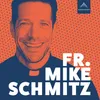
The Fr. Mike Schmitz Catholic Podcast
Faith, pop culture, and current events discussed from a Catholic perspective by Fr. Mike Schmitz.

Ask NT Wright Anything
A weekly podcast exploring theology and biblical questions through discussions with NT Wright, hosted by Mike Bird.
Wretched Radio with Todd Friel
A Christian talk show addressing theology, cultural issues, and evangelism with humor.
Grace to You: Radio Podcast
Verse-by-verse Bible teaching to help listeners understand and apply Scripture to daily life.
About Sermons of Fr Paul Robinson SSPX
Sermons of Fr Paul Robinson SSPX (Society of St Pius X)
Customized Recaps
AI-powered recaps with compact key takeaways, quotes, and insights.
Straight to Your Inbox
Get key takeaways from Sermons of Fr Paul Robinson SSPX in a 5-minute read.
Save Hours Every Week
Stay current on your favorite podcasts without falling behind.
Frequently Asked Questions
What is Podzilla's Sermons of Fr Paul Robinson SSPX daily summary?
It's a free AI-powered email that summarizes new episodes of Sermons of Fr Paul Robinson SSPX as soon as they're published. You get the key takeaways, notable quotes, and links & mentions — all in a quick read.
How does the Sermons of Fr Paul Robinson SSPX podcast summary work?
When a new episode drops, our AI transcribes and analyzes it, then generates a personalized summary tailored to your interests and profession. It's delivered to your inbox every morning.
Is this an official Sermons of Fr Paul Robinson SSPX product?
No. Podzilla is an independent service that summarizes publicly available podcast content. We're not affiliated with or endorsed by Fr Paul Robinson.
Can I get summaries of other podcasts too?
Absolutely! The free plan covers up to 3 podcasts. Upgrade to Pro for 15, or Premium for 50. Browse our full catalog at /podcasts.
How often does Sermons of Fr Paul Robinson SSPX release new episodes?
Sermons of Fr Paul Robinson SSPX publishes biweekly. Our AI generates a summary within hours of each new episode.
What topics does Sermons of Fr Paul Robinson SSPX cover?
Sermons of Fr Paul Robinson SSPX covers topics including Religion & Spirituality, Spirituality. Our AI identifies the specific themes in each episode and highlights what matters most to you.
Start getting Sermons of Fr Paul Robinson SSPX summaries tomorrow morning.
Free forever for up to 3 podcasts. No credit card required.
Free forever for up to 3 podcasts. No credit card required.