Free Daily Podcast Summary
Sea Change: Daily Summaries Delivered
by WWNO & WRKF
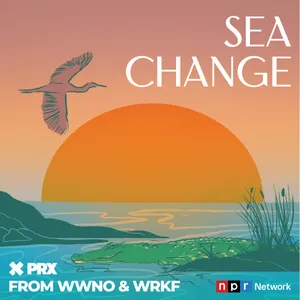
Living on the coast means living on the front lines of a rapidly changing planet. And as climate change transforms our coasts, that will transform our world. Every two weeks, we bring you stories that illuminate, inspire, and sometimes enrage, as we dive deep into the environmental issues facing coastal communities on the Gulf Coast and beyond. We have a lot to save, and we have a lot of solutions. Join us as we investigate and celebrate life on a changing coast. It’s time to talk about a Sea Change. Based in New Orleans, Sea Change is a production of WWNO New Orleans Public Radio and WRKF Baton Rouge Public Radio. Hosted by Carlyle Calhoun. Our theme song is by Jon Batiste.
Latest Episodes
The most recent episodes — sign up to get AI-powered summaries of each one.
- 1 weeks ago34 min
The Future of the Beach
We love our beaches. We build homes beside them, vacation on them, and spend billions of dollars trying to keep them from disappearing. But beaches are supposed to move—and as sea levels rise, keeping them in place is becoming more expensive, more difficult, and possibly impossible. So what happens when the sand, the money, and the time start running out? Coastal geologist Rob Young says we’re going to have to make some hard choices about what we protect, what we let go, and who pays for the risk. For more information, studies, and data about beach nourishment, buyouts, and adaptation at the coast, check out the Program for the Study of the Developed Shoreline's website. Additional resources:Rebuild by DesignNOAA's Sea Level Rise ViewerThe Water Institute's Community Resilience CenterThis episode was hosted by Executive Producer Carlyle Calhoun. Our theme music is by Jon Batiste, and our sound designer is Emily Jankowski. Sea Change is a WWNO and WRKF production. We are part of the NPR Podcast Network and distributed by PRX. Sea Change is made possible with major support from the Gulf Research Program of the National Academy of Sciences, Engineering, and Medicine. WWNO’s Coastal Desk is supported by the Walton Family Foundation, the Meraux Foundation, and the Greater New Orleans Foundation.
- 3 weeks ago44 min
From Puffins to Pelicans: How to Save a Seabird
What does it take to bring a seabird back from the brink—and can we keep it there? We travel from a rocky island of Maine to a tiny restored island in coastal Louisiana to learn the astonishing comeback stories of two beloved birds, puffins and pelicans. This is a hopeful story about how innovative ideas can save wildlife — and asks whether that's enough in a rapidly changing world.CREDITSThis episode was reported by Katelyn Harrop and Michael McEwan and hosted by Executive Producer Carlyle Calhoun. Eve Abrams edited the pelicans story. The puffins story was edited by Carlyle Calhoun. The episode was fact-checked by Philip Kiefer with help from Shruti Gautam. Sound design by Rebecca Nolan and our theme music is by Jon Batiste. Sea Change is made possible with major support from the Gulf Research Program of the National Academy of Sciences, Engineering, and Medicine. WWNO’s Coastal Desk is supported by the Walton Family Foundation, the Meraux Foundation, and the Greater New Orleans Foundation.
- Aug 12, 202641 min
The Fight Over Culatra Island: When Nature Wins, Must People Lose?
Throughout Western history of conservation, protecting nature has often meant removing people. It's what happened during the creation of many of America's national parks. But what if protecting nature didn't have to mean displacing the people who call it home? That's the question that brings us to Culatra, a small fishing island off Portugal's southern coast, and one of the country's seven natural wonders. For decades, the Portuguese government saw only one way to save the fragile lagoon surrounding Culatra: kick out the residents. This episode follows one woman's decades-long fight for her island — and the unlikely alliance she built along the way with the very scientists once sent to evict her.CREDITSThis episode was reported and produced by Geert Vlieger. Sound design also by Geert. Johanna Zorn edited the episode with help from Executive Producer Carlyle Calhoun. Fado was performed on acoustic guitar by Ricardo Martins and Cláudio Sousa. All other music in the episode is composed and produced by Geert. Sea Change’s theme music is by Jon Batiste.Production of this episode was made possible with support from the Walden Collective and Sciaena, and funding from the European Union’s Big Green Project. One brief update: Valentina Munoz is now in Lisbon and is no longer working for the NGO, but hopes to continue working on community-based ocean protection programs. Sea Change is a WWNO and WRKF production. We are part of the NPR Podcast Network and distributed by PRX. And to help others find our podcast, please share this episode with a friend!Sea Change is made possible with major support from the Gulf Research Program of the National Academy of Sciences, Engineering, and Medicine. WWNO’s Coastal Desk is supported by the Walton Family Foundation, the Meraux Foundation, and the Greater New Orleans Foundation.
- Jul 30, 202635 min
Surfing in a Plastic Sea
Neil McQueen learned to surf as a Texas teenager, and it changed his life – eventually pulling him away from a career as a plastics engineer and into the fight to save the very waters that shaped him. Thanks to the way ocean currents loop through the Gulf, the Texas coast collects roughly 10 times more plastic debris than any other Gulf state, much of it spilling from the massive petrochemical complex that lines its shores. In this episode of Sea Change, reporter Avery Thompson follows Neil from the surf off Mustang Island to the halls of the Texas Capitol to witness a personal reckoning with the plastics economy that helped build modern Texas—and one man’s determination to leave the ocean better than he found it.To learn more about the citizen-led science project tracking pre-production plastics, called nurdles, check out the Nurdle Patrol. And for more about the Surfrider Foundation's work on the Texas coast, click here. CREDITSThis episode was reported by Texas-based reporter Avery Thompson. It was edited by Carlyle Calhoun and Eve Abrams, with additional help from Johanna Zorn, Eva Tesfaye, and Michael McEwan. Carlyle Calhoun is the executive producer. Our theme music is by Jon Batiste, and sound design by Dennis Funk with help from Avery Thompson. Sea Change is a WWNO and WRKF production. We are part of the NPR Podcast Network and distributed by PRX. Sea Change is made possible with major support from the Gulf Research Program of the National Academy of Sciences, Engineering, and Medicine. WWNO’s Coastal Desk is supported by the Walton Family Foundation, the Meraux Foundation, and the Greater New Orleans Foundation.
- Jul 15, 202626 min
From Foe to Friend: The Dutch Rethink Their War Against the Sea
In the Netherlands, water has always been both a threat and a triumph. A quarter of the country lies below sea level, and for centuries the Dutch have engineered their way to safety. It’s a place not unlike New Orleans: a delta shaped by risk, resilience, and the belief that with enough ingenuity, water can be controlled. But as sea levels rise, that centuries-old confidence is beginning to crack.In this episode of Sea Change, reporter Jonathan Groubert takes us to the Netherlands to explore a relationship in turmoil. From floating farms to visions of entire cities on water, the Dutch are beginning to rethink everything they thought they knew. The question is no longer how to win the war against water—but whether it’s time to learn how to live with it.
- Jul 2, 202631 min
It's All Elementary: Part 3 – Carbon
This is part 3 of our three-part series about elements. And today is a biggie: carbon. When we hear about carbon, it's usually about its role in heating up the planet. And while that's an absolutely critical part of the story, the story of this most miraculous of substances is so much larger. We talk to Peter Brannen, author of The Story of CO2 is the Story of Everything, about how carbon has always been central to just about every major turning point in the history of life on Earth...including why life is here in the first place. CREDITSThis episode is hosted by Executive Producer Carlyle Calhoun. Editing help from Eva Tesfaye and Jack Rodolico. Our theme music is by Jon Batiste, and our sound design by Dennis Funk. Sea Change is a WWNO and WRKF production. We are part of the NPR Podcast Network and distributed by PRX. Sea Change is made possible with major support from the Gulf Research Program of the National Academy of Sciences, Engineering, and Medicine. WWNO’s Coastal Desk is supported by the Walton Family Foundation, the Meraux (Meer - O) Foundation, and the Greater New Orleans Foundation.
- Jun 18, 202636 min
It's All Elementary: Part 2 – Phosphorus
This is part 2 of our 3-part series about elements. Last time we met nitrogen, today, it’s partner in crime and in life – phosphorus. WLRN Environment Editor Jenny Staletovich has gotten to know the main character of this story pretty well after reporting on the environment in South Florida for more than a dozen years. Bone Valley in Central Florida has quietly fed the world’s hunger for phosphorus, even as its waters, in particular the Everglades, suffer from the fallout. In this episode, you'll meet fishing captains turned environmental crusaders, hear about Guano Wars fought over this "Devil's Element," and learn how some are figuring out how to fix our phosphorus paradox.CREDITS WLRN Environment Editor Jenny Staletovich reported this story. The episode was hosted by Executive Producer Carlyle Calhoun. This episode was edited by Eve Abrams. Editing help from Carlyle Calhoun, Michael McEwan, Ryan Vasquez, Alana Schrieber, and Eva Tesfaye. Sound design by Dennis Funk, and our theme music is by John Batiste. Sea Change is a WWNO and WRKF production. We're a part of the NPR Podcast Network and distributed by PRX. Sea Change is made possible with major support from the Gulf Research Program of the National Academy of Sciences, Engineering, and Medicine. WWNO's Coastal Desk is supported by the Walton Family Foundation, the Meraux Foundation, and the Greater New Orleans Foundation.
- Jun 5, 202625 min
It's All Elementary: Part 1 – Nitrogen
In this three-part series, we’re giving some of the most misunderstood characters on the periodic table a fuller story. We dive into the fascinating double lives of these elements that are both the makers and unmakers of our world. In part one, reporter Olga Loginova travels to Cape Cod to meet nitrogen. In this episode: we trudge through the marsh, avoid great white sharks, and find out how we harnessed the power of nitrogen, why that power turned against us, and what we can do about it. CREDITS This episode was hosted by Carlyle Calhoun and Olga Loginova. Olga also reported the story. This story was edited by Jack Rodolico. Editing help from me, Eve Abrams, and Michael McEwan. The episode was fact-checked by Philip Kiefer. Sound design by Dennis Funk, and our theme music is by John Batiste. I'm the executive producer. Sea Change is a WWNO and WRKF production. We're a part of the NPR Podcast Network and distributed by PRX. And to help others find our podcast, hit subscribe wherever you get your podcasts. Sea Change is made possible with major support from the Gulf Research Program of the National Academy of Sciences, Engineering, and Medicine. WWNO's Coastal Desk is supported by the Walton Family Foundation, the Meraux Foundation, and the Greater New Orleans Foundation. We'll be back with another element in two weeks.
Get Sea Change summaries in your inbox
Free AI-powered daily recaps. Key takeaways, quotes, and mentions — in a 5-minute read.
Get Free Summaries →Free forever for up to 3 podcasts. No credit card required.
You Might Also Like
Listeners also like.

American Shoreline Podcast Network
Experts discuss coastal business, policy, science, engineering, and advocacy to inform and prepare listeners on American shoreline issues.
Short Wave
A daily science podcast exploring discoveries, everyday mysteries, and the stories behind scientific headlines.
From A to Sea – The Southern Star Sea Swimming Podcast
A conversation series exploring sea swimming in West Cork and Ireland, its growing popularity, and the region’s coastal culture.
Outside/In
Explores connections between people and the natural world through stories on science, policy, and culture.

Sustainable World Radio- Ecology and Permaculture Podcast
Experts discuss ecology, permaculture, organic gardening, and sustainable living through interviews and commentary.

A Matter of Degrees
Experts explore the systems driving climate change and highlight solutions, leadership, and movements shaping the path to a livable future.

Science Friday
Explores diverse science and technology topics, from space to microscopic life, with engaging educational stories.
Unf*cking the Future
A scientist explores environmental crises and practical solutions to secure a sustainable future.
D-Day: The Tide Turns
Follows the personal stories of those who lived through the planning, execution, and aftermath of the 1944 Normandy landings.

The Wild with Chris Morgan
Explores wildlife and wild places through stories of animals adapting to survive and the people protecting them.

The Pulse
Explores surprising stories in health and science, from operating rooms and labs to breakthrough innovations.

The World, the Universe and Us
Explores big scientific questions about life, consciousness, climate, and the cosmos with expert scientists and New Scientist journalists.
About Sea Change
Living on the coast means living on the front lines of a rapidly changing planet. And as climate change transforms our coasts, that will transform our world. Every two weeks, we bring you stories that illuminate, inspire, and sometimes enrage, as we dive deep into the environmental issues facing coastal communities on the Gulf Coast and beyond. We have a lot to save, and we have a lot of solutions. Join us as we investigate and celebrate life on a changing coast. It’s time to talk about a Sea Change. Based in New Orleans, Sea Change is a production of WWNO New Orleans Public Radio and WRKF Baton Rouge Public Radio. Hosted by Carlyle Calhoun. Our theme song is by Jon Batiste.
Customized Recaps
AI-powered recaps with compact key takeaways, quotes, and insights.
Straight to Your Inbox
Get key takeaways from Sea Change in a 5-minute read.
Save Hours Every Week
Stay current on your favorite podcasts without falling behind.
Frequently Asked Questions
What is Podzilla's Sea Change daily summary?
It's a free AI-powered email that summarizes new episodes of Sea Change as soon as they're published. You get the key takeaways, notable quotes, and links & mentions — all in a quick read.
How does the Sea Change podcast summary work?
When a new episode drops, our AI transcribes and analyzes it, then generates a personalized summary tailored to your interests and profession. It's delivered to your inbox every morning.
Is this an official Sea Change product?
No. Podzilla is an independent service that summarizes publicly available podcast content. We're not affiliated with or endorsed by WWNO & WRKF.
Can I get summaries of other podcasts too?
Absolutely! The free plan covers up to 3 podcasts. Upgrade to Pro for 15, or Premium for 50. Browse our full catalog at /podcasts.
How often does Sea Change release new episodes?
Sea Change publishes biweekly. Our AI generates a summary within hours of each new episode.
What topics does Sea Change cover?
Sea Change covers topics including Science, Nature. Our AI identifies the specific themes in each episode and highlights what matters most to you.
Start getting Sea Change summaries tomorrow morning.
Free forever for up to 3 podcasts. No credit card required.
Free forever for up to 3 podcasts. No credit card required.