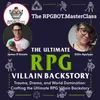
MASTERCLASS w/ James D'Amato and Dillin Apelyan - Trauma, Drama, and World Domination: Crafting the Ultimate RPG Villain Backstory
Every villain thinks they're the hero of their own story. This episode proves that sometimes they're right, and that's what makes them dangerous. Joined by James D'Amato and Dillin Apelyan, we set out to discuss villain backstories and somehow end up creating a supernatural cat-themed criminal mastermind based on Tyler's cat Cora. The result is equal parts masterclass, therapy session, and cautionary tale about what happens when a cat gains both motivation and opposable thumbs. Show Notes This week we welcome James D'Amato and Dillin Apelyan from the One Shot Podcast Network to discuss the art of creating memorable tabletop RPG villains. Drawing from their new book, The Ultimate RPG Villain Backstory Guide, we explore how Game Masters can move beyond simple evil-for-the-sake-of-evil antagonists and build villains with goals, beliefs, flaws, and histories that make them feel alive. The conversation examines why great villains are often reflections of the heroes themselves. We discuss how similar experiences can lead one character toward heroism and another toward villainy, and why understanding a villain's motivations often makes them more frightening rather than more sympathetic. A villain does not need redemption to be compelling. Sometimes knowing exactly why they became terrible only makes their choices more horrifying. To demonstrate the process, the group builds a villain from scratch using exercises from the book. Starting with the simple premise of Tyler's attention-seeking cat, we gradually construct a complex antagonist with needs, ideology, grudges, and a worldview that justifies increasingly terrible behavior. The exercise highlights how quickly a few well-designed prompts can transform a joke character into someone players would genuinely remember. We also discuss villain archetypes, the value of supporting indie RPG creators, experiences within the broader tabletop community, and how character motivations can create richer stories at the table. By the end of the episode, listeners will have practical tools for creating antagonists who challenge players emotionally as well as mechanically. Key Takeaways Great villains are people first and villains second. The most memorable antagonists have understandable desires, fears, and motivations. Even when their actions are unforgivable, players should be able to understand how they arrived at those decisions. A villain does not need to be sympathetic to be interesting. Learning a villain's history is not about excusing their actions. In many cases, understanding their choices makes them even more terrifying because they knowingly embraced a destructive path. Villains become stronger when they reflect the heroes. Some of the best antagonists share experiences, values, or struggles with the protagonists. The difference is often how they responded to those challenges, creating powerful thematic contrasts. Motivation matters more than evil. Players engage more deeply with villains who are pursuing something meaningful to them rather than simply causing destruction. Goals, needs, and personal stakes create stronger stories than random cruelty. Villain archetypes are tools, not restrictions. The book's archetypes can be combined to create unique antagonists. Mixing traits from multiple archetypes allows Game Masters to build villains that feel distinct and unpredictable. Corruption is often more interesting than conquest. Some villains do not just want to win. They want to prove they are right by pulling others into their worldview, tempting heroes and bystanders to compromise their values along the way. The people around a villain matter. Followers, allies, rivals, and victims help define who a villain is. These relationships create story hooks, reveal personality traits, and show the broader impact of the villain's actions. Small details create memorable antagonists. A villain's habits, grudges, insecurities, and personal beliefs often leave a stronger impression than their grand plans. Players remember personalities more than stat blocks. Building villains can be surprisingly collaborative. The episode's running joke about Cora evolves into a fully realized antagonist because everyone contributes ideas and follows the logical consequences of those choices. Villain creation often works best as an iterative process. Every campaign can benefit from a villain who feels alive. Whether your
Podzilla Summary coming soon
Sign up to get notified when the full AI-powered summary is ready.
Free forever for up to 3 podcasts. No credit card required.
Listen to This Episode
More from RPGBOT.Podcast
HTP BLADES IN THE DARK 4 ACTUAL PLAY - We Worship a Vampire Bat and We're Still the Good Guys
DND 5e ARTIFICER 1 (Remastered) - Crafting Chaos: A Guide to Building the Master Artisan
HTP BLADES IN THE DARK 3 ACTUAL PLAY - The Sewer Cult Learns About Police Corruption
SESSION RECAP: CROWN OF THE KOBOLD KING - Mythical Oklahoma has a Lich Problem
Get summaries like this every morning.
Free AI-powered recaps of RPGBOT.Podcast and your other favorite podcasts, delivered to your inbox.
Free forever for up to 3 podcasts. No credit card required.