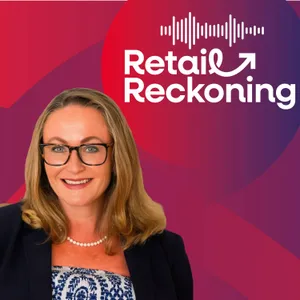
Free Daily Podcast Summary
Retail Reckoning - Retail Stories from Retail Frontlines: Daily Summaries Delivered
by Clare Bailey (Retail Champion)
Welcome to “Retail Reckoning,” the place where you get the real truth about what’s happening on Britain’s high streets. Hosted by Clare Bailey—aka the retail champion and basically a walking encyclopedia for all things retail—this show skips the sugar-coating and gets straight to the good stuff. Clare brings you sharp insights, honest stories, and no-fluff advice from people who've lived and breathed retail for years. Whether you love your local high street or just want to know what’s really going on behind the shop windows, you’re going to get plenty of sass, soul, and stories that actually matter. If you care about your town centre or just want the straight facts on retail, you’re in the right spot. Let’s get into it!
Latest Episodes
The most recent episodes — sign up to get AI-powered summaries of each one.
- Jun 22, 202611 min
Are You a Busy Fool? The Footfall Trap Every Retailer Falls Into
Have you ever caught yourself being a bit of a busy fool? The high street's packed, the pavements are full, the events are pulling in the crowds — so your footfall figures are up. But footfall doesn't save a high street. If sales aren't growing in line with visitor numbers, profits certainly won't be.Hi, I'm Clare Bailey, founder of The Retail Champion.In this episode I reflect on a really strong discussion I hosted for Public Policy Exchange on the future of UK high streets, alongside experts in placemaking, digital visibility and retail crime. I unpack why a busy high street can still be a struggling one — and what actually separates the places that thrive from the ones that simply look busy.This isn't about whether footfall matters. Of course it does. It's about what happens once people are through the door — and everything that happens long before they ever leave home.What We CoverWhy footfall is an outcome, not a strategyThe 'busy fool' trap — confusing activity and noise with real resultsWhy the customer journey now starts long before anyone arrives in townDiscoverability: customers can't buy from a business they can't findWhy the digital and physical worlds are one journey, not twoExperience, personality and purpose — being less beige and more brilliantCollaboration, place management and why momentum needs leadershipWhy safety is infrastructure, not an optional extraKey TakeawaysA busy high street can still be a struggling high streetFootfall isn't a strategy — it's the result of getting lots of other things rightMost businesses don't have a footfall problem, they have a discoverability problemThe digital and physical worlds cannot be separated — they're one customer journeyThriving places are an ecosystem of commercial, social, digital and human activityHealth is measured by repeat footfall, happy customers, safety and cleanliness — not raw numbersResources & LinksThe Retail Champion: www.retailchampion.co.ukOther episodes: retailreckoningpodcast.co.ukSubscribe to Retail Reckoning wherever you get your podcastsConnect & ShareIf this episode made you think differently about your high street, I'd love to know. Leave a review, share with a fellow retailer, or come and find me on social media. Let's keep the conversation going.
- Jun 15, 202622 min
Mastering Product Selection and Cash Flow: Retail's 'Stock Illusion' (Pt3)
Hi, I'm Clare Bailey, The Retail Champion - This is the 3rd and final part of our 'Stock Illusion' miniseries. In Part 1, we explored the customer-facing cost of over-ranging — the overwhelm, the choice paralysis, the damage to the shopping experience. Now it's time to go deeper.In Part 2 we looked at the operational reality of range creep — how it happens, why it feels like good management when it's actually slowly destroying your margins, and what data-driven decisions really look like when you're editing a range.In this episode, I focus on unravelling the persistent myths of retail stock management. A key theme is the misconception that more stock and greater choice automatically drives more sales and profitability. I explore the operational and commercial challenges that arise from bloated, poorly curated ranges—highlighting how years of incremental, unchallenged buying decisions often create complexity, cash flow issues, and diminished margins.What we cover:The Real Cost of Carrying MoreCommercial Clarity vs. Operational ChaosGood-Better-Best: Structuring for SuccessKey Takeaways:More choice doesn’t always mean more sales.A bloated range can erode margin, tie up cash, and confuse both customers and teams.The best retailers excel not just at launching new products, but at knowing when to let them go.Resources & Links• Free Stock Assessment & Mini Guide: retailchampion.co.uk/retail-playbooks• The Retail Champion: www.retailchampion.co.uk• Other episodes: retailreckoningpodcast.co.uk• Newsletter: retailreckoningpodcast.co.uk/newsletterSubscribe to Retail Reckoning wherever you get your podcasts.Connect & ShareIf this episode resonated — and if you recognised your own business in any of it — I'd love to hear from you. Leave a review, share it with a fellow retailer, or come and find me on social media. Let's keep the conversation going.
- Jun 8, 202618 min
Does Your Retail Business Have Range Creep: Retail's 'Stock Illusion' (Pt2)
Hi, I'm Clare Bailey, The Retail Champion.In Part 1 of the Stock Illusion series, we explored the customer-facing cost of over-ranging — the overwhelm, the choice paralysis, the damage to the shopping experience. Now it's time to go deeper.In this episode, I'm looking at the operational reality of range creep — how it happens, why it feels like good management when it's actually slowly destroying your margins, and what data-driven decisions really look like when you're editing a range.Because here's the truth: most businesses don't suddenly wake up with bloated ranges. It creeps in. A new line because a category's doing well. Another colourway because the grey one sells. A supplier introducing something low-risk. And before long, the range is running the business — not the other way around.What We Cover• Why range creep feels like good management until it really doesn't• The difference between sales performance and margin performance — and why it matters• Why retailers develop emotional attachments to products that are quietly killing their profitability• Product lifecycle management: every product has a beginning and an end• How exception reporting helps you catch decline before it's too late• Why e-commerce has made range discipline harder, not easier• What the best retailers do differently — continuous curation, not annual reviews• Why clarity gives control: and how a curated range is better commercially and operationally• A sneak preview of what's coming in Part ThreeKey Takeaways• Adding is easy. Editing is where the hard — and most valuable — work happens• Your top seller by sales volume might not be your most profitable product• Products don't get culled because of emotion — and that's costing you money• Good retail doesn't run on nostalgia. It runs on relevancy• The strongest retailers make as many quality exit decisions as entry decisionsResources & Links• Free Stock Assessment & Mini Guide: retailchampion.co.uk/retail-playbooks• The Retail Champion: www.retailchampion.co.uk• Other episodes: retailreckoningpodcast.co.uk• Newsletter: retailreckoningpodcast.co.uk/newsletterSubscribe to Retail Reckoning wherever you get your podcasts.Connect & ShareIf this episode resonated — and if you recognised your own business in any of it — I'd love to hear from you. Leave a review, share it with a fellow retailer, or come and find me on social media. Let's keep the conversation going.
- Jun 1, 202624 min
More stock, more problems: Retail's 'Stock Illusion' (Pt1)
Hi, I’m Clare Bailey, The Retail Champion.This episode kicks off a brand new three-part miniseries called "The Stock Illusion" — and if you’ve ever felt like you’re drowning in stock but still struggling to grow your sales, this is the conversation you need to hear.I’m tackling one of the most dangerous assumptions in retail today: that more stock leads to more sales. Spoiler — it doesn’t. In fact, for many retailers, the opposite is true.From the CIPS insight that “safety stock replaces information in the supply chain,” to the very real psychological impact of too much choice on your customers, this episode unpacks why range bloat, just-in-case buying, and the obsession with availability are quietly eroding margins across retail — regardless of business size.What We CoverWhy availability and demand are not the same thingThe difference between a stock problem and a ranging problemHow safety stock creates a false sense of securityWhy customers are experiencing choice paralysis — and walking awayThe hidden costs of adding “just one more” SKU to your rangeWhy independent retailers often get this right when larger ones don’tThe one question every retailer should ask about every product on their shelfA preview of Parts 2 and 3 of The Stock IllusionKey TakeawaysMore products do not equal more sales — they often mean more confusionSafety stock doesn’t protect you; it replaces the data you should have been usingCurated ranges outperform bloated ones in both conversion and profitabilityClarity is a commercial advantage, not just an aesthetic oneThe retailers who will win are those with the clearest ranges — not the biggestResources & LinksFree Stock Audit Assessment & Mini Guide: www.retailchampion.co.uk/retail-playbooksThe Retail Champion: www.theretailchampion.co.ukAll episodes: retailreckoningpodcast.co.ukSubscribe to the newsletter: retailreckoningpodcast.co.uk/newsletterIf this episode made you look at your range differently, I’d love to know. Leave a review, share it with a fellow retailer, or come and find me on social media. Parts 2 and 3 are coming — don’t miss them.
- May 25, 202613 min
Trust vs Reward: What Real Loyalty Actually Looks Like
Let me ask you something that might make you uncomfortable. You probably have a loyalty programme. Maybe you've got an app, special offers, points, a rewards card. But if your customers are only coming back because of those incentives — is that actually loyalty?Hi, I'm Clare Bailey, founder of Retail Champion.In this third and final episode of the Loyalty Illusion mini-series, I get to the heart of the biggest question in retail retention right now: what's the difference between driving behaviour and earning trust? And why does it matter so much?If loyalty programmes were really working, we'd expect to see more loyal customers. But I'd argue we have more loyalty programmes than ever — and less true loyalty. That's the contradiction at the heart of modern retail.What We CoverThe loyalty illusion defined — and why it's a problem for your businessWhy rewards create action but trust creates commitmentThe critical distinction between a customer who 'shops with you' and one who 'chooses you'The three pillars of trust-building: Clarity, Consistency, and ExperienceWhy dynamic pricing can quietly destroy customer trustThe path forward: using behaviour-driving mechanics for acquisition, then converting to trust-based retentionWhy the retailers who will win are those who understand the differenceKey TakeawaysLoyalty hasn't disappeared — but it has been dilutedRewards can be copied; trust cannotClarity, consistency, and experience are your most durable competitive advantagesDriving behaviour is short-term — trust builds a business that lastsA customer who chooses you is worth far more than one who merely shops with youResources & LinksThe Retail Champion: www.theretailchampion.co.ukFree Download — The Loyalty Illusion Mini Guide: retailreckoningpodcast.co.uk/retail-playbooksRetail Reckoning Newsletter: retailreckoningpodcast.co.uk/newsletterAll Episodes: retailreckoningpodcast.co.ukConnect & ShareIf this episode — or this series — has made you think differently about loyalty in your business, I'd genuinely love to hear from you. Leave a review, share with a fellow retailer, or come and find me on social media. Let's keep this conversation going.
- May 18, 202612 min
Gen Z: They're Not Disloyal. They're Just Not Yours
You've heard it said that Gen Z are disloyal. They switch brands constantly, they don't commit, they jump around. But what if that's the wrong lens entirely?Hi, I'm Clare Bailey, founder of Retail Champion.This is Part 2 of my three-part miniseries, "The Loyalty Illusion" — and in this episode I dig deep into what's really driving Gen Z behaviour. Spoiler: it's not disloyalty. What We CoverWhy 'disloyal' is the wrong word for Gen Z — and what's actually going onWhy gamification creates engagement but not attachment — the pseudo-loyalty trapWhy the new competitive battlefield is something you've perhaps not consideredWhat this means practically for your retail or eCommerce strategy right nowComing next week...Episode 3 will answer the big question: what actually builds real, lasting connection with this generation?Resources & LinksDownload the free Loyalty Illusion Guide: retailchampion.co.uk/retail-playbooksThe Retail Champion: www.retailchampion.co.ukAll episodes: retailreckoningpodcast.co.ukSubscribe to Retail Reckoning wherever you get your podcastsConnect & ShareIf this episode made you rethink your Gen Z strategy, leave a review, share with a fellow retailer, or find me on social media. The conversation is just getting started — and Episode 3 is where it all comes together.
- May 11, 202610 min
The Loyalty Illusion: Are Your Customers Actually Loyal — Or Just Trained?
Hi, I'm Clare Bailey, founder of The Retail Champion.Here's an uncomfortable truth I want to put on the table right at the start of this new series: most retailers think they've got loyal customers. But when you look more closely — at the apps, the points, the personalised offers, the data being harvested — you start to wonder: is that actually loyalty? Or is it just a very efficient system of behavioural compliance?This is episode one of a three-part series — The Loyalty Illusion — and in this episode, I'm challenging what loyalty has become. Not what it used to be. What it is now. And the uncomfortable truth is that for most retailers, what they're calling loyalty is actually something quite different.What We CoverWhy repeat purchases and loyalty scheme usage doesn't mean your customers are actually loyalHow the relationship between customer and retailer shifted from emotional to conditionalThe real reason supermarkets want you on their loyalty apps — hint: it's not about rewarding youWhy modern loyalty programmes may actually be training disloyaltyThe coffee card test — and what it reveals about how shoppers really behaveThe Pret exception: what genuine brand affinity actually looks likeTwo models of loyalty in retail today, and which one actually builds something lastingThe one question every retailer needs to answer about their own loyalty strategyKey TakeawaysMore loyalty schemes than ever doesn't mean more loyaltyCompliance and loyalty are not the same thingIf your programme disappeared tomorrow and customers left, you never had loyaltyTransactional programmes create dependency, not connectionReal loyalty is emotional — and most businesses have stopped building itResources & LinksThe Retail Champion: www.retailchampion.co.ukFree Loyalty Illusion Mini Guide: retailreckoningpodcast.co.uk/retail-playbooksAll episodes: retailreckoningpodcast.co.ukSubscribe to Retail Reckoning wherever you get your podcastsConnect & ShareIf this episode has made you question your own loyalty strategy, I'd love to know. Leave a review, share it with a fellow retailer, or come and find me on social media. And look out for episodes two and three — because this is just the beginning of a conversation that I think retail really needs to have.
- May 4, 202618 min
Is Your Retail Business Stuck in the Middle? Here's How to Fix That
Hi, I'm Clare Bailey, founder of The Retail Champion.This is the final episode of my three-part series on discounting, data, and escaping the middle market trap — and this one's all about the fix.If you've been following parts one and two, you'll recognise this: you're not the cheapest in your market, and you're not the most premium either. Your promotions don't always land. Your products are good, but customers don't always see the difference. Margin feels under constant pressure. And every now and then you find yourself thinking — why does all this still feel so hard?You're in the middle. And the uncomfortable truth is this: the middle is no longer a strategy.In this episode, I break down exactly why the middle has stopped working, what the Aldi effect means for your business, and — most importantly — what you can do to fix it. This isn't about more data or more panicky promotions. It's about clarity, confidence, and choosing your lane.What We CoverWhy being in the middle used to work — and why it no longer doesThe Aldi effect and how retail polarisation is reshaping every categoryWhy most mid-market businesses don't actually have a price problemHow to choose your lane: competing on price vs. experience and expertiseFixing your offer: editing your range and tightening your price architectureGiving customers a reason to choose you beyond priceMaking it easy to buy — and why friction kills conversionKey TakeawaysThe middle isn't a strategy — it's usually the result of a lack of strategyYou can't be everything to everyone anymore — but you can be everything to someoneCompeting on price is a race to the bottom that small businesses can't winClarity of positioning beats trying to do everythingWhen you can answer 'what do we want to be known for?' — everything else gets easierResources & LinksGet our playbooks: https://www.retailchampion.co.uk/retail-playbooks/Retail Clarity Scorecard Quiz: subscribe to the newsletter https://retailreckoningpodcast.co.uk/newsletterOther episodes: retailreckoningpodcast.co.ukSubscribe: retailreckoningpodcast.co.uk/newsletterContact Clare: clare.bailey@retailchampion.co.ukConnect & ShareIf this episode made you think differently about your positioning, I'd love to hear from you. Leave a review, share with a fellow retailer, or find me on social media. Let's keep the conversation going.
About Retail Reckoning - Retail Stories from Retail Frontlines
Welcome to “Retail Reckoning,” the place where you get the real truth about what’s happening on Britain’s high streets. Hosted by Clare Bailey—aka the retail champion and basically a walking encyclopedia for all things retail—this show skips the sugar-coating and gets straight to the good stuff. Clare brings you sharp insights, honest stories, and no-fluff advice from people who've lived and breathed retail for years. Whether you love your local high street or just want to know what’s really going on behind the shop windows, you’re going to get plenty of sass, soul, and stories that actually matter. If you care about your town centre or just want the straight facts on retail, you’re in the right spot. Let’s get into it!
Customized Recaps
AI-powered recaps with compact key takeaways, quotes, and insights.
Straight to Your Inbox
Get key takeaways from Retail Reckoning - Retail Stories from Retail Frontlines in a 5-minute read.
Save Hours Every Week
Stay current on your favorite podcasts without falling behind.
Frequently Asked Questions
What is Podzilla's Retail Reckoning - Retail Stories from Retail Frontlines daily summary?
It's a free AI-powered email that summarizes new episodes of Retail Reckoning - Retail Stories from Retail Frontlines as soon as they're published. You get the key takeaways, notable quotes, and links & mentions — all in a quick read.
How does the Retail Reckoning - Retail Stories from Retail Frontlines podcast summary work?
When a new episode drops, our AI transcribes and analyzes it, then generates a personalized summary tailored to your interests and profession. It's delivered to your inbox every morning.
Is this an official Retail Reckoning - Retail Stories from Retail Frontlines product?
No. Podzilla is an independent service that summarizes publicly available podcast content. We're not affiliated with or endorsed by Clare Bailey (Retail Champion).
Can I get summaries of other podcasts too?
Absolutely! The free plan covers up to 3 podcasts. Upgrade to Pro for 15, or Premium for 50. Browse our full catalog at /podcasts.
How often does Retail Reckoning - Retail Stories from Retail Frontlines release new episodes?
Retail Reckoning - Retail Stories from Retail Frontlines publishes weekly. Our AI generates a summary within hours of each new episode.
What topics does Retail Reckoning - Retail Stories from Retail Frontlines cover?
Retail Reckoning - Retail Stories from Retail Frontlines covers topics including News, Business, Marketing, Entrepreneurship. Our AI identifies the specific themes in each episode and highlights what matters most to you.
Start getting Retail Reckoning - Retail Stories from Retail Frontlines summaries tomorrow morning.
Free forever for up to 3 podcasts. No credit card required.
Free forever for up to 3 podcasts. No credit card required.