Free Daily Podcast Summary
Eric Dingler Leadership Podcast: Daily Summaries Delivered
by Eric Dingler
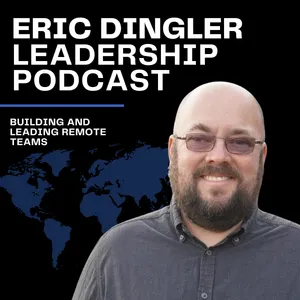
You built a team so you wouldn't have to do everything yourself. So why does every decision still land on your desk?The Remote Team Leadership Podcast helps business owners build and develop remote teams that bring decisions ready to approve, not more questions to answer. Host Eric Dingler shares the frameworks and methods he uses with his own remote team and with the owners he coaches, drawn from more than 25 years of building and leading teams, from nonprofit work to launching new organizations to running his own agency.Each week you'll get practical ways to delegate decisions (not just tasks), set clear expectations across time zones, hold remote employees accountable without micromanaging, and step out of the day-to-day without your business stalling.If you already have people on your team but you're still the one everyone waits on, this show is for you. Take control of your time by developing a team that makes decisions you trust.Lead better to live better.
Latest Episodes
The most recent episodes — sign up to get AI-powered summaries of each one.
- 1 weeks ago55 min
61) Why Delegation Fails: 4 Things to Fix on Your Remote Team
You handed work to your team, and somehow it keeps coming back to your plate, so you have started to wonder whether you hired the wrong people. In this episode, Eric Dingler walks through the four things that break when delegation fails, in the order he diagnoses them with the owners he consults: clarity, trust, systems, and people, with real examples from his own agency, including single statement job descriptions, the "trust but verify" checkpoint system, and the QUACK quality assurance checklists. You will leave knowing which of the four is your actual bottleneck, and why nine out of ten "people problems" turn out to be a broken system you can fix. Key takeaways Delegating doesn't mean giving tasks. It means giving responsibilities. To be clear is to be kind. Clarity is the first thing that breaks in delegation, and the first thing to check. If every emergency lands on your desk, you haven't developed a team. You have helpers. Trust but verify means checkpoints and quality control systems, not micromanagement or surveillance. Nine out of ten times it isn't a people problem. Never blame the person first. Always start with the system. Full episode page, transcript, and Q&A: https://ericdingler.com/podcast/61-why-delegation-fails More from Eric at EricDingler.com
- 2 weeks ago38 min
60) How to Use AI Without Isolating Your Remote Team
Your team is using AI more every week, and nobody has decided what it should and should not do. Eric walks through the nine guardrails his agency is building into its AI operating core values, from refusing to name or humanize AI and never accepting "the AI did it," to quality-checking outputs and reinvesting the time AI frees up into people instead of a faster treadmill. You will leave with a clear starting point for writing your own AI core values, so the tool grows your profit and your team instead of quietly isolating them. Key takeaways People make decisions; machines do work, so AI never makes a decision without human approval. AI is a tool, not a teammate, and naming it or calling it "he" or "she" erodes your judgment of its output. Just because AI could do something does not mean it should, especially when it replaces human contact on a remote team. If you have used AI for six months without growing revenue or profit, you are playing with AI, not leveraging it. Reinvest the margin AI creates into people, not a faster treadmill. Full episode page, transcript, and Q&A: https://ericdingler.com/podcast/60-use-ai-without-isolating-team/ More from Eric at EricDingler.com
- 3 weeks ago26 min
59) How to Get Your Remote Team to Make Decisions You Trust
You hired a team to take things off your plate, yet every decision still lands back on your desk. Eric walks through 1-3-1 (one problem, three options, one recommendation) and shows why the "and why" behind the recommendation, tied to a core value, is the part that makes it work. You'll walk away with a shared language for your team's questions and a clear path to the day you can tell them, "Just keep making decisions." Key takeaways Every question your team brings should come as one problem, three options, and the one they recommend, and why. The why matters more than the what, so listen for a core value behind every recommendation. If your core values don't work as a decision filter, you don't have the right core values in place yet. Always consider the third option, because it often makes the first two obviously the wrong choice. Leadership doesn't happen in the absence of relationship, so coach the why in person instead of handing it to a document or an AI. Full episode page, transcript, and Q&A: https://ericdingler.com/podcast/59-remote-team-decisions-you-trust/ More from Eric at EricDingler.com
- Feb 13, 202619 min
58) 4 Mindsets for Leading Through Failure
You have hit one of those seasons where plans fall apart, revenue dips, the team struggles, and it all seems to go wrong at the same time. In this episode Eric walks through four specific mindsets for leading through setbacks: you can't grow what you won't own, failure is a classroom and not a courtroom, curiosity always outgrows criticism, and growth requires the right environment. You will leave with a way to think about your next failure before it arrives, so you respond from ownership and curiosity instead of blame and self-criticism. Key takeaways You can't grow what you won't own, and ownership is where leadership begins. Failure is not a courtroom you get condemned in, it is a classroom where you learn what to do next. A fear mindset sees failure as final, but confidence sees failure as feedback. If you want momentum after a setback, get curious before you get critical. You grow to the level of the conversations you have most often, so the right environment is not optional. Full episode page, transcript, and Q&A: ericdingler.com/podcast/4-mindsets-for-leading-through-failure More from Eric at EricDingler.com
- Feb 6, 202626 min
57) How to Develop New Leadership Skills and Habits
You can see the leader you want to become, but the distance between that picture and how you actually show up feels too big to leap in one move. In this episode, Eric walks through the exact personal development system he has run for years: working on three habits at a time, reviewing them daily for ten to fifteen minutes, rehearsing hard conversations out loud (and now with AI), and opening feedback loops with both a coach and his own team. You will leave with a repeatable routine for changing how you respond as a leader, instead of just wishing you were better at it. Key takeaways Build a bridge, do not attempt the leap. The gap between who you are and who you want to be is closed in pieces, not in one heroic jump. Work on three habits at a time and review them daily for ten to fifteen minutes, evaluating where you practiced and where you missed. Rehearse hard conversations out loud before they happen, including AI role play, so your new response is ready instead of your old reflex. When you solve every problem for your team, you make yourself the bottleneck. Train people to bring you three options instead. Open a feedback loop by asking your team what has changed about you and what is one way you could lead better. Full episode page, transcript, and Q&A: ericdingler.com/podcast/57-develop-leadership-skills More from Eric at EricDingler.com
- Dec 11, 202555 min
56) When and How to Hire Help So You Can Stop Doing It All
Hiring help feels risky when you are convinced it is just faster to do everything yourself, and the one time you tried it, it did not work. Eric walks through an eight step process for your first one to four hires, including how to decide what to take off your plate, the 10-10-80 rule for the time it frees up, and the RODD System of Recruit, Onboard, Delegate, and Develop. You will finish knowing how to write a job description that screens out the wrong applicants, where to actually find the right people, and why micromanaging points to a broken system rather than a bad hire. Key takeaways The task that drains you is often the one that gives someone else energy, so the first move is naming what to take off your plate. For every block of hours you free up, give ten percent to yourself, ten percent to studying leadership, and eighty percent to revenue-generating work. A specific job description with built-in screening cuts roughly seventy-five percent of applicants and removes the wrong people before you ever interview them. When you feel the urge to micromanage, the problem is usually the unclear map you handed your team, not the route they took. If your business would stall the moment you disappeared for ten days, the bottleneck is your leadership, not your people. Full episode page, transcript, and Q&A: ericdingler.com/podcast/56-when-to-hire-help More from Eric at EricDingler.com
- Nov 13, 202522 min
55) Build a Small Team With Big Results (5 Steps)
If you're leading a team of one to three people and wondering when the work is finally going to match the vision, the problem might not be the size of your team. In this episode, Eric Dingler walks through five principles for building small team output that rivals larger operations, covering mindset, clarity, systems design, strategic focus, and how to develop the people around you. By the end, you'll have a framework for leading with what you have instead of waiting for a team you think you need. Key takeaways Comparison robs you of momentum. Stop measuring your beginning against someone else's middle. Clarity is the great equalizer. A small team with clear direction will always outperform a larger team without it. Build your systems for the stage you're headed into, not the stage you're in. Communicate as if you're still small. Do less with more. Focus your team on fewer things and demand greater excellence in those things. Develop everyone on your team as a leader. An abundance mindset here is a competitive advantage. Full episode page, transcript, and Q&A: ericdingler.com/podcast/55-build-a-small-team More from Eric at EricDingler.com
- Nov 3, 202533 min
54) The Real Cost of a Bad Hire on Your Remote Team
If you have ever rushed to hire because the workload hit a breaking point, you already know the cost can go well beyond the paycheck. In this episode, Eric walks through the real math behind a wrong hire at every pay rate, introduces the principle of hiring help before headcount when urgency strikes, and lays out his three-interview system built on character, chemistry, and competency. You will walk away knowing exactly how to slow down the hiring process in a way that protects your business and actually gets you the right person. Key takeaways A wrong hire at even three dollars an hour can become a five thousand dollar mistake after six months, and the number scales up fast from there. When urgency hits, hire help, not headcount; bring in a freelancer or contractor while you search for the right long-term person. It is always a systems problem, never a people problem; if you cannot find good candidates, fix your process before you blame the talent pool. Hire in this order: character first, chemistry second, competency third, because you cannot train someone to be a decent human being. A test project before the official offer is not a hoop to jump through; it is the clearest signal you will get that someone is the right fit. Full episode page, transcript, and Q&A: ericdingler.com/podcast/54-cost-of-a-bad-hire More from Eric at EricDingler.com
Get Eric Dingler Leadership Podcast summaries in your inbox
Free AI-powered daily recaps. Key takeaways, quotes, and mentions — in a 5-minute read.
Get Free Summaries →Free forever for up to 3 podcasts. No credit card required.
You Might Also Like
Listeners also like.

Your Brand Amplified
Explores the strategies and mindsets of successful entrepreneurs in business growth, marketing, and personal branding.

The Entrepreneur DNA
Entrepreneurs share lessons on building businesses and personal growth through real experiences and mistakes.
Bred To Lead
Leadership is developed through real-world turnarounds, early warning signs, and people-first habits that prevent organizational decline.
Team Lead Talks
Andrew Becker and guests discuss real estate business strategies, scaling, and market trends with industry leaders.
One Part Lion - One Part Lamb with Stephen Scoggins
Leadership advice for founders balancing success, integrity, and faith through interviews with entrepreneurs.
Unbossing
Conversations with business and tech leaders about redefining leadership by unlearning outdated rules in times of change.

The Modern Manager
A manager shares practical tools and expert insights on leadership, feedback, delegation, and team culture.

Right About Now - Legendary Business Advice
Raw business insights from founders and industry leaders, revealing real wins, failures, and actionable strategies without the fluff.

Coaching Inc with Tom Krol
Teaches coaches and consultants how to generate consistent leads and increase income using proven, efficient marketing strategies.

Do Small Business Like a Big Boss Podcast
A lawyer offers practical legal and business strategies for small business owners to scale and compete effectively.

Amplify Speakers Podcast
Discusses mindset, leadership, and resilience with top speakers, athletes, and change-makers about their personal journeys and impact.

The Mindful Enterprise: Spirituality and Success for the Modern Leader
Examines how mindfulness and self-awareness can reshape leadership and success in modern corporate environments.
About Eric Dingler Leadership Podcast
You built a team so you wouldn't have to do everything yourself. So why does every decision still land on your desk?The Remote Team Leadership Podcast helps business owners build and develop remote teams that bring decisions ready to approve, not more questions to answer. Host Eric Dingler shares the frameworks and methods he uses with his own remote team and with the owners he coaches, drawn from more than 25 years of building and leading teams, from nonprofit work to launching new organizations to running his own agency.Each week you'll get practical ways to delegate decisions (not just tasks), set clear expectations across time zones, hold remote employees accountable without micromanaging, and step out of the day-to-day without your business stalling.If you already have people on your team but you're still the one everyone waits on, this show is for you. Take control of your time by developing a team that makes decisions you trust.Lead better to live better.
Customized Recaps
AI-powered recaps with compact key takeaways, quotes, and insights.
Straight to Your Inbox
Get key takeaways from Eric Dingler Leadership Podcast in a 5-minute read.
Save Hours Every Week
Stay current on your favorite podcasts without falling behind.
Frequently Asked Questions
What is Podzilla's Eric Dingler Leadership Podcast daily summary?
It's a free AI-powered email that summarizes new episodes of Eric Dingler Leadership Podcast as soon as they're published. You get the key takeaways, notable quotes, and links & mentions — all in a quick read.
How does the Eric Dingler Leadership Podcast podcast summary work?
When a new episode drops, our AI transcribes and analyzes it, then generates a personalized summary tailored to your interests and profession. It's delivered to your inbox every morning.
Is this an official Eric Dingler Leadership Podcast product?
No. Podzilla is an independent service that summarizes publicly available podcast content. We're not affiliated with or endorsed by Eric Dingler.
Can I get summaries of other podcasts too?
Absolutely! The free plan covers up to 3 podcasts, any in the catalog. Basic raises that to 15, Pro to 40 and Max to 100. Browse our full catalog at /podcasts.
How often does Eric Dingler Leadership Podcast release new episodes?
Eric Dingler Leadership Podcast publishes biweekly. Our AI generates a summary within hours of each new episode.
What topics does Eric Dingler Leadership Podcast cover?
Eric Dingler Leadership Podcast covers topics including Business, Management, Entrepreneurship. Our AI identifies the specific themes in each episode and highlights what matters most to you.
Start getting Eric Dingler Leadership Podcast summaries tomorrow morning.
Free forever for up to 3 podcasts. No credit card required.
Free forever for up to 3 podcasts. No credit card required.