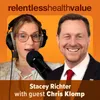
Why Avoidable ER Visits Aren't the Real Cost Problem: Revisiting Our 2016 Interview With HHS Nominee Chris Klomp
Emergency Department High Utilizers and Real-Time Care Coordination, With Chris Klomp (Episode 532) Today we are dipping into the archives for an essential replay from 2016, one decade ago, featuring Chris Klomp back when he served as CEO of Collective Medical, and now nominated to serve as deputy secretary of the Department of Health and Human Services (HHS), a nearly $2 trillion federal health apparatus. In this conversation, Klomp explains why emergency medicine is only 2 to 4% of total U.S. healthcare cost, so avoidable ED spend can't be more than about 0.8 to 0.9% of total spend, and why the emergency department is still the natural choke point for finding complex, high-risk patients. Listening back is a rare, candid preview of the operational philosophy which may now shape Chris Klomp's view on health policy. WHAT YOU'LL LEARN ✅ Why Klomp said in 2016 that emergency medicine is only 2 to 4% of total U.S. healthcare cost, versus about 6% for plan sponsors now ✅ How the ED works as a "clearinghouse" for physical, mental, behavioral, and social complexity, and why the goal is the right care setting, not stopping the visit (EMTALA) ✅ How a Pacific Northwest clinical group used real-time data and coordinated care plans to cut hospital readmission rates by close to 40% ✅ Klomp's four building blocks: real-time data (starting with an ADT feed, since claims data runs 90 to 180 days late), risk analytics, communication inside the EHR workflow, and community-wide collaboration ✅ How whole-person care took "Ron" from 23 ED visits in a month across seven hospitals to 3 at peak, and why 78% of ED high utilizers have physical, mental, and behavioral health comorbidities WHY THIS MATTERS With the nomination of Chris Klomp to serve as deputy secretary of HHS, all eyes are kind of on how he plans to manage a nearly $2 trillion federal health apparatus. The emergency department is a critical choke point through which complex, often high-risk patients inevitably pass. Not dealing effectively with these larger community issues costs everyone more than dealing with them effectively would cost, and if the country had done more of what Klomp describes ten years ago, it makes you wonder how things would be different now. MENTIONED IN THIS EPISODE EP467 with Stacey Richter: Apple Podcasts | Spotify | Other Apps EP495 with Mick Connors, MD: Apple Podcasts | Spotify | Other Apps EP464 with Al Lewis: Apple Podcasts | Spotify | Other Apps Study: Research from Peter Smulowitz, MD, MPH; Leah Honigman, MD; and Bruce Landon, MD, MBA EP322 with Monica Lypson, MD, MHPE: Apple Podcasts | Spotify | Other Apps EP473 with Kenny Cole, MD: Apple Podcasts | Spotify EP391 with Scott Conard, MD: Apple Podcasts | Spotify | Other Apps === LINKS === 🔗 Show Notes with all the mentioned links and article: Show Notes ✉️ Enjoy this podcast? Subscribe to the free weekly newsletter 🫙 Support the podcast with a small donation to the <a href= "https://relentlesshealthvalue.com/join-the-relen
Podzilla Summary coming soon
Sign up to get notified when the full AI-powered summary is ready.
Free forever for up to 3 podcasts. No credit card required.
Listen to This Episode
More from Relentless Health Value

EP531: Slaying the Three-Headed Monster of Health Plan Networks, With Evan Anderson

A Wildly Underappreciated Point: Overpaying for Infusions Means Overpaying for Stop-Loss Coverage, With Jake Velie and Keith Hartman, RPh

How Stark Law, Stipends, and Noncompetes Drive Hospital Consolidation, With Eric Bricker, MD

EP528: The Current State of Primary Care—Inevitable or Fixable? Will It Be Private Equity to the Rescue? With Yashaswini Singh, PhD
Get summaries like this every morning.
Free AI-powered recaps of Relentless Health Value and your other favorite podcasts, delivered to your inbox.
Free forever for up to 3 podcasts. No credit card required.