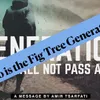
Who is the Fig Tree Generation?
Who is the Fig Tree Generation?Will a "Fig Tree" Generation as asserted by Amir Tsarfati, see the return of Christ?Or perhaps the question we should really ask is: Is there a fig tree generation?In this episode, I review an often repeated assertion by those who believe in a futurist interpretation of the Olivet discourse (Mt 24, Mk13, Lk 21), that there is a “fig tree” generation that will see the return of Christ. In this instance, well-known preacher Amir Tsarfati speaks on this topic, and I pull back the veneer and demonstrate that he is being being true to the text.Here are the notes & comments from the podcast for those who prefer to read.After watching the whole video/sermon - this clip represents the central point he made. Please feel free to watch the whole sermon on Youtube for yourself.So what are the assertions he has made?He interprets the "fig tree parable" as some special event 2000 years in the future of Jesus disciples, when the nation of Israel will be restored to it's original nationhoodHe then says "You" (in the video he points at the audience) are the generation of people who according to Jesus's words "see" this special fig tree based restoration of the nation of Israel and therefore:When Jesus says "this generation" - he means the generation of people who are alive to witness the restoration of the nation of Israel and they will basically be the ones who experience the second coming of Christ.The all important question now is: Is this what Jesus actually said?To assist us in answering this question, let's first read the passage in all three renditions of the Olivet Discourse: Matthew 24, Mark 13 and Luke 21."From the fig tree learn its lesson: as soon as its branch becomes tender and puts out its leaves, you know that summer is near. So also, when you see all these things, you know that he is near, at the very gates. Truly, I say to you, this generation will not pass away until all these things take place" - Mt 24:32-34"From the fig tree learn its lesson: as soon as its branch becomes tender and puts out its leaves, you know that summer is near. So also, when you see these things taking place, you know that he is near, at the very gates. Truly, I say to you, this generation will not pass away until all these things take place" - Mk 13:28-30"Look at the fig tree, and all the trees. As soon as they come out in leaf, you see for yourselves and know that the summer is already near. So also, when you see these things taking place, you know that the kingdom of God is near. 32 Truly, I say to you, this generation will not pass away until all has taken place" - Lk 21:29-32What are then some of the important questions we must ask to ascertain what is being said?- (1) What is the parable about, i.e. what is it's central message?- (2) What was Jesus trying to say when he referred to the parable by "So also when you see"?- (3) What did Jesus mean by "all these things"? Was he referring to the parable or the events just detailed before launching into this parable?- (4) What was Jesus's audience, i.e. who was in view with the pronoun "You"?- If we can answer these four questions we can I think quite clearly demonstrate who was in view with the term "this generation".(1) What was the parable about ?- Tsarfati asserted that the parable is about the restoration of the nation of Israel. In the full sermon he states that the Fig Tree is used as representation of Israel. I would suggest he is engaging in "eisegesis" here since this parable does not say anything about the restoration of a dead tree in the long distant future, even if Israel was meant with the tree, the rest has to be quite literally imposed onto the parable.Let's break it down and also see what Jesus clearly tells us:- "From the fig tree learn its lesson" - so we are to learn a specific lesson from the tree- "As soon as its branch becomes tender and puts out its leaves, you know that summer is near"- if we read this in plain English it simply means two things:- "When the tree's branch becomes tender, it put's out its leaves"- "When it's leaves are out, we can know that summer is near"- NB: Please note here that the parallel passage in Luke's gospel mentions "and all the trees".- Given that Luke primarily wrote to a Gentile audience who may or may not know about "fig trees"the addition of "all trees" is a pretty sane give away that Jesus's isn't making any specific assertion about a Fig tree per say and therefore something specific to Israel only, but rather a straightforward and simple assertion that is true of all trees!- When trees put out their leaves, you know the summer is near!- This leads us straight into our next question:(2) W
Podzilla Summary coming soon
Sign up to get notified when the full AI-powered summary is ready.
Free forever for up to 3 podcasts. No credit card required.
Listen to This Episode
More from Reformed Apologist - Rational Answers for Real Questions Podcast
Is the Abrahamic Covenant Unconditional?
Why Atheism Cannot Be True

Greed, Money, Tithing and

The Six Days of Creation
Get summaries like this every morning.
Free AI-powered recaps of Reformed Apologist - Rational Answers for Real Questions Podcast and your other favorite podcasts, delivered to your inbox.
Free forever for up to 3 podcasts. No credit card required.