Free Daily Podcast Summary
Reasonable Faith Podcast: Daily Summaries Delivered
by William Lane Craig
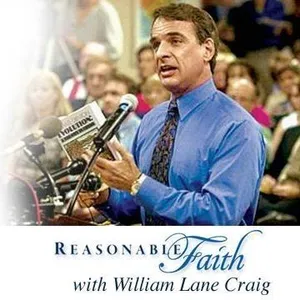
Reasonable Faith is a conversational program dealing with the most important apologetic questions of our day.
Latest Episodes
The most recent episodes — sign up to get AI-powered summaries of each one.
- 3 days ago5 min
The Spirit of the Logos? (QoW #1009)
A listener who's been working through Dr. Craig's Systematic Philosophical Theology asks whether it's more accurate to say Jesus Christ is "the Spirit of the Logos" united to a human body, rather than "the soul of the Logos," pointing to passages describing God as spirit and drawing an analogy to how a human spirit unites to a body. Dr. Craig first corrects the premise: his actual view is that the Logos is the soul of Jesus, not that the Logos possesses a soul. He then explains why he avoids "spirit" language here, it risks blurring the incarnation with the Holy Spirit's indwelling or even demonic possession, when in fact the incarnation is a unique union unlike either.
- 3 days ago9 min
Is God Still Around? (QoW #1008)
A listener from the UK argues that the Kalam cosmological argument has a fatal flaw: even if it proves God created the universe, that doesn't prove God still exists today, any more than a house proves its builder is still alive. Dr. Craig responds by pointing to arguments for a metaphysically necessary being (from the Leibnizian cosmological, moral, and ontological arguments), which by definition cannot go out of existence. He also explains why the Kalam functions as one link in a cumulative case rather than standing alone, and closes with the resurrection of Jesus as public, historical evidence that God remains active in the world.
- 1 weeks ago18 min
Apatheism and the Unexamined Life
Journalist Jonathan Rauch's Atlantic essay "Let It Be" argued that apatheism, simply not caring whether God exists, is a mark of civilizational progress, making society safer and less prone to religious conflict. Philosopher Paul Copan disagrees, calling it a sign of decline. Kevin and Dr. Craig work through the disagreement: what's actually at stake if the question of God goes unexamined, whether a secular society can sustain objective meaning and purpose without a theistic foundation, and whether the altruism and self-sacrifice inspired by Christian belief have any real secular equivalent. Dr. Craig also revisits his case for the absurdity of life without God, drawing on thinkers from Pascal to Nietzsche, and argues that an atheistic worldview cannot be lived out both consistently and happily. He closes with thoughts on how Christians can awaken genuine curiosity about God in a culture that has simply stopped caring.
- 1 weeks ago8 min
Inevitable Sin? (QoW #1007)
A listener writes in with a philosophical challenge to the coherence of Christian doctrine: if God knowingly creates the exact conditions under which people will sin, how can he justly hold them responsible for sinning, and how can Christ's atonement make sense as a remedy for a failure that was effectively built into the system? Dr. Craig traces the problem to a hidden assumption in the question: theological necessitarianism, the idea that circumstances which make sin likely also make it inevitable. He argues that God's providence creates freedom-permitting circumstances, not deterministic ones, citing 1 Corinthians 10:13 on God's promise to supply a way of escape from every temptation. Craig also draws a key distinction between moral perfection, which he grants is impossible for finite creatures, and simply living without sin, using Adam and Eve's pre-fall innocence as an example of the latter without the former. He closes by addressing apostasy directly, denying that God ever places anyone in circumstances they are unable to handle.View the full Question of the Week here!
- 2 weeks ago31 min
Eternal Generation of the Son: Dr. Craig Responds to the Backlash
A clip of Dr. William Lane Craig discussing the eternal generation of the Son went viral a few weeks ago, picked up by Protestia and drawing heresy accusations from across the theological world. In this episode, Kevin puts those criticisms to Dr. Craig directly.Dr. Craig clarifies what he is and isn't claiming: he denies eternal generation is taught in Scripture, but affirms Christ's full deity and the rest of the Nicene Creed. He responds point by point to named critics, including Michael Carlino, Luke Stamps, Jared Moore, Father Ron Ofringa, and Dinesh D'Souza, and explains the distinction between the ontological and economic Trinity that underlies his position.The episode closes on a practical question: how should a Christian who disagrees handle reciting a creed they can't fully affirm.Show notes link:"Is God the Son Begotten in His Divine Nature?" by William Lane Craighttps://www.reasonablefaith.org/writings/scholarly-writings/christian-doctrines/is-god-the-son-begotten-in-his-divine-nature
- 2 weeks ago5 min
Annihilationism and Penal Substitutionary Atonement Once More (QoW #1006)
A reader follows up on an earlier question about annihilationism, asking Dr. Craig to unpack what it means that Christ was "momentarily separated" from the Father on the cross, given that the Trinity is indivisible. Dr. Craig explains this as a relational rather than ontological separation, then argues that annihilationism actually undermines penal substitutionary atonement, since it becomes very hard to see how Christ bore the punishment we deserved without being annihilated himself.
- 2 weeks ago6 min
Why Not the Beatific Vision Now? (QoW #1005)
A reader asks Dr. Craig why God doesn't just grant humanity the beatific vision, the direct vision of God, right now, if it's the strongest possible evidence for His existence. Dr. Craig explains what the beatific vision is and why giving it to us in this life would strip away our freedom to believe, making genuine faith impossible.
- 3 weeks ago36 min
A Megachurch Pastor's Eight Reasons for Leaving the Faith and Where They Go Wrong
A pastor trained at three seminaries and formerly on staff at a Dallas-area megachurch has says he is now an agnostic atheist, citing eight reasons for his deconversion. Dr. William Lane Craig Craig responds to each, from the genetic fallacy and divine hiddenness to the historical Adam and the problem of evil, and points out what's conspicuously missing from the video: any engagement with the positive case for Christianity.
Get Reasonable Faith Podcast summaries in your inbox
Free AI-powered daily recaps. Key takeaways, quotes, and mentions — in a 5-minute read.
Get Free Summaries →Free forever for up to 3 podcasts. No credit card required.
You Might Also Like
Listeners also like.
The Counsel of Trent
Teaches practical ways to defend and share the Catholic faith in response to common objections.
Knowing Faith
Explores the Christian faith through Scripture, examining belief, practice, and biblical foundations in an accessible way.
Pints With Aquinas
Discussions and teachings on the Catholic faith inspired by the works of Thomas Aquinas.
I Don't Have Enough FAITH to Be an ATHEIST
Examines ideas and Christianity in relation to truth.

The Alisa Childers Podcast
Addressing progressive Christianity and skeptical challenges to the gospel from a biblical perspective.
Wretched Radio with Todd Friel
A Christian talk show addressing theology, cultural issues, and evangelism with humor.

Ask NT Wright Anything
A weekly podcast exploring theology and biblical questions through discussions with NT Wright, hosted by Mike Bird.
Life.Church with Craig Groeschel
Teachings from Craig Groeschel and Life.Church pastors on practical, biblical topics for everyday life.

Issues, Etc.
Discusses a wide range of topics with experts, centered on Christian faith and teachings.

Timothy Keller Sermons Podcast by Gospel in Life
Sermons by a New York City pastor exploring Christian theology and the application of faith to urban life.

Godsplaining
Dominican friars explore Catholic tradition through philosophical and theological reflections on modern life.
Relatable with Allie Beth Stuckey
A Christian, conservative perspective on current events, culture, and theology with thoughtful, engaging commentary.
About Reasonable Faith Podcast
Reasonable Faith is a conversational program dealing with the most important apologetic questions of our day.
Customized Recaps
AI-powered recaps with compact key takeaways, quotes, and insights.
Straight to Your Inbox
Get key takeaways from Reasonable Faith Podcast in a 5-minute read.
Save Hours Every Week
Stay current on your favorite podcasts without falling behind.
Frequently Asked Questions
What is Podzilla's Reasonable Faith Podcast daily summary?
It's a free AI-powered email that summarizes new episodes of Reasonable Faith Podcast as soon as they're published. You get the key takeaways, notable quotes, and links & mentions — all in a quick read.
How does the Reasonable Faith Podcast podcast summary work?
When a new episode drops, our AI transcribes and analyzes it, then generates a personalized summary tailored to your interests and profession. It's delivered to your inbox every morning.
Is this an official Reasonable Faith Podcast product?
No. Podzilla is an independent service that summarizes publicly available podcast content. We're not affiliated with or endorsed by William Lane Craig.
Can I get summaries of other podcasts too?
Absolutely! The free plan covers up to 3 podcasts. Upgrade to Pro for 15, or Premium for 50. Browse our full catalog at /podcasts.
What topics does Reasonable Faith Podcast cover?
Reasonable Faith Podcast covers topics including Religion & Spirituality, Spirituality, Christianity, Philosophy, Culture, Society & Culture. Our AI identifies the specific themes in each episode and highlights what matters most to you.
Start getting Reasonable Faith Podcast summaries tomorrow morning.
Free forever for up to 3 podcasts. No credit card required.
Free forever for up to 3 podcasts. No credit card required.