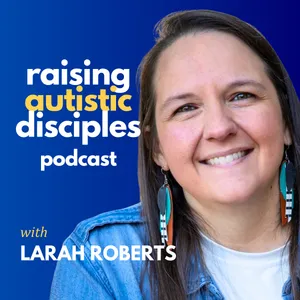
Free Daily Podcast Summary
Raising Autistic Disciples: Daily Summaries Delivered
by Raising Autistic Disciples
Hey there! Are you a parent, caregiver, or friend of someone on the autistic spectrum? Do you also desire to steward, raise, and encourage them to love and follow Jesus? If so, you're in the right place!We believe that the gospel is for everyone, including our neurodiverse children. We know that raising children on the spectrum comes with its unique challenges and that discipleship methods may need to look different. That's why we're here to equip and encourage you on your journey to raising autistic disciples who know, love, and follow Jesus.We would love to connect with you and hear your story. If you have any questions or just want to say hi, please do not hesitate to email us at raisingautisticdisciples@gmail.com.
Latest Episodes
The most recent episodes — sign up to get AI-powered summaries of each one.
- 3 days ago23 min
Surviving the Holidays: FOOD
Thanksgiving is a bizarre time to suddenly get brave about feeding goals. An unfamiliar house, twenty-seven relatives, seventeen smells, and a plate full of foods nobody makes the other 364 days of the year—and now we're asking our autistic kid to "just try a bite"? In this episode of the Raising Autistic Disciples podcast, Larah talks about navigating holiday meals with autistic kids and adults, bringing familiar foods without apologizing, and responding when extended family suddenly appoints themselves assistant director of Thanksgiving nutrition. From the exact brand of chicken nuggets to keeping the gravy spoon away, small details can communicate something much bigger: We thought about you. We want you here. There's room at this table for you, too. With practical ideas for parents and hosts, this conversation brings us back to giving thanks to God, enjoying our people, and helping our autistic disciples participate meaningfully—even if their Thanksgiving plate looks different. In this episode: * Why familiar foods can offer predictability beyond personal preference. * Why Thanksgiving dinner doesn't need to become a feeding clinic. * Bringing food your child will eat without needing everyone's approval. * How hosts can ask about specific brands, preparation, and serving needs. * Simple responses to unsolicited food commentary. * Planning for food touching, seating needs, and long meals. * Why declining a food doesn't mean someone is ungrateful. * Making room for belonging, prayer, and giving thanks together. A question to carry into your holiday meals: Is this necessary, or is it just how I pictured it? If this episode encouraged you, subscribe, leave a rating or review, and share it with a parent—or a Thanksgiving host—who could use it. Now pass the rolls. Intro & Outro song: Thanksgiving Day by Ben Rector Resources & ways to support RAD: 📚 Letters to Lindsey: Seeing Your Child's Autism Diagnosis Through a Gospel Lens [https://www.amazon.com/dp/B0FS87WY24] 📚 How to Advocate & Stay Christian [https://link.amazon/B00yWcdKK] 📺 Minno [https://gominno.com/?afmc=RAISINGAUTISTICDISCIPLES] 🛍️ Larah's Amazon Picks [https://www.amazon.com/shop/raisingautisticdisciples] 👕 RAD Merch [https://raising-autistic-disciples.printify.me/products] ✍️ Read RAD on Substack [https://substack.com/@raisingautisticdisciples]
- 2 weeks ago55 min
37: Surviving October 31st - Let Batman Wear Sweatpants
Costumes, candy, crowds, and a whole evening of doing things we spend the rest of the year telling our kids NOT to do. When you stop and think about it, trick-or-treating has some pretty confusing rules. In this episode of the Raising Autistic Disciples podcast, Larah shares the story of Graham, a church fall festival, and three hours riding a lawnmower-powered "redneck train"—and what she understands about that night now that she didn't understand then. From uncomfortable costumes to the pressure to say "trick or treat," we're unpacking the hidden expectations that can make October 31st complicated for autistic kids and their families. Whether your family enjoys trick-or-treating, attends a fall festival, or chooses something different, this conversation will help you think through meaningful participation, practical accommodations, and opportunities to love your neighbors. And yes, there's a superhero jacket hack that might save you fifty dollars. In this episode: * Why "obvious" social rules may need to be explicitly taught. * How to "practice the weird thing" with rehearsals, visuals, and predictable sequences. * Making costumes comfortable—and letting go of the full costume experience. * Supporting communication without turning free candy into a speech evaluation. * Planning for safety, candy expectations, shorter routes, and knowing when you're done. * Meaningful ways for autistic adults to participate, contribute, and serve. * Using neighborhood interactions to build relationships for the sake of the gospel. * Releasing comparison and recognizing your own family's wins. A reminder for the whole holiday season: Support makes growth possible. We can help our autistic disciples practice meaningful skills while asking, "Is this necessary, or is it just how I pictured it?" If this episode encouraged you, subscribe, leave a rating or review, and share it with another family navigating the holidays. Resources & ways to support RAD: 📚 Letters to Lindsey: Seeing Your Child's Autism Diagnosis Through a Gospel Lens [https://www.amazon.com/dp/B0FS87WY24] 📚 How to Advocate & Stay Christian [https://link.amazon/B00yWcdKK] 📺 Minno [https://gominno.com/?afmc=RAISINGAUTISTICDISCIPLES] 🛍️ Larah's Amazon Picks [https://www.amazon.com/shop/raisingautisticdisciples] 👕 RAD Merch [https://raising-autistic-disciples.printify.me/products] ✍️ Read RAD on Substack [https://substack.com/@raisingautisticdisciples]
- 2 weeks ago37 min
36: Surviving the Holidays: Is This Necessary, or Just How I Pictured It?
Welcome to the series: Surviving the Holidays! From October 31 through Christmas (and the week after), we're entering 60 days of changed schedules, unfamiliar foods, family gatherings, church programs, sensory overload, and traditions that apparently nobody thought to run by an autistic person before making them mandatory. In this introductory episode of the Raising Autistic Disciples podcast, Larah talks about navigating the holidays as a Christian autism parent, managing expectations, making meaningful accommodations, and learning when to stretch our kids and when to simply go home. Because sometimes the biggest obstacle to enjoying the holidays isn't our child's challenges. It's the picture we've created in our heads of how everything is supposed to go. That "picture perfect way." In this episode: * Why holiday traditions can be exciting for us but overwhelming for our autistic kids. * How to recognize when our expectations create unnecessary challenges. * Why accommodations aren't the same as avoidance. * The difference between ability and capacity. * Why parents get dysregulated, too! * Finding joy in Christ, even when the holidays don't go according to plan. One question to carry into every holiday gathering: Is this thing I'm stressing about necessary… or is this just how I pictured it? Our goal isn't to avoid every challenge or make our autistic kids experience the holidays exactly like everyone else. It's to help them participate meaningfully, grow in discipleship, and enjoy the family God has given us. Resources & Support RAD 📚 Letters to Lindsey [https://www.amazon.com/dp/B0FS87WY24] 📚 How to Advocate & Stay Christian [https://link.amazon/B00yWcdKK] 📺 Minno — Free 7-Day Trial (Code RAD) [https://gominno.com/?afmc=RAISINGAUTISTICDISCIPLES] 🛍️ Larah's Amazon Picks [https://www.amazon.com/shop/raisingautisticdisciples] 👕 RAD Merch [https://raising-autistic-disciples.printify.me/products] ✍️ RAD on Substack [https://substack.com/@raisingautisticdisciples] Subscribe to Raising Autistic Disciples and join us for the rest of the series!
- 3 weeks ago37 min
35: Autism & Healing Series: Who Do You Listen to When Christians Disagree?
When Christians disagree about autism and healing—and everyone seems completely convinced they're right—who do you listen to? In the final episode of the Autism & Healing series, we're talking about discernment: healing testimonies, confident Christian content creators, Bible verses pulled into Instagram Reels, "God told me" claims, and what happens when someone turns their personal conviction about autism and healing into a test of someone else's faith. Someone can be confident and still be wrong. Someone can have an extraordinary testimony and still misunderstand what that testimony means. Someone can quote Scripture and interpret it incorrectly. And that includes me. Confidence is not authority. God's Word is. We also talk about families who say their child was "healed of autism." Something may have genuinely changed—and we can praise God for it! But discernment asks another question: What actually changed? Behavior is not autism. A meltdown is not autism. Aggression is not autism. Elopement is not autism. Being nonspeaking is not autism. Communication can grow. Sleep can improve. Anxiety can decrease. Sensory needs can be accommodated. Therapy can help. Children can mature. And God can be glorified through every bit of it. God's work does not become less divine because He works through ordinary means. Scriptures Referenced Acts 17 Matthew 4 Isaiah 53:5 James 5 1 Corinthians 15 Romans 10 John 14:6 Matthew 28:18–20 2 Corinthians 12 A Discernment Filter When you encounter a big theological claim, ask: What does Scripture explicitly say? What conclusion is this person drawing from it? Does the passage actually authorize that conclusion? Is this Scripture, inference, personal conviction, or testimony? And remember: Someone else's testimony cannot become God's promise to my family. Where This Series Lands Can God heal? Yes. Do I know whether God intends to remove Graham's autism this side of eternity? I don't know. Does that make me passive? Absolutely not. Do I believe neurotypicality is God's definition of wholeness? No. Neurotypical is a neurological category. Redeemed is a theological category. Do faithful Christians disagree about healing? Yes. And disagreement about healing does not give us permission to redefine the gospel around our conclusions. So what do I do with everything I don't know? I know my assignment. You don't have to settle every question about autism and healing before you get busy with the Great Commission. Pray. Ask boldly. Open your Bible. Learn your child. Trust God with what He hasn't revealed. Be faithful with what He has. God gets the outcome. You get the assignment. Now go raise that autistic disciple. ______ 📚 Letters to Lindsey: Seeing Your Child's Autism Diagnosis Through a Gospel Lens [https://www.amazon.com/dp/B0FS87WY24] 📚 How to Advocate & Stay Christian [https://link.amazon/B00yWcdKK] 📺 Minno — Get a free 7-day trial with code RAD [https://gominno.com/?afmc=RAISINGAUTISTICDISCIPLES] 🛍️ Larah's Amazon Picks [https://www.amazon.com/shop/raisingautisticdisciples] 👕 RAD Merch [https://raising-autistic-disciples.printify.me/products] ✍️ Read RAD on Substack [https://substack.com/@raisingautisticdisciples]
- Oct 5, 202624 min
34: Autism & Healing Series: Who Decided Neurotypical Means Whole?
When Christians talk about autism and healing, what exactly do we mean by healed? Sometimes we picture something dramatic: autistic today, non-autistic tomorrow. And underneath that picture can be an assumption we may not even realize we're making: autistic means something is not whole, less autistic means becoming more whole, and non-autistic means healed. But who decided neurotypical means whole? Because I don't think Scripture did. In Part 3 of the Autism & Healing series, we're examining what Scripture actually teaches about wholeness, redemption, resurrection, growth, and Christlikeness—and why those categories matter for how we disciple our autistic children today. God can grow my son. He can mature him, develop his communication, give him new skills, relieve distress, provide wise doctors and therapists, deepen friendships, grow his independence, and sanctify him. And I can praise God for every bit of that without interpreting every new skill as Graham becoming "less autistic." God's work does not become less divine because He works through ordinary means. Because if I make neurotypicality the goal, I can accidentally celebrate masking as maturity, exhaustion as participation, compliance as discipleship, or silence as regulation. I need a better target. Christlikeness. Scriptures Referenced Romans 3:23 Ephesians 2 Romans 8 1 Corinthians 15 Revelation 21 Galatians 5:22–23 Questions for This Week Open your Bible and ask: Where did my definition of "whole" come from? Did Scripture give it to me, or have I assumed typical means whole because typical is what I'm accustomed to seeing? Then look at the autistic image-bearer in front of you and ask: What am I actually hoping for? Less autism? Less suffering? Greater communication? Growth? Maturity? Independence? Christlikeness? The target matters because the target determines what we celebrate. Average is not the definition of whole. Typical is not the definition of redeemed. Neurotypical is not the definition of holy. God does not need to make my son neurotypical in order to be at work in his life. Next in the series: How do we respond when another family says their child was "healed of autism"—without dismissing their testimony or turning their experience into a promise for our family? ______ 📚 Letters to Lindsey: Seeing Your Child's Autism Diagnosis Through a Gospel Lens [https://www.amazon.com/dp/B0FS87WY24] 📚 How to Advocate & Stay Christian [https://link.amazon/B00yWcdKK] 📺 Minno — Get a free 7-day trial with code RAD [https://gominno.com/?afmc=RAISINGAUTISTICDISCIPLES] 🛍️ Larah's Amazon Picks [https://www.amazon.com/shop/raisingautisticdisciples] 👕 RAD Merch [https://raising-autistic-disciples.printify.me/products] ✍️ Read RAD on Substack [https://substack.com/@raisingautisticdisciples]
- Sep 28, 202626 min
33: Autism & Healing Series: What I DO Pray For My Autistic Kid?
If I don't know whether God intends to remove my son's autism this side of eternity… what exactly do I pray for? In Part 1 of this series, we established a framework: God gets the outcome. I get the assignment. But trusting God with the outcome doesn't mean we stop asking Him for things. Paul didn't. In 2 Corinthians 12, he pleaded with God to remove his thorn three times. Trusting God's sovereignty didn't silence his prayers—and it doesn't have to silence ours. In this episode, I'm getting very practical about what I pray for Graham: salvation, communication, reading, regulation, patience, self-advocacy, friendships, courage, meaningful work, opportunities to use his gifts, and ultimately that he would become a disciple who makes disciples. Because the greatest miracle I could witness in my autistic son's life isn't watching an autistic child become non-autistic. It's watching a spiritually dead sinner be made alive in Christ. And somewhere in all of this, I'm learning how to live in the tension between hope and expectation. I can desperately want something for my son, ask God boldly for it, work faithfully toward it—and still refuse to make that hoped-for outcome a burden Graham has to carry. Ask boldly. Work faithfully. Hope deeply. Hold the outcome with open hands. Scriptures Referenced 2 Corinthians 12:7–10 Ephesians 2:1–10 Romans 8:29 Romans 10:17 1 Corinthians 13 Galatians 5:22–23 Questions for This Week Instead of ONLY asking, "Do I pray for my child's healing?" ask: What am I specifically asking God to do IN my child's life? Write it down. Salvation? Communication? Understanding? Wisdom? Courage? Friendships? Regulation? Self-advocacy? A love for Scripture? Opportunities to serve? Greater independence? Then ask one more question: What am I asking God to grow in ME? Because you can't raise an autistic disciple without first being a disciple yourself. Jesus, make my son more like You. Not less autistic. More like Christ. ______ 📚 Letters to Lindsey: Seeing Your Child's Autism Diagnosis Through a Gospel Lens [https://www.amazon.com/dp/B0FS87WY24] 📚 How to Advocate & Stay Christian [https://link.amazon/B00yWcdKK] 📺 Minno — Get a free 7-day trial with code RAD [https://gominno.com/?afmc=RAISINGAUTISTICDISCIPLES] 🛍️ Larah's Amazon Picks [https://www.amazon.com/shop/raisingautisticdisciples] 👕 RAD Merch [https://raising-autistic-disciples.printify.me/products] ✍️ Read RAD on Substack [https://substack.com/@raisingautisticdisciples]
- Sep 21, 202635 min
32: Autism & Healing Series: Can God vs. Will God
Can God heal autism? And if God can, does that mean He has promised that He will? In Part 1 of this four-part Autism & Healing series, Larah wrestles with the difference between God's ability and God's intention—and why that distinction matters for Christian parents raising autistic children. We'll look at what Scripture allows us to be certain about, where faithful theology may require us to say "I don't know," and why accepting, supporting, and accommodating an autistic child is not evidence of deficient faith. The episode ultimately lands here: I am more theologically certain about the Great Commission than I am about whether God intends to heal my son's autism this side of eternity. One is explicitly commanded. The other is not explicitly promised. God gets the outcome. I get the assignment. Scriptures referenced: Deuteronomy 29:29; Psalm 115:3; Daniel 3; Daniel 4:35; Isaiah 53:5; Matthew 28:18–20; John 5; John 9; John 11; Acts 12; Romans 8; 2 Corinthians 12; 1 Peter 2:24. Study it for yourself: What does Scripture explicitly say? What has God actually promised? What am I assuming? Where am I confusing what God can do with what God has promised to do? * Next in the series: What I DO Pray For. ______ 📚 Letters to Lindsey: Seeing Your Child's Autism Diagnosis Through a Gospel Lens [https://www.amazon.com/dp/B0FS87WY24]📚 How to Advocate & Stay Christian [https://link.amazon/B00yWcdKK]📺 Minno — Get a free 7-day trial with code RAD [https://gominno.com/?afmc=RAISINGAUTISTICDISCIPLES]🛍️ Larah's Amazon Picks [https://www.amazon.com/shop/raisingautisticdisciples] 👕 RAD Merch [https://raising-autistic-disciples.printify.me/products] ✍️ Read RAD on Substack [https://substack.com/@raisingautisticdisciples]
- Sep 14, 202635 min
31: The Worst Meltdown Ever & the Road That Led There
Big idea: The meltdown gives us information, but so does the road behind it. If we only study the point of collision, we may miss what our autistic kids were communicating long before they had the words to tell us. Sometimes the meltdown is the first thing everyone notices—but it may not be where the story started. In this episode of Raising Autistic Disciples, Larah shares one of Graham's most memorable meltdowns from the early years after his diagnosis: a simple change in the Sunday morning plan that became far more than a quick walk back to the car. What looked like a sudden explosion was actually an autistic child in deep distress, unable to communicate what his body and nervous system were experiencing. That experience became an important lesson: don't only study the collision. Learn the road that led there. For parents, church leaders, grandparents, and anyone discipling an autistic child, this episode explores how curiosity, observation, and biblical discernment can help us distinguish between rebellion, overwhelm, weakness, distress, and genuine behavior that needs correction. Understanding behavior is not the same thing as excusing behavior. Faithful discipleship requires knowing the child well enough to respond with the right kind of care. Larah also walks through 1 Thessalonians 5:14—"admonish the idle, comfort the discouraged, help the weak, be patient with everyone"—as a framework for recognizing that different conditions require different responses. Sometimes an autistic child needs correction. Sometimes they need comfort. Sometimes they need help. And in every case, they need patient, discerning love. You'll hear practical questions like: What does my child look like before they become overwhelmed? What happens when plans unexpectedly change? What environments require more effort from them? What happens to communication as stress increases? When does more language stop helping and become additional input? And what patterns can I learn now that may eventually help my child recognize and communicate their own needs? The goal isn't to predict every meltdown or become omniscient. Only God is. The goal is to become observant—to learn the child God has entrusted to you so that you can shepherd them faithfully toward Christlikeness. Scriptures discussed: 1 Thessalonians 5:14, James 1:19, Proverbs 18:13, Proverbs 20:5, and John 10. Resources Mentioned: Find the Letters to Lindsey: Seeing Your Child's Autism Diagnosis through a Gospel Lens on Amazon by clicking here: amazon.com/dp/B0FS87WY24 [https://www.amazon.com/dp/B0FS87WY24].
Get Raising Autistic Disciples summaries in your inbox
Free AI-powered daily recaps. Key takeaways, quotes, and mentions — in a 5-minute read.
Get Free Summaries →Free forever for up to 3 podcasts. No credit card required.
You Might Also Like
Listeners also like.

Raising Boys & Girls
Child development experts discuss practical strategies and insights for parenting boys and girls with empathy and hope.

Tony Mantor: Why Not Me ?
Explores autism, mental health, and human stories to promote understanding, challenge stigma, and support neurodiversity.

Let's Parent on Purpose: Christian Marriage, Parenting, and Discipleship
Jay Holland and Christian Parenting

Focus on the Family Parenting Podcast
A Christian parenting podcast offering practical advice and faith-based encouragement for raising children from toddlers to teens.

The [EYE] on Autism Podcast
Brightway Living and Learning
Keeping Families Connected
Christian teaching and counseling to help families overcome division through biblical truth, faith growth, and relational healing.

Raising Good Humans
A developmental psychologist discusses evidence-based parenting approaches with experts and parents to support raising resilient, empathetic children.

Entrepreneur Parents - Pretty & Punk Podcast | Family Success, Business Tactics, Relationship Goals
Parents who run businesses share real experiences balancing family, marriage, and entrepreneurship.

Carpooling with Jesus | Bible Stories for Kids Devotionals Daily Devotional for Kids Daily Christian Kids Devotional
Daily Bible stories and devotionals for kids, blending Scripture and prayer into short, family-friendly episodes.
Ask Lisa: Untangling Family Life
Psychologist Lisa Damour answers parents' questions about raising tweens and teens with evidence-based advice on mental health, behavior, and family dynamics.

The Christy-Faith Show
A podcast offering educational and homeschooling insights for intentional parents.

After Bedtime with Big Little Feelings
Honest conversations about modern parenting challenges with practical advice and emotional support from experienced guides.
About Raising Autistic Disciples
Hey there! Are you a parent, caregiver, or friend of someone on the autistic spectrum? Do you also desire to steward, raise, and encourage them to love and follow Jesus? If so, you're in the right place!We believe that the gospel is for everyone, including our neurodiverse children. We know that raising children on the spectrum comes with its unique challenges and that discipleship methods may need to look different. That's why we're here to equip and encourage you on your journey to raising autistic disciples who know, love, and follow Jesus.We would love to connect with you and hear your story. If you have any questions or just want to say hi, please do not hesitate to email us at raisingautisticdisciples@gmail.com.
Customized Recaps
AI-powered recaps with compact key takeaways, quotes, and insights.
Straight to Your Inbox
Get key takeaways from Raising Autistic Disciples in a 5-minute read.
Save Hours Every Week
Stay current on your favorite podcasts without falling behind.
Frequently Asked Questions
What is Podzilla's Raising Autistic Disciples daily summary?
It's a free AI-powered email that summarizes new episodes of Raising Autistic Disciples as soon as they're published. You get the key takeaways, notable quotes, and links & mentions — all in a quick read.
How does the Raising Autistic Disciples podcast summary work?
When a new episode drops, our AI transcribes and analyzes it, then generates a personalized summary tailored to your interests and profession. It's delivered to your inbox every morning.
Is this an official Raising Autistic Disciples product?
No. Podzilla is an independent service that summarizes publicly available podcast content. We're not affiliated with or endorsed by Raising Autistic Disciples.
Can I get summaries of other podcasts too?
Absolutely! The free plan covers up to 3 podcasts, any in the catalog. Basic raises that to 15, Pro to 40 and Max to 100. Browse our full catalog at /podcasts.
How often does Raising Autistic Disciples release new episodes?
Raising Autistic Disciples publishes biweekly. Our AI generates a summary within hours of each new episode.
What topics does Raising Autistic Disciples cover?
Raising Autistic Disciples covers topics including Fitness, Parenting, Religion & Spirituality, Health & Fitness, Kids & Family, Family, Mental Health. Our AI identifies the specific themes in each episode and highlights what matters most to you.
Start getting Raising Autistic Disciples summaries tomorrow morning.
Free forever for up to 3 podcasts. No credit card required.
Free forever for up to 3 podcasts. No credit card required.