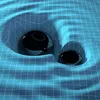
The Large Hadron Collider (LHC) stands as a 27-kilometer masterpiece of engineering that successfully identified the Higgs boson in 2012, yet the decade since has been met with a frustrating silence. While the Standard Model remains a triumphant theory, it is visibly incomplete, failing to account for dark matter or the matter-antimatter asymmetry of the cosmos. To push beyond these boundaries, physicists face a daunting "physics cliffhanger": under current technology, higher energies require massive machines like the proposed 100-kilometer Future Circular Collider, carrying price tags in the tens of billions of dollars.A radical alternative may lie in plasma wakefield acceleration, a method that uses ionized gas to accelerate particles over much shorter distances. By sending a high-energy laser or particle pulse through plasma, researchers create a "wake" of electric fields that trailing particles can surf, much like a surfer gaining speed from a wave. This technique has achieved unprecedented gradients—up to 10 Giga Electron Volts per meter—offering the potential to leapfrog to Terascale energies on a campus-sized machine rather than a countryside-scale one. While these "small, messy, and dangerous" accelerators promise to democratize high-energy physics, the challenge remains whether they can ever match the precision and stability of their gargantuan predecessors.
Podzilla Summary coming soon
Sign up to get notified when the full AI-powered summary is ready.
Free forever for up to 3 podcasts. No credit card required.
Listen to This Episode
Get summaries like this every morning.
Free AI-powered recaps of Quarks to Cosmos and your other favorite podcasts, delivered to your inbox.
Free forever for up to 3 podcasts. No credit card required.