Free Daily Podcast Summary
Private Property: Daily Summaries Delivered
Get key takeaways, quotes, and insights from Private Property in a 5-minute read. Delivered straight to your inbox.
Latest Episodes
The most recent episodes — sign up to get AI-powered summaries of each one.
- Feb 21, 2024
Understanding the True Meaning of Charity
The Misesian (TM): The economics behind gift giving and charity have long been a neglected topic among researchers and economists. What prompted you to launch your own investigation into the topic? Jörg Guido Hülsmann (JGH): The economic literature on gifts is actually quite massive, but it’s true that these writings don’t make it into standard micro- and macroeconomics. My initial interest was sparked by Benedict XVI’s 2009 encyclical letter Caritas in veritate. The pope wondered how the scope of gratuitous goods could be increased in the human economy, and he called on all people of good will to deal with this issue in thought and action. I put a doctoral student to work on this subject in 2011 and she successfully defended her French-language dissertation four years later. Still I sensed that much more work was needed and that the economics of gratuitous goods promised to shed new light on the very foundations of economics. In 2018, during a sabbatical semester, I therefore set out to study three specific areas in more detail: (1) How do gifts fit into the general theory of economic goods? Is the act of giving a distinct praxeological category on its own? (2) Which are the major types of positive externalities, or side-effect goods, that spring from profit seeking and other human actions that do not have the express purpose of providing gratuitous benefits to others? Which are the causes that promote and hamper the development of such side-effect goods? (3) In which ways and to what extent do government interventions influence these processes? At first, I thought this could be done fairly quickly, but I overrated my speed and underestimated the difficulty of the subject. All told it took me four years to produce a complete draft of the book. TM: The idea of Homo economicus has long plagued economics, and many people conclude the idea tells us that people engage in economic activity only for monetary profit. Does the Homo economicus model have value or is it an impediment to understanding the full economy? JGH: With a few exceptions, economists have always understood that the Homo economicus fiction is precisely that, a fiction. Its proper use is to serve as a pedagogical tool. Sums of money can be directly compared. It is clear that nine units of money are more than eight units of money. It is also straightforward to argue that everybody prefers more money to less money. But outside of this narrow pedagogical use, the fiction becomes problematic. It is clearly not the case that all goods can be given a monetary expression. Nor is it the case that people only care about money. Human action designed to acquire and hold money must be balanced against all alternative actions. People do not desire to own as much money as possible but the proper amount of money, along with the proper amounts of all other goods that they also wish to own. Last but not least, it is not the case that all human actions have the purpose of providing the agent with monetary revenue or other advantages. Genuine donations of time and material goods are also possible. TM: Why is the Austrian School uniquely suited to analyze gifts and charity? JGH: The starting point of Austrian reasoning is real human action, not any fictitious stipulations. Carl Menger strongly emphasized that acting man pursues different objectives that cannot be summarized by a single one. In other words, human action does not aim at maximizing a single variable, such as monetary profit or utility. It aims at establishing a proper balance between different goods that cannot be reduced to a common denominator. It follows that, from a Mengerian perspective, it is not difficult to concede the possibility that gifts are meant to serve others, and that the satisfaction of the needs of others has to be brought into a proper balance with the satisfaction of our own needs. By contrast, the Homo economicus of present-day mainstream economics maximizes a single variable; namely, utility. But this implies from the very outset that only one person counts; namely, the agent whose utility is being maximized. Whatever he may do for others he ultimately does for himself. Mainstream economists are therefore willy-nilly led to the conclusion that genuine gifts are impossible. They hold that donors always and everywhere give in order to benefit from “warm glow” feelings and for other selfish objectives. But such contentions have nothing to do with any science or empirical research. They are implied in the stipulated premise of Homo economicus. They are grounded in a fiction, not in a fact. Let me also highlight that Austrians are uniquely well positioned to understand the nature and scope of positive externalities. The reason is that, contrary to the mainstream, they do not subscribe to Aristotle’s equivalence postulate. Aristotle contended that a just exchange is an exchange of equal values. Unless ea
- Feb 18, 2024
Legacies of Injustice and Racial Inequality
Progressives argue that free markets stand in the way of economic and racial equality. In fact, free markets are the only vehicle that can help make people more equal. Original Article: Legacies of Injustice and Racial Inequality
- May 31, 2023
A Collection of the Political Writings of William Leggett, Two Volumes
A Collection of the Political Writings of William Leggett, selected and arranged, with a preface, by Theodore Sedgwick, in two volumes. (1839) This collection provides important example of populist laissez-faire opinion from the Jacksonian Era in the United States. In terms of economic policy, the Jacksonians favored low taxes, decentralization, and hard-money while opposing central banks and regulation of private business. William Leggett was born on April 30, 1801 in New York City and died at age thirty-eight, on May 29, 1839 in New Rochelle, New York. He was a Jacksonian era journalist and the intellectual leader of the laissez-faire wing of Jacksonian democracy. He wrote editorials in support of individual liberties and private property rights while working with William Cullen Bryant at the Evening Post.
- Apr 28, 2023
The Economics of Space Travel
Are NASA contracts propping up the private space industry? Or are Government regulations stifling the private space race? Dr. Eli Dourado, Senior Research Fellow with the Center for Growth and Opportunity at Utah State University, joins Bob to discuss the recent "successful failure" of the exploded SpaceX launch and the differences between government and privately funded space travel. Dr. Dourado on NASA contracting private companies to build their shuttles: Mises.org/HAP393a Dr. Dourado on the Artemis moon program: Mises.org/HAP393b
- Mar 1, 2023
The Nationalization of Credit?
Arthur Travers-Borgstroem, a Finnish writer, published a book entitled Mutualism that deals with ideas of social reform, and culminates in a plea for the nationalization of credit. A German edition appeared in 1923. In 1917, the author had established a foundation under his name in Berne, Switzerland, whose primary objective was the conferring of prizes for writings on the nationalization of credit. The panel of judges consisted of Professors Diehl, Weyermann, Milhaud, and Reichesberg, the bankers Milliet, Somary, Kurz, and others. The judges awarded a prize to a paper submitted by Dr. Robert Deumer, director of the Reichsbank in Berlin. This paper was published in book form by the Mutualist Association of Finland.Die Verstaatlichung des Kredits: Mutualisierung des Kredits (Nationalization of Credit: Mutualization of Credit), Prize Essay of the Travers-Borgstroem Foundation at Berne, Munich, and Leipzig, 1926. From the background material of the paper we can learn why the author is not concerned with the rationale of credit nationalization, but merely with the details of its realization. Dr. Deumer is presenting a proposal, elaborated in its insignificant details, on the nationalization of all German institutions of banking and credit, and the establishment of a national credit monopoly. But his plan can be of no interest to us as no one is contemplating its implementation in the foreseeable future. And if there ever should be such a movement, conditions may be quite different so that the Deumer proposal will not be applicable. Therefore, it would not make any sense to discuss its details, such as article I, section 10, of the "Draft of a Bill Nationalizing Banking and Credit," which reads, "He who engages in any banking and credit transaction after the nationalization will be subject to a fine not exceeding ten million gold marks, or imprisonment up to five years, or both."Ibid., p. 335. Deumer's work is of interest to us because of its motives for the nationalization of credit, and its statements on a reform that preserves the superiority of "profit" management over "bureaucratic" management. These statements reveal an opinion that is shared by a large majority of our contemporaries — yes, that is even accepted without contradiction. If we should share this Deumer-Travers-Borgstroem-mutualist position we must welcome a nationalization of credit and every other measure leading to socialism. In fact, we must agree to its realizability and even its urgent necessity. The public welcomes all proposals designed to limit the sphere of private property and entrepreneurship because it readily accepts the critique of the private-property order by the Socialists of the Chair in Germany, the Solidarists in France, the Fabians in Great Britain, and the Institutionalists in the United States. If the nationalization proposals have not yet been fully realized we must not search for any opposition in social literature and the political parties. We must look to the fact that the public realizes that whenever enterprises are nationalized and municipalized or government otherwise interferes with economic life, financial failure and serious disruption of production and transportation follow instead of the desired consequences. Ideology has not yet taken stock of this failure of reality. It continues to hold fast to the desirability of public enterprises and the inferiority of private enterprises. And it continues to find only malice, selfishness, and ignorance in opposition to its proposals, of which every objective observer should approve. Under such conditions an analysis of Deumer's reasoning seems to be in order. 1. Private Interest And Public Interest According to Deumer, banks presently serve private interests. They serve public interests only inasmuch as these do not conflict with the former. Banks do not finance those enterprises that are most essential from the national point of view, but only those that promise to yield the highest return. For instance, they finance "a whiskey distillery or any other enterprise that is superfluous for the economy." "From the national point of view, their activity is not only useless, but even harmful." "Banks permit enterprises to grow whose products are not in demand; they stimulate unnecessary consumption, which in turn reduces the people's purchasing power for goods that are more important culturally and rationally. Furthermore, their loans waste socially necessary capital, which causes essential production to decline, or at least their costs of credit, and thus their production costs, to rise."Ibid., p. 86. Obviously, Deumer does not realize that in a market order, capital and labor are distributed over the economy in such a way that, except for the risk premium, capital yields the same return, and similar labor earns the same wage everywhere. The production of "unnecessary" goods pays no more and no les
- Aug 29, 2022
Economy, Society, and History Audiobook
In June 2004, Professor Hoppe visited the Mises Institute in Auburn to deliver an ambitious series of lectures titled Economy, Society, and History. This project brings together the core of Hoppe’s lifetime of theoretical work in one vital and cohesive source. Here we find provocative themes developed by Hoppe in the 1980s and 90s, particularly in his essays found in A Theory of Socialism and Capitalism and The Economics and Ethics of Private Property. We also find his devastating critique of democracy, made famous in his seminal book Democracy—The God That Failed. This audiobook is narrated by Paul Strikwerda. Download the complete audiobook (12 MP3 files) here. This audiobook is also available on Apple Podcasts, Soundcloud, and via RSS. Purchase the Audiobook on iTunes/Audible/Amazon, or paperback at the Mises Store.
- Jul 26, 2022
The Anti-Capitalists: Barbarians at the Gate
[This talk was presented as the Ludwig von Mises Memorial Lecture at the Austrian Scholars Conference in Auburn, Alabama on March 15, 2008. This talk is also available in video and MP3 audio file.] One thing is abundantly clear. Both the spirit and the genius of Ludwig von Mises are alive and well here at the Mises Institute. The breadth and depth of the scholarship encountered at these annual conferences is quite remarkable. Indeed, the transdisciplinary nature of much of this work may be unique in the academic world. Mises would, I believe, be enormously proud of the research being carried on in his name — even, and perhaps especially, by those whose conclusions diverge in some particulars from his own. Guido Hülsmann's masterful biography, Mises: The Last Knight of Liberalism, has carefully documented the fact that this was truly a man of the mind, a man utterly devoted to the pursuit of truth. Ayn Rand once made an observation that I think is germane to Mises, though it appeared in the context of discussing educational theories. She exhorted her readers to "[o]bserve also the intensity, the austere, the unsmiling seriousness with which an infant watches the world around him. (If you ever find, in an adult, that degree of seriousness about reality, you will have found a great man)" (The New Left, p. 156). In the course of his pursuit of truth, this great man unfailingly exhibited what I like to think of as a "dignified ruthlessness." To comprehend complex phenomena was what was important. To grasp reality was the objective that fueled Mises's life, not popularity, not winning debates, not currying political approval. Moreover, this quest was to be undertaken within an interpersonal context of civility and even elegance. All that is so alien to our present world. Today the kind of impregnable integrity that Mises possessed is decried as "dogmatism," because truth is thought to be limitlessly malleable. His sort of aristocratic grace is slandered as "elitist" and "reactionary," because so many collectivists are mesmerized by all things proletarian. His deep concern with the epistemological foundations of economics is demeaned as pedantic babbling, because ours is a Humean world in which the profundity of the law of causality is routinely brushed aside in favor of the glamour of statistical correlation. And his heroic defense of laissez-faire capitalism is dismissed as being "out of touch with reality," on the grounds that such an economic system is callous, crass, wasteful, inequitable, and exploitative, not to mention insensitive to "real human needs." Capitalism and Envy It is this last issue — capitalism and Mises's powerful defense of it, as well as both the grave implications of the common assaults on capitalism and the characteristics of those assailants — that I wish to examine today. Allow me first to state clearly what I mean by "capitalism." Now it is true that I would shrink the state by more than would Mises, but we have the same broad objective. I mean a totally unregulated, laissez-faire economic system, one in which property rights are sacred, where profit-seeking is seen as a noble enterprise, where money is a symbol of honorable achievement — rather than being castigated as a sordid tool used only by those sadly devoid of humane qualities. It is liberalism — in the classical sense — applied to the everyday business of life. Recall that Mises insisted that "[f]reedom is indivisible. He who has not the faculty to choose among various brands of canned food or soap, is also deprived of the power to choose between various political parties and programs…. He is no longer a man; he becomes a pawn in the hands of the supreme social engineer" ("Liberty and Property," Two Essays, p. 27). Elsewhere, Mises declared that, if compressed into one word, liberalism meant property — privately held and earnestly protected by law (Liberalism, p. 19). In terms of concretes, by capitalism I mean an economy with no progressive taxes, no central bank, no pure paper currency, no drug prohibition, no gun prohibition, no "affirmative action" employment mandates for any ethnic group, no government-run health care, no federal departments of education, energy, labor, homeland security, health and human services, no DEA, BATFE, SEC, EPA, FTC, FDA, no minimum legal wage rates, no price controls, no tariffs, no welfare — domestic or foreign, rural or urban, for the rich or the poor. You know, a free economy! Parenthetically, I am amazed by how often I hear people speak of "the free market," but somehow manage to incorporate within that notion the presence of the Federal Reserve, Social Security, the IRS, ad nauseum. What part of the word "free" do they not comprehend? In any case, I for one obviously do not refer to that tortured, disfigured, tormented, twisted gargoyle which usually masquerades as capitalism today. Who would
- May 17, 2022
Was Jean-Baptiste Say a Market Anarchist?
Jean-Baptiste is certainly best known for his famous Law of Markets (la loi des débouchés) also referred to as Say's Law. Though Say's Law is one of the key points of the classical school of economics, the manner in which this obvious proposition has been distorted and misinterpreted in a significant number of economic textbooks as well as in lectures of certified professors of economics is simply perplexing. As a consequence, Say's achievements are often abridged to some incoherent assertion that "supply creates its own demand."For a correct exposition of Say's Law, see Say's biography at mises.org. But Jean-Baptiste Say has much more to offer than his Law of Markets. Actually, he had already conceived a society without government long before Gustave De Molinari, who is often considered as being "the first writer to draw the conclusion that government could, in effect, be replaced by competing companies or agencies offering to provide security and protection."Amongst others: "Remembering Gustav de Molinari." It is my endeavor to show that Say was conscious of the shortcomings of governmental services in terms of the security and organization of society as such.This article is greatly inspired by the writings of Philippe Steiner who is co-editor of the compilation of Say's Oeuvres Complètes (Paris: Economica, 2003) and the author of some precious contributions on Say in the recently published Histoire du Libéralisme (Paris: Presses Universitaires de France, 2006) which I strongly recommend to every francophile reader. In the third session of his Cours à l'Athénée,These lectures were given in 1819 which is also the year in which Gustave De Molinari was born. The Athénée was a private school founded in 1781. With the arrival of Jean-Baptiste Say, political economy began to be taught (Marivault, Auguste Walras and others succeded Say). The lectures were as an introduction to economics for the "profanes," (lay people). Say explains that the supply of society is assured by the individuals who actually compose it. Furthermore, he notes that the disposal of capital is due to the private savings and precaution of individuals who, rather than destroying their savings, build their savings with the intention of creating new products. Likewise, he considers how these products come into the hands of those who need them, concluding that this is the result of interpersonal exchanges. As a result of this conclusion, he raises the following final question: Have we found the government in this analysis up to now?2003. Oeuvres Complètes, IV. Leçons d'Economie Politique, p. 101. Again, he provides an answer: No. And the reason of this is the fact that government is not at all an essential part of the social organization.2003. Oeuvres Complètes, IV. Leçons d'Economie Politique, p. 101. Thus, society could work without government management if people carried out their business and let other people carry out their business at the same time. Say underlines his position by giving some historical examples. Writing in 1819, he observes that at times during the previous thirty years, France had found itself in a situation in which all the authorities were suddenly halted. In these critical moments, no government was at all existent. And what does Say observe? During these periods, the essential functions of the social body could not have been carried out in a better way: everything worked, better than would have normally been the case. Say states that the worst occurred in times when people were too much governed. Endeavoring to strengthen his position, he brings up another example, this time from overseas. In Kentucky, there are "cantons" in which one family would settle and take root, after which another family would move into the area, and so forth until the formation of villages occurred. There were houses, clothes, and food, and the people were better nourished than many households in the rue Jean-pain-molletThe editors of Say's Oeuvres Complètes did not find the origins of this expression. and yet there was no government. His observations lead him to declare that one can not only conceive a society without government but one can actually see it; the only problem is the journey overseas. Likewise, Say correctly argues that social life is not in the government but in the governed. As a consequence, the old representations of the state as a family and the chief executive of the administration as the father are not accurate at all. According to Say, all productive enterprises are created by individuals in society, not by the state. It is the responsibility of productive enterprise to support the continuity of families, the components of society. Likewise, if there are government officials in the society, they exist at the people's expense. Only those who refuse to acknowledge this realit
Get Private Property summaries in your inbox
Free AI-powered daily recaps. Key takeaways, quotes, and mentions — in a 5-minute read.
Get Free Summaries →Free forever for up to 3 podcasts. No credit card required.
You Might Also Like
Listeners also like.
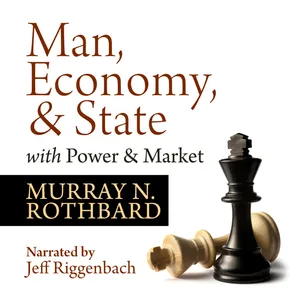
Man, Economy, and State, with Power and Market
Murray N. Rothbard
The Well-Read Anarchist
James Corbett
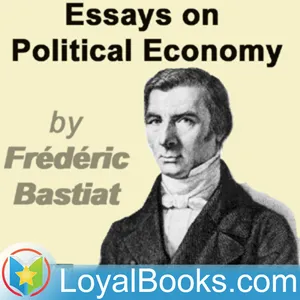
Essays on Political Economy by Frederic Bastiat
Loyal Books
Human Action: A Treatise on Economics
Ludwig von Mises

Axioms of Liberty
Axioms Of Liberty
A Theory of Socialism and Capitalism
Hans-Hermann Hoppe
The Wealth of Nations by Adam Smith
Loyal Books
Against Intellectual Property
Stephan Kinsella

Voluntaryist Academy
James Cordiner

The Liberty Exchange
Libertarianism.org

Private Markets Made Human
Hamilton Lane

Mises Audio Books Podcast
Mises.org
About Private Property
Private Property looks at economic, historical, legal, philosophical works. Private ownership of the means of production is the center of the market economy.
Customized Recaps
AI-powered recaps with compact key takeaways, quotes, and insights.
Straight to Your Inbox
Get key takeaways from Private Property in a 5-minute read.
Save Hours Every Week
Stay current on your favorite podcasts without falling behind.
Frequently Asked Questions
What is Podzilla's Private Property daily summary?
It's a free AI-powered email that summarizes new episodes of Private Property as soon as they're published. You get the key takeaways, notable quotes, and links & mentions — all in a quick read.
How does the Private Property podcast summary work?
When a new episode drops, our AI transcribes and analyzes it, then generates a personalized summary tailored to your interests and profession. It's delivered to your inbox every morning.
Is this an official Private Property product?
No. Podzilla is an independent service that summarizes publicly available podcast content. We're not affiliated with or endorsed by the podcast creators.
Can I get summaries of other podcasts too?
Absolutely! The free plan covers up to 3 podcasts. Upgrade to Pro for 15, or Premium for 50. Browse our full catalog at /podcasts.
How often does Private Property release new episodes?
Private Property publishes monthly. Our AI generates a summary within hours of each new episode.
What topics does Private Property cover?
Our AI identifies the specific themes in each episode and highlights what matters most to you.
Start getting Private Property summaries tomorrow morning.
Free forever for up to 3 podcasts. No credit card required.
Free forever for up to 3 podcasts. No credit card required.