Free Daily Podcast Summary
Practical Advice from the Scriptures: Daily Summaries Delivered
by Anissa Cooke
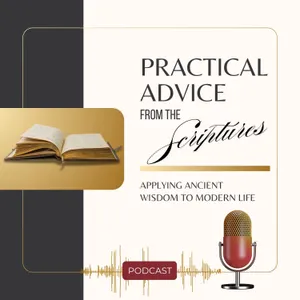
Practical Advice from the Scriptures is a podcast designed to deepen your understanding of the Bible, offering a fresh perspective on how ancient wisdom can be applied to modern life. Each short episode explores a chapter from the Bible, summarizing key themes and helping listeners interpret and apply God’s Word to their daily challenges. Whether you’re a seasoned Bible reader or just starting your journey, this podcast is a helpful companion to your personal study. With relaxed, conversational guidance from your AI hosts, "The Deep Dive" offers insightful reflections that encourage spiritual growth, deeper reflection, and a closer relationship with God.
Latest Episodes
The most recent episodes — sign up to get AI-powered summaries of each one.
- 4 weeks ago19 min
When Fear Makes the Decision: The Warning of Isaiah 30
What happens when fear makes the decision for you?Isaiah 30 confronts Israel's decision to seek protection from Egypt rather than trust God's direction. Under pressure, they choose a visible solution that appears practical but ultimately leaves them vulnerable.The modern lesson is powerful:Pressure can make us choose movement over wisdom.Isaiah 30 challenges us to ask:Am I making this decision because it is wise... or because I am afraid of what happens if I wait?The chapter reminds us that strength isn't always found in doing more. Sometimes the wiser response is to stop, listen, accept correction, and allow clarity to replace panic.
- Aug 22, 202616 min
Going Through the Motions: The Warning of Isaiah 29
What happens when you look committed on the outside but have become disconnected on the inside?Isaiah 29 confronts a people who continue their religious routines while their hearts have drifted away from God. Their outward activity creates the appearance of devotion, but beneath the surface is pride, disconnection, and resistance to truth.The modern lesson is uncomfortable:Being busy doing the right things doesn't necessarily mean we're becoming the right people.Isaiah 29 challenges us to examine our own lives:Are we actually growing... or have we simply become very good at going through the motions?The chapter ultimately points toward restoration. When pride is humbled and blindness is removed, people can see differently, understand differently, and return to what is true.
- Aug 21, 202620 min
The Refuge of Lies: What Are You Really Building On? | Isaiah 28
What if the security you've been trusting isn't real?Isaiah 28 delivers a sharp warning to leaders who have become comfortable, proud, and resistant to correction. Instead of confronting deep problems, they rely on superficial solutions and convince themselves they are safe.Isaiah calls this false security a "refuge of lies." In contrast, God establishes a "precious cornerstone", representing a foundation strong enough to withstand pressure.The modern lesson is direct:What you build your life on determines whether it can survive being tested.Isaiah 28 challenges us to ask:Am I actually secure... or have I simply become comfortable with the illusion of security?
- Aug 20, 202615 min
Cutting Out What Holds You Back: The Transforming Wisdom of Isaiah 27
What if lasting growth requires more than managing the problems that keep coming back?Isaiah 27 presents a powerful picture of divine protection, restoration, and cultivation. A destructive adversary is defeated, and God's vineyard is described as something He continually watches over, waters, and protects.The deeper lesson is about intentional growth.You cannot cultivate something healthy while continuing to protect the patterns that destroy it.Isaiah 27 challenges us to look honestly at what keeps returning.Are you solving the problem... or simply managing it?Are your daily habits producing the life you say you want?And what needs to be removed before something healthier can grow?The chapter offers a powerful picture of restoration: clear purpose, ongoing care, refinement, and consistent cultivation.
- Aug 19, 202618 min
Perfect Peace in an Unstable World: The Wisdom of Isaiah 26
Can you experience peace when your circumstances are anything but peaceful?Isaiah 26 presents a powerful vision of perfect peace, not as the result of an easy life, but as the fruit of an anchored mind and consistent trust. The chapter contrasts the collapse of pride with the endurance of those who remain humble, patient, and grounded.The modern lesson is direct: peace begins internally before it appears externally.Isaiah 26 challenges us to stop measuring our stability by what is happening around us and start examining what is happening within us.What kind of foundation are you building when nobody can see it?
- Aug 18, 202616 min
When the Storm Is Over: Finding Strength in Isaiah 25
What happens when the systems you trusted collapse... and you discover that something stronger remains?Isaiah 25 moves from scenes of judgment and upheaval into a powerful celebration of protection, restoration, and hope. The chapter describes God as a refuge for the vulnerable and promises a future where suffering, shame, and even death will ultimately be defeated.But Isaiah 25 also offers a practical lesson for navigating difficult seasons today.True security isn't created by appearances. It's built on a foundation strong enough to withstand the storm.Isaiah 25 invites us to consider:When everything around you is shaken, what are you standing on?The chapter ultimately moves us from fear to confidence, from destruction to restoration, and from uncertainty to hope.
- Aug 17, 202616 min
When the Foundation Cracks: The Warning of Isaiah 24
What happens when a society looks stable on the outside but its foundation is already breaking apart?Isaiah 24 presents a sobering vision of widespread judgment and social collapse. The chapter describes the earth being emptied, communities disrupted, and the normal structures of society shaken.But beneath the destruction is a deeper warning: systems eventually reflect the condition of their foundations.The problem isn't simply external circumstances. Isaiah points to broken moral and spiritual commitments that have created consequences throughout society. No class, position, or level of influence is exempt.The modern lesson is equally challenging.We can build impressive careers, businesses, institutions, and lifestyles while ignoring the structural problems underneath them. Eventually, a crisis exposes what was already unstable.Isaiah 24 ultimately asks a difficult question:What are you building on... and will it still stand when everything superficial is stripped away?
- Aug 16, 202616 min
When Success Disappears: The Warning of Isaiah 23
What happens when the thing that made you feel successful suddenly disappears?Isaiah 23 tells the story of Tyre, a wealthy and influential center of ancient commerce whose economic power seemed nearly unstoppable. But Isaiah describes its dramatic downfall, reminding us that even the most powerful economic systems can be disrupted.The deeper lesson isn't simply about money.It's about identity.When our sense of worth becomes tied to our income, career, business, reputation, or professional achievements, disruption can feel like more than financial loss. It can feel like personal failure.Isaiah 23 challenges that mindset.Economic systems change. Careers end. Businesses fail. Industries disappear. Markets shift. The question is whether our identity can survive when the role we've built it around no longer exists.The chapter ultimately invites a deeper question:If everything you accomplished disappeared tomorrow, would you still know who you are?
Get Practical Advice from the Scriptures summaries in your inbox
Free AI-powered daily recaps. Key takeaways, quotes, and mentions — in a 5-minute read.
Get Free Summaries →Free forever for up to 3 podcasts. No credit card required.
You Might Also Like
Listeners also like.

Achievers Therapy
Spiritual wisdom and motivational messages to inspire personal growth and purposeful living through faith.

The Proverbs 31 Ministries Podcast
Teachings from Proverbs 31 Ministries staff and friends on applying Scripture to everyday struggles.
The Scriptures Are Real
Examines the Book of Mormon and LDS scriptures through historical, archaeological, and personal perspectives to deepen understanding and spiritual connection.

Unshaken Saints
A religion scholar explores scripture, doctrine, and faith crises to help strengthen belief amid cultural and spiritual change.

Kids Bible Stories
Bible stories for kids brought to life with sound, voice, and storytelling to connect faith with everyday life.

Scripture Central
Provides research, videos, and digital resources to strengthen faith in Jesus Christ through the Book of Mormon and Restoration scripture.

Unlearned Wisdom by Johnny Chang
Biblical insights and life lessons drawn from personal experiences and faith, offering practical spiritual guidance.

The Bible Recap Deep Dive
Explores key biblical themes and answers listener questions from The Bible Recap's weekly reading plan.

Lisa Harper's Back Porch Theology
Conversations about faith, theology, and everyday life from a Christian perspective, exploring biblical truth with warmth and authenticity.

Bible at Bedtime
Bible passages are read aloud to help listeners relax and fall asleep.
Hearing Jesus: Daily Bible Study and Christian Affirmations
A daily Bible study podcast combining Scripture, prayer, and Christian affirmations to help listeners hear God’s voice and grow in faith.

Becoming Something with Jonathan Pokluda
A weekly podcast offering Christian guidance on faith and life for young adults in their 20s and 30s.
About Practical Advice from the Scriptures
Practical Advice from the Scriptures is a podcast designed to deepen your understanding of the Bible, offering a fresh perspective on how ancient wisdom can be applied to modern life. Each short episode explores a chapter from the Bible, summarizing key themes and helping listeners interpret and apply God’s Word to their daily challenges. Whether you’re a seasoned Bible reader or just starting your journey, this podcast is a helpful companion to your personal study. With relaxed, conversational guidance from your AI hosts, "The Deep Dive" offers insightful reflections that encourage spiritual growth, deeper reflection, and a closer relationship with God.
Customized Recaps
AI-powered recaps with compact key takeaways, quotes, and insights.
Straight to Your Inbox
Get key takeaways from Practical Advice from the Scriptures in a 5-minute read.
Save Hours Every Week
Stay current on your favorite podcasts without falling behind.
Frequently Asked Questions
What is Podzilla's Practical Advice from the Scriptures daily summary?
It's a free AI-powered email that summarizes new episodes of Practical Advice from the Scriptures as soon as they're published. You get the key takeaways, notable quotes, and links & mentions — all in a quick read.
How does the Practical Advice from the Scriptures podcast summary work?
When a new episode drops, our AI transcribes and analyzes it, then generates a personalized summary tailored to your interests and profession. It's delivered to your inbox every morning.
Is this an official Practical Advice from the Scriptures product?
No. Podzilla is an independent service that summarizes publicly available podcast content. We're not affiliated with or endorsed by Anissa Cooke.
Can I get summaries of other podcasts too?
Absolutely! The free plan covers up to 3 podcasts. Upgrade to Pro for 15, or Premium for 50. Browse our full catalog at /podcasts.
How often does Practical Advice from the Scriptures release new episodes?
Practical Advice from the Scriptures publishes daily. Our AI generates a summary within hours of each new episode.
What topics does Practical Advice from the Scriptures cover?
Practical Advice from the Scriptures covers topics including Education, Religion & Spirituality, Spirituality, Christianity, Self-Improvement. Our AI identifies the specific themes in each episode and highlights what matters most to you.
Start getting Practical Advice from the Scriptures summaries tomorrow morning.
Free forever for up to 3 podcasts. No credit card required.
Free forever for up to 3 podcasts. No credit card required.