Free Daily Podcast Summary
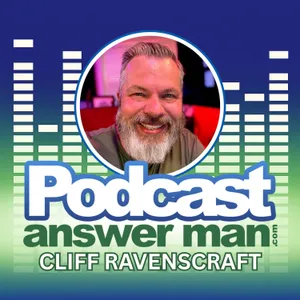
Podcast Answer Man: Daily Summaries Delivered
by Cliff Ravenscraft
For the past twenty years, I have been immersed in the world of podcasting. I’ve produced more than fifty-five of my own shows and published over 4,800 episodes. As a podcast consultant, I’ve trained tens of thousands of people on how to successfully launch their show and build a profitable business around their expertise. Podcast Answer Man is where you can bring every question you have about podcasting. Gear. Workflow. Strategy. Audience growth. Monetization. Industry shifts. The landscape is always changing. I may not have every answer on the spot. I do know how to find the right answer for you, and I’m eager to be of service. If you want a clear, dependable guide in a noisy industry, this is the place. Each episode is focused on practical insight, proven experience, and the mindset required to create content that serves your audience and supports the business you want to build. Ask your questions. I’ll help you find your path forward in podcasting.
Latest Episodes
The most recent episodes — sign up to get AI-powered summaries of each one.
- Yesterday1h 10m
511 - Why I’m Creating Fewer Podcasts and Writing More
At the beginning of 2026, I committed to publishing a new episode of Podcast Answer Man every Friday morning at 12:01 a.m. I kept that commitment for months. Recently, I decided to let it go. In this episode, I want to take you deeper into the thinking behind that decision because this has become about much more than how frequently I publish a podcast. I've been asking myself a larger question. What forms of creation deserve my life energy now? Audio podcasting has been one of the most important creative mediums of my life. I've produced more than 5,000 podcast episodes across more than 55 shows over the past 20 years. I'm certainly not walking away from audio. But I no longer want an arbitrary weekly publishing schedule determining where several hours of my creative energy go every week. Going forward, my commitment to Podcast Answer Man is that there will be at least one new episode every calendar month. There may be many more when I'm inspired. I'm giving myself the freedom to create those episodes when there is something I genuinely want to communicate. One major reason for this change is that I've rediscovered my identity as a writer. Before podcasting entered my life in 2005, I had spent years writing online. I recently rebuilt an archive containing hundreds of my old blog posts, and going through that material reminded me how much I used to enjoy writing. For years, one of the biggest disadvantages of written content was simply the amount of time it required. A long-form article or newsletter could consume anywhere from two to eight hours of my time. AI has dramatically changed that equation for me. Today I can begin by talking through an idea, transcribe those thoughts, use ChatGPT to help me organize what I've said, explore relevant stories from my archives, develop an outline and then work with that material until the final writing genuinely sounds like me. A piece that once might have consumed most of a working day can now often be created in roughly the same amount of time I would spend producing a podcast episode. There is also a significant difference in potential reach. I have thousands of people on my email list, nearly a thousand subscribers to my LinkedIn newsletter, a much larger network across LinkedIn and Facebook, and I'm now intentionally building on Substack. Meanwhile, I have more than 5,000 podcast episodes in my archives, many containing evergreen ideas that thousands of people heard when those episodes were originally released, but tens of thousands of people in my current network have never encountered. I'm very interested in what happens when some of those ideas become written-first content. I also talk about something I'm experimenting with in this very episode. This single recording was created simultaneously as an episode of Podcast Answer Man, an episode of The Cliff Ravenscraft Show and a long-form YouTube video. I'm continuing to think about each medium differently. Audio should work as audio. Video should work as video. Written content deserves to be intentionally crafted as written content. My video strategy is still being figured out, which is one of the reasons I'm heading to VidSummit soon. Toward the end of the episode, I share a story involving my PLAUD Note Pro that illustrates another principle that has become central to the way I approach problems. When something happens that I don't prefer, I eventually ask myself, "What is my desired outcome?" Then I start looking for the available paths toward that outcome. In this particular case, that process somehow resulted in three brand new PLAUD Note Pro devices. Relevant Links Next Level Mastermind: Momentum: https://www.cliffravenscraft.com/momentum Substack: https://cliffravenscraft.substack.com LinkedIn Newsletter: The Entrepreneur’s Journey : https://www.linkedin.com/newsletters/the-entrepreneur’s-journey-7275950143143604225 PLAUD Note Pro Affiliate Link: http://plaudus.sjv.io/en2jd6 Affiliate disclosure: If you purchase a PLAUD product through my affiliate link, I may receive a commission.
- 3 weeks ago1h 9m
510 - FIftteen Years, 760+ Episodes, and a Business Transformed by Podcasting
In 2011, Gary Takacs joined my four-week Podcasting A to Z course with an idea for a podcast specifically designed to serve dentists. Gary was certainly not new to his profession at the time. He had started his own dental practice management consulting firm in 1989 after spending the 1980s learning his craft with two larger consulting organizations. His marketing model consisted primarily of writing articles for dental publications and speaking at conferences around the country. Then he discovered podcasting. Gary saw the potential for audio to give him an ongoing way to share useful information with dentists beyond the people who happened to be sitting in the room when he was speaking. That decision changed his business. The Thriving Dentist Show now has more than 760 episodes and has reached dentists in 188 countries. Gary shared that he has published weekly for 748 consecutive weeks without missing a single week. Even more significant is what happened to his business as a result. By 2012, Gary says the number one reason dentists contacted him about his coaching and consulting services was because they listened to his podcast. The podcast also became the number one reason he was invited to speak at conferences. Eventually, those opportunities expanded into an international speaking career. Gary explained that meeting planners could listen to the podcast and essentially "sample" his thinking and communication style before taking the risk of putting him on their stage. What surprised Gary most about podcasting One of my favorite parts of this conversation had nothing to do with downloads, clients, or revenue. Within the first year of producing the show, Gary realized that he would continue podcasting even if nobody listened. Creating the podcast made him a better thinker. It caused him to read more, develop his ideas more deeply, clarify his perspective, and continually work on his own professional development. That is a benefit of podcasting that I believe is often overlooked. Sometimes the person who benefits most from creating the podcast is the person behind the microphone. In this conversation, Gary and I talk about: The first podcast Gary ever listened to and how Podcast Answer Man helped convince him that he could create a show of his own What his consulting business looked like before podcasting existed Why choosing an extremely specific audience can actually create more opportunities rather than fewer Being one of the earliest podcasts specifically serving the dental profession Apple's old "New & Noteworthy" era and the role it played in helping The Thriving Dentist Show gain early exposure Building an international audience that now reaches dentists in 188 countries Why Gary committed to publishing every Wednesday What has allowed him to maintain that consistency for hundreds of consecutive weeks Why Gary says producing the podcast became valuable to him even independent of whether anyone listened How podcasting became a primary source of coaching clients, workshop attendees, and speaking opportunities The unusual intimacy created by audio and the stories Gary has heard from dentists who spent years listening to him during their commutes Why both of us still believe deeply in audio-first podcasting Where video adds value and where Gary believes audio remains the better medium Gary's Less Insurance Dependent Podcast His upcoming Great Minds in Dentistry podcast Why Gary wants Great Minds in Dentistry to highlight people who genuinely love dentistry and inspire others about what is possible in the profession His abundance mindset and why he has actively encouraged other people in dentistry to launch podcasts, even though they could theoretically be considered competitors Why neither Gary nor I believe someone who wants to start an audio podcast in 2026 has "missed the opportunity" Gary told me that he has now watched more than 70 podcasts launch within the dental profession after encouraging others to share their own perspectives. His nickname within that community? The Podfather. And when someone recently asked him whether she was too late to start a podcast, Gary's response captured the spirit of this entire conversation: Jump in. The water's warm. Connect With Gary Takacs The Thriving Dentist Show and Gary's work: https://thrivingdentist.com Email Gary: gary@takacslearningcenter.com Text Gary:</strong
- Aug 13, 20261h 18m
509 - Does Your Podcast Still Deserve Your Time?
For the past 32 weeks, I have been committed to publishing a new episode of The Cliff Ravenscraft Show every Monday and a new episode of Podcast Answer Man every Friday. I made that commitment because I believed strongly in the value of consistency, and because bringing Podcast Answer Man back was part of a larger strategy to restore visibility, reconnect with the podcasting industry, get back on stages, and create new relationships and business opportunities. That strategy has worked. Podcast Answer Man has reopened doors, created speaking and community opportunities, and contributed to new client relationships. But after publishing 31 episodes of each show during this period, I found myself asking a different question: did I really need to produce this much content to get those results? As I worked through that question in real time during this episode, I realized that weekly publishing is no longer the minimum effective dose for what these shows are designed to accomplish in my business. Both podcasts still matter to me. They still help me stay top of mind, share what I am learning, demonstrate how I think, build relational depth, and maintain valuable archives of content. But I no longer believe that showing up every Monday and Friday provides enough additional value to justify the hours of time, attention, and energy it requires. So I am revising my commitment. Going forward, The Cliff Ravenscraft Show will have at least one new episode every month by the first of the month, and Podcast Answer Man will have at least one new episode every month by the 15th, with additional episodes whenever I genuinely feel inspired to create them. I also openly rated this episode about a 5 out of 10. I wandered, repeated myself, lost control of the chronology in places, and spent far more time creating it than I believe the finished episode deserves. I know exactly what I could do to turn it into a much stronger, more tightly crafted episode, but I have no desire to spend another two or three hours editing or rerecording it. That became part of the evidence itself. Had there been no Friday deadline, this episode probably would not exist. And now that it does exist, I do not believe it deserves more of my life simply so I can make it better. That realization helped me see the difference between keeping a commitment and refusing to reevaluate one. My podcasts still deserve my time. They just do not deserve as much of it as I have been giving them. Resources mentioned: Podcast Answer Man 475: “Podcast Answer Man Is Back” The Cliff Ravenscraft Show 802: “Why Podcast Answer Man Is Back” The Prosperous Coach by Rich Litvin and Steve Chandler Momentum Mastermind: https://cliffravenscraft.com/momentum Lost Podcast: https://lostpodcast.com Twilight Saga Podcast: https://twilightsagapodcast.com Hunger Games Podcast: https://hungergamespodcast.com Zoom PodTrak P4next Empowered Podcasting 3 in Charlotte, North Carolina If you are attending Empowered Podcasting 3 and want to connect with me: cliff@cliffravenscraft.com My next episode of Podcast Answer Man will be published no later than September 15, 2026.
- Aug 7, 202624 min
508 - Five Questions Every Podcaster Must Answer Before Expecting Their Show to Generate Clients
For more than twenty years, people have asked me two questions about podcasting more than almost any others: “How do I launch a podcast?” “How do I grow my audience?” Those can be useful questions, but neither one appears on my list of the five questions you must be able to answer if your goal is to generate clients through your show. Do not ask, “How do I grow my podcast?” until you can clearly answer what the growth is intended to produce, for whom, and why they would eventually pay you. A larger audience will not solve an unvalidated offer, unclear positioning, vague messaging, or a lack of confidence in the value you provide. Before investing more time, energy, and money into growing your show, I encourage you to reflect on these five questions. 1. Do you have a validated product or service? Has someone actually paid you for this solution, or are you hoping the podcast will validate it for you? Conversations, compliments, expressed interest, and awareness of a problem do not necessarily prove that people are willing to pay for your solution. My definition of early validation is that two or three people have paid for the product or service and would rate their satisfaction with that investment as an eight, nine, or ten. A podcast can help people discover and trust you, but it should not become a way to postpone the vulnerable work of asking someone to pay for what you offer. 2. Do you know exactly who your ideal client is? Can you identify the specific person, problem, desire, threshold, or transformation your offer is designed to address? You should be able to clearly describe: Who this person is What they are currently experiencing What they desire Where they tend to get stuck What obstacles they face What transformation your offer helps them experience You should also be able to answer this question clearly: “If I were looking for someone who might be a great fit for what you do, who should I be on the lookout for?” When you know exactly who you serve, your content becomes more focused, your language becomes more specific, and your invitations become more relevant. 3. Is your positioning and language clear enough for that person to recognize themselves? When they hear you describe the problem and the desired outcome, do they immediately think, “He understands exactly where I am”? Clear positioning does more than explain what you do. It allows the right listener to recognize their own experience in your words. They should hear you describe their challenges, patterns, frustrations, and desires with enough specificity that they feel understood. Vague language may sound professional, but specific language creates recognition. 4. Is each episode intentionally created for that person? Are you speaking to a clearly defined listener and helping them move toward a better decision, a new belief, or a meaningful next step? Your podcast does not need to sell your service in every episode. But every episode should make it increasingly logical for the right person to want your help. Your content can build trust, demonstrate how you think, reveal your values, clarify the listener’s problem, and help them see possibilities they could not previously see. The purpose is not to turn every episode into an infomercial. The purpose is to create content that consistently serves the kind of person your business is designed to help. 5. Do you believe deeply enough in the value of your offer to confidently invite people into it? Are you willing to clearly tell the right listener what you offer, why it matters, and what they should do next? You may have a validated offer, a clearly defined ideal client, powerful positioning, and relevant content. But none of those things will generate clients if you remain unwilling to make an invitation. On a scale of one to ten, how confident are you in the value of what you offer? If your answer is not an eight, nine, or ten, there may be important work to do around your offer, your evidence, your language, or your own belief in the transformation you provide. Confidence does not require arrogance or pressure. It means believing that inviting the right person into your offer is an act of service. You May Need Fewer Listeners Than You Think Depending on your business model, you may only need twenty, thirty, or fifty clients each year. With a genuinely high-value offer, you may only need five or ten. You do not necessarily need a massive audience. You need the right people hearing a clear message about a valuable solution that was intentionally created for them. I Would Love to Hear From You Take some time to journal through
- Jul 31, 202617 min
507 - Your Newest Episode Is Not Always Your Most Valuable
In 2016, I helped a student launch a podcast through my four-week Podcasting A to Z program. For this story, I call him Bill. Bill was 62 years old at the time. He wanted to create a library of leadership content that people could access on their own schedule. He also wanted to build a more virtual business that was less dependent on his physical presence with clients. At a deeper level, he hoped this new way of working would give him and his wife more time together and greater freedom to choose where and how they lived. By the end of our four weeks together, he had successfully launched his podcast. He continued producing the show for many years, but after that initial season, our direct interaction slowly faded. More than ten years passed without a meaningful one-on-one conversation between us. Bill remained on my email list during that time, but I have no evidence that he was regularly listening to my podcasts. Recently, I noticed that he had clicked a link in one of my emails to learn more about Next Level Mastermind Momentum. Seeing his name prompted me to revisit our old conversations and reach out personally. I was not assuming that Momentum was right for him. I was genuinely curious about how his life and business had unfolded since our time together. He responded and told me about the impact his podcast had made over the past decade. He also revealed that he was now facing a meaningful threshold as he considered what doing more, becoming more, or entering a new season might look like at age 73. Our renewed conversation prompted him to explore the work I am doing today. While looking through the archive of The Cliff Ravenscraft Show, he found episode 819: Why More Listeners Won’t Fix Your Business That episode had been published several months earlier. By the time he discovered it, I was preparing to record episode 832. He did not choose my newest episode. He scanned the titles and selected the episode that most clearly spoke to what he was experiencing in that moment. After listening, he told me that the message had hit him square in the face. That older episode allowed him to experience the current version of my thinking, my work, and the way I help people today. It played an important role in opening the door to a deeper conversation, and Bill ultimately booked a paid 90-minute coaching session with me. The exciting thing about this story is not simply that an older episode contributed to a paid coaching opportunity. The deeper lesson is that an episode I recorded months earlier remained available in my archive until the right person encountered it at the right moment. Your Episodes Do Not Expire An episode may have a publication date, but its opportunity to create value does not necessarily expire. Every meaningful episode you publish becomes an asset in your archive. It may reach someone days, months, years, or even decades after you originally recorded it. You cannot predict: which episode someone will choose how old that episode will be when they discover it which title will capture their attention what circumstances will make the message personally relevant what relationship or opportunity may emerge afterward What you can control is your commitment to continue publishing meaningful content. You can also be intentional about creating titles that clearly communicate the heart of each episode, making it easier for the right person to recognize the message they need. Your newest episode will naturally receive most of your attention today. But it may be an episode you published months or even years ago that creates the greatest value for someone tomorrow. Are You Facing a Meaningful Threshold? Perhaps you have a desired outcome that you want to make part of your next season. You may be clear about what you want and why it matters, but uncertain about the options available to you or the next aligned step you should take. That is the kind of work I do through my coaching and through Next Level Mastermind Momentum. Momentum is an environment where entrepreneurs gain clarity, receive strategic feedback, identify their next aligned action, commit that action to the calendar, and report back on the results. Learn more at: https://cliffravenscraft.com/momentum
- Jul 24, 202641 min
506 - The Feedback That Could Keep a Creator Going for Six Months
There may be a podcast you’ve listened to for years—someone who has taught you, encouraged you, entertained you, or helped you make decisions that changed your life. But have you ever actually told them? I’ve been listening to podcasts since the summer of 2005. Over those twenty years, I’ve listened to thousands of episodes from countless creators. Yet when I honestly thought about how often I’ve personally reached out to tell one of those creators about the impact they’ve had on my life, the number was surprisingly small. This episode was inspired by something I heard while listening to Matthew McLean interview Sarah Golding on his Audio Indies podcast. Sarah talked about how little direct feedback creators sometimes receive—even when the download numbers tell them that hundreds or thousands of people are listening. She shared that one meaningful piece of feedback can sometimes provide enough encouragement to fuel a creator for another six months. That really stayed with me. As listeners, we often assume established creators hear appreciation all the time. The reality is that they often don’t. People listen silently. They learn silently. They appreciate silently. Sometimes they even make significant changes in their lives because of something they heard—and the person behind the microphone never knows. In this episode, I share why analytics and download numbers can never replace genuine human acknowledgment. I also tell a very personal story from the early days of the Weekly Lost Podcast, when harsh criticism nearly caused me to walk away from podcasting altogether. I genuinely believed I was done. Then something happened. Our community responded with an overwhelming amount of encouragement and honest feedback about what our work meant to them. That feedback helped me keep going. Had I stopped producing podcasts at that moment, my entire life might look very different today. There may never have been a Podcast Answer Man. I may never have trained more than 40,000 people to launch podcasts. So much of what followed over the next nineteen years might never have happened. That experience taught me just how powerful expressed appreciation can be. I also share a practice I’ve developed over the years: intentionally saving meaningful feedback. I have physical letters and cards that I’ve kept, along with a Gmail label called Praise and Encouragement where I save messages that remind me why this work matters. When those inevitable questions arise— Is anybody really listening? Does this matter? Should I keep going? —I have somewhere to return and reconnect with evidence of the impact. A Few Creators I Want to Publicly Thank In this episode, I also take some time to publicly express my appreciation for several creators whose work has had a profound influence on my life. Leo Laporte introduced me to podcasting in its earliest days and has been one of the most influential voices in my relationship with technology. More than twenty years later, I still regularly listen to MacBreak Weekly and This Week in Tech. Fr. Roderick Vonhögen has been another voice in my life for more than twenty years. His curiosity, childlike astonishment, authenticity, love of service, and passion for personal growth have influenced me in countless ways. Over the years, our connection grew from listener and podcaster into a meaningful personal friendship. Brian and Liz Deacle, creators of It’s a Drama, are another couple whose podcast I listen to consistently. I love their authenticity, their relationship, their adventures around the world, and the opportunity to live vicariously through some of their experiences. I also give honorable mentions to three people whose podcasts have played significant roles in different seasons of my life: My dear friend and mentor Dan Miller and the 48 Days Online Radio Show Michael Hyatt and his This Is Your Life podcast My dear friend Ray Edwards and The Ray Edwards Show Each of these creators has contributed something meaningful to the person I am today. My Challenge to You Before today ends, think of one creator who has positively impacted your life and send them a message. Don’t just write: “Great episode.” Tell them something specific. Tell them what you heard. Tell them what you learned. Tell them about a decision you made or something you changed because of their work. Tell them the story of the impact. And for b
- Jul 17, 202630 min
505 - Has Your Business Outgrown What You’re Known For?
What happens when your work has evolved, but the market still associates you with an earlier version of your professional identity? In this episode, I explore how to use the content you create to intentionally change what people know you for, especially when your current work is profitable enough to keep postponing the work you most want to become known for. This episode was inspired by a powerful question that someone brought to a hot seat in one of my mastermind groups. This entrepreneur already had a successful service-based business, plenty of client work, an established content platform, a proven ability to create compelling content, and an audience that had previously generated attention and passive revenue. His problem was not a lack of ideas, ability, equipment, opportunity, or an existing audience. The deeper issue was that there was no immediate pain demanding that he create content. His current business was working, his income needs were being met, and client work continued to arrive. As a result, content remained in the category of “eventually.” Three Strategic Functions Your Content Can Serve Positioning Direction Service Without Sacrificing Strategy Consistency Is Not the Same as Frequency Consistency does not have to mean publishing daily or weekly. Consistency means choosing a rhythm that is: Intentional Sustainable Predictable enough to maintain Significant enough to accumulate evidence over time Even quarterly content created with strategic clarity can be more valuable than a burst of weekly content followed by nine months of silence. Not all publishing cadences produce equal results. Monthly or quarterly content will create evidence more slowly than weekly content. However, a slower and sustained rhythm is better than an aspirational schedule that repeatedly collapses. The minimum effective cadence is the cadence you will genuinely place on your calendar and protect. Two Commitments I Invite You to Make Commitment 1: Audit the Evidence Already in Your Archives Review the ten most recent pieces of content you have published, even if they were published several months or years ago. Ask yourself: What would someone believe I do based only on these ten pieces of content? What professional identity do these pieces reinforce? Is that identity current, incomplete, outdated, or confusing? What important dimension of my work is absent? Commitment 2: Put Your Next Piece of Content on the Calendar Decide: What will I publish? What date will it be published? What strategic role will it serve? What professional identity will it reinforce? What single next step will I offer? When will I prepare it? What protected time will I place on my calendar to complete it? Having an insight or breakthrough is incredibly valuable, but it is incomplete until it produces committed action. You do not prove that something matters simply by saying it matters. You demonstrate that it matters by choosing a date and time when you will devote yourself to it—and then protecting that commitment. Your Current Success Cannot Consume Your Entire Future Your current work may be profitable. It may be respectable. It may even be enjoyable. But if it is not the fullest expression of the work you want to be doing three years from now, you cannot allow today’s success to consume every hour that could have been invested in creating tomorrow’s professional identity. I am not telling you to abandon the work that is serving you today. I am encouraging you to consistently create evidence of the work you are becoming increasingly devoted to now and moving forward. Next Level Mastermind: Momentum The insight I shared in this episode came from a real conversation inside my Next Level Mastermind: Momentum group. This is the work I know I was put on this earth to do: creating rooms where entrepreneurs can bring the outcomes they genuinely desire, clarify who they are and what they want, identify what is currently standing in the way, and discern their next aligned step. Inside Momentum, we do not attempt to solve the entire path all at once. We focus on: The desired outcome What is currently standing in the way The clarity or insight needed now The next aligned step A commitment placed on the calendar Protected focus during that commitment A specific date to report back The feedback received from taking action The next aligned step that becomes v
- Jul 10, 202626 min
504 - What Do You Really Want Your Podcast to Do for You?
Many people begin podcasting with the goal of launching a show and growing an audience. But after observing thousands of podcasting journeys over the past two decades, I have become convinced that the podcast itself is rarely the true desired outcome. What people really want is what they hope the podcast will help them experience. That might include more fulfilling work, meaningful income, greater freedom, stronger professional relationships, increased influence, thought leadership, or a creative outlet for expressing what is inside them. In this episode, I explore the deeper question every podcaster should ask: What do you really want your podcast to do for you? I have produced more than 55 different podcast shows, published well over 5,000 podcast episodes, and helped more than 40,000 people launch podcasts. Today, I am less interested in teaching technical setup or tactical audience-growth strategies. Those resources are widely available. The perspective I now bring to the podcasting industry is focused on strategy, mindset, longevity, reinvention, and business clarity. I want to help creators design podcasts that support the life and work they actually want rather than allowing their lives to become consumed by algorithms, publishing expectations, and someone else’s definition of success. Returning to the Podcasting Community I also share why I have intentionally returned to podcasting conferences and events. These rooms reconnect me with a community that has shaped my life for two decades. Many of my most meaningful relationships began through hallway conversations, shared meals, meetups, and spontaneous introductions at podcasting events. I also value the opportunity to meet creators who are standing where I stood 15 or 20 years ago. I can now share both what others generously taught me and what I wish someone had been able to tell me at the beginning of my journey. I am not returning to an outdated version of my identity. I am bringing the credibility, relationships, experience, and accumulated trust of that earlier chapter into a more mature expression of my work. Upcoming Podcasting Events Empowered Podcasting Conference 3 August 21–23, 2026 Charlotte, North Carolina I will be presenting: Why You Should Consider Creating a Separate Podcast With Only 5 to 10 Episodes Learn more: https://empoweredpodcasting.com Podcast Movement NYC September 17–18, 2026 Terminal 5, New York City I submitted the following presentation for consideration: Why Your Most Powerful Podcast May Only Need 5 to 10 Episodes Podcast Movement is selecting 50 percent of its sessions through community voting. The remaining sessions will be selected through an industry review process. You can vote for my proposed session here: https://podcastmovement.fider.io/posts/139/why-your-most-powerful-podcast-may-only-need-5-to-10-episodes Learn more about the event: https://2026.podcastmovement.com PodINDY Saturday, November 7, 2026 9:00 AM to 5:00 PM Indianapolis, Indiana I will be the featured presenter for both the morning and afternoon sessions, helping podcasters and business professionals explore what it means to move to their next level. Learn more: https://podindy.com Podfest Expo 2027 January 14–17, 2027 Orlando, Florida I will be presenting: Five Strategic Shifts That Help an Established Podcast Evolve This session is designed for experienced podcasters whose shows were built for an earlier season of their lives. I will explore how a long-running podcast can evolve without completely abandoning its audience, identity, publishing rhythm, or everything the creator has already built. Learn more: https://podfestexpo.com What I Now Bring to the Podcasting Industry The five areas I am most interested in exploring today are: Strategy Mindset Longevity Reinvention Business clarity I want to help podcasters understand the role their show should play within the larger body of their life and work. I want to help creators identify the beliefs, fears, expectations, and identity
Get Podcast Answer Man summaries in your inbox
Free AI-powered daily recaps. Key takeaways, quotes, and mentions — in a 5-minute read.
Get Free Summaries →Free forever for up to 3 podcasts. No credit card required.
You Might Also Like
Listeners also like.

Podmastery: podcasting insights and advice for indie creators
Practical podcasting advice for independent creators aiming to grow their audience and improve production.

Right About Now - Legendary Business Advice
Real talk from business founders and entrepreneurs about building companies, lessons learned, and what actually works in real-world ventures.

Growth Triggers: Content Marketing & AI
A marketing expert shares proven podcasting strategies for growing audience reach, generating leads, and building authority in any niche.

Search Engine
Explores curious questions about the world with investigative storytelling and thoughtful analysis.
Creative Pep Talk
A practical guide for creatives to build a sustainable practice through interviews and strategies from artists and makers.

The Clark Howard Podcast
Offers practical advice on personal finance, consumer rights, and saving money, covering topics like insurance, home buying, and retirement planning.

Impact Podcast, Mentorship with Eddie Wilson
A seasoned entrepreneur shares insights on building businesses, leadership, and living with purpose to create meaningful impact.

BiggerPockets Business Podcast
Real entrepreneurs share practical advice on starting, growing, and selling businesses, covering hiring, marketing, and raising capital.

The Kevin Rose Show
Conversations with experts in tech, science, and performance to uncover unconventional wisdom for personal and professional growth.

Hacks and Hobbies with Junaid Ahmed
Creators and entrepreneurs discuss turning hobbies into income through podcasting, content, and personal branding.

Financial Advisor Success
Real stories and strategies from top financial advisors and consultants on building and growing a successful advisory business.

Total Disruption Podcast
Entrepreneurs discuss mindset, business growth, and operational frameworks to move beyond hustle culture and build scalable companies.
About Podcast Answer Man
For the past twenty years, I have been immersed in the world of podcasting. I’ve produced more than fifty-five of my own shows and published over 4,800 episodes. As a podcast consultant, I’ve trained tens of thousands of people on how to successfully launch their show and build a profitable business around their expertise. Podcast Answer Man is where you can bring every question you have about podcasting. Gear. Workflow. Strategy. Audience growth. Monetization. Industry shifts. The landscape is always changing. I may not have every answer on the spot. I do know how to find the right answer for you, and I’m eager to be of service. If you want a clear, dependable guide in a noisy industry, this is the place. Each episode is focused on practical insight, proven experience, and the mindset required to create content that serves your audience and supports the business you want to build. Ask your questions. I’ll help you find your path forward in podcasting.
Customized Recaps
AI-powered recaps with compact key takeaways, quotes, and insights.
Straight to Your Inbox
Get key takeaways from Podcast Answer Man in a 5-minute read.
Save Hours Every Week
Stay current on your favorite podcasts without falling behind.
Frequently Asked Questions
What is Podzilla's Podcast Answer Man daily summary?
It's a free AI-powered email that summarizes new episodes of Podcast Answer Man as soon as they're published. You get the key takeaways, notable quotes, and links & mentions — all in a quick read.
How does the Podcast Answer Man podcast summary work?
When a new episode drops, our AI transcribes and analyzes it, then generates a personalized summary tailored to your interests and profession. It's delivered to your inbox every morning.
Is this an official Podcast Answer Man product?
No. Podzilla is an independent service that summarizes publicly available podcast content. We're not affiliated with or endorsed by Cliff Ravenscraft.
Can I get summaries of other podcasts too?
Absolutely! The free plan covers up to 3 podcasts. Upgrade to Pro for 15, or Premium for 50. Browse our full catalog at /podcasts.
How often does Podcast Answer Man release new episodes?
Podcast Answer Man publishes weekly. Our AI generates a summary within hours of each new episode.
What topics does Podcast Answer Man cover?
Podcast Answer Man covers topics including Technology, Education, Business, Entrepreneurship, How To. Our AI identifies the specific themes in each episode and highlights what matters most to you.
Start getting Podcast Answer Man summaries tomorrow morning.
Free forever for up to 3 podcasts. No credit card required.
Free forever for up to 3 podcasts. No credit card required.