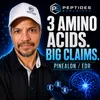
What Is Pinealon? Brain Aging, Neuroprotection, and the Evidence
Check out The Peptide App here: thepeptide.app/explained What is Pinealon, and does this three-amino-acid peptide really protect the aging brain? Pinealon—also called EDR or Glu-Asp-Arg—is a synthetic tripeptide associated with the Khavinson bioregulator research program. It is discussed for memory, neuroprotection, oxidative stress, brain aging, and even Alzheimer's disease, but the evidence is much more complicated than the marketing language suggests. John Garrett, examines Pinealon's proposed mechanism, cell and animal research, a newer induced-neuron study, and the PubMed-indexed human reports that are often overlooked. The episode also explains why Pinealon is different from Epitalon, where the human evidence is weak, what remains unknown about brain exposure and long-term safety, and why a plausible mechanism is not the same thing as an established cognitive therapy. Educational content only. Not medical advice.
Podzilla Summary coming soon
Sign up to get notified when the full AI-powered summary is ready.
Free forever for up to 3 podcasts. No credit card required.
Listen to This Episode
More from Peptides Explained
Icotyde: The Oral Peptide That Could Change Medicine
Why Your Favorite Peptides May Never Get a Big Human Trial

The Hollywood Trinity Stack: What Happened When I Tried It
SNAP-8: Is "Botox in a Bottle" Real?
Get summaries like this every morning.
Free AI-powered recaps of Peptides Explained and your other favorite podcasts, delivered to your inbox.
Free forever for up to 3 podcasts. No credit card required.