Free Daily Podcast Summary
Pepperwood Podcast: Daily Summaries Delivered
by Pepperwood Foundation
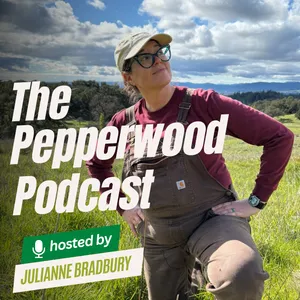
The Pepperwood Podcast is a monthly podcast, hosted by Julianne Bradbury. Join us as we speak with experts on conservation, landscape connectivity, biodiversity, science, stewardship, and everything in between.
Latest Episodes
The most recent episodes — sign up to get AI-powered summaries of each one.
- 1 weeks ago35 min
Connecting Communities & Inspiring Future Conservation Leaders
Join us as Margaret Boeger, Executive Director of Pepperwood, shares her passion for nurturing a complex web of community relationships. Through her leadership, early-career professionals like Priya Jayaswal have opportunities to grow, including completing Pepperwood's first high school internship with the Career Technical Education Foundation. Explore Pepperwood's impactful internship programs for college students, including the Stephen J. Barnhart Herbarium Internship and the Conservation Science Internship. Your contribution can play a vital role in supporting these transformative experiences.This episode's Nature Sound Guess Who Game mystery clip was recorded and shared by Bill Hubick, co-founder of Maryland Biodiversity Project. To learn more about the mystery sound maker, check out the collection of fact sheets from the Western Association of Fish and Wildlife Agencies.Send us questions, feedback, and requests for future guests and topics at podcast@pepperwoodpreserve.org
- Aug 11, 202643 min
The Native Advisory Council at Pepperwood & Indigenous Californian Basketry, with Clint McKay
Clint McKay, Pepperwood's Indigenous Education Coordinator and founding member of the Native Advisory Council at Pepperwood, shares the story of how the Council was established. He also discusses a recent donation of Wappo and Pomo baskets from the Bedford family, which will soon be displayed at Pepperwood's Art Gallery. Clint highlights the cultural significance of Indigenous basketry from California and explains Pepperwood's goals for sharing this collection with the community.For more knowledge and Indigenous perspectives from Clint McKay, check out his video about Cultural Burning and his webinar on Pomo and Wappo Basketry on Pepperwood's YouTube channel. To register for an event led by Clint McKay, please visit Pepperwood's Classes and Events page.This episode features clips from the Nature Sound Guess Who Game (the mystery clip and the bonus example), which were used with permission from Dan Levitis of the Children's Museum of Sonoma County and Sarah E. Reid, a certified California Naturalist, instructor, and iNaturalist Ambassador. For more information on the mystery species, check out this article from the journal Mammalian Species.
- May 20, 202653 min
Fires That Heal: The Story of a Broadcast Burn
Devyn Friedfel, Pepperwood’s Fire and Stewardship Manager and a California-certified Burn Boss, returns to the podcast to share the story of a 70-acre broadcast burn he coordinated in October 2025. In this episode, you'll learn about the various community partnerships that supported this project, the diverse research collaborations that studied the effects of the burn, and the initial impacts of this complex stewardship initiative.Visit Pepperwood’s Good Fire page to learn more about prescribed burning practices, access additional content from experienced practitioners, and discover opportunities for hands-on experience.This episode’s Nature Sound Guess Who Game clip, recorded by William R. Fish, was used courtesy of Cornell Lab of Ornithology | Macaulay Library.
- Mar 19, 202648 min
Birdwatching Breakthroughs: How Volunteers are Transforming Bird Conservation
Since 2007, Pepperwood has actively engaged dedicated volunteers in monitoring the behavior of local bird populations. Science volunteer Sean Jeane shares his valuable experience of gathering critical data through careful listening, highlighting the skills he's honed along the way. Additionally, Ecology Research Manager Michelle Halbur provides insights into the significant findings we've uncovered about local bird populations by analyzing the data contributed by Sean and his fellow volunteers. Their combined efforts enhance our understanding of these vital ecosystems and contribute to conservation efforts.Links bonanza!Support long-term monitoring and our new Motus tower with a donation to the Pepperwood FoundationCornell Lab links: Macaulay Library to access recorded bird vocalizations, All About Birds to learn more about bird species, Merlin Bird ID to download the smartphone application, and eBird to contribute bird observationsPepperwood also contributes breeding bird survey data to the Environmental Data Initiative and the Avian Knowledge NetworkLearn more (and join an annual birding event!) at the West Sonoma County Christmas Bird Count websiteLearn more about the movement to change eponymous bird names at Bird Names for Birds website and Bird Names for the 21st Century, an article from the American Birding Association.This episode’s bird vocalization clips were used courtesy of Cornell Lab of Ornithology | Macaulay Library. Clips were recorded by Paul Marvin, Bob McGuire, Randolph Little, Thomas G. Sander, Paul Fenwick, Ed Pandolfino, Timothy Piranian, I'm Birding Right Now (Teresa & Miles Tuffli), and Bob HasenickSend your guesses for this episode’s Mystery Nature Sound to podcast@pepperwoodpreserve.org!
- Feb 26, 202621 min
Voices of TeenNat
Seven past participants of TeenNat, Pepperwood’s summer science institute for high school students, join us to share their experiences and encourage others to apply. For current information about the program and how to apply, visit the TeenNat page, and email us at teennat@pepperwoodpreserve.org for more details and bilingual support.We kindly ask you to consider supporting the TeenNat program by making a donation to the Pepperwood Foundation to help us keep it free for all participants.In this episode, we feature clips from the Nature Sound Guess Who Game, recorded by Geoffrey A. Keller and Thomas G. Sander, with permission from the Cornell Lab of Ornithology | Macaulay Library. Please send your guesses for this episode’s Mystery Nature Sound to podcast@pepperwoodpreserve.org!
- Jan 13, 202642 min
Hunting & Conservation with Ryan Ferrell
Sentinel Site Manager Ryan Ferrell joins us for a conservation conversation (say that three times fast!) about the practice of hunting, its management for ecological sustainability, and its relationship to conservation. As a lifelong hunter and professional field scientist, Ryan’s understanding of the hunting community and the dynamics of local ecosystems provides unique insight into this topic. Learn more about Ryan’s work monitoring soils and hydrology at Pepperwood in the November 2024 article, Consulting with the Soil: Nature’s Oracle.This episode’s Nature Sound Guess Who Game clip, recorded by Bob Hasenick, was used courtesy of Cornell Lab of Ornithology | Macaulay Library.
- Dec 17, 202545 min
What is a Sentinel Site for Nature?
Sentinel Sites for Nature are strategic locations, such as preserves or sanctuaries, where scientists conduct long-term and standardized monitoring of physical and biological conditions, including climate, wildlife, and water. This monitoring helps detect and understand environmental changes, providing crucial early warnings of impacts from climate change, pollution, and habitat loss. The data gathered enables better conservation decisions.Using consistent methods like camera monitoring, audio monitoring, meteorological, and soil sensor data, these sites track the pulse of the natural world across vast networks like California's Sentinel Site Network or NOAA's Marine Sanctuaries. These data help scientists establish baselines and track trends, supporting stewardship and public safety more effectively. Pepperwood is part of California's Sentinel Site Network and was among the first such sites established in the state. It is also one of the most highly instrumented of such sites, with more than 700 real-time data streams. Take a tour through our extensive collection of monitoring sensors with Ryan Ferrell, Pepperwood's Sentinel Site Manager. Ryan describes how collecting abiotic data can inform our adaptive management plan, and what that process is like in his day-to-day experience. You can read more about this, including additional projects within the Sentinel Site and links to our regional partners, in the April 2025 article What is a Sentinel Site.This episode's Nature Sound Guess Who Game clip, recorded by Geoffrey A. Keller, was used courtesy of Cornell Lab of Ornithology | Macaulay Library.
- Nov 18, 202539 min
Celebrating 20 Years of Pepperwood: A Conversation with Steve and Linda Barnhart
To celebrate Pepperwood's 20th anniversary, we are joined by esteemed community members Steve and Linda Barnhart, who share their extensive involvement with Pepperwood over the years. Steve discusses the significance of oak woodlands and his academic research on local oak species, while Linda highlights the history of the Pepperwood Stewards training course, which led to the establishment of the California Naturalist (CalNat) certification course.To experience the CalNat course for yourself, visit the UC Environmental Stewards website or look for upcoming courses at Pepperwood’s Classes and Events page.This episode’s Nature Sound Guess Who Game clip, recorded by Andrew Spencer, was used courtesy of Cornell Lab of Ornithology | Macaulay Library.
Get Pepperwood Podcast summaries in your inbox
Free AI-powered daily recaps. Key takeaways, quotes, and mentions — in a 5-minute read.
Get Free Summaries →Free forever for up to 3 podcasts. No credit card required.
You Might Also Like
Listeners also like.
Sustainable World Radio- Ecology and Permaculture Podcast
Experts discuss ecology, permaculture, organic gardening, and sustainable living through interviews and commentary.

Wild Edible World: A Foraging Podcast
Explores wild edible plants and mushrooms, sharing global foraging knowledge and ways to identify and use them safely.
The Michigan DNR's Wildtalk Podcast
Michigan wildlife experts discuss habitat, conservation, and species management.

Wildlife Photography
Photographers discuss wildlife and nature photography techniques, experiences, and creative inspiration in casual conversation.

Gastropod
Explores the science and history behind food and farming, from ancient feasts to modern aquaculture and everything in between.
Nature Podcast
Covers breakthrough research from Nature journal across all scientific fields, with insights from scientists and science journalists.
The Nevada Wild Podcast
A podcast by the Nevada Department of Wildlife about wildlife and outdoor topics in Nevada.
In Defense of Plants Podcast
Explores the fascinating world of plants, from tiny duckweeds to towering redwoods, celebrating the science and wonder of botany.

Get Birding
A birder and actor guides listeners through the basics of birdwatching and nature connection.
MeatEater Conservation
A podcast about outdoor news and conservation issues, featuring interviews with experts and hunters.
Fire University
Explores fire ecology research and its applications for managing wildlife and plant communities.
Stanford Psychology Podcast
Students interview psychologists about recent research and its real-world applications in mental health, behavior, and cognition.
Customized Recaps
AI-powered recaps with compact key takeaways, quotes, and insights.
Straight to Your Inbox
Get key takeaways from Pepperwood Podcast in a 5-minute read.
Save Hours Every Week
Stay current on your favorite podcasts without falling behind.
Frequently Asked Questions
What is Podzilla's Pepperwood Podcast daily summary?
It's a free AI-powered email that summarizes new episodes of Pepperwood Podcast as soon as they're published. You get the key takeaways, notable quotes, and links & mentions — all in a quick read.
How does the Pepperwood Podcast podcast summary work?
When a new episode drops, our AI transcribes and analyzes it, then generates a personalized summary tailored to your interests and profession. It's delivered to your inbox every morning.
Is this an official Pepperwood Podcast product?
No. Podzilla is an independent service that summarizes publicly available podcast content. We're not affiliated with or endorsed by Pepperwood Foundation.
Can I get summaries of other podcasts too?
Absolutely! The free plan covers up to 3 podcasts. Upgrade to Pro for 15, or Premium for 50. Browse our full catalog at /podcasts.
How often does Pepperwood Podcast release new episodes?
Pepperwood Podcast publishes monthly. Our AI generates a summary within hours of each new episode.
What topics does Pepperwood Podcast cover?
Pepperwood Podcast covers topics including Science, Education. Our AI identifies the specific themes in each episode and highlights what matters most to you.
Start getting Pepperwood Podcast summaries tomorrow morning.
Free forever for up to 3 podcasts. No credit card required.
Free forever for up to 3 podcasts. No credit card required.