Free Daily Podcast Summary
Peculiar Britain: Odd Crimes & Bizarre Mysteries: Daily Summaries Delivered
by David Bainbridge
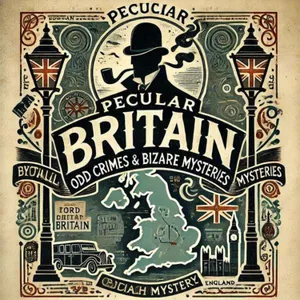
Delve into the unsettling, the unexplained, and the downright peculiar side of English history on Peculiar Britain: Odd Crimes & Bizarre Mysteries. Each episode unearths a new story from the dark and twisty corners of England—think strange heists, baffling murders, quirky local legends, and unsolved mysteries that defy reason. Join our host every week as we peel back the layers of these captivating cases, exploring the historical context, the theories, and the enduring intrigue behind each tale. Whether you’re a fan of true crime, fascinated by weird trivia, or simply crave a glimpse into England’s most unusual happenings, Peculiar Britain serves up a healthy dose of the curious and the macabre. Tune in to satisfy your itch for all things strange and spine-chilling!
Latest Episodes
The most recent episodes — sign up to get AI-powered summaries of each one.
- 1 weeks ago37 min
The Day Britain's Big Cat Mystery Left a Body
Britain has decades of big cat sightings and almost no bodies. Then, in February 1989, a man named Mr Evans found a dead cat on his land at Richards Castle, near Ludlow. It wasn't a stray tabby. It was an Asian jungle cat, a wild species whose nearest native population is in Egypt.A local vet, Gareth Thomas, identified it at Ludlow Museum: thin, starving and with a badly injured back, probably hit by a car. Weeks later, two kittens called George and Jasper walked into his surgery looking uncannily like the dead cat, and their feral mother, known only as "Mother", had lynx-like features of her own. Was the jungle cat their grandfather?We follow the specimen into the hands of cryptozoologist Dr Karl Shuker, who still owns it. We weigh up the hybrid theory against the biology of wild and domestic cat crosses, put Ludlow alongside the Hayling Island jungle cat killed only months earlier, and ask the bigger question. If one real exotic cat can turn up dead in Shropshire, how many of Britain's "big cat" sightings are actually something smaller, stranger and far easier to miss?
- 2 weeks ago21 min
The Winged Deer of Bristol Zoo: How a Muntjac Became a Monster
In October 2024, Bristol Zoo Project released a night-vision photo from its Bear Wood habitat showing a small, four-legged creature that seemed to have wings and horns. The zoo said it was a mystery and asked the public to help identify it. It compared the creature to the Loch Ness Monster and the Beast of Bodmin Moor, and posted a crystal-clear photo of a muntjac deer right next to it.Alex and Charlie investigate how Reddit’s sleuths cracked the case within hours, and how a camera’s slow shutter speed can give a barking deer wings. They also cover why Britain is so ready to believe in phantom beasts, from big cats on the moors to a shaved elephant seal dumped in Loch Ness. Then they check the calendar, and the zoo’s Halloween trail opened just days later.Was it a cryptid, a camera glitch or a clever marketing campaign? And if every oddity now gets debunked within hours, what happens when something genuinely strange turns up on camera?
- 2 weeks ago21 min
The Canvey Island Monster: The Thing That Washed Up After the Flood
In 1953, the North Sea flood killed 58 people on Canvey Island. Later that year, while the island was still recovering, something strange washed up on its shore. It had bulging eyes, a wide mouth, reddish-brown skin and what looked like two legs on its belly. A second, larger one turned up in 1954, and the Reverend Joseph Overs photographed it.The first carcass was cremated, and nobody published a scientific report. With no report, the rumours grew. By the end of the decade the American broadcaster Frank Edwards was linking the creature to the Devil’s Footprints of 1855.In this episode of Peculiar Britain, we look at what people actually saw and what the newspapers printed. We also look at why a museum ichthyologist later said the “monster” was an anglerfish, and how a fish’s pectoral fins came to look like feet. It’s a story about grief, gaps in the evidence and how quickly a bloated fish can become a legend.
- 2 weeks ago36 min
The Bat-Winged Monkey-Bird: Kent's Loneliest Monster
In 1969, a four-year-old girl in the back of the family car looked out into the twilight and saw something sitting in a tree: bat wings, red eyes, a monkey's face and a parrot's beak. Her parents heard nothing. She saw it again at eleven, near Robertsbridge. And at half past four one October morning in 2006, a screech woke her in Tunbridge Wells, and she knew it was back.This is the bat-winged monkey-bird: a British cryptid with a population of one witness. We look at how the case reached cryptozoologist Karl Shuker, why the anatomy simply doesn't work, which very real Kent resident screams in the dark, and what a single, sincere, lifelong sighting tells us about memory, childhood fear and the stories we absorb without noticing.
- 3 weeks ago40 min
The Bristol Crocodile: How a Bus Driver’s Wing Mirror Created a City Legend
In February 2014, a Bristol bus driver looked in his wing mirror and saw a six-foot crocodile in the River Avon. Or he thought he did. The Chief Constable tweeted about it, the police searched the river, and Bristol lost its mind in the best possible way.In this episode, we follow the sightings, the doctored photo that fooled the national press, and the very real caiman that turned up in a Somerset reservoir three years later. We ask why a crocodile can’t survive in the Avon, and why that has never mattered. From parody Twitter accounts to a permanent sculpture in Temple Quarter, this is the story of how a city turned a probable log into a much-loved monster.
- 3 weeks ago32 min
Whose Knob Is It Anyway? The Mystery of Lord Hereford's Knob
High on the north-west edge of the Black Mountains sits a 690-metre hill with two names. In Welsh it is Twmpa: the mound. In English it is Lord Hereford's Knob, a name that has been making walkers snigger at Ordnance Survey maps for generations.But which Lord Hereford? And did he name it, or did someone name it at him? We follow the trail from the Norman Devereux family to a country house three miles from Hay-on-Wye, then up the slopes with Allen Ginsberg on an acid-soaked summer's day in 1967, and on to Half Man Half Biscuit's gloriously daft 2008 tribute. Plus the best routes to the top via Gospel Pass and Capel-y-ffin.A story about place names, power and the gap between what a landscape is and what we call it.
- Oct 14, 202613 min
Arabella Yate | The Iron Grave of Ashford Carbonell
1806. Ashford Carbonell, Shropshire. Arabella Yate died, and was commemorated with a cast-iron chest tomb in the churchyard of St Mary Magdalene. Our search of Shropshire parish records found nothing concrete about her life.Local children were still afraid of her grave in the 20th century.What this episode examinesIn this episode of Peculiar Britain: Odd Crimes and Bizarre Mysteries, we look at the facts and folklore around Arabella Yate and her unusual iron grave. It matters because almost nothing is documented, and the legend has filled the gap.This episode exploresThe Grade II listed memorial and what Historic England says about itWhy so little is recorded about Arabella’s lifeHer claimed link to Ashford Court, built in the 1780s by Samuel Yate Sprott, and why the ownership records don’t support itShropshire’s ironworking history and other early iron memorials in the countyThe witchcraft rumours and the superstition about circling her graveWhat the evidence does and doesn’t support: the claim she was buried deeply in metal is folkloreSome mysteries fade with time. Others grow louder in silence.
- Jul 10, 202614 min
The Theatre of Dissent: Binface, Buckets and the Ballot Box
Where democracy meets dressing-up box. Every general election, somewhere between the solemn returning officer and the ashen-faced incumbent, a man in a bin costume elbows his way onto the stage. This week on Peculiar Britain, we ask why. From the 2026 Makerfield by-election, where a man in a full fox costume cornered Andy Burnham mid-count, to Clacton, where Nigel Farage's hasty resignation turned Count Binface into the nation's unofficial opposition, we trace the strange and surprisingly serious lineage of Britain's novelty candidates. Screaming Lord Sutch. Bus-Pass Elvis. H'Angus the Monkey, who actually ran a town rather well. We dig into the folklore of the "carnivalesque", the Ofcom rules that force broadcasters to take these people seriously, and why Britain, alone among nations, has built democratic safeguards specifically so its citizens can mock power to its face. Dark humour, deep history, and a surprising amount of legislation. For the full story and show notes, visit peculiarbritain.wordpress.com.
About Peculiar Britain: Odd Crimes & Bizarre Mysteries
Delve into the unsettling, the unexplained, and the downright peculiar side of English history on Peculiar Britain: Odd Crimes & Bizarre Mysteries. Each episode unearths a new story from the dark and twisty corners of England—think strange heists, baffling murders, quirky local legends, and unsolved mysteries that defy reason. Join our host every week as we peel back the layers of these captivating cases, exploring the historical context, the theories, and the enduring intrigue behind each tale. Whether you’re a fan of true crime, fascinated by weird trivia, or simply crave a glimpse into England’s most unusual happenings, Peculiar Britain serves up a healthy dose of the curious and the macabre. Tune in to satisfy your itch for all things strange and spine-chilling!
Customized Recaps
AI-powered recaps with compact key takeaways, quotes, and insights.
Straight to Your Inbox
Get key takeaways from Peculiar Britain: Odd Crimes & Bizarre Mysteries in a 5-minute read.
Save Hours Every Week
Stay current on your favorite podcasts without falling behind.
Frequently Asked Questions
What is Podzilla's Peculiar Britain: Odd Crimes & Bizarre Mysteries daily summary?
It's a free AI-powered email that summarizes new episodes of Peculiar Britain: Odd Crimes & Bizarre Mysteries as soon as they're published. You get the key takeaways, notable quotes, and links & mentions — all in a quick read.
How does the Peculiar Britain: Odd Crimes & Bizarre Mysteries podcast summary work?
When a new episode drops, our AI transcribes and analyzes it, then generates a personalized summary tailored to your interests and profession. It's delivered to your inbox every morning.
Is this an official Peculiar Britain: Odd Crimes & Bizarre Mysteries product?
No. Podzilla is an independent service that summarizes publicly available podcast content. We're not affiliated with or endorsed by David Bainbridge.
Can I get summaries of other podcasts too?
Absolutely! The free plan covers up to 3 podcasts, any in the catalog. Basic raises that to 15, Pro to 40 and Max to 100. Browse our full catalog at /podcasts.
What topics does Peculiar Britain: Odd Crimes & Bizarre Mysteries cover?
Peculiar Britain: Odd Crimes & Bizarre Mysteries covers topics including History, True Crime, Documentary, Culture, Society & Culture. Our AI identifies the specific themes in each episode and highlights what matters most to you.
Start getting Peculiar Britain: Odd Crimes & Bizarre Mysteries summaries tomorrow morning.
Free forever for up to 3 podcasts. No credit card required.
Free forever for up to 3 podcasts. No credit card required.