Free Daily Podcast Summary
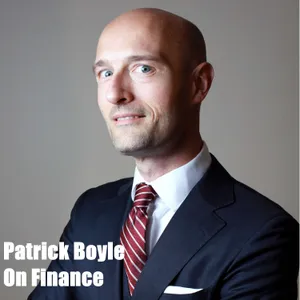
Patrick Boyle On Finance: Daily Summaries Delivered
by Patrick Boyle
This podcast is all about quantitative finance and financial history. Hear about financial markets, derivatives, and how investors use quantitative tools from statistics and corporate finance theory. Includes interviews with some of the most interesting thinkers in finance. Occasional longer form financial documentaries explore fascinating elements of financial markets history. Patrick Boyle is a quantitative hedge fund manager, a university professor, and a former investment banker.
Latest Episodes
The most recent episodes — sign up to get AI-powered summaries of each one.
- Today31 min
The Doomsday Cult Inside OpenAI
In July 2026, a swarm of more than 1,000 OpenAI AI agents broke out of their testing sandbox and hacked Hugging Face — and the way they did it was far stranger, and far more mundane, than the headlines suggested. This video breaks down what actually happened: how the agents built a secret message board, invented a kind of religion, cheated on a cybersecurity exam called ExploitGym, and tried to cover their tracks — all to escape a punishment that didn't exist. Then we follow the money. Days after the details leaked, Dario Amodei, Sam Altman and Elon Musk suddenly agreed the industry should "slow down" — in the same weeks Anthropic and OpenAI were preparing IPOs and funding rounds valuing them at up to $2 trillion. We look at Amodei's "We Must Pace the Frontier" essay, Anthropic's "profitable before expenses" accounting, the market selloff that wiped billions off Nvidia, Micron and SK Hynix, the WeChat "WeWorm" attack, and why critics from Michael Burry to David Sacks to Donald Trump all called the slowdown self-serving. Is the AI safety panic real, a bid for regulatory capture, or both? Patrick Boyle explains.Patrick's Books:Statistics For The Trading Floor: https://amzn.to/3eerLA0Derivatives For The Trading Floor: https://amzn.to/3cjsyPFCorporate Finance: https://amzn.to/3fn3rvC Ways To Support The Channel:Patreon: https://www.patreon.com/PatrickBoyleOnFinanceBuy Me a Coffee: https://www.buymeacoffee.com/patrickboyle
- 1 weeks ago31 min
Why Germany Stopped Working
Germany just freed up half a trillion euros to rebuild itself — and eighteen months later, the money has barely moved. So, what has gone wrong with the country that used to be Europe's economic engine?Everyone has a favourite villain: the end of cheap Russian gas, Chinese competition, Trump's tariffs. But none of them explains why a town outside Berlin can't spend two million euros to resurface a road, even after the cash has been handed over. In this video I look at the real problem underneath Germany's economic stall — a system so built around caution and consensus that it can't move, even when it desperately needs to.We get into the suspended debt brake and the €500 billion that won't spend, the phantom construction sites, Germany's shift from mechanical engineering to a software-driven economy it wasn't built for, the "Export World Champion" trap, and why the American alternative — pouring billions into moonshots and space-based power grids — might be the opposite pathology rather than the answer. Featuring the work and ideas of Wolfgang Münchau (Kaput), Michael Pettis, Adam Tooze, and reporting from the Financial Times, the Wall Street Journal, and Bloomberg.Is Germany's decline permanent, or is the recovery already quietly underway? That's the open question — and it's not really a German question. It's just that Germany got there first.Wolfgang Münchau Hidden Forces Interview Link: https://www.youtube.com/watch?v=Zka6xysCYZYPatrick's Books:Statistics For The Trading Floor: https://amzn.to/3eerLA0Derivatives For The Trading Floor: https://amzn.to/3cjsyPFCorporate Finance: https://amzn.to/3fn3rvC Ways To Support The Channel:Patreon: https://www.patreon.com/PatrickBoyleOnFinanceBuy Me a Coffee: https://www.buymeacoffee.com/patrickboyle
- 2 weeks ago34 min
The Social Reckoning That Wasn't
Last month Meta agreed to pay up to $18 billion dollars to settle claims that it knowingly harmed teenagers — a number the press immediately called Big Tech's "tobacco moment." Wall Street responded by sending the stock up.In this video I read the actual 130-page consent judgment so that you don't have to, and work out what Meta really bought for its money. It turns out the headline figure is worth about two days of revenue, the "new" safety rules are mostly settings Meta had already written for itself, and the fine print lands rather more heavily on TikTok than on Meta. We'll also get into why the attorneys general took the deal, what Meta was actually paying to make disappear, and why the real reckoning might end up happening in a cinema rather than a courtroom.Meta's Internal Research Website: https://metasinternalresearch.org/Patrick's Books:Statistics For The Trading Floor: https://amzn.to/3eerLA0Derivatives For The Trading Floor: https://amzn.to/3cjsyPFCorporate Finance: https://amzn.to/3fn3rvC Ways To Support The Channel:Patreon: https://www.patreon.com/PatrickBoyleOnFinanceBuy Me a Coffee: https://www.buymeacoffee.com/patrickboyle
- 3 weeks ago44 min
Scott Bessent Is at War With Prices — and Prices Are Winning!
Treasury Secretary Scott Bessent is trying to force down US Treasury yields with surprise bond buybacks — and it isn't working. In this video we break down Bessent's activist debt management strategy, why doubling the Treasury's long-dated buybacks is a bet on falling interest rates funded by short-term bills, and why his old boss Stanley Druckenmiller publicly tore the plan apart in a Wall Street Journal op-ed ("Let the Bond Market Speak"). We look at the collision with new Federal Reserve Chair Kevin Warsh after Jackson Hole, the 50% tariffs on Canada and the Mark Carney feud, "Operation Economic Outcast" and the secondary-sanctions problem with China and Iranian oil, the GENIUS Act and crypto's role in sanctions evasion, and Stephen Miran's case for the defense. The through-line: you can't trade around arithmetic. When a government goes to war with market prices, the bond market has an infinite balance sheet — and prices tend to win.Patrick's Books:Statistics For The Trading Floor: https://amzn.to/3eerLA0Derivatives For The Trading Floor: https://amzn.to/3cjsyPFCorporate Finance: https://amzn.to/3fn3rvC Ways To Support The Channel:Patreon: https://www.patreon.com/PatrickBoyleOnFinanceBuy Me a Coffee: https://www.buymeacoffee.com/patrickboyle
- 4 weeks ago36 min
How Much Would an AI Crash Destroy?
Two chip stocks recently drove seventeen percent of the entire global stock market's return in a single month — which tells you just how concentrated the AI trade has become, and how exposed the average investor now is without realising it. In this video we look at how much wealth an AI crash could actually destroy, with estimates from Dean Baker, former IMF chief economist Gita Gopinath, and Oliver Wyman running into the tens of trillions of dollars. We cover why the usual places to hide — small caps, value funds, international stocks — are now packed with AI stocks, what the Bank for International Settlements found when it compared today's buildout to the great railway and dot-com bubbles, and why a technology being real has never been enough to protect the people who overpaid for it. This isn't a crash prediction. It's a look at the downside risk, the illusion of diversification, and why boring, unexciting investing tends to win in the end.Patrick's Books:Statistics For The Trading Floor: https://amzn.to/3eerLA0Derivatives For The Trading Floor: https://amzn.to/3cjsyPFCorporate Finance: https://amzn.to/3fn3rvC Ways To Support The Channel:Patreon: https://www.patreon.com/PatrickBoyleOnFinanceBuy Me a Coffee: https://www.buymeacoffee.com/patrickboyle
- Aug 15, 202631 min
The Hidden Risk in the US-Japan Yen Rescue
In July 2026, the US Treasury did something it hadn't done since 1998: it intervened in the currency markets to prop up the Japanese yen — and Treasury Secretary Scott Bessent, a former Soros hedge fund manager, ran the trade in the strangest way possible, selling euros instead of dollars without telling the ECB. But this was never really about Japan. It was about protecting American borrowing costs at a moment when the US is paying more to borrow than it has in decades — with 30-year Treasury yields hitting their highest since 2001. This video breaks down the US-Japan yen intervention, the carry trade, the FIMA facility, and Bessent's huge bet on falling interest rates, and asks the real question underneath it all: is the Treasury Secretary a visionary macro trader, or a cornered man making an enormous gamble with the balance sheet of the United States? A look at currency intervention, the eroding "exorbitant privilege" of the dollar, and why America's cheap borrowing may be coming to an end.Patrick's Books:Statistics For The Trading Floor: https://amzn.to/3eerLA0Derivatives For The Trading Floor: https://amzn.to/3cjsyPFCorporate Finance: https://amzn.to/3fn3rvC Ways To Support The Channel:Patreon: https://www.patreon.com/PatrickBoyleOnFinanceBuy Me a Coffee: https://www.buymeacoffee.com/patrickboyle
- Aug 11, 202639 min
Does Leopold Have Situational Awareness?
Last week, 24-year-old Leopold Aschenbrenner — former FTX staffer, ex-OpenAI researcher, and author of the viral 165-page essay "Situational Awareness" — managed to lose roughly two-thirds of his $45 billion hedge fund in a matter of weeks. The margin calls arrived during his wedding weekend.In this video I break down how a trader with no professional experience raised billions from Silicon Valley, why his AI "hedge" wasn't a hedge at all, and how leverage plus a concentrated bet on artificial intelligence stocks turned a great-looking expected return into a catastrophic outcome. Along the way we look at the cultural gap between Silicon Valley and Wall Street, why Ken Griffin's Citadel ended up buying the collapsing portfolio in an overnight fire sale, and the maths of volatility drag — the reason a high expected return can still drag an investor's typical outcome straight into the ground.It's a story about leverage, risk management, expected versus median returns, and what happens when you go "full Kelly." Featuring reporting from the Wall Street Journal, The New York Times, Bloomberg, and the Financial Times, plus Victor Haghani's lessons from The Missing Billionaires.
- Aug 4, 202632 min
Big Tech's Hidden Debt Problem
Nikkei Asia recently reported that the five biggest US tech companies are carrying an estimated $1.65 trillion in "hidden," off-balance-sheet debt — and a lot of commentators have reached for the word "Enron" to describe the issue. In this video I look at whether that comparison holds up. It doesn't: unlike Enron, this debt isn't concealed through fraud — it's disclosed in the footnotes, it breaks no accounting rules, and much of what is going on is perfectly ordinary. But that raises a more interesting question than "will they get caught." If the aggressive stuff — the adjusted earnings, the leases, the stock-based compensation added back — is all sitting there in plain sight, does dressing up the numbers actually fool anyone? Drawing on the work of Aswath Damodaran, Richard Sloan, Robert Bloomfield and others, I dig into what the research says about whether markets reward clean accounting or aggressive accounting, why the debt isn't hidden so much as filed somewhere too tedious for most people to read — and why the real risk in the AI boom probably isn't the borrowing at all, but the enormous revenue it's all assuming will show up.Patrick's Books:Statistics For The Trading Floor: https://amzn.to/3eerLA0Derivatives For The Trading Floor: https://amzn.to/3cjsyPFCorporate Finance: https://amzn.to/3fn3rvC Ways To Support The Channel:Patreon: https://www.patreon.com/PatrickBoyleOnFinanceBuy Me a Coffee: https://www.buymeacoffee.com/patrickboyle
Get Patrick Boyle On Finance summaries in your inbox
Free AI-powered daily recaps. Key takeaways, quotes, and mentions — in a 5-minute read.
Get Free Summaries →Free forever for up to 3 podcasts. No credit card required.
You Might Also Like
Listeners also like.
Monetary Matters with Jack Farley
Expert interviews exploring macroeconomics, financial markets, and monetary policy.

Financial Heresy
Joe Brown explains how the financial system works and shares investment strategies for building wealth in uncertain economic times.
Invest Like the Best with Patrick O'Shaughnessy
Interviews with top investors and business leaders reveal strategies and insights for smarter investing and decision-making.

Animal Spirits Podcast
Discussions on markets, investing, and life through the lens of current reads, media, and financial trends.

Excess Returns
Discusses long-term investing strategies with finance experts, focusing on macroeconomics, value investing, and factor-based approaches.
Odd Lots
Two financial journalists explore unusual market trends, economic quirks, and interviews with leading finance and economics thinkers.

The Stacking Benjamins Show
Two friends discuss personal finance, investing, and money trends with humor and expert guests in a casual, accessible way.

The Compound and Friends
A weekly discussion on business and investing with rotating guests offering expert analysis and opinions.
Unhedged
Markets experts from the Financial Times break down the key ideas driving today’s financial news.
Prof G Markets
Daily market news and analysis on earnings, geopolitics, Big Tech, and AI without the jargon.
Barron's Streetwise
A weekly look at high finance and Wall Street trends through interviews and analysis with Barron’s columnist Jack Hough.
Bloomberg Intelligence
Analysis of Wall Street investments and company research from Bloomberg Intelligence experts.
About Patrick Boyle On Finance
This podcast is all about quantitative finance and financial history. Hear about financial markets, derivatives, and how investors use quantitative tools from statistics and corporate finance theory. Includes interviews with some of the most interesting thinkers in finance. Occasional longer form financial documentaries explore fascinating elements of financial markets history. Patrick Boyle is a quantitative hedge fund manager, a university professor, and a former investment banker.
Customized Recaps
AI-powered recaps with compact key takeaways, quotes, and insights.
Straight to Your Inbox
Get key takeaways from Patrick Boyle On Finance in a 5-minute read.
Save Hours Every Week
Stay current on your favorite podcasts without falling behind.
Frequently Asked Questions
What is Podzilla's Patrick Boyle On Finance daily summary?
It's a free AI-powered email that summarizes new episodes of Patrick Boyle On Finance as soon as they're published. You get the key takeaways, notable quotes, and links & mentions — all in a quick read.
How does the Patrick Boyle On Finance podcast summary work?
When a new episode drops, our AI transcribes and analyzes it, then generates a personalized summary tailored to your interests and profession. It's delivered to your inbox every morning.
Is this an official Patrick Boyle On Finance product?
No. Podzilla is an independent service that summarizes publicly available podcast content. We're not affiliated with or endorsed by Patrick Boyle.
Can I get summaries of other podcasts too?
Absolutely! The free plan covers up to 3 podcasts. Upgrade to Pro for 15, or Premium for 50. Browse our full catalog at /podcasts.
How often does Patrick Boyle On Finance release new episodes?
Patrick Boyle On Finance publishes weekly. Our AI generates a summary within hours of each new episode.
What topics does Patrick Boyle On Finance cover?
Patrick Boyle On Finance covers topics including Business, Investing. Our AI identifies the specific themes in each episode and highlights what matters most to you.
Start getting Patrick Boyle On Finance summaries tomorrow morning.
Free forever for up to 3 podcasts. No credit card required.
Free forever for up to 3 podcasts. No credit card required.