Free Daily Podcast Summary
Patient from Hell: Daily Summaries Delivered
by Manta Cares
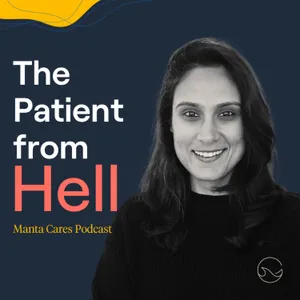
Are you a cancer patient? Caregiver? Survivor? Advocate? Friend? Then you've come to the right place! The Patient from Hell is a bi-weekly podcast hosted by cancer survivor, founder of Manta Cares, and self-described "patient from hell", Samira Daswani. The podcast features guests who are making the cancer experience a little easier. Each episode will educate, empower, inspire and most importantly, show you that you are not alone in your experience. Listen on Apple Podcasts, Spotify, YouTube, or wherever you listen to (or watch!) podcasts.
Latest Episodes
The most recent episodes — sign up to get AI-powered summaries of each one.
- Yesterday42 min
Lung Cancer at 33: A Doctor's Symptoms Were Mistaken for Pneumonia
November is Lung Cancer Awareness Month, so we're rewinding to a powerful conversation about lung cancer in young people.At 33, in her first year of medical residency, Dr. Sydney Barned was diagnosed with stage 4 ALK-positive non-small cell lung cancer. Her early symptoms, shortness of breath on her 5K runs, a cough, and then wheezing, were treated as walking pneumonia and an airway disease. It wasn't until she pushed for a CT scan that doctors found a mass compressing her airway.In this episode of Patient From Hell, host Samira Daswani sits down with Dr. Barned, an internal medicine hospitalist who has spent years caring for patients on the oncology floor while living with lung cancer herself, on what she calls "both sides of the stethoscope."In this conversation, Samira and Dr. Barned discuss:• Why "Did you smoke?" is the wrong first question, and the stigma that leaves lung cancer under-researched• The early lung cancer symptoms that were mistaken for pneumonia and asthma• Why patients should speak up and push for a CT scan when symptoms don't go away• Stage 4 ALK-positive lung cancer and life on targeted therapy• How she self-diagnosed a pulmonary embolism (a blood clot in the lungs)• Lung cancer screening guidelines and who they leave out• What palliative care really is, and why she waited years to get it• Her advice for anyone newly diagnosed with lung cancerWhether you're newly diagnosed, supporting someone you love, or treating patients, this conversation is a reminder that lung cancer can happen to anyone, and that the right questions can change your care.Recorded in September 2024. Timelines mentioned in the episode reflect that date.Chapters0:00 Lung cancer at 33: "Did you smoke?"0:46 Meet Dr. Sydney Barned1:06 Diagnosed with lung cancer at 33, during residency3:35 Stage 4 ALK-positive non-small cell lung cancer & targeted therapy5:14 A doctor working on the oncology floor7:15 Treating patients who remind you of yourself12:34 How she self-diagnosed a pulmonary embolism14:23 Early lung cancer symptoms mistaken for pneumonia & asthma18:14 Would you have known to push for a CT scan?20:16 Lung cancer stigma, even among doctors22:16 Lung cancer screening guidelines & who they miss23:45 "The most barbaric thing": her first mammogram25:51 Do patients understand palliative chemotherapy?35:43 Palliative care years into treatment: managing fatigue39:13 Advice for anyone newly diagnosed with lung cancer40:26 Manta Cares maps: the questions to ask your doctor41:49 DisclaimerAbout Our GuestDr. Sydney Barned is an internal medicine hospitalist and a stage 4 lung cancer survivor. Originally from Jamaica, she moved to the United States for residency and was diagnosed with ALK-positive non-small cell lung cancer at 33, months into her intern year. Thanks to targeted therapy, she went on to complete her residency and serve as chief resident, and she has since spent years caring for patients on her hospital's oncology floor. Living on both sides of the stethoscope, she is a passionate advocate for lung cancer research, education, and patient self-advocacy.🎙️ Patient From Hell is hosted by Samira Daswani, cancer survivor, entrepreneur, and founder and CEO of Manta Cares. Through candid conversations with patients, physicians, researchers, and healthcare leaders, the show explores the realities of cancer care while empowering patients with practical, evidence-based information.🔗 Connect with Patient From HellWebsite: https://www.mantacares.comFree personalized cancer roadmap: https://maps.mantacares.com/sign-upManta Cares app: https://pages.mantacares.com/appLinkedIn: https://www.linkedin.com/in/samiradaswani/Instagram: https://www.instagram.com/manta_cares/This podcast is intended for educational and informational purposes only and should not be considered medical advice. Always consult a qualified healthcare professional regarding diagnosis, treatment, or medical decisions.
- 2 weeks ago35 min
Taking Ownership of Your Care After Breast Cancer Treatment | Kia Lee, Author of Lighthouse
The end of active treatment is often treated as a finish line. For many patients, it is the start of a harder adjustment.Kia Lee was 38 when she found a lump in her right breast at the gym. She was diagnosed with stage 3 ER-positive, HER2-negative breast cancer in 2023, and over the next 20 months she went through chemotherapy, a unilateral mastectomy, proton radiation, and reconstruction. Getting proton radiation covered took a five-month fight with her insurer.Kia, a breast cancer recovery coach and author of Lighthouse: The Path Through Cancer, joins host Samira Daswani to talk about what happened after treatment ended. She explains why emotions she could not process during treatment surfaced once it was over, how the experience changed the way she spends her time and energy, and how body image and intimacy shift after a mastectomy and reconstruction.The conversation closes with practical guidance for patients approaching the end of treatment: setting aside time to reconnect with yourself, including ways to do that at home and without spending money; finding a therapist, mentor, or peers with lived experience; and asking questions until you understand the trade-offs of each decision, from hormone therapy to fertility preservation.Kia's views on her own treatment choices, including hormone therapy and new treatment options, reflect her personal experience. Talk with your care team about the options that are right for you.0:00 What have I done with 38 years?0:17 Introducing Kia Lee0:50 Finding a lump at 38: a stage 3 ER-positive, HER2-negative diagnosis2:13 Chemotherapy, an allergic reaction, and an insurance requirement2:52 Mastectomy and a five-month fight to cover proton radiation3:54 A six-month plan that took nearly two years4:29 Done with treatment, and finding the middle ground5:41 Hormone therapy and side effects6:36 Why the end of treatment was the hardest chapter8:40 Now what? Questioning identity and purpose10:14 Why emotions surface after active treatment ends11:56 Is processing ever finished?13:52 Before and after cancer: from people pleasing to boundaries16:33 Facing your own mortality18:10 Body image, reconstruction, and intimacy19:51 Being done and weighing new treatment options21:56 Advice for patients nearing the end of treatment24:28 Taking ownership of your treatment decisions25:49 How do you reconnect with yourself?27:52 Reconnecting without travel or spending money30:50 Take your time and ask the questions32:54 A Friday-to-Monday decision on fertility preservation34:21 Closing thoughtsKia Lee is a stage 3 breast cancer survivor, author, speaker, and patient advocate dedicated to helping people navigate life during and after breast cancer. She is the author of Lighthouse: The Path Through Cancer and Lighthouse: Surviving Narcissistic Abuse, and works one-on-one with women navigating life after breast cancer. She also facilitates a virtual support group for Breastcancer.org. Her work has been featured by Katie Couric Media, Living Beyond Breast Cancer, and Wildfire Magazine, and she has appeared on several breast cancer and survivorship podcasts.Website: https://kia-lee.comInstagram: @LighthouseSurvivorPatient From Hell is hosted by Samira Daswani, cancer survivor, entrepreneur, and founder of Manta Cares. Through candid conversations with patients, physicians, researchers, and healthcare leaders, the show explores the realities of cancer care while empowering patients with practical, evidence-based information.Connect with Patient From HellWebsite: https://www.mantacares.comDisclaimerThis podcast is intended for educational and informational purposes only and should not be considered medical advice. Always consult a qualified healthcare professional regarding diagnosis, treatment, or medical decisions.
- Oct 7, 202639 min
First-Line Treatment for Metastatic TNBC: Inside the ASCENT-03 Trial | Dr. Alissa Huston, University of Rochester
This episode is sponsored by Gilead Sciences. Gilead had no involvement or input in the podcast content. Gilead is working to transform how cancer is treated. We are innovating with next-generation therapies, combinations, and technologies to deliver improved outcomes for people with cancer. From antibody drug conjugates and small molecules to cell therapy-based approaches, our portfolio and pipeline assets are creating new possibilities for people with cancer.UPDATE SINCE RECORDING JANUARY 2026. Since this recorded conversation, the FDA has acted on the data discussed in this episode. On May 22, 2026, Datopotamab Deruxtecan was approved for first-line metastatic TNBC in patients who are not candidates for immunotherapy. On June 24, 2026, Sacituzumab Govitecan was approved for first-line use both as a single agent and in combination with pembrolizumab for PD-L1-positive disease (CPS ≥10). Consult with your care team for the most recent indications and availability of these treatment options.Metastatic triple-negative breast cancer has historically had the fewest targeted options of any breast cancer subtype. The ASCENT-03 trial changed the first-line picture.ASCENT-03 (NCT05382299) was a phase 3, open-label, randomized trial of 558 patients with unresectable locally advanced or metastatic triple-negative breast cancer who had not received prior systemic therapy for advanced disease and who were not candidates for PD-1 or PD-L1 inhibitor therapy. Participants were randomized 1:1 to sacituzumab govitecan-hziy or to physician's choice of chemotherapy (nab-paclitaxel, paclitaxel, or gemcitabine plus carboplatin).0:00 Treating cancer like a game of chess 0:44 Introducing Dr. Alissa Huston 1:11 Breast oncology and integrative oncology in one practice 2:58 Twenty years of change: from tumor size to molecular profiling 4:28 Where metastatic triple-negative breast cancer stands today 5:55 What is PD-L1, and how does immunotherapy work? 6:46 Why immune-related side effects behave differently 8:05 Choosing between immunotherapy, ADCs, and chemotherapy 9:58 Inside ASCENT-03: what the trial studied and who it enrolled12:15 Progression-free survival, explained in plain language 16:50 What the first appointment actually looks like19:22 Holding hope and toxicity in the same conversation 20:34 Supportive and integrative tools for managing side effects 21:29 Neutropenia, infection risk, and growth factor support 22:50 Cumulative toxicity versus emerging toxicity 25:47 Toxicity grading and why doses get reduced 26:34 Why patients hide side effects, and why dose reductions are planned 30:02 The chess analogy, revisited 32:09 One piece of advice at diagnosis 33:43 Rapid fire: ASCENT-03, progression-free survival, overall survival 36:15 Rapid fire: antibody-drug conjugates and first-line treatment 37:33 What is integrative oncology? 38:09 Closing thoughtsAlissa Huston, MD is a Professor of Medicine and breast medical oncologist at the Wilmot Cancer Institute at the University of Rochester, and Co-Medical Director of the Pluta Integrative Oncology and Wellness Center. She earned her medical degree at the University of Buffalo, completed her internal medicine residency at Strong Memorial Hospital, and completed her hematology and oncology fellowship at the University of Pittsburgh. Her research focuses on the effects of breast cancer treatment on bone health and on evidence-based integrative approaches to symptom management during cancer treatment. She is a member of the American Society of Clinical Oncology and the Society for Integrative Oncology, and a co-author on the Society for Integrative Oncology and ASCO guideline for integrative management of anxiety and depression in adults with cancer.This podcast is intended for educational and informational purposes only and should not be considered medical advice. Always consult a qualified healthcare professional regarding diagnosis, treatment, or medical decisions.
- Sep 30, 202630 min
The Genetic Test Every Patient Should Have Before 5-FU Chemotherapy | Dr. Gabe Brooks
Two of the most widely used chemotherapy drugs in the world, 5-FU and capecitabine, have been in use since the 1950s. A small share of patients carry variants in a gene called DPYD that slow their ability to break these drugs down, which means a standard dose behaves like an overdose in their body.A single genetic test can identify those patients before the first treatment. Europe recommended universal screening in 2020. The FDA updated the labels for both drugs in 2025, after years of pressure from families who had lost someone.In this episode of Patient From Hell, host Samira Daswani speaks with Dr. Gabe Brooks, a medical oncologist at the Dartmouth Cancer Center, about what DPD deficiency is, what severe toxicity actually looks like, how and when to get screened, what the test costs, and the exact question to ask before starting either drug.Guest: Gabriel Brooks, MD, MPH, is a medical oncologist and Associate Professor of Medicine at the Dartmouth Cancer Center and the Geisel School of Medicine. He co-directs the Cancer Population Sciences Research Program and specializes in gastrointestinal cancers, including colorectal cancer.Chapters00:00 Introduction00:27 What DPYD is and why it matters02:50 When toxicity turns fatal04:21 5-FU vs. capecitabine06:16 Which cancers use these drugs06:53 What the FDA changed08:26 Why the U.S. took five years longer than Europe11:27 Warning signs and time to onset15:28 How and when to get screened17:39 Germline DNA vs. tumor genomic testing20:16 The patient advocacy behind the change24:44 What to ask your oncologist26:43 What the test costs28:18 Closing thoughtsResources: Advocates for Universal DPD/DPYD Testing — test4dpd.org🎙️ Patient From Hell is hosted by Samira Daswani, cancer survivor, entrepreneur, and founder of Manta Cares. Through candid conversations with patients, physicians, researchers, and healthcare leaders, the show explores the realities of cancer care while empowering patients with practical, evidence-based information.🔗 Connect with Patient From HellWebsite: https://www.mantacares.comDisclaimerThis podcast is intended for educational and informational purposes only and should not be considered medical advice. Always consult a qualified healthcare professional regarding diagnosis, treatment, or medical decisions.
- Sep 16, 202630 min
What Patient-Centered Research Looks Like, From a Nurse Who Became the Patient | Janice Cowden
This episode is sponsored by Gilead Sciences. Gilead had no involvement or input in the podcast content. Gilead is working to transform how cancer is treated. We are innovating with next-generation therapies, combinations, and technologies to deliver improved outcomes for people with cancer. From antibody drug conjugates and small molecules to cell therapy-based approaches, our portfolio and pipeline assets are creating new possibilities for people with cancer.Recorded on location at the San Antonio Breast Cancer Symposium, December 2025.Metastatic triple-negative breast cancer remains the breast cancer subtype with the fewest targetable biomarkers and the shortest treatment algorithm. When a trial reports a double-digit progression-free survival in the first-line setting, it is worth understanding what that actually changes and how the trial was designed with patient outcomes at the center.This episode was recorded in December 2025, before regulatory action. On June 24, 2026, the FDA approved sacituzumab govitecan-hziy for two first-line indications in triple-negative breast cancer: as a single agent for adults with unresectable locally advanced or metastatic TNBC who are not candidates for PD-1 or PD-L1 inhibitor-based therapy supported by ASCENT-0, and in combination with pembrolizumab for adults whose tumors express PD-L1 with a CPS of 10 or greater supported by ASCENT-04. Janice's speculation in this episode about how PD-L1 status might factor into the guidelines has since been answered by the label.ASCENT-04/KEYNOTE-D19 NCT05382286 was a phase 3, open-label, randomized trial of 443 patients with previously untreated locally advanced unresectable or metastatic TNBC whose tumors expressed PD-L1 at a CPS of 10 or greater by the 22C3 assay. Participants were randomized 1:1 to sacituzumab govitecan plus pembrolizumab or to physician's choice of chemotherapy plus pembrolizumab. Patients in the control arm with centrally confirmed progression were offered crossover to sacituzumab govitecan.0:00 Live from the San Antonio Breast Cancer Symposium0:30 The METAvivor ribbon and what the pink ribbon leaves out1:35 Diagnosed in 2016 with a median overall survival of 9 to 15 months2:26 Nine years later3:20 From pediatric nursing to research advocacy4:30 What has changed since 2017, and what has not5:26 2011: when chemotherapy was the only option5:55 On not knowing a relevant clinical trial existed6:47 Why metastatic TNBC still has no maintenance therapy7:25 What first-line treatment looks like today8:25 Inside ASCENT-049:09 Progression-free survival, defined9:59 Why a double-digit PFS is notable in this subtype11:20 Why each subsequent line of treatment works for less time11:52 How many patients never reach second line12:50 The case for a stronger first-line option13:21 Crossover design, and why it matters to patients14:33 What crossover means in a randomized trial15:56 Patient advocates in clinical trial design18:59 Quality of life versus quantity of life21:48 Rapid fire: metastatic breast cancer and metastatic TNBC23:06 Rapid fire: first line, second line, progression-free survival24:00 Rapid fire: immunotherapy and antibody-drug conjugates24:59 Advice for the newly diagnosed26:04 What she wants next: a biomarker26:52 On ADCs, tolerability, and the need for novel targetsJanice Cowden, RN is a research patient advocate living with metastatic triple-negative breast cancer. She practiced as a registered nurse for approximately 22 years, primarily in pediatrics, and later worked as a pharmaceutical sales representative. She was diagnosed with stage I triple-negative breast cancer in 2011 and with metastatic disease in 2016, and completed the Living Beyond Breast Cancer advocacy training program in 2017.This podcast is intended for educational and informational purposes only and should not be considered medical advice.
- Sep 2, 202626 min
Health Equity in Cancer Starts in the Lab | Dr. Eugene Manley, Jr., PhD
Researchers studying lung cancer draw on more than 800 cell lines as a scientific baseline. Not one of them came from a Hispanic/Latin(x), American Indian/Alaska Native, or Native Hawaiian/Pacific Islander patient, and only about 3% are from Black patients. Eugene Manley Jr., PhD is a biomedical research scientist, mechanical engineer, patient advocate, and the Founder and CEO of the STEMM & Cancer Health Equity (SCHEQ) Foundation in New York City. Before founding SCHEQ, he served as Director of STEM Workforce Initiatives at LUNGevity. He also co-authored the review in Frontiers in Oncology that uncovered the patient mix and cataloged the lung cancer cell lines available to researchers worldwide.In this episode, he and host Samira Daswani trace a problem most conversations about clinical trial diversity never reach. The underrepresentation does not begin at enrollment. It begins upstream, in the cell lines, reference genomes, and funding decisions that shape what science gets done at all.Dr. Manley’s review found 390 lung cancer cell lines from Asian patients and nearly 200 from White patients, but only 31 from Black patients and none at all from three other groups. When the input material is not representative, no amount of downstream clinical trial recruitment can fix it.The conversation covers:Why cell lines and reference genomes are the real starting point for drug developmentWhat the 2023 Frontiers in Oncology review found, and what it means for who a drug is designed to work onHow funding decisions shape which questions researchers can even askWhy patients enroll in trials at much higher rates when someone simply asksWhat to request at diagnosis, including biomarker testing, ideally NGS, and a patient or nurse navigatorHow to read your own chart, advocate for accuracy, and document discrepancies while you are still in the hospitalWhat Dr. Manley learned about advocating for himself while on MedicaidCHAPTERS00:00 The bias does not start at the clinical trial00:23 Meet Dr. Eugene Manley Jr., PhD01:15 Detroit roots, chronic asthma, and the road into science02:31 Why a bench scientist became a patient advocate03:26 Experiencing medical racism as a patient05:24 Finding your voice when the system is not listening07:08 "Alert and oriented": how three words shape your care08:10 Bring a proxy and read your chart in real time10:47 When the chart becomes fact: correcting your record11:20 Why oncology trials still are not representative12:46 It is not the trial, it is the whole system13:13 The cell line gap: what the lab starts with14:39 Where the bias actually begins: basic science15:44 Breast cancer outcomes: biology, not just zip code16:28 Reference genomes and databases skew European17:10 Why he founded the SCHEQ Foundation20:02 Newly diagnosed: biomarker testing and navigation21:19 When a clinical trial should be offered to you22:56 How to start the trial conversation with your team23:53 Inside the SCHEQ Foundation's work25:18 Closing thoughtsDr. Eugene Manley, Jr., PhD, MS, is a biomedical scientist-turned-social impact leader and Founder & CEO of the STEMM & Cancer Health Equity (SCHEQ) Foundation. With more than 20 years of experience spanning molecular biology, cancer research, nonprofit strategy, workforce development, and health equity, he has held leadership roles with organizations including AACR, LCRF, and LUNGevity Foundation. Through SCHEQ, Dr. Manley advances STEMM workforce diversity and patient-centered cancer solutions, with a focus on improving access to screening, biomarker testing, clinical trials, and survivorship resources for underserved communities.🔗 Connect with Patient From HellWebsite: https://www.mantacares.comDisclaimerThis podcast is intended for educational and informational purposes only and should not be considered medical advice. Always consult a qualified healthcare professional regarding diagnosis, treatment, or medical decisions.
- Aug 19, 202631 min
New First-Line Treatment: Metastatic Triple-Negative Breast Cancer with Dr. Sara Tolaney (Dana-Farber Cancer Inst.)
This episode is sponsored by Gilead Sciences. Gilead had no involvement or input in the podcast content. Gilead is working to transform how cancer is treated. We are innovating with next-generation therapies, combinations, and technologies to deliver improved outcomes for people with cancer. From antibody drug conjugates and small molecules to cell therapy-based approaches, our portfolio and pipeline assets are creating new possibilities for people with cancer.Dr. Sara Tolaney, Chief of the Division of Breast Oncology at Dana-Farber Cancer Institute, returns to Patient From Hell to explain the ASCENT-04/KEYNOTE-D19 study, the phase 3 trial she led as principal investigator, and what it changes for people living with metastatic triple-negative breast cancer.For years, the most effective drugs for metastatic TNBC were only available after first-line chemotherapy had already failed. The problem, as Dr. Tolaney puts it plainly, is that many patients never reach a second line of treatment at all. ASCENT-04 asked whether moving an antibody-drug conjugate to the front, paired with immunotherapy, would change that. Median progression-free survival improved from 7.8 months to 11.2 months, and treatment responses lasted significantly longer.UPDATE: Since this recorded conversation, the FDA has acted on the data discussed in this episode. On May 22, 2026, Datopotamab Deruxtecan was approved for first-line metastatic TNBC in patients who are not candidates for immunotherapy. On June 24, 2026, Sacituzumab Govitecan was approved for first-line use both as a single agent and in combination with pembrolizumab for PD-L1-positive disease (CPS ≥10). Consult with your care team for the most recent indications and availability of these treatment options.00:00 The trial that moves the best drugs first 00:31 Welcome back, Dr. Sara Tolaney 00:40 What ASCENT-04 set out to solve 02:00 Why many patients never reach second-line treatment 02:50 What PD-L1 status means for your treatment 04:12 The result: 7.8 to 11.2 months 05:29 What is an antibody-drug conjugate (ADC)? 06:33 Why TROP-2 is the target in triple-negative breast cancer 07:24 How immunotherapy works: taking the brakes off the T cell 09:01 Who was eligible for the trial 10:05 What "controlling" cancer actually means 11:44 Progression-free survival vs. duration of response 13:37 Dr. Tolaney reconsiders: what ASCENT-03 showed 15:51 How trial data reaches your oncologist's office 18:21 The testing checklist after a metastatic diagnosis 19:59 First-line treatment options today 22:27 The new paradigm: ADCs as the first-line backbone 23:51 What comes second line 25:29 Why tumor sequencing matters: somatic BRCA, TMB, trials 27:24 Twenty years of change in triple-negative breast cancer 29:28 Advice for a newly diagnosed patientSara M. Tolaney, MD, MPH is Chief of the Division of Breast Oncology and Associate Director of the Susan F. Smith Center for Women's Cancers at Dana-Farber Cancer Institute, and Associate Professor of Medicine at Harvard Medical School. She trained at Princeton University, UC San Francisco, Johns Hopkins University, and Dana-Farber Cancer Institute, and holds a Masters in Public Health (MPH) from Harvard University. She serves on the National Cancer Institute (NCI) Breast Cancer Steering Committee and is Vice Chair for Late-Stage Development in Breast Cancer for the Alliance for Clinical Trials in Oncology. She was principal investigator of ASCENT-04.🔗 Connect with Patient From HellWebsite: https://www.mantacares.comDisclaimerThis podcast is intended for educational and informational purposes only and should not be considered medical advice. Always consult a qualified healthcare professional regarding diagnosis, treatment, or medical decisions.
- Jul 31, 202625 min
“If You Have Lungs, You Can Get Lung Cancer” | Early Detection, Screening Cost & Stigma | Shira Boehler
Shira Boehler's family is full of doctors, and every one of them told her not to get the full-body MRI. She canceled the appointment repeatedly herself, until her husband rebooked it one time too many and she finally went.The scan found a 3.8 centimeter mass in her right lung and labeled it a minor finding, with a note to correlate with symptoms. She had none. She was running six miles a day, the picture of health, and had never smoked. A follow-up CT months later showed the mass had grown, and on the Monday she walked into a pulmonary specialist's office she was told she had an invasive adenocarcinoma. She told him it was probably an EMR error. One week later, surgeons removed half her right lung to treat her cancer.Samira Daswani, host of Patient from Hell and founder of Manta Cares, welcomes lung cancer survivor and bestselling author Shira Boehler for an eye-opening conversation on the part that comes after the story, which is why almost nobody in Shira's position gets caught this early. Screening guidelines currently cover people over 50 with a twenty-pack-per-year smoking history, and fewer than one in five of them actually get scanned, in part because the criteria require disclosing something patients are ashamed of. Shira has been working the problem from both ends since her treatment, negotiating cash prices at imaging centers down to a fraction of what she paid and funding new scans for people who can't cover them through the nonprofit organization she founded, Cancer Doesn't Care.In this episode, Samira and Shira discuss:Why lung cancer is often diagnosed too lateThe importance of early detection and low-dose CT screeningHow people who have never smoked can still develop lung cancerThe stigma surrounding lung cancer diagnosisCurrent lung cancer screening guidelinesInsurance coverage, healthcare access, policy reformHow artificial intelligence may improve cancer screeningWhy patient advocacy is becoming increasingly important in modern healthcareChapters00:00 Introduction01:00 The Full-Body Scan That Changed Everything03:32 Diagnosed With Lung Cancer Despite Having No Symptoms05:30 Access, Privilege & Why Early Detection Isn't Equal07:10 Building the Cancer Doesn't Care Foundation09:21 Why Lung Cancer Screening Needs to Change10:19 Breaking the Stigma Around Lung Cancer12:26 Who Actually Qualifies for Screening?14:23 Changing Public Perception Through Advocacy16:20 Why Patients Must Advocate for Themselves17:15 AI, False Positives & the Future of Cancer Screening20:27 Why Lung Cancer Is Often Diagnosed Too Late21:17 Stage 1 vs. Stage 4 Survival Rates23:25 Shira's Advice for Anyone Considering Lung Cancer ScreeningShira Kupperman Boehler is a finance professional, health advocate, bestselling author, and lung cancer survivor. Shira holds a degree in Molecular and Cell Biology from the University of California, Berkeley, and an MBA from New York University’s Stern School of Business. Alongside her husband Adam, she has spent her career building and scaling multibillion-dollar healthcare businesses, developing deep relationships across health systems, payers, and policymakers.After being unexpectedly diagnosed with Stage 1B lung adenocarcinoma despite never smoking and having no symptoms, Shira founded Cancer Doesn't Care, a nonprofit dedicated to expanding access to life-saving lung cancer screening and reducing financial barriers to early detection. She is also the author of the bestselling memoir One Scan Saved My Life, with proceeds supporting patient screening initiatives.🔗 Connect with Patient From HellWebsite: https://www.mantacares.comDisclaimerThis podcast is intended for educational and informational purposes only and should not be considered medical advice. Always consult a qualified healthcare professional regarding diagnosis, treatment, or medical decisions.
Get Patient from Hell summaries in your inbox
Free AI-powered daily recaps. Key takeaways, quotes, and mentions — in a 5-minute read.
Get Free Summaries →Free forever for up to 3 podcasts. No credit card required.
You Might Also Like
Listeners also like.
INTERLUDE: Cancer Stories with Dr. Teplinsky
Eleonora Teplinsky

Thrive Through and Beyond Cancer
Season Johnson

Tony Mantor: Why Not Me ?
Explores autism, mental health, and human stories to promote understanding, challenge stigma, and support neurodiversity.
Treated with Dr. Sara Szal
Dr. Sara Szal explores holistic health solutions through conversations with experts and patients seeking mind, body, and soul healing.

Get Better Faster
Doctors and researchers discuss functional medicine and root-cause approaches to chronic illness and health optimization.

Health Matters
NewYork-Presbyterian

Made for Health | Peptides | Lyme | Chronic Infections | Long Covid | Insulin Resistance | Hypermobility
A physician explores science-based approaches to treating chronic conditions and restoring health.

Symptomatic: A Medical Mystery Podcast
Patients battle undiagnosed illnesses as host Lauren Bright Pacheco investigates their journeys to uncover hidden medical conditions.

Red Pill Your Healthcast
Two healthcare providers discuss overlooked health issues and empower listeners to make informed decisions for their families.
Out of the Gray (Gy) - Standard Imaging
Conversations with experts in radiation oncology exploring advancements in technology, research, and clinical practice.

Mind If We Talk?
Two people share raw, intimate conversations about emotional struggles while a therapist guides understanding and growth.

Sh!t That Goes On In Our Heads
Friends discuss mental health, relationships, parenting, and pop culture with humor and honesty to encourage open conversations.
About Patient from Hell
Are you a cancer patient? Caregiver? Survivor? Advocate? Friend? Then you've come to the right place! The Patient from Hell is a bi-weekly podcast hosted by cancer survivor, founder of Manta Cares, and self-described "patient from hell", Samira Daswani. The podcast features guests who are making the cancer experience a little easier. Each episode will educate, empower, inspire and most importantly, show you that you are not alone in your experience. Listen on Apple Podcasts, Spotify, YouTube, or wherever you listen to (or watch!) podcasts.
Customized Recaps
AI-powered recaps with compact key takeaways, quotes, and insights.
Straight to Your Inbox
Get key takeaways from Patient from Hell in a 5-minute read.
Save Hours Every Week
Stay current on your favorite podcasts without falling behind.
Frequently Asked Questions
What is Podzilla's Patient from Hell daily summary?
It's a free AI-powered email that summarizes new episodes of Patient from Hell as soon as they're published. You get the key takeaways, notable quotes, and links & mentions — all in a quick read.
How does the Patient from Hell podcast summary work?
When a new episode drops, our AI transcribes and analyzes it, then generates a personalized summary tailored to your interests and profession. It's delivered to your inbox every morning.
Is this an official Patient from Hell product?
No. Podzilla is an independent service that summarizes publicly available podcast content. We're not affiliated with or endorsed by Manta Cares.
Can I get summaries of other podcasts too?
Absolutely! The free plan covers up to 3 podcasts, any in the catalog. Basic raises that to 15, Pro to 40 and Max to 100. Browse our full catalog at /podcasts.
How often does Patient from Hell release new episodes?
Patient from Hell publishes biweekly. Our AI generates a summary within hours of each new episode.
What topics does Patient from Hell cover?
Patient from Hell covers topics including Medicine, Fitness, Health & Fitness. Our AI identifies the specific themes in each episode and highlights what matters most to you.
Start getting Patient from Hell summaries tomorrow morning.
Free forever for up to 3 podcasts. No credit card required.
Free forever for up to 3 podcasts. No credit card required.