Free Daily Podcast Summary
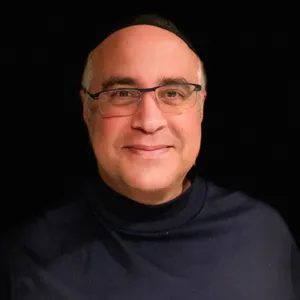
Parsha with Rabbi David Bibi: Daily Summaries Delivered
by JewishPodcasts.fm
Join as we explore the weekly parasha from a Kabbalistic perspective and attempt to simplify the secrets of the Torah
Latest Episodes
The most recent episodes — sign up to get AI-powered summaries of each one.
- Yesterday14 min
The Prayer That Reopened the Case
Can a judgment that has already been made be reconsidered? Rosh Hashanah has passed. The books have been opened. Yom Kippur is approaching. And perhaps we wonder: if the judgment has already been written, what can another prayer, another tear, another act of teshuvah possibly accomplish? An extraordinary story in the Zohar, set in the ancient Galilean village of Peki’in, gives us a remarkable answer. A little boy stands before HaShem with nothing but Torah, tears, and a prayer — and somehow, the case is opened again. This week, Chantelle and I found ourselves climbing the narrow mountain roads into Peki’in, walking through a place where the world of our Ḥakhamim suddenly feltvery close. There I was reminded of the story of Rabbi Yossi of Peki’in and thechild who refused to accept that the story was over. It may be one of the mostpowerful lessons we can carry into Yom Kippur: as long as there can be anothertefillah, another tear, another act of teshuvah, there can be new evidence. Andperhaps the question is not simply whether HaShem will give us another year —but what unfinished purpose we can place before Him as the reason we are asking for it.
- 5 days ago17 min
The Door Yom Kippur Cannot Open
We spent RoshHashanah in Givot Eden, and what was supposed to be a short two-day tripthrough northern Israel somehow became a journey filled with enough stories forweeks. Most of that was because of my wife Chantelle, who has a wonderful habitof making me stop when I am ready to keep driving. One of those stops broughtus to the extraordinary Tunisian synagogue in Akko, a building covered fromfloor to ceiling with millions of tiny mosaic stones. And because Chantelleinsisted that we stay, we found ourselves listening to an Israeli Air Forceofficer speaking to a group of young men and women about Yom Kippur—andteaching a lesson I needed to hear myself. Wecan fast for twenty-five hours. We can beat our chests, cry through Kol Nidrei,confess every sin and remain in synagogue until the final HaShem Hu HaElokim.But the Mishnah teaches that there is one door Yom Kippur cannot open for us: עֲבֵירוֹת שֶׁבֵּין אָדָם לַחֲבֵירוֹ—thehurts that remain between one person and another. Before we ask HaShem toforgive us, there may be a phone call we need to make, an apology we need tooffer—or perhaps an old resentment we finally need to put down. In thismorning’s Breakfast & a Class,TheDoor Yom Kippur Cannot Open, we discussforgiveness, reconciliation, and what those millions of stones in an Akkosynagogue can teach us about repairing the mosaic before Yom Kippur.
- 1 weeks ago17 min
When the Excuses Run Out - Ha’azinu, Rabbi Elazar ben Dordaya, and the Courage of Teshuvah
When the Excuses Run Out We all have explanations for why we are the way we are. It was our parents. It wasthe home we grew up in. It was our environment, our circumstances, our personality, perhaps even our DNA. And sometimes those explanations areabsolutely true. But somewhere between understanding where we came from anddeciding where we are going, explanation can quietly become excuse. In thismorning’s Breakfast and a Class, as we prepare for Rosh Hashanah through theopening words of Ha’azinu, we meet one of the most unlikely heroes of teshuvahin the entire Talmud: Rabbi Elazar ben Dordaya. He first turns to the mountains, then Heaven and Earth, then the sun and moon, andfinally the stars, begging each of them to help him. Until suddenly there isnowhere else to turn and no one else to blame. And then he speaks five wordsthat change his eternity: אֵין הַדָּבָר תָּלוּי אֶלָּא בִּי — “The matter depends onno one other than me.” Perhaps that is where teshuvah really begins—not when we deny our past, our wounds, or the forces that shaped us, but when we realize that none of them gets to write our future. Join us for “When the Excuses Run Out.”
- 2 weeks ago20 min
Why Some Don’t Dip the Apple in Honey
Ask almost any Jewish child what we eat on Rosh Hashanah and the answer comes immediately: apples and honey. It is one of the most beloved and recognizable customs of the year. But not every Jewish community followed that tradition. In Baghdad, in Aleppo, in Damsacas and throughout the near east, following the custom recorded by the Ben Ish Chai, the apple was cooked in sugar rather than dipped in honey. In our own family, we never used honey at the Rosh Hashanah table; even after coming to America, our great-grandparents continued the tradition of using sugar instead. Why would anyone avoid honey on the very night when we are asking Hashem for asweet year? The answer takes us from the ancient customs of Ashkenaz to theKabbalists of the Sephardic world, and reveals two remarkably different ways ofunderstanding honey, judgment, and sweetness. Along the way we discover why bee honey may actually be the perfect symbol of transforming din into rachamim,why the Ben Ish Chai preferred white sugar, and why the apple itself—with itstaste, appearance, and fragrance—carries a much deeper Rosh Hashanah messagethan we might ever have imagined. Two customs, two approaches, and ultimatelyone prayer: שנה טובה ומתוקה — a truly good and sweet year.
- 2 weeks ago16 min
Closer Than We Think — What Torah Is Trying to Make of Us - Nesavim
As we approachRosh Hashanah, we naturally begin thinking about what needs fixing. Themistakes we need to correct. The habits we need to break. The parts ofourselves that still need work. But what if that is only half the story? Whatif Torah was not given merely to make us less bad, but to help usdiscover how much greater we are capable of becoming? Inthis morning’s Breakfast & Class,we explore a remarkable teaching of Rabbi Frand built around the words לֹא בַשָּׁמַיִם הִוא — “It is not inHeaven.” Why did HaShemcreate us unfinished? Why does the Torah hide an allusion to milahinside the words “Who will ascend for us to Heaven?” And if the angels have noyetzer hara, why did theywant the Torah? The answers lead to a beautiful message for these final days ofElul: HaShemgave us wheat and asks us to make bread. He did not create us finished—Hecreated us with the extraordinary ability to become.
- 2 weeks ago20 min
Open the Gates — The Secret of the Tehilim of Parnassah And Finacial Success
Open the Gates — The Secret of thePsalm of Parnassah Whydid לְדָוִדמִזְמוֹר, לַה׳ הָאָרֶץ וּמְלוֹאָהּ become one of ourgreat prayers for parnassah?We say it every Sunday as we begin a new week. In Moroccan communities it isrecited as Shabbat departs and we return to the working world. And on RoshHashanah, in the Syrian community, people will bid extraordinary sums for theprivilege of opening the Heikhal as we recite this Psalm and pray for financialblessing for the coming year. But there is something strange: the Psalm never actually asks for money. Inthis morning’s Breakfast & Class,Openthe Gates — The Secret of the Psalm of Parnassah,we discover that perhaps this is precisely the point. David HaMelekh begins byreminding us Who owns everything, asks whether ourhands are clean enough to receive His blessing, and finally calls upon thegates to open. But when those gates open, it isn’t money that comes through: וְיָבֹא מֶלֶךְ הַכָּבוֹד — “Let theKing of Glory enter.” Perhaps thegreatest secret of parnassahis not simply asking HaShem to send us more, but inviting Him into the way weearn, spend, give—and live.
- 3 weeks ago18 min
When the Rebel Says Amen - Can the Yetzer Hara Become the Yetzer Tov?
When the Rebel Says Amen Can the Yetzer Hara Become the Yetzer Tov? Every morning, we wrap the tefillin shel-yad around our arm and then place the tefillin shel-rosh upon our head. We have done it thousands of times. But what if hidden inside that simple order is an entire philosophy of how we are supposed to fight—and ultimately transform—the yetzer hara? In this morning’s Breakfast & Class, based on a beautiful teaching of Rabbi Pinḥas Friedman, we discover the Ḥatam Sofer’s remarkable image: before we can crown the King, we first have to bind the rebel. But Judaism asks us to go even further. The ultimate goal is not simply to defeat the yetzer hara, but to harness its fire and teach it to serve HaShem—until, like the “bad angel” who accompanies us home on Friday night, even the rebel learns to say Amen.
- 3 weeks ago6 min
When You Can’t See the Runway
When You Can’t See the Runway What happens when we find ourselves flying through the clouds — unable to see what lies ahead, frightened by the turbulence, and unsure whether we are even heading in the right direction? A remarkable story told by Rabbi Shlomo Landau about two young men trapped in a small airplane with an unconscious pilot gives us a powerful way to understand one of the great challenges of life: learning to listen to the Voice that knows exactly where we are and exactly where we need to go. The Torah never promises that there won’t be a war. It never promises that there won’t be clouds. And it never promises that we won’t be frightened. But as we enter Elul and read כִּי תֵצֵא לַמִּלְחָמָה, perhaps we are being reminded that even when we cannot see the runway, Hashem can. Our task is to keep fighting, keep moving forward — and above all, keep listening.
About Parsha with Rabbi David Bibi
Join as we explore the weekly parasha from a Kabbalistic perspective and attempt to simplify the secrets of the Torah
Customized Recaps
AI-powered recaps with compact key takeaways, quotes, and insights.
Straight to Your Inbox
Get key takeaways from Parsha with Rabbi David Bibi in a 5-minute read.
Save Hours Every Week
Stay current on your favorite podcasts without falling behind.
Frequently Asked Questions
What is Podzilla's Parsha with Rabbi David Bibi daily summary?
It's a free AI-powered email that summarizes new episodes of Parsha with Rabbi David Bibi as soon as they're published. You get the key takeaways, notable quotes, and links & mentions — all in a quick read.
How does the Parsha with Rabbi David Bibi podcast summary work?
When a new episode drops, our AI transcribes and analyzes it, then generates a personalized summary tailored to your interests and profession. It's delivered to your inbox every morning.
Is this an official Parsha with Rabbi David Bibi product?
No. Podzilla is an independent service that summarizes publicly available podcast content. We're not affiliated with or endorsed by JewishPodcasts.fm.
Can I get summaries of other podcasts too?
Absolutely! The free plan covers up to 3 podcasts. Upgrade to Pro for 15, or Premium for 50. Browse our full catalog at /podcasts.
What topics does Parsha with Rabbi David Bibi cover?
Parsha with Rabbi David Bibi covers topics including Religion & Spirituality, Spirituality, Judaism. Our AI identifies the specific themes in each episode and highlights what matters most to you.
Start getting Parsha with Rabbi David Bibi summaries tomorrow morning.
Free forever for up to 3 podcasts. No credit card required.
Free forever for up to 3 podcasts. No credit card required.