Free Daily Podcast Summary
Orbit: Science for kids on the move!: Daily Summaries Delivered
by Cumbre Kids
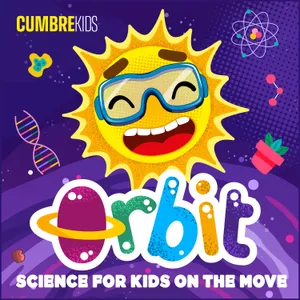
Science made simple to help kids better understand the world around them. Publishing "Wild Critters," a series with PBS Nature and the National Wildlife Federation! 🦬 For kids ages 3-11. Perfect for car rides, family adventures, and learning on the go! 'Orbit' sparks curiosity, builds STEM vocabulary, and inspires kids to think like scientists as they explore the amazing world we live in! 🚀
Latest Episodes
The most recent episodes — sign up to get AI-powered summaries of each one.
- 5 days ago28 min
The race to save 3 mountain lion cubs!
Three mountain lion cubs were left orphaned in the California wilderness, and a team of scientists raced to find them before it was too late! In this episode of the Wild Critters USA series on Orbit, families meet wildlife ambassador Marco Wendt from the San Diego Zoo Wildlife Alliance. We learn about the incredibly versatile mountain lion - which can be found from Canada all the way down to Argentina - including what makes it a stealthy hunter and how it adapts to an incredible variety...
- 2 weeks ago31 min
How tiny corals build underwater cities!
Did you know a coral reef, one of the largest structures ever built by a living creature, is made by an animal smaller than a grain of rice!? And that corals aren't plants or rocks at all, but tiny animals related to jellyfish and sea anemones!? In this episode, marine scientist Dr. Mike Henley from the Smithsonian's National Zoo and Conservation Biology Institute joins Orbit to explore the underwater world of coral reefs! Learn how thousands of tiny coral polyps build a single reef, how cora...
- 3 weeks ago29 min
A monarch butterfly's 3,000-mile journey!
Ever heard of the SUPER GENERATION of the monarch butterfly!? This little insect goes on one of the most incredible journeys in the whole animal kingdom! To learn more, we're joined in this episode by Dr. Dorothy Borowy, an ecologist with the U.S. National Park Service! We also have a new friend! Margaret joins Orbit to cohost and help us bring a chrysalis to life for families! ➡️ Part of the Wild Critters series, created with PBS Nature and the National Wildlife Federation ...
- Aug 19, 202625 min
The turtle that dances for worms!
Ever wonder how a turtle can trick worms into coming out of the ground just by dancing?! Or how scientists can tell a turtle's age just by looking at its shell?! We're continuing the Wild Critters series to learn all about wood turtles with turtle biologist Chris Polinski from the Smithsonian's National Zoo and Conservation Biology Institute! Along the way, learn why mama wood turtles travel for miles to lay their eggs, and exactly what to do if you're lucky enough to spot one in the wild! ➡️...
- Aug 12, 202611 min
Walruses! (from our friends at "But Why?")
This week, we’re bringing an episode from our friends at “But Why?” from Vermont Public! Find “But Why?” On your favorite podcast platform or visiting butwhykids.org We'll be back next week to learn all about Wood Turtles 🐢 together on Orbit! See you soon!
- Aug 5, 202627 min
How do baby bald eagles learn to fly?
Ever wonder how a fluffy baby bald eagle grows into the majestic bald eagles that soar through the sky!? Or why bald eagles build giant nests that can weigh as a pickup truck!? We're continuing the Wild Critters series to learn all about bald eagles with eagle biologist Ulgonda Dunlevy from the U.S. Fish and Wildlife Service! Along the way, learn why bald eagles almost disappeared in the 1960s, and how people worked together to help their population recover! ➡️ Part of the Wild Critters serie...
- Jul 29, 202629 min
What is mummified mammoth poop!?
Did you know a giant, dried-out pile of mammoth poop can survive for over 20,000 years!? And still hold the seeds, pollen, and even parasite eggs trapped inside it! Scientists call it "mummified," and it might be the ultimate Ice Age time capsule! This week, we travel to Waco Mammoth National Monument in Texas with Justin Tweet, paleontologist with the U.S. National Park Service! ➡️ Part of the Wild Critters USA series, created with PBS Nature and the National Wildlife Federation ➡️ Learn more about Waco Mammoth National Monument: https://www.nps.gov/waco/index.htm ➡️ Ranger Rick magazine from the National Wildlife Federation: https://rangerrick.org 🖍️ Free Wild Critters and Orbit coloring pages: https://www.cumbrekids.org/color-along 💬 Submit your kids' questions! https://www.cumbrekids.org/questions💛 Support this podcast by joining The Curious Club: Orbit Family Conversation Starters!If you found footprints, bones, hair, and poop in a cave, which one would you want to investigate first, and why?What do you think scientists can learn about an animal just by studying its poop? Why do you think it's important to leave fossils where you find them and tell a park ranger instead of taking them home?Continue Learning as a Family!Play "junior paleontologist" at home: take turns asking each other which discovery you'd want to find first in a cave: footprints, bones, hair, or poop, and why!Look up what kind of Ice Age animals once lived in your own area or country! Many places around the world had their own giant mammoths, sloths, or saber-toothed cats.Explore an Ice Age fossil site like Waco Mammoth National Monument in Texas or Tule Springs Fossil Beds National Monument in Nevada: https://www.nps.gov/subjects/fossils/fossil-parks-list.htm🎧 More podcasts by Cumbre Kids in English and Spanish: https://linktr.ee/orbitkidsA message for parents about our values: https://www.cumbrekids.org/our-values
- Jul 21, 202621 min
Why does welding create sparks? ⚡
Did you know the welding arc can get even hotter than the surface of the Sun? 🔥 This week, we meet Rudy Rodriguez, a welding instructor at Weimar High School in Weimar, Texas. Together, we discover how welders use heat to join metal together, why they wear special helmets, what causes those bright sparks, and how welding helps build everything from playgrounds and roller coasters to bridges, airplanes, and even rockets!➡️ Part of the Cool Jobs for Curious Kids series, made possible by Level Up Texas and the Texas A&M Office for Youth Engagement https://tx.ag/cooljobs 💬 Submit your kids' questions! https://www.cumbrekids.org/questions🖍️ Coloring pages for each episode! https://www.cumbrekids.org/color-along💛 Support this podcast by joining The Curious Club: https://www.cumbrekids.org/curious-clubOrbit Family Conversation Starters!If you could build anything out of metal, what would you create?Would you rather work on roller coasters, rockets, race cars, metal artwork, or giant skyscrapers? Why?What is something in your home or neighborhood that was probably welded together?Continue learning as a family!Look for welded objects around your home, school, or playground. Can you spot where pieces of metal were joined together?Visit a construction site from a safe distance and see what materials are being used to build.Talk about a time you learned a skill that seemed difficult at first but became easier with practice.🎧 More podcasts by Cumbre Kids in English and Spanish: https://www.cumbrekids.org👨👩👧👦 A message for parents about our values: https://www.cumbrekids.org/our-values
About Orbit: Science for kids on the move!
Science made simple to help kids better understand the world around them. Publishing "Wild Critters," a series with PBS Nature and the National Wildlife Federation! 🦬 For kids ages 3-11. Perfect for car rides, family adventures, and learning on the go! 'Orbit' sparks curiosity, builds STEM vocabulary, and inspires kids to think like scientists as they explore the amazing world we live in! 🚀
Customized Recaps
AI-powered recaps with compact key takeaways, quotes, and insights.
Straight to Your Inbox
Get key takeaways from Orbit: Science for kids on the move! in a 5-minute read.
Save Hours Every Week
Stay current on your favorite podcasts without falling behind.
Frequently Asked Questions
What is Podzilla's Orbit: Science for kids on the move! daily summary?
It's a free AI-powered email that summarizes new episodes of Orbit: Science for kids on the move! as soon as they're published. You get the key takeaways, notable quotes, and links & mentions — all in a quick read.
How does the Orbit: Science for kids on the move! podcast summary work?
When a new episode drops, our AI transcribes and analyzes it, then generates a personalized summary tailored to your interests and profession. It's delivered to your inbox every morning.
Is this an official Orbit: Science for kids on the move! product?
No. Podzilla is an independent service that summarizes publicly available podcast content. We're not affiliated with or endorsed by Cumbre Kids.
Can I get summaries of other podcasts too?
Absolutely! The free plan covers up to 3 podcasts. Upgrade to Pro for 15, or Premium for 50. Browse our full catalog at /podcasts.
How often does Orbit: Science for kids on the move! release new episodes?
Orbit: Science for kids on the move! publishes weekly. Our AI generates a summary within hours of each new episode.
What topics does Orbit: Science for kids on the move! cover?
Orbit: Science for kids on the move! covers topics including Education, Kids & Family, Family. Our AI identifies the specific themes in each episode and highlights what matters most to you.
Start getting Orbit: Science for kids on the move! summaries tomorrow morning.
Free forever for up to 3 podcasts. No credit card required.
Free forever for up to 3 podcasts. No credit card required.