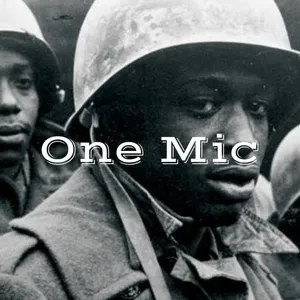
Free Daily Podcast Summary
One Mic Black History: Daily Summaries Delivered
by Michael Motley jr
Get key takeaways, quotes, and insights from One Mic Black History in a 5-minute read. Delivered straight to your inbox.
Latest Episodes
The most recent episodes — sign up to get AI-powered summaries of each one.
- 2 weeks ago13 min
How Harlem Musicians Outsmarted Segregated Clubs
History tells us the Harlem Renaissance was just a magical explosion of art. That is a lie.It was actually a highly calculated, heavily funded cultural heist.In the 1920s, Black Harlem didn't just entertain the world, they outsmarted the world. From building an independent real estate mecca and finessing white patrons out of thousands in cash, to ambushing elite white publishers and hijacking national radio wires.They took the raw reality of Black life, turned it into high art.Sources:Harlem: The Making of a Ghetto by Gilbert OsofskyRed Summer: The Summer of 1919 by Cameron McWhirterThe New Negro: The Life of Alain Locke by Jeffrey C. StewartDuke Ellington's America by Harvey G. CohenWrapped in Rainbows: The Life of Zora Neale Hurston by Valerie BoydThe Harlem Renaissance: A Historical Dictionary for the Era by Bruce KellnerAudio Onemichistory.comFollow me on Instagram: @onemic_historyFollow me on Substack: https://onemicblackhistorypodcast.substack.com/Follow me on Threads: https://www.threads.net/@onemic_historyPlease support our Patreon: https://www.patreon.com/user?u=25697914Buy me a Coffee https://www.buymeacoffee.com/Countryboi2m
- Apr 6, 202611 min
How Black Cooks Humiliated Enslavers With Oxtail
You walk into a restaurant today and see a plate of oxtails for $35 or $40. A century ago, that exact same cut of meat was considered garbage. The white folks tossed it to the side, assuming the tough, bony tail was completely worthless.They were wrong.This is the history of how Black cooks across the diaspora, from the American South to Jamaica took the scraps nobody wanted and built an undeniable delicacy.
- Mar 9, 20267 min
The Black Man Who Bought Memphis
In 1866, a white mob shot Robert Church Sr. in the head and left him for dead in the streets of Memphis. Twelve years later, when the Yellow Fever epidemic caused the white folks to panic and flee, Church used his cash to buy up their prime real estate for pennies on the dollar.Sources:Beale Street Dynasty: Sex, Song, and the Struggle for the Soul of Memphis by Preston Lauterbach"Robert R. Church Sr." – The Tennessee Encyclopedia of History and Culture"Robert Reed Church" & "Solvent Savings Bank and Trust" – WikipediaRobert Reed Church of Memphis: The First Black Millionaire – Historic-Memphis archivesChurch Family Papers – Special Collections, University of Memphis LibrariesAudio Onemichistory.comFollow me on Instagram: @onemic_historyFollow me on Substack: https://onemicblackhistorypodcast.substack.com/Follow me on Threads: https://www.threads.net/@onemic_historyPlease support our Patreon: https://www.patreon.com/user?u=25697914Buy me a Coffee https://www.buymeacoffee.com/Countryboi2m
- Feb 9, 20268 min
How They Got Rich on a $0 Salary
The Pullman Porters were the backbone of the railroad, but the system forced them to survive on tips. Here is how they took a $0 wage and built the Black Middle Class."Audio Onemichistory.comFollow me on Instagram: @onemic_historyFollow me on Substack: https://onemicblackhistorypodcast.substack.com/Follow me on Threads: https://www.threads.net/@onemic_historyPlease support our Patreon: https://www.patreon.com/user?u=25697914Buy me a Coffee https://www.buymeacoffee.com/Countryboi2m
- Jan 19, 20269 min
How a Barber Stole the Blueprint from Millionaires
In 1898, the American financial system had a specific label for Black people: "Uninsurable." They said we died too young. They said we were too poor. They wrote us out of the equation.But John Merrick, a barber in Durham, NC, had a different plan. While shaving the throats of the South's most powerful white titans, he wasn't just making small talk. He was stealing their blueprint.
- Jan 5, 202615 min
The Town Where White People Were Illegal
In 1904 Mississippi, a white man stepped off a train and made a dangerous mistake: he thought the law was on his side. He didn't realize he had just walked into Mound Bayou, the only town in the South where Jim Crow had no jurisdiction.Most history books tell us about the prosperous Black towns that were destroyed, Tulsa, Rosewood, Wilmington. But they rarely talk about the one that was too strong to burn.This is the investigative history of Mound Bayou: a "fortress" built in the middle of the Delta that used a loophole in property law to ban white ownership and create a self-sustaining economy. From a hospital with Black surgeons in the 1940s to a bank that secretly funded the Civil Rights movement when the government tried to freeze their assets, this is the blueprint for how infrastructure beats integration.It started with a paradox on a plantation and ended with a town that became a safe house for the movement. This is how they built the wall that hate couldn't climb.The Pursuit of a Dream by Janet Sharp HermannMound Bayou and the Regional Council of Negro Leadership by David T. BeitoRecords from the Taborian Hospital (National Register of Historic Places)
- Dec 8, 202514 min
How Ebony Exposed the White Beauty Lie
Two magazines changed the mirror. Ebony and Jet put everyday Black life on the cover, turned a touring fashion show into a cosmetics empire, and forced Madison Avenue to see—then spend. This episode shows how pictures became power.Audio Onemichistory.comFollow me on Instagram: @onemic_historyFollow me on Substack: https://onemicblackhistorypodcast.substack.com/Follow me on Threads: https://www.threads.net/@onemic_historyPlease support our Patreon: https://www.patreon.com/user?u=25697914Buy me a Coffee https://www.buymeacoffee.com/Countryboi2m
- Nov 10, 202511 min
The Deal McDonald's Made With Black America
In 1968, Chicago after Dr. King’s murder. Windows are boarded. Stores sit dark. McDonald’s needs a plan. Operation Breadbasket has one: put Black owners in Black neighborhoods. In December, Herman Petty opens the first Black owned McDonald’s in Chicago. It works, More owners follow and a pipeline is created. But there is a catch. McDonald’s owns the land, sets the fees, and picks the sites. This is how a Black franchise empire created, and what it cost.Audio Onemichistory.comFollow me on Instagram: @onemic_historyFollow me on Substack: https://onemicblackhistorypodcast.substack.com/Follow me on Threads: https://www.threads.net/@onemic_historyPlease support our Patreon: https://www.patreon.com/user?u=25697914Buy me a Coffee https://www.buymeacoffee.com/Countryboi2m
Get One Mic Black History summaries in your inbox
Free AI-powered daily recaps. Key takeaways, quotes, and mentions — in a 5-minute read.
Get Free Summaries →Free forever for up to 3 podcasts. No credit card required.
You Might Also Like
Listeners also like.
Drapetomaniax: Unshackled History
OTHERtone / Michael Harriot / Sony Music Entertainment
This Week in Black History, Society, and Culture
Hettie V. Williams
Black Stories. Black Truths.
NPR
Black History, For Real
Audible
Black History Buff: Uncovering Untold Stories
King Kurus, Griot of Black & African History
America's Untold Stories
Eric Hunley
Being Black- The '80s
theGrio
My Momma Told Me
Big Money Players Network and iHeartPodcasts
History
TopNotch

LET'S GET TO IT
The Educator
Black Art Is Lit | Black Literature, Culture and Iconic Stories
Nykieria Chaney
Soulful Justice
Black Opinion on American Politics & Hip-Hop Culture
About One Mic Black History
One Mic Black History brings you the untold stories that shaped Black lives and reshaped America. Each episode uncovers a hidden chapter of our history, told by us, for us
Customized Recaps
AI-powered recaps with compact key takeaways, quotes, and insights.
Straight to Your Inbox
Get key takeaways from One Mic Black History in a 5-minute read.
Save Hours Every Week
Stay current on your favorite podcasts without falling behind.
Frequently Asked Questions
What is Podzilla's One Mic Black History daily summary?
It's a free AI-powered email that summarizes new episodes of One Mic Black History as soon as they're published. You get the key takeaways, notable quotes, and links & mentions — all in a quick read.
How does the One Mic Black History podcast summary work?
When a new episode drops, our AI transcribes and analyzes it, then generates a personalized summary tailored to your interests and profession. It's delivered to your inbox every morning.
Is this an official One Mic Black History product?
No. Podzilla is an independent service that summarizes publicly available podcast content. We're not affiliated with or endorsed by Michael Motley jr.
Can I get summaries of other podcasts too?
Absolutely! The free plan covers up to 3 podcasts. Upgrade to Pro for 15, or Premium for 50. Browse our full catalog at /podcasts.
How often does One Mic Black History release new episodes?
One Mic Black History publishes monthly. Our AI generates a summary within hours of each new episode.
What topics does One Mic Black History cover?
One Mic Black History covers topics including History. Our AI identifies the specific themes in each episode and highlights what matters most to you.
Start getting One Mic Black History summaries tomorrow morning.
Free forever for up to 3 podcasts. No credit card required.
Free forever for up to 3 podcasts. No credit card required.