Free Daily Podcast Summary
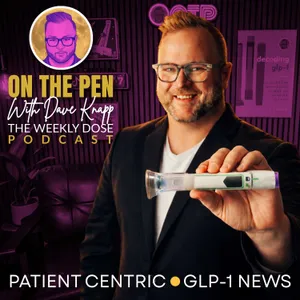
On The Pen GLP-1 News: Daily Summaries Delivered
by Dave Knapp GLP-1 Industry Insider
On The Pen is the leading GLP-1 news podcast and platform covering obesity medicine, FDA actions, drug shortages, access policy, and the business of NuSH therapies. The podcast is in the top 1% of all podcasts globally, and On The Pen is a top Substack best-seller.
Latest Episodes
The most recent episodes — sign up to get AI-powered summaries of each one.
- 5 days ago30 min
17% Weight Loss in 16 Weeks… Is This Better Than Retatrutide?
Lilly just gave us a glimpse of what could come after today’s GLP-1s, and it may not be about simply pushing patients to stronger drugs and higher doses.This week on On The Pen: The Weekly Dose, we break down Lilly’s surprising early data combining just 5 mg of tirzepatide with 3 mg of eloralintide, producing roughly 17% weight loss in only 16 weeks. Could combinations like this eventually approach retatrutide-level efficacy with better tolerability? And when retatrutide reaches the real world, how many patients will actually need or tolerate the higher doses responsible for its biggest clinical-trial numbers?We’re also digging into the bigger stories shaping the future of obesity medicine, including new research suggesting semaglutide may influence aging beyond calorie restriction in mice, the emerging race to preserve lean mass during GLP-1 weight loss, apitegromab’s eye-popping price, Lilly’s legal battle over retatrutide’s classification, the underground market already selling unapproved Reta, and the latest development in Lilly’s lawsuit against Mochi.The science is getting better incredibly quickly. The bigger question may be whether we can deliver enough efficacy, tolerability and muscle preservation at a price patients can actually access.👍 Like, comment and subscribe if you want patient-centered GLP-1 news without the pharmaceutical press-release filter. If you listen to the podcast on Apple or Spotify, leaving a rating and review is one of the best ways to help more people find On The Pen.🔗 Everything On The Pen: linktr.ee/manonthemounjaroOn The Pen: Empowering you to have better conversations with your doctor.#GLP1 #Zepbound #Mounjaro #Retatrutide #Tirzepatide #Eloralintide #WeightLoss #ObesityMedicine #Ozempic #Wegovy
- 1 weeks ago25 min
GLP-1 for 6 Year Olds? Here’s What the Trial Actually Found
Is obesity still a disease worthy of treatment when the patient is six years old?This week, Novo Nordisk released Phase 3 STEP Young data in children ages 6 to 11 with obesity. After 68 weeks, 40.4% of children treated with semaglutide moved below the obesity threshold, compared with 0% on placebo. More than 85% of the children entered the trial with class II or class III severe obesity, and both groups received lifestyle intervention.That raises a harder question than whether people are comfortable with kids taking GLP-1s: compared with what? A nearly 90% chance that obesity present at age 3 persists into the teen years? An approximately 80% chance that a teen with obesity carries it into adulthood? Another decade of stigma, bullying, and metabolic disease while we keep telling families to try harder?I’m unapologetically supportive of studying and treating severe childhood obesity. That does not mean ignoring long-term questions around growth, puberty, nutrition, lean mass, or what happens when treatment stops. It means recognizing that withholding treatment is also a decision with consequences.We also break down the new Structure Therapeutics data, including aleniglipron, an oral small-molecule GLP-1 that produced up to 16.2% mean weight loss at 72 weeks, and ACCG-2671, an experimental oral amylin/calcitonin agonist that produced 3.3% mean weight loss after a single dose, with some important tolerability caveats.Plus, we look at a preliminary semaglutide signal involving asthma and COPD, and one of the strangest Ozempic access stories of the week.Recorded from the Bask Health Studios.This episode is sponsored by VoaFit. Learn more about VoaFit here:https://voafit.com/otpThis episode was filmed in the Bask Health Studios, visit:https://bask.healthFollow On The Pen everywhere plus get special discounts:https://otplinks.comRead more at:https://obesity.news
- 2 weeks ago24 min
We’re Solving Obesity. Now Who Pays for It?
This week on On The Pen, the GLP-1 story is moving in two very different directions.The Fifth Circuit handed FDA major wins in the fight over semaglutide and tirzepatide shortages, FDA updated its consumer guidance around compounded GLP-1 medications and multi-dose vials, and employers continue questioning whether they can afford obesity-drug coverage.At the same time, the medical case for these medications keeps getting stronger.We break down Mounjaro’s new cardiovascular indication and what preventing heart attacks and strokes could mean for the true long-term cost of GLP-1 treatment. We also look at 600,000 Medicare beneficiaries already enrolling in the $50 GLP-1 Bridge program, California’s effort to tackle affordability, the rapidly expanding oral GLP-1 market, and new real-world data on patients staying at lower doses of semaglutide and tirzepatide.The science is expanding. Access is contracting.And that may be the biggest challenge facing the next phase of the GLP-1 revolution.In this episode:• What the Fifth Circuit compounding decisions actually mean• FDA’s updated language around compounded GLP-1 vials• The 28-day multi-dose vial controversy• Mounjaro’s new cardiovascular indication• Why GLP-1s may reduce long-term healthcare costs• Employers dropping obesity-drug coverage• 600,000 people joining the Medicare GLP-1 Bridge• California’s push for lower GLP-1 prices• The oral GLP-1 race• New data on lower-dose semaglutide and tirzepatideFollow everything On The Pen:This episode is sponsored by VoaFit.https://www.voafit.com/otpThis content is for informational and educational purposes only and is not medical advice. Always discuss medication and treatment decisions with a qualified healthcare professional.
- 3 weeks ago34 min
GLP-1 Coverage Is COLLAPSING in 2027
GLP-1 access is getting tighter just as obesity treatment is becoming more effective, more affordable, and more important to public health.In this episode of the On The Pen Podcast, Dave Knapp breaks down two of the biggest GLP-1 stories of the week: why most states are opting out of the Trump administration’s new Medicaid obesity-drug coverage model, and why employers are preparing to cut GLP-1 coverage in 2027.We also dig into the growing conversation around GLP-1 microdosing after Real Housewives of Orange County star Emily Simpson described using a lower-frequency maintenance strategy after losing around 50 pounds. Could lower-dose or intermittent GLP-1 therapy eventually become a legitimate maintenance tool? Could it help lower long-term healthcare costs? And could earlier, lower-intensity treatment eventually become a form of prophylaxis against obesity-related disease?This episode covers Medicaid GLP-1 coverage, the BALANCE model, Zepbound coverage, Wegovy coverage, employer insurance changes, compounded GLP-1 access, GLP-1 microdosing, obesity maintenance, semaglutide, tirzepatide, metabolic disease prevention, obesity medicine, healthcare costs, and the future of GLP-1 treatment.If you take Ozempic, Wegovy, Mounjaro, Zepbound, compounded semaglutide, compounded tirzepatide, or simply follow the rapidly changing world of obesity medicine, this is a conversation you need to hear.Subscribe to On The Pen for breaking GLP-1 news, obesity medicine updates, access and insurance coverage news, new weight-loss drugs, clinical research, and patient advocacy.More from On The Pen: https://linktr.ee/manonthemounjaro#GLP1 #Ozempic #Wegovy #Mounjaro #Zepbound #Semaglutide #Tirzepatide #Microdosing #ObesityMedicine #WeightLoss #Medicaid #HealthInsurance #CompoundedGLP1 #Obesity #GLP1News
- Aug 18, 202645 min
$50 Zepbound Incoming? China Has US in a GLP-1 “Chokehold”
Could GLP-1 medications eventually cost just $40 to $50 per month? Hims & Hers CEO Andrew Dudum thinks so, and if he’s right, it could completely change access to obesity treatment in America.But getting there may depend on something most patients have never heard of: the global peptide manufacturing supply chain.In this episode of The Weekly Dose from On The Pen, Dave Knapp, Man on the Mounjaro, breaks down one of the biggest weeks in GLP-1 and obesity medicine news, including the surprising role of Chinese pharmaceutical manufacturer WuXi AppTec, which Bloomberg described as having a “GLP-1 chokehold” while U.S. policymakers wrestle with reducing America’s dependence on Chinese biotechnology.We also dig into one of the strangest GLP-1 stories of the year. Amylyx Pharmaceuticals just reported positive Phase 3 results for avexitide, a GLP-1 receptor antagonist, meaning it actually BLOCKS GLP-1. The drug reduced serious hypoglycemic events by 55% in patients with post-bariatric hypoglycemia, a debilitating condition that can occur after gastric bypass surgery.Then we get personal.Online personality Clavicular recently described becoming apathetic while taking a high dose of retatrutide, renewing the conversation around GLP-1 medications, anhedonia, emotional blunting, dopamine and reward signaling. Dave has firsthand experience with anhedonia during GLP-1 treatment and previously discussed that experience as part of coverage on the Today Show.At what point does turning down food noise start turning down everything else?We also examine Serena Williams’ return to professional tennis while openly using Zepbound (tirzepatide) and the growing debate over whether GLP-1 medications could ever be considered performance-enhancing drugs in professional sports.Plus, new research suggests GLP-1 medications and significant weight loss may improve testosterone levels and fertility markers in men with obesity-related low testosterone, raising important questions about metabolic health, hypogonadism and when testosterone replacement therapy may or may not be appropriate.In this episode:💉 Could Ozempic, Wegovy, Mounjaro and Zepbound eventually cost $40 to $50 per month?🇨🇳 Why WuXi AppTec and China matter to the global GLP-1 supply chain💰 How manufacturing capacity could determine future GLP-1 prices🧬 Amylyx avexitide Phase 3 results and the “anti-GLP-1”🩸 Post-bariatric hypoglycemia after gastric bypass surgery🧠 Retatrutide, anhedonia, apathy and emotional blunting⚖️ Why anecdotes about GLP-1 side effects still need scientific context🎾 Serena Williams, Zepbound and the performance-enhancing drug debate💪 GLP-1 medications, weight loss and testosterone in men🧬 Obesity, metabolic health, fertility and hypogonadismThe goal here isn’t to cheerlead GLP-1 medications or scare patients away from them. It’s to understand what the headlines actually mean so patients can have better conversations with their healthcare providers.If GLP-1 medications were available for $40 to $50 cash per month without insurance, would that change your ability to stay on treatment? Let me know in the comments.And if you’ve experienced anhedonia or emotional flattening while taking a GLP-1 medication, particularly after increasing your dose, I’d be interested in hearing about your experience as well.The Weekly Dose is shot live in the Bask Health Studio. Learn more at bask.healthThanks to VoaFit and the MyLevel app for sponsoring the podcast. Learn more at voafit.com/otp🔗 Follow On The Pen, find our newsletter, resources and all of my social channels: otplinks.comOn The Pen covers breaking news and patient-focused reporting on obesity medicine, GLP-1 medications, Ozempic, Wegovy, Mounjaro, Zepbound, tirzepatide, semaglutide, retatrutide, compounded GLP-1 medications, obesity treatment, type 2 diabetes, metabolic health and the next generation of obesity medications.
- Aug 12, 202631 min
200 GLP-1 Deaths, Chrissy Metz & a Stunning Harvard Study
Https://www.otplinks.comBased on the transcript flow, here’s a clean YouTube description with chapter timestamps. The transcript itself doesn’t include timecodes, so these are estimated from speaking pace and topic position. A GLP-1 Death_ Chrissy Metz & a Stunning Harvard Study.txtMore than 200 deaths in the UK have now been reported in association with GLP-1 medications, including the heartbreaking death of a 19-year-old woman taking tirzepatide.But the headline does NOT tell the whole story.Today, we unpack what those 216 reports actually mean, what investigators found in the death of Josephine Nassar, and why adverse-event reports are very different from proving a medication caused a death.Plus, This Is Us star Chrissy Metz reveals she is using a GLP-1 to treat obesity, and I think what she did deserves a lot more respect than she’s getting.Then we dig into a stunning new Harvard working paper examining what happened to women’s employment and relationship outcomes after starting GLP-1 treatment, and Starbucks becomes the latest major employer to pull GLP-1 coverage for obesity.This is a BIG episode.⏱️ CHAPTERS00:00 The GLP-1 headlines you need to know01:40 VoaFit / MyLevel03:30 200+ GLP-1 deaths reported in the UK04:25 The tragic death of 19-year-old Josephine Nassar09:40 The hidden heart condition found after her death12:30 Did tirzepatide contribute to her death?15:35 What the UK’s 216 GLP-1 death reports actually mean19:15 Pancreatitis and how regulators identify real safety signals22:35 Chrissy Metz reveals she’s taking a GLP-124:35 Why Chrissy Metz’s decision to tell the truth was incredibly brave27:05 Harvard’s stunning “Obesity Penalty” study30:30 Starbucks drops GLP-1 coverage for obesity33:10 What happens when employers stop paying for these drugs?34:15 Final thoughts and your call to actionIf you’ve lost significant weight, I want to hear from you: Did people start treating you differently?And if your employer stopped covering your GLP-1, would you consider changing jobs to keep access to treatment?👇 Drop your experience in the comments.🔗 Keep up with everything On The Pen:linktr.ee/manonthemounjaroOn The Pen brings you the stories and information that empower you to have better conversations with your doctor.Subscribe and join us live every Monday, Wednesday and Friday at 11 AM Central / 12 PM Eastern.#GLP1 #Mounjaro #Zepbound #Ozempic #Wegovy #Tirzepatide #WeightLoss #Obesity #ChrissyMetzIf you give me the actual final runtime of the uploaded video, I can tighten those timestamps much closer to the real chapter breaks.
- Aug 7, 202659 min
Eli Lilly Earnings Call Recap: Retatrutide News
https://www.otplinks.com
- Aug 4, 202618 min
Novo Nordisk Warned us For Years About Synthesized Semaglutide. Now They Want In.
Novo Nordisk has spent years warning patients, regulators, lawmakers, and courts about the risks of synthetic semaglutide. Now, as patents begin to expire and China’s pharmaceutical industry becomes increasingly important, Novo may be staring at a very uncomfortable question: what happens if synthetic semaglutide suddenly makes sense when Novo is the one making it?In this week’s episode of The Weekly Dose, I dig into Novo’s long-running recombinant-versus-synthetic semaglutide argument, the lawsuits and FDA petitions built around it, and a clip from more than 16 months ago showing that we were covering this exact issue long before it became part of the mainstream conversation. Novo Warned Us About Synthetic Semaglutide_ Now This_.txtWe also break down Pfizer’s decision to kill two clinical-stage obesity drugs, including an oral GLP-1 acquired through its $10 billion Metsera deal, the strange science behind GIP receptor antagonism, and why Pfizer’s remaining obesity pipeline still deserves attention. Plus, Wall Street is looking at Eli Lilly’s obesity-fueled rally and asking just how big this market can get.In this episode:00:00 Novo’s synthetic semaglutide problem02:00 VoaFit sponsor message03:30 The 16-month-old On The Pen receipt05:00 Recombinant vs. synthetic semaglutide07:00 Novo’s FDA, legal, and political strategy09:00 Pfizer kills two obesity drugs11:00 What happened to Metsera’s oral pipeline?13:00 The GIP agonist vs. antagonist paradox15:00 Why China matters to Pfizer and Novo17:00 Could Novo eventually make synthetic semaglutide?18:30 What comes next for Lilly, Novo, and PfizerThe big question: If Novo Nordisk eventually launches its own synthetically manufactured semaglutide, does that change how you view the arguments it has made against compounded semaglutide over the last several years?Comment below. I want to know where you land.More obesity medicine news and analysis: OnThePen.comAll my links, socials, and resources: linktr.ee/manonthemounjaroThis episode is sponsored by VoaFit. Learn more at voafit.com/otp.#GLP1 #Semaglutide #Ozempic #Wegovy #NovoNordisk #CompoundedSemaglutide #ObesityMedicine #Pfizer #EliLilly #Mounjaro #Zepbound #Metsera
About On The Pen GLP-1 News
On The Pen is the leading GLP-1 news podcast and platform covering obesity medicine, FDA actions, drug shortages, access policy, and the business of NuSH therapies. The podcast is in the top 1% of all podcasts globally, and On The Pen is a top Substack best-seller.
Customized Recaps
AI-powered recaps with compact key takeaways, quotes, and insights.
Straight to Your Inbox
Get key takeaways from On The Pen GLP-1 News in a 5-minute read.
Save Hours Every Week
Stay current on your favorite podcasts without falling behind.
Frequently Asked Questions
What is Podzilla's On The Pen GLP-1 News daily summary?
It's a free AI-powered email that summarizes new episodes of On The Pen GLP-1 News as soon as they're published. You get the key takeaways, notable quotes, and links & mentions — all in a quick read.
How does the On The Pen GLP-1 News podcast summary work?
When a new episode drops, our AI transcribes and analyzes it, then generates a personalized summary tailored to your interests and profession. It's delivered to your inbox every morning.
Is this an official On The Pen GLP-1 News product?
No. Podzilla is an independent service that summarizes publicly available podcast content. We're not affiliated with or endorsed by Dave Knapp GLP-1 Industry Insider.
Can I get summaries of other podcasts too?
Absolutely! The free plan covers up to 3 podcasts. Upgrade to Pro for 15, or Premium for 50. Browse our full catalog at /podcasts.
How often does On The Pen GLP-1 News release new episodes?
On The Pen GLP-1 News publishes weekly. Our AI generates a summary within hours of each new episode.
What topics does On The Pen GLP-1 News cover?
On The Pen GLP-1 News covers topics including News, Business, Medicine, Fitness, Health & Fitness. Our AI identifies the specific themes in each episode and highlights what matters most to you.
Start getting On The Pen GLP-1 News summaries tomorrow morning.
Free forever for up to 3 podcasts. No credit card required.
Free forever for up to 3 podcasts. No credit card required.