Free Daily Podcast Summary
On The Ground: Daily Summaries Delivered
by James Misner
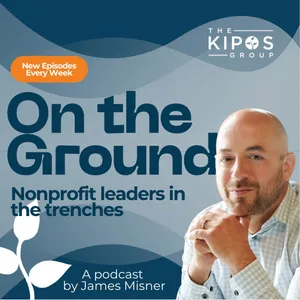
As CEO of The Kipos Group, James Misner has spent years in the trenches with nonprofit leaders. "On the Ground" brings those conversations to you—unfiltered insights by nonprofit leaders, for nonprofit leaders. Real Leaders. Real Challenges. Real Solutions.
Latest Episodes
The most recent episodes — sign up to get AI-powered summaries of each one.
- 5 days ago36 min
$54 Million Over 40 Years: How Trees for the Future Made Carbon a Crop
How Trees Helps Smallholder Farmers Build Prosperity and Restore LandJames Misner speaks with Cate from Trees about how a nature-based organization uses regenerative agriculture, trees, and local leadership to help smallholder farmers in East Africa improve soil health, diversify crops, and strengthen livelihoods. They also discuss why climate work is inseparable from people, how carbon markets fit into nonprofit revenue, and what happens when partnerships are not the right scaling strategy.Key TopicsCate shares her career path from advertising to public health, consulting, and Trees, where her work combines curiosity, persuasion, community, and mission.Trees uses trees as a starting point to support regenerative agriculture with smallholder farmers in Africa.Its mission is twofold: restore land and unlock prosperity for farmers.Cate explains farmer-led, locally rooted delivery, including informed consent and community-based support.Farmers move from monocropping and degraded soils to diversified farms with 4–5 crops in year one and 12–15 by year three.The model improves food security, dietary diversity, composting, pest management, savings, and market access.Village savings and loans help farmers save, lend, and reinvest in their farms and communities.Cate and James discuss why framing climate work through people makes funding more compelling.Trees adapts its approach to local soil, education, markets, and gender norms across Uganda, Kenya, and Tanzania.Cate explains why Trees moved away from broad partnerships when they began affecting quality and capacity.The conversation closes with how carbon credits can generate additional revenue for farmers and Trees while requiring verification and long-term permanence.Timestamps00:00 — Opening the conversation and Cate’s career path 03:10 — What Trees is and why trees are only the starting point 06:07 — How smallholder farmers experience the program 08:22 — Farm redesign, composting, and integrated pest management 09:45 — From diversified farms to savings groups and small businesses 12:47 — Why climate work must be framed through people 15:09 — Scaling across countries without losing local fit 19:23 — The partnership model that did not work 22:28 — Translating the story for donors and outside audiences 26:12 — Revenue diversification and why carbon markets matter 32:52 — How to connect with Trees and CateResources & Links:The Kipos Group WebsiteSchedule a Discovery Call with JamesConnect with James Misner on LinkedinConnect with Cate:Trees for the Future Official WebsiteConnect with Cate on Linkedin
- 1 weeks ago36 min
$400 Million in Tax Credits: How NeighborWorks Capital Funds 250 Nonprofits
How NeighborWorks Capital Uses Nonprofit Lending to Expand Affordable HousingJames Misner talks with Jim Peffley of NeighborWorks Capital about the affordable housing crisis, how community development financial institutions work, and the power of collaboration across the nonprofit housing sector. Jim shares his path from growing up in affordable housing to leading an institution that helps nonprofit developers access capital. They discuss the scale of the housing shortfall, how NeighborWorks Capital is structured, and why the network's collective strength gives smaller developers more leverage with investors.Key topicsJim shares how Brookview Apartments shaped his views on housing.His path went from banking to housing finance to affordable housing investing.They discuss the affordable housing continuum, from public housing to homeownership.Jim describes the scale of the housing shortage and its pressure on families.More housing alone isn't enough if it's unaffordable or blocked by zoning.NeighborWorks Capital is a nonprofit CDFI lending to housing developers.It finances land acquisition, infrastructure, and construction.The organization borrows close to $100 million a year, with $400 million in tax credits.The NeighborWorks network collectively rivals major for-profit developers.Jim explains organizing developers to negotiate better terms with investors.A failed Fannie Mae effort taught him to listen closely to customers first.Intelligent risk-taking is essential in mission-driven leadership.He closes by encouraging orgs to connect with local NeighborWorks members.Timestamps00:39 - Jim's path into affordable housing01:33 - From banking into housing finance03:41 - Today's affordable housing landscape04:55 - Scale of the housing shortfall06:30 - Housing insecurity's effect on opportunity07:58 - Why more homes isn't the whole solution09:13 - Who NeighborWorks Capital serves10:56 - Types of financing it provides11:51 - Why banks invest in it12:56 - How the nonprofit model sustains itself14:48 - Annual borrowing and lending scale15:23 - Tax credit investments and capital stack16:40 - Affordable units the network produces17:10 - Why collective bargaining power matters18:18 - NeighborWorks nonprofits as innovators19:26 - How scale advantages leave smaller groups behind22:19 - Listening as a superpower with funders23:44 - Why new partnerships require flexibility25:44 - Advice for frontline organizations27:01 - Why NeighborWorks members are the right partners28:43 - The collaborative culture of the CDFI space29:28 - What NeighborWorks Capital hopes to change next31:02 - Headwinds facing affordable housing33:40 - Where to find Jim and NeighborWorks CapitalResources & Links:The Kipos Group WebsiteSchedule a Discovery Call with JamesConnect with James Misner on LinkedinConnect with Jim:Neighborworks Capital Official WebsiteConnect with Jim on Linkedin
- 2 weeks ago30 min
Asking for Money for a Need They Don't Have: Empower Girls Camp's Fundraising Fix
Therese Tetzel on Building Empower Girls Camp to Change Girls’ TrajectoriesJames Misner talks with Therese Tetzel, founder of Empower Girls Camp, about leaving a 30-year corporate career to build a research-informed program that helps shy or at-risk girls develop confidence and resilience. They also discuss why short, consistent donor updates beat broad, generic appeals.Key topicsEmpower Girls Camp aims to deeply impact a small group of girls rather than many superficially.Therese left a 30-year corporate career after questioning its purpose, sparked by tutoring Sifa, a young refugee who couldn't read — Sifa's first camp became the turning point.Serves girls 9–11 who are shy, withdrawn, or facing hardship at home — a "precision intervention disguised as a STEM camp."Selection uses a 12-point counselor questionnaire and a scoring system built with a child psychologist.Therese designed the program using her corporate product-development background, planning it out on butcher paper.Lessons learned: not every parent says yes, so a response plan was needed; in fundraising, local relationships and short, frequent donor updates beat long newsletters.Donors want to see impact, not a sales pitch — regular updates build trust.Vision: keep adding schools and girls yearly, aiming for 20 schools.Timestamps00:00 - Why nonprofit missions differ from corporate ones00:28 - Meet Therese Tetzel and Empower Girls Camp00:59 - Leaving corporate America after asking "What am I doing here?"02:28 - Meeting Sifa and discovering the power of tutoring03:10 - Teaching a six-year-old refugee to read in a month04:07 - The first camp experience that changed everything05:47 - From one camper to a broader model06:17 - Launching a nonprofit with no prior experience07:59 - Building the model from the American Camp Association study09:26 - "Precision intervention masquerading as a STEM camp"10:13 - Identifying the girls most likely to benefit11:12 - The 12-point questionnaire and selection process12:21 - Building the process on butcher paper13:17 - Using school data to predict enrollment14:14 - Parent permission, photo releases, vaccination records15:27 - What didn't work: assuming every parent would say yes17:10 - Fundraising lessons: local giving matters most18:26 - Why sales skills don't translate to fundraising19:27 - Donor communication needs to happen often20:24 - Short, frequent updates over long newsletters21:34 - Keeping the cause front and center for donors23:14 - Donors want impact, not merchandise24:46 - Showing outcomes multiplies donor joy25:10 - Milestones can also lead to grants26:16 - Growth plans: more schools, girls, funding27:37 - How to connect with Therese28:17 - Why the organization is uniquely focusedResources & Links:The Kipos Group WebsiteSchedule a Discovery Call with JamesConnect with James Misner on LinkedinConnect with Therese:MPower Girls Camp Official WebsiteConnect with Therese on Linkedin
- 3 weeks ago50 min
30% From Program Revenue: How Helping Up Mission Funds Recovery Without Medicaid
Helping Up Mission, Baltimore, and a life shaped by serving people in crisisJames Misner talks with Daniel Stoltzfus, CEO of Helping Up Mission in Baltimore, about the personal calling that led him into addiction recovery and homelessness work, the mission’s 140-year history, and how it navigates changing policies while staying focused on trust, relationships, and transformation. Daniel also shares how a life-changing experience at age 19 shaped his path, along with insights on Baltimore’s recovery, nonprofit leadership, succession, and sustainable funding.Key TopicsDaniel’s calling began at 19 on the Relief Bus in NYC.Isaiah 58 shaped his view of service and vocation.Helping Up Mission was founded in Baltimore in 1885.Its original mission included women and children.The mission expanded to women and children in 2020.Daniel sees this growth as returning to its roots.Baltimore shows both deep need and real renewal.Overdoses, crime, prayer, and partnerships shape the city.Daniel supports housing, harm reduction, and recovery together.Recovery depends on trust, relationships, and readiness.Timestamps00:00 - Daniel’s introduction and why this matters00:52 - Mission service and street addiction in NYC03:12 - The moment in Maria Hernandez Park that changed his life04:20 - Isaiah 58 and his call to service05:42 - 30 years in addiction, homelessness, and poverty work07:16 - Helping Up Mission’s founding in 188508:42 - Historic board minutes and early mission language10:05 - Expanding from men’s shelter to recovery and women’s services11:33 - Discovering the founder lived near today’s campus13:15 - Why rescue missions emerged during economic crises15:12 - What early records reveal about resilience16:36 - Emergency funds, near closures, and faith18:20 - Why Baltimore is often misunderstood19:19 - Street outreach and active addiction20:15 - Overdose deaths and the people behind the numbers22:14 - A vision for Baltimore’s recovery24:09 - Prayer, churches, leaders, and the city26:32 - Succeeding a long-tenured CEO32:41 - Housing first, harm reduction, and recovery34:36 - 12-step and Christ-centered recovery37:21 - Narcan and going beyond harm reduction39:39 - Why strong nonprofits embrace paradox40:27 - What failed: oversimplifying with a hotline41:26 - Telling client stories with dignity and consent42:55 - Building diversified nonprofit revenue45:03 - Helping Up Mission’s next 5–10 years47:39 - Connecting with Daniel and Helping Up MissionResources & Links:The Kipos Group WebsiteSchedule a Discovery Call with JamesConnect with James Misner on LinkedinConnect with Daniel:Helping Up Mission Official WebsiteConnect with Daniel on Linkedin
- Aug 18, 202633 min
372 Missionaries in 71 Countries: How Global Outreach Grew Retention Doing Things That Don't Scale
Building Bridges and Moving Hearts with Josh Yerkes: Stories, Funding, and Mission ImpactIn this conversation, Josh Yerkes Vice President of Development at Global Outreach International—shares how storytelling, unscalable donor engagement, and documentary filmmaking fuel the organization's mission to send missionaries worldwide. Discover the power of personal touches in fundraising, the challenges of donor retention, and innovative ways to inspire support for global missions.Key Topics:The role of faith-based organizations in international missionsThe importance of storytelling in donor engagement and fundraisingUnscalable yet impactful donor stewardship tacticsHow documentary films can energize mission-focused givingLessons learned from fundraising failures and setbacksStrategies for building long-term donor loyaltyThe significance of personal, experiential touches in supporter relationshipsEffective use of social media and video content to tell compelling storiesTimestamps:00:00 - Introduction to Josh Yerkes and Global Outreach International00:39 - What Global Outreach does annually—mission, support, training01:10 - Josh’s background as a missionary kid and career transition into nonprofit leadership03:15 - The path from YMCA leadership to global missions and fundraising06:44 - The storytelling approach and its impact on fundraising success07:14 - The influence of personal stories and experiences in donor relationships09:12 - Using sensory memories like chlorine smell to craft compelling stories10:20 - How Global Outreach funds its mission: impact, partnership, and broad-spectrum investing13:24 - Strategies for increasing revenue and donor retention14:23 - The importance of personalized thank-yous and stewardship16:33 - The power of experiential gifts and unscalable acts of generosity18:53 - The value of personal gestures in donor loyalty and supporter engagement20:45 - Overcoming scarcity mindset in fundraising and supporting loyal supporters22:36 - The importance of focusing on supporter loyalty over immediate metrics23:14 - Lessons from fundraising failures and experimenting in the space26:46 - A personal story of a failed year-end campaign and lessons learned27:24 - Announcing the upcoming documentary project "Beyond River's Edge"29:18 - How storytelling through film can galvanize support for missions31:09 - Practical ways to connect with Josh and collaborate in global missionsResources & Links:The Kipos Group WebsiteSchedule a Discovery Call with JamesConnect with James Misner on LinkedinConnect with Josh:Global Outrech International Official WebsiteConnect with Josh Yerkes on Linkedin
- Aug 11, 202632 min
$1.6M to $2.5M in One Year: How Junior Achievement Grew by Fixing the Product Mix
Empowering Future Leaders: Junior Achievement, AI, and the Future of Nonprofit StorytellingJoin us as James Misner sits down with Kim Morgan, President of Junior Achievement of Greater Fairfield County, to talk about preparing young people for the future through financial literacy, experiential learning, and career readiness. Kim also shares how her nonprofit team is using AI to work smarter, strengthen grant writing, and create more effective storytelling that puts donors and audiences first.In this episode:How Junior Achievement uses experiential learning to teach financial literacy, entrepreneurship, communication, and critical thinkingWhy students need hands-on experiences to build confidence and prepare for real-world successKim’s path to Junior Achievement after 18 years at United Way and a two-year career breakWhat it means to return to leadership refreshed, focused, and not burnt outHow Kim’s team adopted AI for grant writing, communications, and strategic planningWhy AI should be treated as a coworker that supports, not replaces, peopleThe role of storytelling in fundraising and why the donor should be the heroHow Finance Park, BizTown, and Dream Accelerator are shaping the next phase of growthTimestamps: 00:00 - James introduces Kim Morgan and Junior Achievement of Greater Fairfield County 00:27 - What Junior Achievement is and how it connects learning with experiences 01:38 - Kim’s view of today’s students and the confidence gap in financial literacy 03:31 - Why real-world experiences create lasting learning 04:20 - How Kim became leader of Junior Achievement of Greater Fairfield County 05:19 - Her years at United Way and what she learned from the role 07:12 - What it’s like to work in a large fundraising organization 09:43 - Why Kim took a two-year career break 13:24 - How the break made her a better leader 14:08 - Why nonprofits need to embrace AI 15:03 - Practical ways Kim’s team uses AI every day 16:38 - How staff members are responding to AI adoption 17:38 - Thinking of AI as a coworker 19:46 - Fundraising growth through stronger products and donor alignment 23:17 - Storytelling that centers the audience, not the organization 26:08 - Why nonprofit leaders struggle with simple, clear messaging 29:05 - What success looks like in five years 30:02 - How to connect with Kim and learn more about Junior AchievementResources & Links:The Kipos Group WebsiteSchedule a Discovery Call with JamesConnect with James Misner on LinkedinConnect with Kim:Junior Achievement of Greater Fairfield County Official WebsiteConnect with Kim Morgan on LinkedinStoryBrand by Donald Miller
- Aug 4, 202629 min
$500K to $25 Million: How Feiro Marine Life Center Funded a 13,000 Sq Ft Rebuild
$500K to $25 Million: How Feiro Marine Life Center Funded a 13,000 Sq Ft RebuildDiscover how Melissa Williams transformed the Feiro Marine Life Center from a small community museum into a $25 million funded marine education hub. Learn the strategic partnerships, fundraising tactics, and resilience that powered their growth despite setbacks, and gain insights into making impactful organizational leaps.Key Topics:Melissa Williams shares her transition from Chicago's Shed Aquarium to Feiro and her nonprofit journeyThe unique "David and Goliath" story of raising $25 million for Feiro's new aquariumBuilding strategic partnerships, including NOAA collaboration, to elevate project credibilityNavigating federal funding allocations and private fundraising from $500,000 to $25 millionOvercoming challenges with a major project reimagining and managing a six-year delayCultivating donor relationships through tours, events, and impact storytellingStrategies for rural organizations to leverage community support and major giftsThe importance of perseverance and self-care during long fundraising campaignsTimestamps:00:00 - Introduction & Feiro's location00:19 - Melissa's background, incl. Shed Aquarium01:12 - Feiro's growth into a $25M project01:39 - Early excitement and community ties03:17 - Visitor experience: tide pools & exhibits04:43 - Plans for the new 2028 center05:52 - Scaling the facility for growth07:01 - Deciding to launch a capital campaign07:58 - Securing federal funds & NOAA partnership09:44 - State/federal funding & grant challenges10:15 - From $500K budget to $25M raised11:12 - Hiring a development director12:02 - Feasibility study & donor cultivation14:41 - Volunteer engagement & outreach15:32 - Setbacks and reimagining the plan16:54 - Keeping the team motivated17:39 - Melissa's resilience strategies19:48 - Earned revenue: 30% to 70%21:29 - Donor cultivation, urgency & matching funds22:39 - Rural fundraising challenges23:37 - Giving, connections & pledge management24:54 - Momentum through perseverance26:01 - Advice for leaders with big visions27:12 - Connect with Melissa & Feiro28:36 - Closing thoughts & appreciationResources & Links:The Kipos Group WebsiteSchedule a Discovery Call with JamesConnect with James Misner on LinkedinConnect with Melissa:The Feiro Marine Life Center's Official WebsiteConnect with Melissa Williams on Linkedin
- Jul 28, 202640 min
Technology Isn’t the Mission: How to Stop Losing Donors to Disconnected Systems
Discover how technology and AI are transforming nonprofit work, enhancing donor relationships, and increasing efficiency in this insightful conversation with David Blyer, CEO of Arreva.Main Topics:The evolution of technology in nonprofits over 25 yearsChallenges with disconnected systems and integrationThe role and future of AI in fundraising and donor managementBuilding trust and protecting donor data with AIPractical steps for nonprofits to adopt new tech with limited resourcesIn this episode:David Blyer shares his journey from software entrepreneurship to solving nonprofit data challengesThe importance of integrated systems in donor engagement and fundraisingHow AI can streamline communication, improve donor retention, and enhance decision-makingKey considerations for responsible AI use, including donor data privacyThe future of technology in nonprofits, including AI embedded into daily operationsPractical advice for nonprofits on adopting technology within budget constraintsTimestamps: 00:00 - Introduction and David Blyer’s background in nonprofit technology 01:12 - Early career and transition into solving nonprofit data problems 02:38 - Identifying the gap: disconnected nonprofit systems 03:57 - How Arreva simplifies donor management for nonprofits 06:42 - Current challenges nonprofits face with multiple systems 08:00 - The importance of timely communication for donor retention 09:56 - Impact of delayed donor communication on giving behavior 11:22 - The role of technology in building trust and relationships 13:00 - Retention statistics and the importance of stewardship 14:26 - Overcoming resource limitations for technology investment 15:48 - The significance of integrated all-in-one solutions 18:10 - Practical steps to streamline nonprofit operations and data management 19:12 - Engaging the board for technology approval 20:36 - How nonprofits can fund technology using existing resources 21:28 - The current state and potential of AI in nonprofits 22:18 - The practical benefits and risks of AI adoption today 23:45 - AI in crafting communication, fundraising, and donor insights 25:38 - Using AI responsibly to protect donor privacy 26:47 - Data protection principles with AI in nonprofit contexts 29:28 - The future of technology and AI in nonprofits over the next decade 30:25 - How AI will enhance fundraisers and personalize supporter engagement 33:03 - The ongoing importance of trust and relationships in fundraising 34:20 - Arriva’s unique offerings and how they improve nonprofit data systems 36:39 - Connecting with David Blyer and Arreva 37:09 - Final thoughts: technology as an enabler for mission-driven workResources & Links:The Kipos Group WebsiteSchedule a Discovery Call with JamesConnect with James Misner on LinkedinConnect with David:Arreva Official WebsiteConnect with David Blyer on Linkedin
About On The Ground
As CEO of The Kipos Group, James Misner has spent years in the trenches with nonprofit leaders. "On the Ground" brings those conversations to you—unfiltered insights by nonprofit leaders, for nonprofit leaders. Real Leaders. Real Challenges. Real Solutions.
Customized Recaps
AI-powered recaps with compact key takeaways, quotes, and insights.
Straight to Your Inbox
Get key takeaways from On The Ground in a 5-minute read.
Save Hours Every Week
Stay current on your favorite podcasts without falling behind.
Frequently Asked Questions
What is Podzilla's On The Ground daily summary?
It's a free AI-powered email that summarizes new episodes of On The Ground as soon as they're published. You get the key takeaways, notable quotes, and links & mentions — all in a quick read.
How does the On The Ground podcast summary work?
When a new episode drops, our AI transcribes and analyzes it, then generates a personalized summary tailored to your interests and profession. It's delivered to your inbox every morning.
Is this an official On The Ground product?
No. Podzilla is an independent service that summarizes publicly available podcast content. We're not affiliated with or endorsed by James Misner.
Can I get summaries of other podcasts too?
Absolutely! The free plan covers up to 3 podcasts. Upgrade to Pro for 15, or Premium for 50. Browse our full catalog at /podcasts.
How often does On The Ground release new episodes?
On The Ground publishes weekly. Our AI generates a summary within hours of each new episode.
What topics does On The Ground cover?
On The Ground covers topics including Business, Non-Profit. Our AI identifies the specific themes in each episode and highlights what matters most to you.
Start getting On The Ground summaries tomorrow morning.
Free forever for up to 3 podcasts. No credit card required.
Free forever for up to 3 podcasts. No credit card required.