Free Daily Podcast Summary
Oldest Stories: Daily Summaries Delivered
by James Bleckley
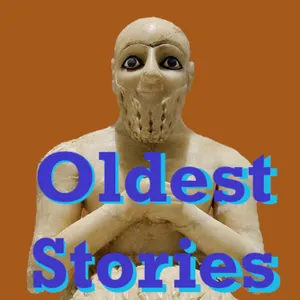
History and myth of the Cradle of Civilization, bronze age Mesopotamia, beginning with the dawn of writing. The show will cover the full history of Mesopotamia, from Gilgamesh to Nabonidas, a span of some 2500 years, with myths of heroes and gods, and tales of daily life peppered throughout. Sumer, Akkad, Old Babylon, Hittites, and Israel have all been covered in depth, current episodes get deep into the Assyrian Empire.
Latest Episodes
The most recent episodes — sign up to get AI-powered summaries of each one.
- 1 weeks ago36 min
The Cimmerian Horse Lords
The Cimmerians were among the first great horse nomad powers to crash into the civilizations of the ancient Near East. Emerging from the Scytho-Siberian world north of the Caucasus, they struck Urartu, devastated Phrygia and Lydia, raided deep into the Near East, and became legendary in Greek memory as one of the great barbarian terrors of antiquity.But how dangerous were they really?In this episode, we look beyond the later legends to reconstruct the Cimmerians and their Scythian cousins as actual people: their pastoral economy, horses, clothing, settlements, weapons, trade, and political organization. We examine what made mounted nomads so difficult for settled kingdoms to fight, why mobility mattered more than any supposedly unstoppable horse-archer tactic, and why the mighty Assyrian army was surprisingly well suited to defeating them.We also confront one of the strangest mysteries of Cimmerian warfare: if lightly equipped horse nomads struggled against an Assyrian battle line, how did they repeatedly overcome some of the greatest fortified cities of Anatolia?From Conan the Barbarian to Herodotus, from the Caucasus to Sardis, this is the story of the Cimmerians, the early Scythians, and the arrival of the horse nomad as a major force in Near Eastern history.Music from the show: oldeststories.net/music (or search "Oldest Stories Music")Support the show:Books: https://a.co/d/7Wn4jhSDonate: oldeststories.netPatreon / YouTube members get bonus episodes: patreon.com/JamesBleckleyNo-AI readings of ancient texts: youtube.com/@osnightreading
- 3 weeks ago43 min
Esarhaddon and the Empire That Ran Itself
Esarhaddon inherited the Neo-Assyrian Empire at the height of its power—but his kingship looked very different from that of the warrior-kings who came before him. Plagued by questions of legitimacy, surrounded by prophets and diviners, and often absent from his own military campaigns, Esarhaddon nevertheless presided over an extraordinarily aggressive and successful Assyrian state.This episode follows the first half of Esarhaddon’s reign: the rebuilding of Babylon, the rise of prophecy as a political force, wars against Chaldeans and Arabs, the arrival of the Cimmerians, the destruction of Sidon, the treaty with Baal of Tyre, and the strange expedition to Bazu. Along the way, we look at how Assyrian kingship was changing, how religion and factional politics shaped the court, and how an empire built for conquest could continue functioning even when its king was no longer personally leading every army.Music from the show: oldeststories.net/music (or search "Oldest Stories Music")Support the show:Books: https://a.co/d/7Wn4jhSDonate: oldeststories.netPatreon / YouTube members get bonus episodes: patreon.com/JamesBleckleyNo-AI readings of ancient texts: youtube.com/@osnightreading
- Jul 29, 202644 min
The Lessons of Ahiqar
The ancient story of Ahiqar follows a legendary wise man and royal adviser at the court of the Assyrian king Sennacherib. After adopting his nephew Nadan and teaching him a long collection of proverbs, Ahiqar is betrayed, falsely accused of treason, condemned to death, and forced to hide beneath his own house. His eventual return leads to a strange contest of riddles with the Pharaoh of Egypt and a final confrontation with the student who rejected his wisdom.Preserved in an ancient Aramaic papyrus from Elephantine and in later Syriac, Arabic, Armenian, Greek, Slavonic, and Ethiopic versions, the Tale of Ahiqar may be the oldest Mesopotamian story to survive beyond the disappearance of cuneiform culture. This episode explores the story’s Assyrian background, its relationship to ancient Near Eastern wisdom literature, its memorable proverbs and insults, and the way traditional stories were used to form memory, judgment, and moral character.Topics include Ahiqar, Nadan, Sennacherib, ancient Assyria, Nineveh, Elephantine, Aramaic literature, Syriac literature, Mesopotamian wisdom, ancient proverbs, the Tale of Ahiqar, the Thousand and One Nights, ancient Egypt, Pharaoh, Assyrian court culture, and ancient Near Eastern storytelling.Music from the show: oldeststories.net/music (or search "Oldest Stories Music")Support the show:Books: https://a.co/d/7Wn4jhSDonate: oldeststories.netPatreon / YouTube members get bonus episodes: patreon.com/JamesBleckleyNo-AI readings of ancient texts: youtube.com/@osnightreading
- Jul 15, 202638 min
Sennacherib’s Last Omen
In the final years of Sennacherib’s reign, the Neo-Assyrian Empire entered a strange period of peace. After decades of war, conquest, rebellion, and the destruction of Babylon, the greatest military power of the ancient Near East suddenly stopped expanding.Was Sennacherib simply more interested in building Nineveh than campaigning abroad? Had Assyria reached the natural limits of profitable conquest? Or were omens and divination beginning to restrain the king’s decisions?The question became far more dangerous when Sennacherib unexpectedly removed his established crown prince and elevated a younger son: Assur-ahu-iddina, better known as Esarhaddon. Sickly, deeply religious, and apparently favored by prophets and diviners, Esarhaddon was proclaimed the heir during a period of intense religious activity surrounding the restoration of the Akitu festival.His older brothers did not accept the decision.This episode follows the final years of Sennacherib, the religious and political logic behind Esarhaddon’s elevation, the rivalry among the Assyrian princes, the assassination of Sennacherib by his own sons, and the brief civil war that brought Esarhaddon to the throne.Along the way, we examine how omens actually influenced Assyrian policy, why sacred oaths may have mattered more than modern historians assume, and how royal propaganda transformed a violent succession crisis into proof that the gods themselves had chosen the new king.Topics include Sennacherib, Esarhaddon, Urdu-Mullissu, Naqia, the Neo-Assyrian Empire, Assyrian divination, the Akitu festival, the destruction of Babylon, Assyrian succession, ancient prophecy, royal assassination, and the religion of ancient Mesopotamia.
- Jul 1, 202651 min
The Bottom of the Mesopotamia Iceberg
An examination of the deepest level of the Ancient Mesopotamia iceberg, commonly labeled "Theories and Speculative Ideas." The video reviews each claim against primary sources from Sumer, Akkad, Babylon, and Assyria, including cuneiform tablets, excavation reports, and geological data, to demonstrate how historical method evaluates extraordinary claims.Coverage includes: Ancient Astronauts and the Annunaki: the origin of the theory in Zecharia Sitchin, what the Akkadian term actually means in Mesopotamian religion, and the evidential standards for alien contact claims. Great Flood myths: comparison of the Epic of Gilgamesh, Genesis, and other flood traditions with evidence for Persian Gulf and Black Sea inundations. Gilgamesh's tomb discovered in 2003: the Uruk excavation, the Iraq War interruption, and why no inscription links the tomb to the historical king. Hanging Gardens location: the case for Nineveh and Dur-Sharrukin, Archimedes screw technology by 700 BC, and why Babylon remains plausible. Nimrud Lens and Saturn's rings: what the 3x quartz lens can and cannot do, and the absence of telescopic astronomy in Assyrian records. Annunaki gold-mining slaves: the actual Mesopotamian creation motive of humans as laborers for the gods versus modern reinterpretations. Abraham from Ur: the biblical text, the Amorite migrations circa 2000 BCE, and the northern vs southern Ur debate. Sumerian King List long reigns: hundreds of thousands of years, symbolic numbers, and attempts at dynastic or calendrical readings. Sumerian origins: language isolate status, the Persian Gulf marsh hypothesis, and pre-flood settlement theories. Nibiru and the 12th planet: claims of hidden planets in tablets and the current state of translation work. 4.2 kiloyear event: climate data and its role in the fall of the Akkadian Empire alongside Gutian pressure. Structures beneath Eridu: the E-Abzu temple's 18 rebuild phases and what lies under ziggurat foundations. Linguistic fringe theories: proposed links between Sumerian and Turkic, Hungarian, Elamite, and Dravidian. Meluhha trade network: Indus Valley contacts, Neo-Assyrian memory loss, and claims of an Ethiopia-to-India empire. Nuclear war dark ages: why nuclear events leave unmistakable geological signaturesSumerian copper from Lake Michigan: sourcing from Cyprus and Iran versus New World contact hypotheses. Sacred marriage as genetic experiment: Ishtar priestess rituals and kingship legitimation. Ur III bala system as socialism: command economy, ration payments, and modern ideological projections. King List as doomsday calendar, Nam-Shub virus, 676 BC simulation, and Enki vs Enlil secret societies: modern fiction, numerology, and conspiracy narrativesThe purpose is not to ridicule speculation, but to show what counts as evidence in early Mesopotamian studies, where the limits of knowledge currently lie, and what kind of discovery would be required to reopen closed questions.Keywords: ancient Mesopotamia, Sumerian history, Akkadian Empire, Babylon, Assyria, Annunaki explained, ancient aliens debunked, Sumerian King List, Gilgamesh tomb 2003, Nibiru 12th planet, Hanging Gardens Nineveh, Nimrud lens, flood myth, 4.2 kiloyear event, Mesopotamia iceberg
- Jun 17, 202639 min
Sennacherib Builds a Paradise in Nineveh
Sennacherib is remembered as one of the most powerful kings of the Neo-Assyrian Empire, but his greatest legacy may not have been conquest. It was Nineveh: a rebuilt imperial capital of canals, gardens, temples, walls, lamassu, and the famous Palace Without Rival.In this episode of Oldest Stories, we look at Sennacherib’s engineering innovations and his massive transformation of Nineveh in the late 8th and early 7th centuries BCE. Unlike many earlier Assyrian kings, Sennacherib did not focus primarily on expanding the borders of the empire. Instead, he poured the wealth, labor, and power of Assyria into construction, urban planning, waterworks, palace architecture, royal gardens, and monumental art.We explore the building of the Palace Without Rival, the reshaping of Nineveh’s streets and walls, the canal systems that watered the city, the possible connection between Assyrian royal gardens and later stories of the Hanging Gardens, and the way Sennacherib used architecture to express kingship, divine favor, imperial control, and personal ambition.This is the story of an Assyrian king who turned the machinery of empire toward building one of the most impressive cities of the ancient world.Music from the show: oldeststories.net/music (or search "Oldest Stories Music")Support the show:Books: https://a.co/d/7Wn4jhSDonate: oldeststories.netPatreon / YouTube members get bonus episodes: patreon.com/JamesBleckleyNo-AI readings of ancient texts: youtube.com/@osnightreading
- Jun 3, 202651 min
Lachish and How an Assyrian Siege Worked
Its the siege of Lachish, but also a much more wide ranging explanation of Assyrian siegecraft more generally. Including how it was recognizably modern and, in many ways, responsible for modernity.
- May 6, 202644 min
Sennacherib vs Hezekiah in 701 BCE: Isaiah and the Battle of Eltekeh
In 701 BCE, Assyrian king Sennacherib launched his western campaign against Judah, bringing him into direct conflict with King Hezekiah and the political counsel of the prophet Isaiah. The decisive field battle of that year was not at Jerusalem, but at Eltekeh, where Assyrian troops defeated an Egyptian and Kushite force sent to support the rebellious Philistine city of Ekron.This episode reconstructs the full 701 campaign from Assyrian annals and biblical accounts, beginning with the minor 702 operations in the Zagros mountains against Zamua, Parsua, and Ellipi, then following Sennacherib to the Phoenician coast. We cover the flight of Luli, king of Tyre, to Cyprus, the installation of Itobaal at Sidon, and the submission of eight Levantine rulers from Ashdod, Byblos, Ammon, Moab, Edom, and Arwad.We then turn to Philistia: the internal coup at Ashkelon, the Ekronite revolt that handed King Padi over to Hezekiah, and Sennacherib's restoration of Padi after the victory at Eltekeh. The episode explains why Jerusalem faced only a blockade rather than a full siege, examines Isaiah's advice against an Egyptian alliance, and considers the logistical, political, and possible epidemiological reasons Sennacherib withdrew with massive tribute but without taking the city.Music from the show: oldeststories.net/music (or search "Oldest Stories Music")Support the show:Books: https://a.co/d/7Wn4jhSDonate: oldeststories.netPatreon / YouTube members get bonus episodes: patreon.com/JamesBleckleyNo-AI readings of ancient texts: youtube.com/@osnightreading
Get Oldest Stories summaries in your inbox
Free AI-powered daily recaps. Key takeaways, quotes, and mentions — in a 5-minute read.
Get Free Summaries →Free forever for up to 3 podcasts. No credit card required.
You Might Also Like
Listeners also like.
The History of Egypt Podcast
A chronological exploration of ancient Egyptian history from its mythological origins to the end of the pharaonic era.
Ancient Civilisations
Explores the history, people, and achievements of ancient civilizations through narrative storytelling.
The Ancients
Explores ancient history through expert interviews, covering topics from Neolithic Britain to the fall of Rome.

Myths and Legends
Retells global myths and legends, from Arthur to Aladdin, with origins and tales reimagined for modern listeners.
Fall of Civilizations Podcast
Examines the decline of historical civilizations, exploring common causes, collapse patterns, and lived experiences during their fall.
The History of Byzantium
Chronicles the history of the Eastern Roman Empire from 476 to 1453, covering its political, military, and religious evolution.

Greeking Out from National Geographic Kids
Kid-friendly retellings of ancient Greek myths featuring gods, goddesses, monsters, and heroes.

Bible Mysteries
Explores hidden meanings in the Bible to reveal insights about the modern world.
In Our Time: History
Explores historical themes, events, and key figures from Akhenaten to Xenophon.
The Ancient Tradition
Explores evidence of a primordial religious tradition across ancient myths, symbols, rituals, and sacred texts worldwide.

Dan Carlin's Hardcore History
A dramatic, narrative-driven exploration of historical events and figures through unconventional, thought-provoking questions.

Mythology
A scripted audio drama that reimagines ancient myths while exploring their historical roots and cultural significance.
About Oldest Stories
History and myth of the Cradle of Civilization, bronze age Mesopotamia, beginning with the dawn of writing. The show will cover the full history of Mesopotamia, from Gilgamesh to Nabonidas, a span of some 2500 years, with myths of heroes and gods, and tales of daily life peppered throughout. Sumer, Akkad, Old Babylon, Hittites, and Israel have all been covered in depth, current episodes get deep into the Assyrian Empire.
Customized Recaps
AI-powered recaps with compact key takeaways, quotes, and insights.
Straight to Your Inbox
Get key takeaways from Oldest Stories in a 5-minute read.
Save Hours Every Week
Stay current on your favorite podcasts without falling behind.
Frequently Asked Questions
What is Podzilla's Oldest Stories daily summary?
It's a free AI-powered email that summarizes new episodes of Oldest Stories as soon as they're published. You get the key takeaways, notable quotes, and links & mentions — all in a quick read.
How does the Oldest Stories podcast summary work?
When a new episode drops, our AI transcribes and analyzes it, then generates a personalized summary tailored to your interests and profession. It's delivered to your inbox every morning.
Is this an official Oldest Stories product?
No. Podzilla is an independent service that summarizes publicly available podcast content. We're not affiliated with or endorsed by James Bleckley.
Can I get summaries of other podcasts too?
Absolutely! The free plan covers up to 3 podcasts. Upgrade to Pro for 15, or Premium for 50. Browse our full catalog at /podcasts.
How often does Oldest Stories release new episodes?
Oldest Stories publishes biweekly. Our AI generates a summary within hours of each new episode.
What topics does Oldest Stories cover?
Oldest Stories covers topics including History. Our AI identifies the specific themes in each episode and highlights what matters most to you.
Start getting Oldest Stories summaries tomorrow morning.
Free forever for up to 3 podcasts. No credit card required.
Free forever for up to 3 podcasts. No credit card required.