Free Daily Podcast Summary
Navigating Child Welfare | CPS, Foster Care, Family Court, Adoption, Mandated Reporter, Burnout, Joy, Retention, DEI, Justice, Equity: Daily Summaries Delivered
by Shanelle Dupree
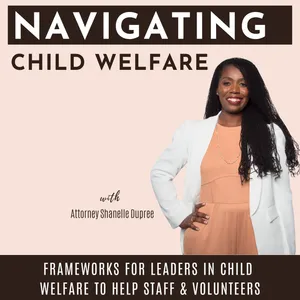
Are you struggling to keep good child welfare staff and volunteers? Are they drowning in alphabet soup, unclear timelines, fuzzy roles, and “who does what” confusion? Does attending court hearings cause anxiety in staff and families? You are not by yourself. When people talk about the foster care system they often describe it as broken, confusing, and frustrating. It’s why I’m so excited to introduce a podcast that will help staff and volunteers see the big picture of child welfare, lessen anxiety, and provide tips on how to connect with partners in the child welfare system. I’m Shanelle Dupree and I’ve been working in the child welfare system for 20 years as an attorney, a social service administrator, a non-profit leader, and now as a consultant. I have experienced first hand that knowing how to do your job is not enough to be successful in serving families. We need to connect better and see the big picture. When I was representing families in court, I finally realized that to have families reach their goal, it requires connection and collaboration with the others involved in the child welfare ecosystem. I’ve created a 360º view of the child welfare system that will eliminate confusion, build relationships, and develop trust with families. If this sounds like the natural but missing piece in your work with vulnerable families—this podcast is for you. So hug your loved ones a little bit tighter, and let's connect.
Latest Episodes
The most recent episodes — sign up to get AI-powered summaries of each one.
- 3 days ago9 min
Episode 44: You don't have to be a foster parent to help families...
The foster care system should not be the first or only place families find support. When families have help early, through neighbors, relatives, churches, community organizations, and basic-needs support, some crises can be reduced or avoided altogether. Helping families does not always require a formal title. Sometimes it starts with noticing a need and responding with care. Who in your circle, neighborhood, church, or community may need support before a crisis becomes system involvement? If this episode helped you think differently about the family and child welfare system, stay connected by signing up for the SYNCing Child Welfare Newsletter. You’ll receive tools, insights, and practical support to reduce confusion, isolation, and burnout in foster care. Sign up HERE.
- 3 weeks ago9 min
Episode 43: Mandated Reporters: What Happens after CPS is Called?
Mandated reporters…you have a power that must be wielded responsibly. A knock on the door from CPS can change everything for a family. Mandated reporters are in a special position where they are required by law to report suspected abuse or neglect. But what happens when training is sporadic, there is no real understanding or grappling of poverty versus neglect, and the policy is “when in doubt report?” Families become unnecessarily involved in a system that was never designed to care for children or families who only needed support. But let me be clear-I am not a proponent of abolishing or ending the family and child welfare system. I’ve represented hundreds of families and there are legitimate situations where the state should be involved, but that’s not all or even most foster care cases. As I think about my time in courtroom, with the agency, and now I see opportunities to change how we work with families. What about you? Check out the YouTube video as well: https://youtu.be/JpbX9jE1a9s #mandatedreporter #cps #fostercare #poverty #neglect Thank you for watching! My hope is that these conversations make us think deeper about ways to serve families better. 📬 Join the SYNCing Child Welfare Newsletter for practical tools, encouragement, and resources: https://lp.constantcontactpages.com/sl/gsyfk6n/syncpodcast
- Aug 14, 20265 min
Episode 42: Heart Resilience: The Forgotten System in Foster Care
In this episode, I’m talking about heart resilience, a piece of foster care support that often gets overlooked. We talk a lot about compliance, housing, employment, and services, and those things matter. But families need more. This episode invites us to consider what support looks like beyond the checklist. Why “doing it alone” is not a realistic expectation for families How support systems shape reintegration and stability Why paid professionals can’t be the only people families rely on What it means to make heart resilience part of foster care work Foster care can become so focused on tasks that we forget the human need underneath it all. Families need plans, yes, but they also need people. Heart resilience reminds us that connection is not extra. It is part of stability. Who does a family call when they are struggling, proud, scared, or trying again? If this episode helped you think differently about the family and child welfare system, stay connected by signing up for the SYNCing Child Welfare Newsletter. You’ll receive tools, insights, and practical support to reduce confusion, isolation, and burnout in foster care. Sign up HERE.
- Jul 29, 20267 min
Episode 41: The Problem with "Foster to Adopt"
The phrase “foster to adopt” sounds simple, but in practice, it can create a lot of confusion and heartbreak. In this episode, I talk about why this language can be misleading when the goal of foster care is often reintegration, not adoption. This conversation is not about blaming foster parents, agencies, or families. It is about clarity. When people enter the foster care system with different expectations, everyone feels it: foster parents, biological parents, workers, and most importantly, the child. Why this matters Foster care already carries enough emotion, pressure, and uncertainty. When people are not given clear information upfront, confusion grows, trust breaks down, and relationships that could have become supportive can become strained instead. Reflection question How does your agency explain the difference between foster care, reintegration, and adoption to prospective foster parents? Call to action If this episode helped you think differently about the family and child welfare system, stay connected by signing up for the SYNCing Child Welfare Newsletter. You’ll receive tools, insights, and practical support to reduce confusion, isolation, and burnout in foster care. Sign up HERE. ******* 8 Videos in 8 Weeks YouTube series Check out the 1st video in a limited series on rethinking the family and child welfare system HERE.
- Jul 24, 202613 min
Episode 40: I tried to break up with DEI
In this episode, I reflect on my long, complicated relationship with DEI: the promise, the disappointment, the fatigue, and the deeper purpose underneath it all. What began as formal diversity work inside an institution eventually became something much more personal: a way of understanding justice, dignity, opportunity, and the barriers families face inside systems. I share how early DEI work taught me that organizations often reveal their true commitment through resources, access, and influence. I also explore what happens when the language of DEI becomes politically charged, when people quietly distance themselves from the work, and when the principles still matter even if the labels change. At its core, this episode is not just about DEI as a department, title, or acronym. It is about whether we still believe in fairness, equal protection, belonging, and the possibility of becoming a better nation. Next steps: To continue learning and move beyond surface-level conversations, engage with Skin DEEP: The History of Child Welfare by Race, an online course and workshop designed to help professionals, organizations, and community partners understand how race has shaped the family and child welfare system. Visit www.skindeepcw.com or email info@skindeepcw.com to learn more.
- Jul 6, 202623 min
Episode 39: Supporting Helpers in Child Welfare: Simple Joy...Big Impact
In this episode, I’m talking with Lauren Welch, founder of Social Empowerment Texas, about what it means to support the people doing some of the hardest work in the child welfare and foster care system. Lauren is a foster and adoptive mom, and through both personal and professional experience, she saw a gap in support for CPS employees, case managers, investigators, supervisors, and support staff. So instead of only talking about what is wrong, she started building something to help. We talk about how supporting workers also supports families. When the workforce is overwhelmed, unsupported, and constantly turning over, foster parents feel it, parents feel it, and children feel it. Lauren shares how Social Empowerment Texas is creating small but meaningful moments of support, from appreciation pop-ups and car kits to refreshed visitation rooms and one-on-one encouragement through their Social Stars program. Social Empowerment Texas information: Was born out of a place of care for the system and those that are affected by it - and the enormous trickle effect that caring, encouraging and empowering social workers provides. www.socialempowertx.org lauren@socialempowertx.org https://www.facebook.com/SocialEmpowerTX #ChildWelfare #FosterCare #ChildWelfareSystem #FamilyAndChildWelfareSystem #CPS #SocialServices #Burnout #Retention #WorkforceSupport #SimpleJoy
- Jun 17, 202610 min
Episode 38: Before you quite social services...listen to this
Before you quit, I want you to pause for a minute. In this episode, I’m talking to the people in social services, foster care, and the family and child welfare system who are tired, frustrated, overwhelmed, or wondering if their work is making a difference. I’ve been there. I’ve carried 100-plus families, I’ve felt the weight of burnout, and I know what it feels like to love the work while also wondering if you can keep doing it. If this episode speaks to where you are right now, sign up for the SYNCing Child Welfare newsletter so you can stay connected and receive tools that simplify navigation and reduce confusion in the family and child welfare system. Click HERE. #burnout #isolation #connection #fostercare #childwelfare #socialservices #mandatedreporter #supervisor #director #leadership #manager
- Jun 11, 202618 min
Episode 37: Foster Care and Homelessness: Why Connection Matters in the Child Welfare System
In this episode, I’m talking about the deep connection between foster care and homelessness, especially for youth who age out of the child welfare and foster care system without a plan or without supportive family to lean on. I share why this should be a shared sorrow for all of us, and what shared success can look like when a community wraps support around families early and consistently. I also break down what the data tells us about foster youth and homelessness and incarceration, highlight a few federal and state programs that matter, and share a local example of what it looks like when systems actually connect and build a “one front door” approach for families. Call to Action: If you know a youth who has been involved in foster care, encourage them to ask about FYI vouchers and Chafee supports and to connect with local agencies that can help them navigate eligibility. And if you’re a leader, partner, or helper in the family and child welfare system, let’s talk about what intentional connection could look like across your local ecosystem. Email: info@dupreeperspective.com
About Navigating Child Welfare | CPS, Foster Care, Family Court, Adoption, Mandated Reporter, Burnout, Joy, Retention, DEI, Justice, Equity
Are you struggling to keep good child welfare staff and volunteers? Are they drowning in alphabet soup, unclear timelines, fuzzy roles, and “who does what” confusion? Does attending court hearings cause anxiety in staff and families? You are not by yourself. When people talk about the foster care system they often describe it as broken, confusing, and frustrating. It’s why I’m so excited to introduce a podcast that will help staff and volunteers see the big picture of child welfare, lessen anxiety, and provide tips on how to connect with partners in the child welfare system. I’m Shanelle Dupree and I’ve been working in the child welfare system for 20 years as an attorney, a social service administrator, a non-profit leader, and now as a consultant. I have experienced first hand that knowing how to do your job is not enough to be successful in serving families. We need to connect better and see the big picture. When I was representing families in court, I finally realized that to have families reach their goal, it requires connection and collaboration with the others involved in the child welfare ecosystem. I’ve created a 360º view of the child welfare system that will eliminate confusion, build relationships, and develop trust with families. If this sounds like the natural but missing piece in your work with vulnerable families—this podcast is for you. So hug your loved ones a little bit tighter, and let's connect.
Customized Recaps
AI-powered recaps with compact key takeaways, quotes, and insights.
Straight to Your Inbox
Get key takeaways from Navigating Child Welfare | CPS, Foster Care, Family Court, Adoption, Mandated Reporter, Burnout, Joy, Retention, DEI, Justice, Equity in a 5-minute read.
Save Hours Every Week
Stay current on your favorite podcasts without falling behind.
Frequently Asked Questions
What is Podzilla's Navigating Child Welfare | CPS, Foster Care, Family Court, Adoption, Mandated Reporter, Burnout, Joy, Retention, DEI, Justice, Equity daily summary?
It's a free AI-powered email that summarizes new episodes of Navigating Child Welfare | CPS, Foster Care, Family Court, Adoption, Mandated Reporter, Burnout, Joy, Retention, DEI, Justice, Equity as soon as they're published. You get the key takeaways, notable quotes, and links & mentions — all in a quick read.
How does the Navigating Child Welfare | CPS, Foster Care, Family Court, Adoption, Mandated Reporter, Burnout, Joy, Retention, DEI, Justice, Equity podcast summary work?
When a new episode drops, our AI transcribes and analyzes it, then generates a personalized summary tailored to your interests and profession. It's delivered to your inbox every morning.
Is this an official Navigating Child Welfare | CPS, Foster Care, Family Court, Adoption, Mandated Reporter, Burnout, Joy, Retention, DEI, Justice, Equity product?
No. Podzilla is an independent service that summarizes publicly available podcast content. We're not affiliated with or endorsed by Shanelle Dupree.
Can I get summaries of other podcasts too?
Absolutely! The free plan covers up to 3 podcasts. Upgrade to Pro for 15, or Premium for 50. Browse our full catalog at /podcasts.
How often does Navigating Child Welfare | CPS, Foster Care, Family Court, Adoption, Mandated Reporter, Burnout, Joy, Retention, DEI, Justice, Equity release new episodes?
Navigating Child Welfare | CPS, Foster Care, Family Court, Adoption, Mandated Reporter, Burnout, Joy, Retention, DEI, Justice, Equity publishes biweekly. Our AI generates a summary within hours of each new episode.
What topics does Navigating Child Welfare | CPS, Foster Care, Family Court, Adoption, Mandated Reporter, Burnout, Joy, Retention, DEI, Justice, Equity cover?
Navigating Child Welfare | CPS, Foster Care, Family Court, Adoption, Mandated Reporter, Burnout, Joy, Retention, DEI, Justice, Equity covers topics including Education, Relationships, Culture, Kids & Family, Society & Culture, Family. Our AI identifies the specific themes in each episode and highlights what matters most to you.
Start getting Navigating Child Welfare | CPS, Foster Care, Family Court, Adoption, Mandated Reporter, Burnout, Joy, Retention, DEI, Justice, Equity summaries tomorrow morning.
Free forever for up to 3 podcasts. No credit card required.
Free forever for up to 3 podcasts. No credit card required.