Free Daily Podcast Summary
Nature Track: Daily Summaries Delivered
by ABC
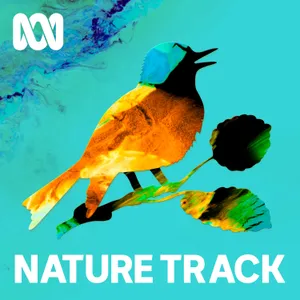
Nature Track is a podcast that opens a window on the beautiful sounds of the Australian wilderness. These long, uninterrupted soundscapes are the perfect relaxing soundtrack for your work, exercise, meditation or sleep. Each unique track is carefully recorded on location in a different part of Australia by the ABC’s nature specialist Ann Jones.
Latest Episodes
The most recent episodes — sign up to get AI-powered summaries of each one.
- Aug 4, 20261h 39m
A rainy night with owls beside a waterhole in the desert
SOUNDS LIKE: The pressure release of rain drops hitting parched red sand after a sweltering day and possibly the best owl recording that Ann has ever taken.CONTAINS: Patches of rain, and distant frogs happy with the rain, kingfishers with insomnia. And a spectacular territorial display from barking owls.RECOMMENDED FOR: Lovers of weather, of romance and whimsy, and also of birds-which-sound-like-they're-anything-but-birds enthusiasts.ANN'S NERDY SOUND NOTES:This is an incredibly dramatic place — and a special place in Yinjibarndi lore. It definitely has that gravitas. The water is surrounded in part by dark red, iron-filled cliff faces, cool grey-blue spinifex clumps and immense river red gums right at the water's edge.Even in the middle of the night, and even when it is raining enough to form puddles on the sand, the waterholes of arid Australia are centres of activity. So, although the landscape is all red sand and rocks, spinifex and heat haze, beside this spring-fed waterhole at Millstream Chichester National Park in the Pilbara in WA, it is pure, cool air.The water in this pool is so deep and cool that it gives you goosebumps if you jump in, even when it's 40 degrees in the shade.And the string of waterholes here are home to huge Pilbara Olive Pythons , which grow up to 4m long and can stay motionless for days on end waiting for the perfect meal to come too close. They can eat a whole rock wallaby in a sitting.Maybe they're the ones responsible for some of the quiet movements in this recording (which is, side note, possibly one of the most wonderfully surprising recordings I have ever taken).Not one, not two, not three but MORE nocturnal bird species all making themselves known between the rain patches. Magic.From the lands of the Ngarluma and Yindjibarndi people listen to raindrops hit dusty surfaces.00:00:00 Hear the rain pattering on the water, and the occasional 'tong' as a drop hits the microphone or a branch of the tree the microphone is attached to.Incredibly, you can hear a distant boobook (which sounds like its name boo-book) calling AND An owlet nightjar chirring (sounds a little bit like the turbo flutter on a souped-up car. If it was toy sized).00:01:15 You may be able to hear the first hints of the star of this show. Not the boobook, but its larger cousin, who will approach closer and closer throughout this recording.00:02:30 A tiny sacred kingfisher is calling in the middle of the night. It sounds like one of those toy dogs they sell at markets that walk round and round in tight circles. In fact, I suspect this is two kingfishers. They may be calling to keep in touch with each other in the darkness, or even as they migrate (many birds travel at night).00:04:54 There is a sound like a computer mouse clicking but I have no idea who makes it, whether it is an insect or a movement of another critter, perhaps a grasshopper eating dry grass, the sound of the tree 'relaxing'? Please let me know if you have an idea. 00:04:55 There is a very high pitched squeaking. Could it be a rodent? A marsupial? an Insect? 00:05:34 A distant scream. It sounds metallic, like shed door being slid back. This is probably a barn owl — a wonderfully handsome owl with white chest feathers and a disc face. THOUGH, it could also be another bird getting a fright like…00:06.10 Your ears do not deceive you it is barking owl. There is a pair in residence, and throughout this recording they will get closer and closer. I believe this is the male.00:06:35 in other contexts I would say this is definitely a woodpecker. But in Australia we don't have them. Perhaps a water bird growl? A frog? A Tree with a backache?00:12:40 Heavier rain here for a time. 00:13:12 Though it sounds like a meow, or a whine, this is actually more likely to be a mosquito-like insect whirring past.00:18:5 0 Here you can feel the breeze building and the start of light rain. You might hear the rustling of grass, or leaves touching the microphone casing.00:19:40 An insect gives a call much closer to the mic. Remember that these sounds are likely made by rubbing parts of the body together imagine wings shivering, feet agitating, extremely fast, thousands of times over to give this chorus. The whole chorus is likely made up of katydids and crickets, but further identification is beyond me.Over 100 000 invertebrate specimens have been collected by the Pilbara Region Biological Survey (across the whole Pilbara) and experts thing that at least 85 per cent of the species collected are new to Western science. They also think there is 'a high degree of endemism' which means that there is a high likelihood that some of these insects you're listening to are found nowhere else on earth.00:21:15 A kingfisher is still awake.00:21:
- Aug 4, 20262h 53m
Soothing, soft wind through trees in a peaceful desert
SOUNDS LIKE: Laying in a hammock, your eyes closed, no-one for 500km, surrounded by red sand, listening to the wind in trees that've been around since the dinosaurs. Perfect conditions for a nap.Sometimes, you just need to a bit of silence. Of course, nature is rarely silent. She's even better than that. She's better than ANY noise machine a human has ever invented. Let the sound of wind through needle-leaves on Akerre Country lull your worries away.CONTAINS: Wind. Quiet. Zebra finches. Budgies. Mysterious rustling of small critters.RECOMMENDED FOR: Fans of gentle soundscapes and wind in sheoaks, those who don't want machine white noise but need to put a baby to sleep.ANN'S NERDY SOUND NOTES:I have a weatherproof recorder that I can stick out in almost any conditions and in this case I attached it to what has been called 'Australia's loneliest tree' in the Simpson Desert.To get there from Alice Springs, you travel through dune country, past ridges and through dry creek beds. And then all of a sudden a loose grove of skinny pine trees peak over the horizon. It is one of only two patches of Acacia peuce in the entire world. They're on opposite sides of the same desert and they're called lonely because they are solitary trees in an otherwise treeless landscape.It's also known as waddi waddi, or maybe Birdsville wattle and this stand is on Akerre Country.It is one of the rarest plants in the world and the wind through the needle-like leaves sounds gorgeous.This recording was taken while I was on site in the Simpson Desert, NT filming for Australia's Favourite Tree.We camped right near the Mac Clarke Reserve. And this is what I listened to all night.00:00 I'm not sure I've ever been anywhere in Australia where there wasn't a cricket calling.03:39 Zebra finches popular in aviaries worldwide but a native bird here in arid Australia, and for me they're one of the sounds that lets me know I'm somewhere arid.08:12 They sound like desert fairy wings.12:51 I *think* that that slightly… complaining sound is the contact call of singing honeyeaters. which are, somewhat ironically, not singing but sounding like they're complaining about their lunch order.18:40 I wonder who it is hopping around the tree, making sounds like they're shuffling along the branches the recorder is connected to. It's probably not the zebra finches, as they don't seem to be able to go anywhere without talking about it.25:40 See? The finches arrive, you can hear their wing beats and they say something about it immediately. I'm still not sure who was jumping around making those clicks and tocks. In fact, there is a phenomenal amount of activity throughout this recording.27:20 There's also a chance it is something non-bird scrabbling around. It could be a reptile, a mammal like a plains mouse? Or a microbat (though I doubt that as I didn't pick up any of their calls)? A DUNNART? It could even be an insect scrabbling? Please leave your opinions on who is creeping around in the comments (if the platform you're listening on has comments)!30:47 This sounds a little like the animal is shredding something.33:25 A beetle, or an insect of some description flying by like it is at an air show!42:50 The signature sound of dove wings.43:50 Though it sounds a little like a swan (which don't really do deserts like this) it is actually a little bit of a diamond dove calling.44:15 Budgerigars! WOO HOO!50:00 Interestingly the insect / cricket that has been calling intermittently really starts a constant call from around this point. Insect noises and choruses can be driven by temperature, so it might literally have hit the right heat.01:20:00 I could listen to the wind through these trees for the rest of my life and be a happy woman.02:04:45 Someone with wings whispers in then lands with a slap/shuffle. Sounds like an insect to me, the texture of the wing beats sounds papery and dry. 02:10:38 I rarely take a recording like this where the microphones or recorder don't get 'investigated' by a local. I've left this one in here for your enjoyment.02:15:20 The wind is so perfect, it sounds fake. (It's not.)With thanks to Dr Elliot Leach and Gus Daly for putting up with a group chat where I send snippets of sound for them to identify. And more seriously, thankyou to the Akerre people for standing with these trees for so long - they are a true wonder of the world. Recording: Dr Ann Jones.Mastering: Isabella TropianoExecutive Producer, Audio for ABC Science: Petria Ladgrove.
- Aug 4, 20261h 15m
Peaceful soundscape of soft ocean waves in a sandy bay
SOUNDS LIKE: The 'shhhh' sound that tropical dreams are made of as gentle waves roll through mangrove trees on an island paradise. It's hushed and peaceful.CONTAINS: Soft waves, and salt water moving quite continuously. Quiet insects throughout. The sounds occupy different frequencies and rhythms so they can all be heard clearly even when they're all calling. Listen for high pitched maraca-like single shakes, rickety-whirring phrases, tiny yaps marking a beat, or what sounds like a tiny mobile phone calling somewhere around 9khz.RECOMMENDED FOR: Fans of quiet white noise, waves and water sounds. Or those who like blocking out noisy colleagues by putting on outrageously large headphones and listening to the ocean instead.ANN'S NERDY SOUND NOTES:This place is White Lotus meets scientific research. At the Orpheus Island Research Station, the island is skirted by bright white sand, its steep hills covered in green vegetation, but rather than pleasure craft, it's practical research vessels anchored in the bay.Located in the Palm Islands on the southern end of the Great Barrier Reef, the Research Station is the sort of place that needs a dive shed (for all the gear), plus a fire pit (for evenings becoming mosquito food donors) and a wary eye (for the huge goanna that keeps on patrolling the shoreline).I was visiting to film for Dr Ann's Secret Lives: bull sharks.But this recording is not of the hectic process of catching a 200kg shark.Instead, this is from the mainland-facing side of Goolboodi, AKA Orpheus Island, in the sea country of the Manbarra people about 110km north of Townsville.The inlet is shallow, with a sweeping mudflat exposed at low tide, and epic mangrove trees around the edge. They're shaped like the 'tree of life' with roots spanning tens of metres and canopies to match, and the waves are forced to move through the roots, backwards and forwards, all night.The recorder is attached to one of those trees — and its roots split the waves into hundreds of smaller pulses, so the rhythm is echoed and split, swirling and sometimes even gurgling.But, as the water recedes, the waves become more distant and more individually distinct. Eventually, rather than pushing onto the roots, the water filters through sand and mudflat, making the 'shhhhh' sound that tropical dreams are made of.You will hear the occasional plonk, bump or metallic sound as the research boats anchored further out in the bay interact with the rolling water.00:24:12 and 25:15 An Eastern Koel calling in the night. They call quite incessantly as they're relatively nomadic and their relationships are fleeting. So they're always on the bird equivalent of the apps (screaming a lot in case anyone hears).
- Aug 4, 20262h 20m
Nature's white noise — thousands of humming insects and a soothing rufous owl
CONTAINS: A consistent insect chorus with a rufous owl calling intermittently throughout.RECOMMENDED FOR: Those who like white noise, brown noise, pink noise. For people who want a consistent soundscape to help mask the sounds of the city, who want something almost mechanical or synthesised to help drown their thoughts.ANN'S NERDY SOUND NOTES:Subtle pulsations, and vibrations, with ticking, buzzing and swooshing that forms soft waves of white noise. It is the insect chorus in rainforest in Cape York, QLD.This recording was taken in the area under the care of Mapoon Aboriginal Council, next to a tidal river with mangroves in a patch of forest that is dense with life.There are crickets and katydids calling and probably a large range of other things that I'll never be able to identify.00:01:20 An orange-footed scrubfowl is calling in the distance.00:08:40 The clicks and snaps of movement. Also, of things falling from trees — perhaps discarded seeds by animals, leaves, or fruit.00:15:00 A brush cuckoo calling.00:15:50 The scream is a Tyto — either a Barn Owl or a Grass Owl. The calls are rather too similar to tell them apart.00:24:00 The metal 'sproing' call of a large-tailed nightjar — a bird which looks like leaf litter, but sounds like an industrial accident.00:33:45 The bounding thumps of a macropod.00:46:30 Now, at first I thought… frogmouth? What is that. But then I roped in my friend Dr Jodi Rowley, who then had to call in a second opinion. AND… drum roll — it is Litoria infrafrenata the white-lipped tree frog. Jodi says it's sort of unusual to hear its calls grouped together like that.00:53:30 An Eastern Koel calling. I wonder if they ever get any sleep. It seems that they turn up everywhere I record, no matter the time!00:55:30 That is the call of a rufous owl — a large nocturnal owl who looks a little like it is wearing a stripy 'Where's Wally' top in cream and orange. It also has a much milder resting 'expression' that the powerful owl — this one looking as if it *slightly* concerned for your welfare but if you wake it up in the daytime, it's eyes will absolutely boggle at the audacity.01:10:10 Yes, probably a cow. There are also feral horses and boars in the area.01.10.40 I'm actually not sure what is making this keening sound.01:13:20 Perhaps a fruit bat calling out. They could be responsible for some of the 'cracks' and 'tocks' of things hitting the leaf litter.01:17:15 The large-tailed nightjar is back bouncing away.01:21:40 the chirr of an owlet nightjar — another bird which looks a little bit like a piece of a branch.01:22:00 Orange-footed scrubfowl.01:32:45 The brush cuckoo calling with it's diagnostic series of descending whistles.01:38:15 A shrike-thrush calls. I wonder whether it woke itself up from a dream.01:41:06 I believe this is a brushtail possum!01:48:50 The owlet nightjar is tiny but gives mighty little cries.01:50:50 Now why insects do this — call. Stop. Start. Stop. Please someone point me towards why?01:56:15 A wallaby with a smokers cough?02:14:00 A seriously silly call from the orange-footed scrubfowl.02:19:35 I think this little grunt may actually be a scrub turkey — they make funny little low pitched kazoo like calls, but it could also be a wompoo fruit dove being weird. Animals are not always predictable. With thanks to Dr Elliot Leach and Gus Daly for putting up with a group chat where I send snippets of sound for them to identify.
- Aug 4, 20261h 30m
Birds in paradise — a rainforest nature soundscape from Australia
SOUNDS LIKE: You're waking up while on holiday in a tropical rainforest, surrounded by exotic birds. Layers of sound are like vine tendrils curling through the jungle canopy: the birds are near, far, above and right next to you. Let them drown out whatever is giving you the sh*ts.In reality, this place in Cape York isn't really visited by tourists. It's one of those spots that the locals from Mapoon Aboriginal Shire Council in Far North Queensland know about. CONTAINS: Mostly birbs. And a curious wallaroo later on.You'll hear green orioles, which sound like someone dropping PVC pipes, orange-footed scrubfowl which call out like an old lady (a posh one) getting a fright and even one of Australia's rarest birds, the palm cockatoo. Minimal flies and mozzies. RECOMMENDED FOR: Those who wish they could travel to every corner of the globe, for when you need something a bit louder to drown out some neighbours, or your thoughts. For bird people (and those who wish they were bird people).ANN'S NERDY SOUND NOTES:There is a 4WD track in western Cape York that leads from the highway towards a tidal river filled with crocs and sharks. Just as you're about to hit the high tide mark - that's where this recording is taken.It is 'riparian forest' which is the fancy way of saying it's forest on a riverbank. In this part of the world, it means thick vegetation with vines growing throughout, the foliage providing shade from the blasting sun, but also keeping the humidity high.There are rare (in Australia) Nypa Palms emerging from muddy water or even at the mangroves edge and let's face it, something that could bite you is never more than 30cm away.This is one of those recordings where there's so much going on, I almost don't know where to start when explaining what I can hear.00:00:00 A dawn chorus, though, if you listen very carefully there is a cross over of some nocturnal birds. The large-tailed nightjar sounds like a metal spring being repeatedly bounced. Boing boing boing boing. Hearing this sound may be dependent on the volume you're listening at! Always listen ONLY to your comfort level (or leave it on full blast when you go out for the neighbours to listen to).00:01:45 A black butcherbird calls, the largest of Australia's butcherbirds. It sounds a little bit like a child pretending to shoot a laser gun, then, perhaps the sound you'd make going over a speed bum too fast!00:01:50 Throughout this recording there is a hum, that comes and goes in long swathes. This isn't the hum of a distant generator or plant machinery. It is the activity, I think, of many hundreds of insects - perhaps crickets? They sound a little bit like the string section of an orchestra warming up or a distant gang of very angry bees.00:02:00 This sound though, louder and closer to the microphone is a green oriole. Ironically, also called the Australasian yellow oriole. It has a fetching millennial pink beak and sounds like several large water droplets hitting a suspended metal bowl in a cave.00:04:50 SO. MUCH. GOING. ON.00:04:44 Oh my goodness that is the sound of one of the rarest birds in the world. Palm Cockatoos. High pitched, almost shrill, and entirely wonderful.00:04:50 Mosquito. I promise there will not be too many throughout the recording, though, there was in real life. Mosquito sounds are sometimes intense around their target species (say… humans!) and because the recorder is out there, all alone, we don't get too many.00:07:30 The wompoo fruit dove in the background, lower in tone than the other birds! What a little legend. Sounds a little bit like Austen Powers trying to get you onto a dance floor boom shaka-WOOOO baby.00:08:35 I think that perhaps, the harsh grating is a spangled drongo (or perhaps a trumpet manucode). A trumpet manucode, a glossy black bird within the family we call 'birds of paradise'. Part of its call sounds like an ancient tree creaking or a blowfly stuck in a small tin can. The other park like a cartoon effect of children blasting off a trampoline into space!00:09:02 Large-billed Gerygone, one of the group of small brown birds that can be difficult to tell apart. The Australian Bird Guide describes the bill as 'hefty' and the eyelids white with a call that is often 'loud and cheery'.00:11.24 potential broad-billed flycatcher calling here with a buzzing sort of call. Now, judging by the name you'd almost expect something like a boat-bill (yes, that is a bird) but to be honest, I reckon I'd have trouble picking the broad-billed from a bill line- up. It is, maybe, shaped a little thicker through the middle than other flycatchers like the Taj Mahal instead of an A-frame house, but you'd have to see it from underneath to be able to tell at all! It gleans insects (picks them off vegetation or other surfaces) and also sallies (sits on a branch then launches out to swoop around and catch
- Aug 4, 202654 min
A cold, crisp night, a high-country river and a whole lot of wombat
SOUNDS LIKE: You have eschewed modern life and joined your new BFF — a wombat — to live a life of naps, snacks and cute attacks. CONTAINS: A clear, cold night and the wombats are stirring, stomping, scratching and most of all, crunching their way through about 2kgs of grass. Nearby, the wombat's neighbours undertake nocturnal shenanigans and no-one seems to get any sleep. Except you. There are birds which should be awake, birds which should be asleep, possums and the star of the show — the bare-nosed wombats.RECOMMENDED FOR: Explorers and the curious, those who want to feel awe and joy at discovering secrets that nature holds close to her chest.ANN'S NERDY SOUND NOTES:I didn't set out to record wombats. But when I went out one evening on Ngunnawal Country in the ACT, I stumbled upon an area that was almost as if it'd been exploded from below - there were holes and dirt EVERYWHERE.And I know a wombat poo when I see one -> 🟫 <- So, I found an active burrow entrance, with some grass nearby (that I thought could be quite delicious to a wombat) and attached the recorder at stumpy-little-hairy-leg height.The Murrumbidgee River is flowing about 10 metres away. Its banks are lined by big old eucalypts and a fair amount of scratchy vegetation (ask me how I know.)Bare-nosed (or common) wombats do lots of scratching. Lots of eating. A bit of bulldozing through things, maybe a fight. And that's just one night!00:01:30 Boobook calls. And in the distance, almost imperceptibly to the human ear in this recording, another answer. 00:01:50 A micro bat flies past - you can hear a series of extremely high pitched 'pips' that doppler. 00:03:10 A bat feeding buzz - the echo location calls are much, much closer together as it zeros in on its prey. And no, I have no idea what the wood ducks are going on about.00:04:08 Wood ducks like to roost in trees, nest in hollows, and sometimes, make noises like cats. You can hear the ducks roosting in different parts across the river and across answering back.00:07:56 A brushtail possum staking it's claim in the trees they sound like a cross between a smoker's cough and the flush of a toilet. 00:09:17 I'm calling it. That's a waterbird doing a poo over the water. 00:10:50 Who flies around at night AND makes water landings? Wood ducks.I expected many things from this soundscape, but I did not expect the wood ducks to be quite so active in the night. They barely get any sleep!00:15:48 let the munching begin. 00:16:20 There are lambs somewhere in the distance. The area is full of merino farms and Namadgi National Park.00:16:30 The slow cracking of sticks sounds mammalian - and there are multiple species in the area. In favour of the wombat, I can't hear the movement normally associated with macropod grazing: a slow gait of back legs and front legs/tail. Also, it sounds like it's pushing through stuff, which... is a very wombat thing to do.00:23:45 A rooster in the distance. 00:26:30 Lot s of pulling and ripping and chewing and stomping.00:27:15 –The frog chorus in this recording contains the average suspects crinia signifera and crinia parasignifera the common eastern froglet and the sign-bearing froglet.I think there is also spotted marsh frog in there, though not in the same numbers or frequency of calls as the others, and perhaps a distant pobblebonk.00:30:22 I am over 95% sure of that little harsh screaming grating sound in the distance? That is a grumpy wombat telling another wombat to back off.00:30:54 Wombat smoker's cough? I'm imagining it like Ben Affleck outside the burrow. Just having a moment. 00:33:10 Superb fairy wren. 00:35:40 Lots going on here - the wombat pushing through sticks, there's chewing, a boobook, an owlet nightjar, a brush tail possum and the frog chorus. 00:37:20 Though this sounds a little bit like a barn owl, it probably is a wombat they make a grating, hissing, deathly call when they're having a territorial dispute. They also bulldoze around. 00:38:00 The screaming call of a wombat, perhaps a female. In between you can hear lower growling grunts. 00:39:00 A sequence featuring the wombat chewing, a fairy wren and then a masked lapwing (AKA PLOVER!)00:44:40 Wombat scratchy.00:46:58 Sulphur-crested cockatoos in the distance (thank goodness - they're pretty raucous)00:49:45 The lapwings are upset by something. You can hear the bird doing it's circle of the area to assess danger and give warnings to all who come.00:53:55 A wombat sigh.
- Sep 20, 2022
Where there is water
No music. No voices. Just the sound of a creek bed in outback Australia.In the Murchison district in Western Australia you're surrounded by low lying ranges where rocks have been found that are 4.4 billion years old — they're almost as ancient as the planet itself.Among the crests and dips of Wajarri country is a creek bed on Boolardy Station. Not flowing, but water is still there. And the places where there is water in this arid environment – well, it's a mecca for birdlife.Listen for: chiming wedgebills, lots of flies and other insects, rainbow bee-eaters, crested bellbirds, babblers and diamond doves among many many more. Mix Engineer: Isabella Tropiano.This program is produced on the land of the Wathawurung people.
- Sep 13, 2022
The storm front
No music, no human voices. Just the sound of an epic summer storm rolling on through the evening.I recorded this at my home. It had been a hot day, and in the late afternoon there was a crack of thunder. I walked out, set the recorder near the woodpile and recorded into the night.In this recording you can hear rain falling, hitting the earth and also hitting the microphones. And you can hear lots and lots of thunder.At first, the afternoon and evening chorus continues, but as the storm intensifies, just the cockies scream. Then, as darkness falls, insects take up the lulls between thunder and rain.Mix Engineer: Isabella Tropiano.This program is produced on the land of the Wathawurung people.
Get Nature Track summaries in your inbox
Free AI-powered daily recaps. Key takeaways, quotes, and mentions — in a 5-minute read.
Get Free Summaries →Free forever for up to 3 podcasts. No credit card required.
You Might Also Like
Listeners also like.

Relaxing White Noise
White noise and nature soundscapes designed to aid sleep, focus, relaxation, and baby soothing.

Deep Sleep Sounds
Original soundscapes combining nature sounds, binaural beats, and white noise to help you sleep and relax.

Koala Sleep Sounds: For Babies & Toddlers
Gentle ambient sounds designed to help babies and toddlers relax, fall asleep quickly, and sleep more soundly through the night.
BirdNote Daily
Short audio stories about birds and nature that highlight animal behavior, sounds, and conservation.
Terrestrials
Nature stories that reveal surprising animal and plant behaviors through immersive, family-friendly audio adventures.

How Wild
Explores the evolving idea of wilderness through voices of rangers, scientists, hikers, and Tribal leaders across American trails.

The Nature Of with Willow Defebaugh
Explores lessons from nature through conversations with artists, scientists, and thinkers about creativity, connection, and transformation.

Wonder
A brief weekly journey into the natural world through immersive soundscapes and mindful reflection.

The Music & Meditation Podcast
BBC Radio 3 Unwind

Natural Causes
Explores the intersection of outdoor access, conservation, and environmental justice in an era of climate crisis and political threat.

Scotland Outdoors
A topical guide to outdoor life in Scotland.

Night Falls: Bedtime Stories For Sleep
Soothing bedtime stories for adults, told in a calm voice, to help quiet the mind and ease into sleep.
About Nature Track
Nature Track is a podcast that opens a window on the beautiful sounds of the Australian wilderness. These long, uninterrupted soundscapes are the perfect relaxing soundtrack for your work, exercise, meditation or sleep. Each unique track is carefully recorded on location in a different part of Australia by the ABC’s nature specialist Ann Jones.
Customized Recaps
AI-powered recaps with compact key takeaways, quotes, and insights.
Straight to Your Inbox
Get key takeaways from Nature Track in a 5-minute read.
Save Hours Every Week
Stay current on your favorite podcasts without falling behind.
Frequently Asked Questions
What is Podzilla's Nature Track daily summary?
It's a free AI-powered email that summarizes new episodes of Nature Track as soon as they're published. You get the key takeaways, notable quotes, and links & mentions — all in a quick read.
How does the Nature Track podcast summary work?
When a new episode drops, our AI transcribes and analyzes it, then generates a personalized summary tailored to your interests and profession. It's delivered to your inbox every morning.
Is this an official Nature Track product?
No. Podzilla is an independent service that summarizes publicly available podcast content. We're not affiliated with or endorsed by ABC.
Can I get summaries of other podcasts too?
Absolutely! The free plan covers up to 3 podcasts, any in the catalog. Basic raises that to 15, Pro to 40 and Max to 100. Browse our full catalog at /podcasts.
How often does Nature Track release new episodes?
Nature Track publishes weekly. Our AI generates a summary within hours of each new episode.
What topics does Nature Track cover?
Nature Track covers topics including Science, Culture, Society & Culture, Travel, Natural Sciences, Places & Travel. Our AI identifies the specific themes in each episode and highlights what matters most to you.
Start getting Nature Track summaries tomorrow morning.
Free forever for up to 3 podcasts. No credit card required.
Free forever for up to 3 podcasts. No credit card required.