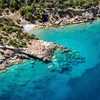
The Mediterranean Sea's beauty hides an ecosystem under pressure
The Mediterranean Sea accounts for less than 1% of the world's ocean surface water, but it contains roughly 18% of global marine biodiversity. It is home to 150 million people along its coastline (roughly equivalent to Russia's population). And it sequesters 17.2 million metric tons of CO2 each year. Joining the Newscast this week to talk about the unique biodiversity of the Mediterranean Sea and its threats is journalist Manuela Callari. Callari has written for Mongabay, highlighting the threats to purple sea urchins (Paracentrotus lividus) along the Italian coast. These marine invertebrates are crucial to the health of marine ecosystems, such as those in the Mediterranean, by helping regulate algal abundance and serving as food for predators. However, they are being overfished and even poached in marine protected areas due to demand for them as the primary ingredient in a popular tourist dish: spaghetti ai ricci di mare. While the situation with urchins persists, Italy has been investing in an unprecedented effort to map its entire underwater coastline using deployed sensors to better understand the marine environment and manage conservation efforts. This is allowing them to identify where meadows of the seagrass Posidonia oceanica, which are "absolutely vital" to the Mediterranean ecosystem, persist, Callari says. Overall, Callari says she wishes the rest of the world and tourists visiting the Mediterranean were more informed about the pressures the marine ecosystem faces. "I grew up here, and now that I go back to certain places where I was as a child, and they are just completely different places to me. Places that were just nature and were difficult to access. Now they have very easy access on cars, buses. You can go on boat tours very easily. And I think we don't appreciate enough the impact that has on the environment. On the sea." Please take a minute to let us know what you think of our podcast here. Mike DiGirolamo is the host & producer for the Mongabay Newscast based in Sydney. Find him on LinkedIn and Bluesky. Cover image: Satellite data from a study shows that the Mediterranean's average surface temperature has risen by 1.2°C (2.2°F) since the mid-1980s. Image by Katerina Katopis/Ocean Image Bank. —— Timecodes (00:00) The Mediterranean is taken for granted (07:09) Why is a tourist dish destroying marine ecosystems? (18:49) Mapping the entire Italian coast (28:19) Learning to appreciate the Mediterranean
Podzilla Summary coming soon
Sign up to get notified when the full AI-powered summary is ready.
Free forever for up to 3 podcasts. No credit card required.
Listen to This Episode
More from Mongabay Newscast
Why are forests in Liberia disappearing?

Oil has brought destruction to the Niger Delta; women and human rights may save it

Wildlife crossings are having a moment
The radical plan to rethink work, wealth and planetary well-being
Get summaries like this every morning.
Free AI-powered recaps of Mongabay Newscast and your other favorite podcasts, delivered to your inbox.
Free forever for up to 3 podcasts. No credit card required.