Free Daily Podcast Summary
Money Healing Club Podcast: Daily Summaries Delivered
by Rachel Duncan
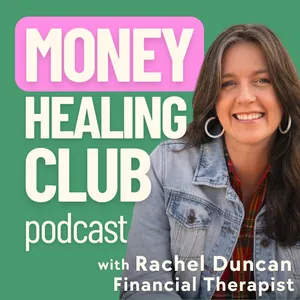
The Money Healing Club Podcast is a place to talk about the things we don’t say when we talk about money.Answering questions about impulse spending, icky family dynamics, rebelling against consumerism, and more, Certified Financial Therapist, Rachel Duncan gives you compassionate, grounded advice and exercises to help you interact with money with less shame and more ease.Get your money & emotions question answered in an upcoming episode here:https://www.moneyhealingclub.com/podcast Welcome to the softest place to land in personal finance.
Latest Episodes
The most recent episodes — sign up to get AI-powered summaries of each one.
- 1 weeks ago29 min
👗 The Real Reason You Keep Buying Clothes You Don't Wear with Dacy Gillespie
This podcast is for educational purposes only and does not constitute mental health, financial, tax, or legal advice. Episode summary Somewhere along the way, "flattering" stopped meaning "you look lovely" and started meaning "you look as thin as possible." This week on the Money Healing Club podcast, Rachel sits down with Dacy Gillespie, a personal stylist who helps people get dressed from the inside out. You'll hear why so much clothing spending is really a search for validation, and why nothing in the fitting room fits. Along the way, Rachel and Dacy get into the tender intersection of clothes and money, how getting dressed becomes a weighty category of spending, and how enoughness lives underneath both. 💬 "The clothes were not made for you." - Dacy Gillespie In this episode: Why "flattering" almost always means "thinner," and what to reach for instead How to tell dressing for you apart from dressing for validation Why nothing fits, and why that is the clothes' fault, not your body's How to find the pieces you actually return to, without going all-or-nothing capsule wardrobe ⏰ Episode breakdown 03:38 | What "flattering" really means | Dacy unpacks the word and the fatphobia quietly baked into it 04:48 | From how you look to how you feel | Moving away from the body as display and toward comfort and self-expression 10:34 | Enoughness and the sparkle of novelty | Why we overspend chasing external validation, and how to come back to what you actually want 19:15 | The fit lottery | Why nothing fits, the study that found 58 different measurements on every body, and letting go of "my body is wrong" 📚 Resources and links Dacy Gillespie is a personal stylist who helps people let go of the rules they were handed about clothes and get dressed from the inside out. Her work centers comfort, self-expression, and undoing the idea that your body is the thing that needs fixing. Connect with Dacy Gillespie: Website: dacygillespie.com Substack: Unflattering, at dacygillespie.substack.com Instagram: @dacygillespie Book: Unflattering: A Radical New Way to Get Dressed, from an imprint of Macmillan, expected early 2028 Also mentioned: Ace & Jig, an ethically made, size-inclusive clothing brand that goes up to a size 5X, which Dacy references wearing A late-1940s USDA study that measured thousands of women and found 58 distinct body measurements that vary from person to person Reddit, which Dacy points to as a useful place to find size-inclusive brands 💬 Join the conversation Click the big orange button on our site, right from your phone or browser, and let Rachel know: what is one piece of clothing you always feel like yourself in? https://www.moneyhealingclub.com/podcast 💝 Support the podcast Help keep the Money Healing Club podcast going. If this show has helped you feel less alone or more grounded with money, please consider contributing: https://www.moneyhealingclub.com/podcast 🎧 Keep listening Your next listen: S2 E41, Curb Your Impulse Spending with Nervous System Awareness w/ Stacy Peterson Full transcript: https://www.moneyhealingclub.com/podcast 🎙️ We're a proud member of the Feminist Podcasters Collective where creators like me are uplifting diverse voices and driving meaningful change.
- 3 weeks ago46 min
🧸 The Money Stories You Inherited Without Ever Choosing Them with Tari Vickery
This podcast is for educational purposes only and does not constitute mental health, financial, tax, or legal advice. Episode summary On this week’s episode Rachel talks with Tari Vickery, a wealth manager and author of The Emotional Side of Money, who has spent decades helping people untangle the money stories they inherited. They get into why security never arrives at the number you're chasing, how to talk to kids about money without saying "we can't afford it," and how to find the practice that actually calms your nervous system. A warm, story-rich conversation on the Money Healing Club podcast about turning the legacy you were handed into one you choose. 💬 "The security comes from within ourselves of knowing that whatever comes, I will deal with it and I'm gonna be okay." - Tari Vickery In this episode: Why the security you're chasing probably isn't a number How to tell the difference between real scarcity and a scarcity mindset What "we can't afford it" might actually be teaching your kids How to find the money practice that calms your nervous system, not someone else's ⏰ Episode breakdown 02:30 | The script you inherited | Tari on the moment in her 40s when she realized scarcity was a story passed down, not just the way things were 07:26 | Why the goalposts keep moving | Security doesn't live in a number, and chasing one keeps it out of reach 20:27 | Beyond "we can't afford it" | Talking to kids about money in a way that teaches values instead of fear 23:15 | What actually calms you | Finding your own money practice rather than the one that's supposed to work for everyone 📚 Resources and links Tari Vickery is a wealth manager, author, and longtime guide for people navigating the emotional weight of money. Her book The Emotional Side of Money is a collection of stories rather than a how-to, written so you might see yourself on the page and get curious about your own patterns. Connect with Tari Vickery: Website: tarikvickeryauthor.com The Emotional Side of Money: A Roadmap to Financial Wellness, available in paperback, ebook, and audiobook (narrated by Tari), wherever you buy books Also mentioned: The 7 Habits of Highly Effective People by Stephen Covey, for its framing of scarcity and abundance 💬 Join the conversation Click the big orange button on our site, right from your phone or browser, and let Rachel know: what money story did you inherit without ever choosing it? https://www.moneyhealingclub.com/podcast 💝 Support the podcast Help keep the Money Healing Club podcast going. If this show has helped you feel less alone or more grounded with money, please consider contributing: https://www.moneyhealingclub.com/podcast 🎧 Keep listening S3 E50: 💌 Write a Letter to Your Money And Let It Write Back Full transcript: https://www.moneyhealingclub.com/podcast 🎙️ We're a proud member of the Feminist Podcasters Collective where creators like me are uplifting diverse voices and driving meaningful change.
- Aug 14, 202642 min
🙃 Money Pet Peeves With Linda Grizely
This podcast is for educational purposes only and does not constitute mental health, financial, tax, or legal advice. Episode summary On the first-ever pet peeve session of the Money Healing Club podcast, Rachel sits down with certified financial planner Linda Grizely, creator of the Me Money method, to unpack the mainstream rules that sound like gospel but fall apart on real humans: wants versus needs, the 30% rent rule, strict budgets, and the pressure to be completely debt free. 💬 "The goal should not be zero debt. The goal should be to have a plan that may include debt that gets you where you want to be." — Linda Grizely In this episode: Why wants versus needs is never one size fits all The Me Money method: budgeting for your wants as permission, not punishment Linda's five money personalities, and why strict budgets only work for one of them Why debt is a morally neutral tool, not a moral failing ⏰ Episode Breakdown 03:33 | Pet peeve: wants versus needs — why the restrictive framing misses the person in front of you 12:40 | Pet peeve: the 30% housing rule — where this benchmark actually came from, and why it can't fit every life 17:16 | The five money personalities — and why strict budgeting only works for one of them 34:19 | Pet peeve: being completely debt free — debt as a tool, not a moral failing About Linda Grizely: Linda is a certified financial planner, financial wellness speaker, and host of the Real Money Real Life podcast. As the creator of the Me Money method, she helps people cut through the shame and stress around money and make financial decisions that feel human, practical, and judgment free. 💌 Connect with Linda Grizely Website: https://www.lindagriz.com/ Podcast: Real Money Real Life LinkedIn 📚 Resources Mentioned Linda's money personality quiz, on lindagriz.com The Me Money method The history of the 30% housing rule, from Shelterforce: "In Defense of the 30 Percent of Income to Housing Affordability Rule, In Some Cases" - https://shelterforce.org/2017/04/25/defense-30-percent-standard-cases/ HALT: hungry, angry, lonely, tired Rachel's exercise on listing your debts and acknowledging how debt has helped you 💬 Join the Conversation Click on the big orange button on our site right from your phone or browser and tell me: what's a piece of money advice that never worked for you? https://www.moneyhealingclub.com/podcast 💝 Support the Podcast Help keep the Money Healing Club podcast going! If this show has helped you feel less alone or more grounded with money, please consider contributing: https://www.moneyhealingclub.com/podcast 🎧 Your next listen: S2 E37: 💳 Debt-Free Isn't the Answer, with Haley and Justin Brown-Woods of The Price of Avocado Toast, for the full deep dive on why paying off debt faster isn't always the goal. https://www.moneyhealingclub.com/podcast/s2e37 💫 Visit the Money Healing Club website to start your money healing process! https://www.moneyhealingclub.com Full transcript: https://www.moneyhealingclub.com/podcast 🎙️ We're a proud member of the Feminist Podcasters Collective where creators like me are uplifting diverse voices and driving meaningful change.
- Jul 31, 202650 min
📦 What to Do with the Stuff You Inherit with Nick Fox
This podcast is for educational purposes only and does not constitute mental health, financial, tax, or legal advice. Episode Summary In this episode of the Money Healing Club podcast, Rachel Duncan sits down with Nick Fox, creator of the Millennial Inheritance Project, a community documenting the very particular experience of inheriting objects instead of wealth. From 3,000 signed baseballs to a mother's beloved library, Rachel and Nick get into grief, family dynamics, identity, memory, and why letting go of stuff is so much heavier than it looks. Rachel also opens up about her own ongoing experience with the boxes still in her basement after her mother's passing. 💬 "You didn't inherit money, you inherited stuff." — Nick Fox Key Takeaways - Inheriting stuff is its own kind of grief, separate from any money that changes hands. - Value is subjective. What one person treasures, another sees as clutter, and both feelings are valid. - When you cannot feel someone else's attachment to an object, a useful question is: what utility does it have for me? - The conversation with aging parents lands better from curiosity than from combativeness. - A full basement or garage is not the same as hoarding, which is a clinical condition that deserves care, not judgment. About Nick Fox Nick is the creator and curator of the Millennial Inheritance Project, a community documenting what it really means to inherit someone's lifetime of belongings. He is a radio person, a husband, and, in his own words, a very normal person trying to make sense of this alongside the rest of us. ⏰ Episode breakdown 06:30 | Where the millennial inheritance community came from. How one sarcastic video about a box of "Oneida crap" turned into a movement. 23:00 | Why value is completely subjective. From the Beanie Baby crash to a mother's beloved books. 26:15 | The one question to ask about any inherited object. Moving from someone else's sentiment to your own sense of utility. 37:00 | Two-pronged advice. One message for the elders holding the collection, one for the kids who will manage it. 💌 Connect with Nick Fox - @nickfoxradio on all socials - @millennialinheritance on socials and podcast platforms 📚 Resources mentioned The Millennial Inheritance Project by Nick Fox International OCD Foundation hoarding center, for anyone concerned about hoarding disorder Lead safety in inherited ceramics: creators like "Lead Mama" and "the Lead Guy," 💬 Join the conversation Click the big orange button on our site, right from your phone or browser, and let me know: what is sitting in your basement or closet right now that you have not been able to let go of? https://www.moneyhealingclub.com/podcast 💝 Support the podcast Help keep the Money Healing Club podcast going. If this show has helped you feel less alone or more grounded with money, please consider contributing: https://www.moneyhealingclub.com/podcast 🎧 Your next listen 👵🏽 When Your Parents' Financial Trauma Becomes Your Money Mindset 💫 Visit the Money Healing Club website to start your money healing process https://www.moneyhealingclub.com Full transcript: https://www.moneyhealingclub.com/podcast 🎙️ We're a proud member of the Feminist Podcasters Collective where creators like me are uplifting diverse voices and driving meaningful change.
- Jul 17, 202653 min
🌀 Money and the Enneagram with Khara Croswaite Brindle
This podcast is for educational purposes only and does not constitute mental health, financial, tax, or legal advice. EPISODE SUMMARY The Enneagram is having a moment, but most of the conversation stops at quizzes and cute type labels. On this episode of The Money Healing Club podcast, Rachel talks with Khara Croswaite Brindle, certified financial therapist and co-author of the Amazon number one bestseller Your Enneagram and Money, about why the Enneagram is less a personality test and more a framework for how you relate to people, yourself, and to money. Together they walk all nine types and the money edge that comes with each, from noble poverty in the helpers to the five's fear of being depleted to the nine who cannot say what they are saving for. Rachel and Khara both name their own types on air. 💬 "A lot of people are worried about being put in a box, but the language we hear often is, hey, it's telling you what box you're already in." — Khara Key takeaways The Enneagram is a relational framework, not a box. It names the logic behind why you do what you do, including the parts you like least. Enneagram assessments run about 66% accurate. When your real type lands, it tends to feel like a gut punch, not a shrug. Every type has a money edge. Ones get rigid, twos slide into noble poverty and financial enabling, threes chase dollars, fours swing between craving and rejecting money, fives hoard against depletion, sixes freeze in worst case forecasting, sevens skip the boring stuff, eights refuse to hand over control, and nines lose track of what they even want. Being "good with money" on paper is not the same as being well. Fives and sixes often look successful and still live in scarcity. There is no type you are supposed to be. The work is curiosity and balance, not a personality overhaul. About Khara Croswaite Brindle Khara is a certified financial therapist and licensed professional counselor in Colorado, director of training at the Financial Therapy Clinical Institute, and co-author of Your Enneagram and Money with Hannah DeGroot. She is also Rachel's former supervisor. ⏰ EPISODE BREAKDOWN 02:53 | Why the Enneagram, and Why It Is Not Just a Personality Test: A relational framework for how you connect with people, with yourself, and with money. 08:12 | How Do You Actually Find Your Type?: Why free quizzes run about 66% accurate, what a typing interview is, and what a counter type means. 11:17 | Walking the Nine Types and Their Money Edges: Ones through nines, the core belief driving each, and the money habits that follow. 14:17 | Noble Poverty, Financial Enabling, and Rachel Outs Herself: The helper's growth edge, and why putting your own mask on first keeps proving true. 47:25 | Inside a Typing Interview: What Khara asks, what she watches for, and why people leave feeling seen. 💌 Connect with Khara Croswaite Brindle Website: Croswaite Counseling, PLLC LinkedIn Instagram 📚 Resources Mentioned Your Enneagram and Money: Transforming Enneagram Edges into Financial Freedom by Khara Croswaite Brindle and Hannah DeGroot - The Path Between Us by Suzanne Stabile for understanding type to type relationships You Are a Badass at Making Money by Jen Sincero - 💬 Join the Conversation Click on the big orange button on our site right from your phone or browser and let me know: what is your type, and which money edge hit a little too close to home? https://www.moneyhealingclub.com/podcast 💝 Support the Podca
- Jul 3, 202636 min
🌱 When Money Stops Feeling Like Conflict: A Member's Money Healing Story
Content note: this episode includes a few brief mentions of disordered eating and eating disorder treatment, in the context of how this week's guest healed her relationship with food. Please take care with where you are as you listen. EPISODE SUMMARY This week on the Money Healing Club podcast, Rachel sits down with a current club member who generously shared her money healing journey. Money was feast or famine growing up, which wired in two scripts at odds with each other, a careful saver and an impulse spender, and she found herself doing all the "right things" while still spending more than she earned. Her way in was intuitive eating. After healing her relationship with food, she went looking for the same softer, self-compassionate approach for her money, and that search led her to Rachel. They get into ditching the budget, why every no needs a yes, and the real shifts she has noticed since joining the club. 💬 "Spending money on something means saying yes to something else, and saying yes to something might mean saying no to something else." 📝 Key takeaways Childhood money conflict can wire in two scripts at odds with each other, a careful saver and an impulse spender, that keep pulling against each other in adulthood. You don't need a budget to heal your money. You need an honest, compassionate picture of what your life actually costs. Every no needs a yes. Reframing a spending choice as a yes to something else turns it from deprivation into an empowered decision. Safety is the value sitting underneath almost every money decision, and feeling safe in the present is what finally frees you to think long term. Self-compassion plus common humanity, not accountability, is the real foundation of lasting change. The shifts are tangible: less impulse spending on clothes and eating out, a growing safety cushion, and a lot more kindness on the days you slip. ⏰ EPISODE BREAKDOWN 08:00 | Intuitive Eating, but for Money How healing her relationship with food sent her looking for the same soft, self-compassionate approach to spending. 11:00 | Ditch the Budget, Ask a Better Question Why "make a budget and stick to it" kept failing, and how "what does my life cost?" changed everything. 15:00 | Every No Needs a Yes Turning restrictive-feeling money choices into empowered yeses instead of deprivation. 28:00 | Self-Compassion Over Accountability Her advice for anyone who avoids their money: start with self-compassion and common humanity, not shame. 🔗 Resources mentioned Leah Kern, intuitive eating dietitian and host of Shoulders Down Amelia Hruby and the Off The Grid podcast Haley and Justin Brown Woods of Price of Avocado Toast, on the separate discretionary spending card idea 🎙️ Have a money story or question? The avoidance, the fear, the feeling that it's just not for you? Rachel wants to hear about it. Click the big orange button on our site right from your phone or browser and let her know: https://www.moneyhealingclub.com/podcast 💝 Support the Podcast Help keep the Money Healing Club podcast going! If this show has helped you feel less alone or more grounded with money, please consider contributing: https://www.moneyhealingclub.com/podcast 🎧 Your next listen: Right in this episode, Rachel mentions she just recorded a companion piece: an episode where she reads a year of her own letters to and from money. Head to Write a Letter to Your Money And Let It Write Back to hear the Dear Money practice this week's guest talks about in action. 💛 Come find your softest place to land This episode is a window into what can happen inside the Money Healing Club: honesty met with compassion, and a room full of people figuring out this money stuff together. If you want a taste of what this week's guest experienced, come join us. The doors open about four times a year. Head to https://www.moneyhealingclub.com/club to see if
- Jun 26, 202617 min
💌 Write a Letter to Your Money And Let It Write Back
EPISODE SUMMARY This week on the Money Healing Club podcast, Rachel shares her favorite money healing exercise. It's called Dear Money: you write a letter to your money, then you let your money write one back. She reads a year's worth of her own letters, where money shows up compassionate, a little sassy, and honest, including the ones she wrote through real burnout and the decision to pause her membership. There is no five step plan here. Just a tender, eye opening way to notice your money and let it notice you back. 💬 "Money loves to be noticed, and I hope you do something to notice it lovingly today." What you'll take away What the Dear Money practice is and where it comes from Why letting money "write back" can feel so grounding The vibe money tends to show up with: compassionate, forgiving, and sometimes funny How these letters helped Rachel move through burnout and toward clearer boundaries A simple variation for asking money for a to-do list when everything feels like a priority ⏰ EPISODE BREAKDOWN 00:32 | The Dear Money Exercise Where the practice came from and how writing to and from your money actually works. 01:10 | What's Money's Vibe? The question Rachel asks her clients, and how money tends to show up when you really listen for it. 07:35 | The Burnout Behind the Letters Writing through the decision to pause the membership and step out of doing too much. 15:50 | When You Just Need a To-Do List A quick variation for the days when everything feels top priority. 💌 Connect with Rachel Email your letters anytime: howdy@moneyhealingclub.com 📚 Resources Mentioned The Money Healing Club website: https://www.moneyhealingclub.com 💬 Join the Conversation Rachel would love to read your letters. Try the Dear Money practice yourself, then share what came up. Even better, record one in a voicemail so Rachel can feature it on a future episode. Wouldn't it be lovely to have a letterbox full of other money healers' letters? Head to moneyhealingclub.com/podcast, scroll down to Ask Me Anything, and click the big orange button. You can record right from your computer or your phone. 💝 Support the Podcast Help keep the Money Healing Club podcast going! If this show has helped you feel less alone or more grounded with money, please consider contributing: https://www.moneyhealingclub.com/podcast 🎧 Your next listen: If money's note about your subscriptions creeping up hit home, here's the practical follow up. In S1 E8: Subscriptions: too easy to ignore, Rachel shares three ways to organize and let go of the ones you no longer need. https://www.moneyhealingclub.com/podcast/s1e8 Full transcript: https://www.moneyhealingclub.com/podcast 🎙️ We're a proud member of the Feminist Podcasters Collective, where creators like me are uplifting diverse voices and driving meaningful change.
- Jun 12, 202627 min
🛒 The Sadness of Saying Enough (And Why Certain Things Are Just Harder for YOU to Resist) + Leah Kern
EPISODE SUMMARY Why do some things feel so easy to talk yourself into? Maybe you don't even like shopping, and yet there are a couple of categories where a different gear kicks in. This episode started with a listener voicemail about exactly that. So on this week's episode of the Money Healing Club podcast, Rachel digs into why certain things feel so much harder to resist, and what that spending is really trying to say. Rachel gets into the values and memories living underneath the things you love, then brings back her friend Leah Kern, a registered dietitian and intuitive eating coach, to talk scarcity, rebellion, and the quiet grief she calls the sadness of saying enough. No five-step plan here, just a kinder way to meet yourself. 💬 "Getting better with money is actually a process of understanding yourself, not stopping yourself." (Rachel Duncan) What you'll take away: You don't impulse spend on everything. Naming your specific kryptonite categories, and noticing where you stay grounded, is the real starting point. The pull toward a certain purchase is often carrying a memory, an age, or a piece of unfinished business that no amount of spending can actually resolve. Leah's sadness of saying enough: when something pleasurable ends, a little grief can surface, and reaching for more is a normal way to soften it. Abundance can be steadying. Having enough on hand can signal safety to your nervous system, while restriction often backfires. It's both/and. You're allowed to want things and plan for them, and you can still practice a kind pause that uses your whole brain. Some of this isn't only emotional. Experiences and food have gotten more expensive since the pandemic, and scarcity tactics like "limited time" and "only one left" are built to rush your decision. ⏰ EPISODE BREAKDOWN 02:00 | It's Not Every Category — Reframing the question from "why do I overspend?" to "why do certain things feel so much harder to resist?" 03:00 | Experiences Over Stuff — Getting curious about the values underneath the things you love, like novelty, connection, and making memories. 08:00 | Leah Kern on Food, Scarcity, and the Sadness of Saying Enough — Why a pleasurable experience ending can feel a little like grief, and why that response is not dramatic. 16:00 | Why Abundance Can Feel Safe — How having enough on hand can settle the nervous system instead of fueling the urge to stock up. 🌟 About Leah Kern Leah is a registered dietitian and intuitive eating coach who helps people build a peaceful, trusting relationship with food and their bodies. She hosts the podcast Shoulders Down and has teamed up with Rachel before on the surprising overlap between budget culture and diet culture. 💌 Connect with Leah Kern 🎙️ Podcast: Shoulders Down 🌐 Website: leahkernrd.com 📚 Resources Mentioned 10 Steps to Food Freedom, Leah's audio course (20% off for listeners with the code MONEYHEALERS20) 💬 Join the Conversation Got a kryptonite category of your own, or a sadness of saying enough moment you've never said out loud to anyone? I would love to hear it. Click the big orange button on our site right from your phone or browser and leave me a voicemail: https://www.moneyhealingclub.com/podcast 💝 Support the Podcast Help keep the Money Healing Club podcast going! If this show has helped you feel less alone or more grounded with money, please consider contributing: https://www.moneyhealingclub.com/podcast 💫 Visit the Money Healing Club website to start your money healing process! https://www.moneyhealingclub.com Full transcript: https://www
About Money Healing Club Podcast
The Money Healing Club Podcast is a place to talk about the things we don’t say when we talk about money.Answering questions about impulse spending, icky family dynamics, rebelling against consumerism, and more, Certified Financial Therapist, Rachel Duncan gives you compassionate, grounded advice and exercises to help you interact with money with less shame and more ease.Get your money & emotions question answered in an upcoming episode here:https://www.moneyhealingclub.com/podcast Welcome to the softest place to land in personal finance.
Customized Recaps
AI-powered recaps with compact key takeaways, quotes, and insights.
Straight to Your Inbox
Get key takeaways from Money Healing Club Podcast in a 5-minute read.
Save Hours Every Week
Stay current on your favorite podcasts without falling behind.
Frequently Asked Questions
What is Podzilla's Money Healing Club Podcast daily summary?
It's a free AI-powered email that summarizes new episodes of Money Healing Club Podcast as soon as they're published. You get the key takeaways, notable quotes, and links & mentions — all in a quick read.
How does the Money Healing Club Podcast podcast summary work?
When a new episode drops, our AI transcribes and analyzes it, then generates a personalized summary tailored to your interests and profession. It's delivered to your inbox every morning.
Is this an official Money Healing Club Podcast product?
No. Podzilla is an independent service that summarizes publicly available podcast content. We're not affiliated with or endorsed by Rachel Duncan.
Can I get summaries of other podcasts too?
Absolutely! The free plan covers up to 3 podcasts. Upgrade to Pro for 15, or Premium for 50. Browse our full catalog at /podcasts.
What topics does Money Healing Club Podcast cover?
Money Healing Club Podcast covers topics including Education, How To, Fitness, Health & Fitness, Mental Health. Our AI identifies the specific themes in each episode and highlights what matters most to you.
Start getting Money Healing Club Podcast summaries tomorrow morning.
Free forever for up to 3 podcasts. No credit card required.
Free forever for up to 3 podcasts. No credit card required.