Free Daily Podcast Summary
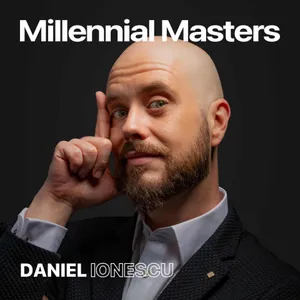
Millennial Masters: Daily Summaries Delivered
by with Daniel Ionescu
Conversations with founders and leaders about the decisions shaping modern businesses
Latest Episodes
The most recent episodes — sign up to get AI-powered summaries of each one.
- 1 weeks ago48 min
Build less before you know more 🧪 Sophia Matveeva
You can build a tech company without becoming a developer, as long as you understand enough to work properly with the people building it.Sophia Matveeva, founder of Tech for Non-Techies, learned that after raising money for her first startup and hiring a technical team. She was the CEO, but when a developer started talking about building the back end on Ruby on Rails, she realised she had no idea what he meant.Her first instinct was to learn to code. After taking computer science and Python courses, she realised she was spending hours learning skills that wouldn’t help her do her actual job. What she needed was enough technical understanding to make decisions, ask useful questions, and work effectively with the team.AI has lowered the barrier again. A non-technical founder can now make a convincing prototype in an afternoon, which makes it easier to start building before finding out whether people understand the product or would pay for it.In this episode, we get into what non-technical founders actually need to understand about tech, how to test an idea before spending heavily on it, and where vibe coding stops being enough.What we cover1️⃣ Speaking enough tech to lead the workSophia explains what founders need to understand so they can make better decisions and work properly with developers without trying to become one themselves.2️⃣ Testing demand before writing production codeA prototype can get the idea in front of potential customers much earlier and expose problems while they’re still cheap to fix.3️⃣ Getting feedback people actually meanThis part gets into user interviews, avoiding leading questions, and creating enough space for people to tell you when something doesn’t make sense.4️⃣ Where vibe coding reaches its limitAI can take a non-technical founder surprisingly far, but a convincing prototype doesn’t mean the underlying product is ready for real customers.5️⃣ The problem a better product still has to solveCustomers already have habits, tools, and systems around existing products. Being better isn’t always enough to make them switch.Chapters00:00 Introduction to Sophia Matveeva02:08 Is vibe coding improving product testing?05:34 Why founders need to speak tech12:54 How to manage developers15:31 Test your product before building it18:47 How to get honest user feedback22:47 Will people actually pay?25:57 How to challenge your technical team30:38 Choosing which features to build32:57 Why Sophia shut down Enty35:22 Funding versus bootstrapping37:23 When to stop funding your own business39:19 Why better products still lose42:58 What AI changes for non-technical founders45:47 Building is easier, finding customers isn’tGet more founder interviews and practical business lessons in the Millennial Masters newsletter at MillennialMasters.netShare this with someone whose prototype is starting to look suspiciously finished 👀 Get full access to Millennial Masters at millennialmasters.net/subscribe
- 2 weeks ago29 min
AI can build it. But should you? 🤖 Konstantin Klyagin
Konstantin Klyagin has spent more than two decades building software for other companies, and lately he’s also been fixing more of what AI helps people build.Through his agencies Redwerk and QAwerk, he sees what happens after the prototype looks convincing and real users start doing things you didn’t expect. Something that worked perfectly in a demo can suddenly fail on basic workflows, from payments to duplicated bookings.That’s why Konstantin sees AI as a multiplier. It can help you build more, but it can also accelerate a bad decision before you’ve realised you misunderstood what people actually need. When almost anyone can turn an idea into working software, deciding what deserves to be built becomes more important.In this episode, we get into where vibe-coded products start to break, what still needs proper technical experience, and how to build a software business when AI is available to everyone. We also talk about bootstrapping, hiring behind demand, and what 21 years in business taught Konstantin about adapting when circumstances change underneath you.___⭐️ Episode sponsored by DataForSEO ⭐️Check how your business appears across AI answers and web search. DataForSEO is pay-as-you-go, and new users who sign up through the Millennial Masters get $5 in credits to try it.👉🏻 Check your visibility 🔎 https://l.dataforseo.com/3Uu7ksv___What we cover1️⃣ When AI accelerates the wrong decisionKonstantin explains why AI multiplies whatever thinking is already there. Strong judgement moves faster, but weak assumptions do too.2️⃣ The gap between a convincing demo and a reliable productVibe coding can get you surprisingly far, but real users expose problems that prototypes often hide.3️⃣ Knowing what deserves to be builtAs software gets easier to make, the bigger edge comes from understanding customers well enough to know which problems are actually worth solving.4️⃣ Where proper engineering still mattersAI can push back the point where you need senior technical experience. Once real users depend on the product, architecture and reliability become much harder to fake.5️⃣ Growing around the demand you actually haveKonstantin has spent 21 years building without outside funding and avoids hiring for a future version of the business that hasn’t arrived yet.Chapters00:00 Introduction to Konstantin Klyagin01:59 DataForSEO sponsor message03:21 More code doesn’t mean more progress05:27 Build what users actually need07:20 A prototype can look finished and still fail10:45 AI multiplies bad decisions too13:02 When you still need a CTO17:52 Don’t hire ahead of demand21:48 Understanding the customer becomes the edge25:51 DataForSEO sponsor message26:06 AI doesn’t belong everywhereGet more founder interviews and practical business lessons in the Millennial Masters newsletter at MillennialMasters.netKnow someone vibe coding their next product? Send them this 🛠️ Get full access to Millennial Masters at millennialmasters.net/subscribe
- 3 weeks ago40 min
Success can break the business too ☕ Zain Peer
Getting more orders sounds like the answer until the business cannot keep up.Zain Peer found that out when London Nootropics appeared on Dragons’ Den, the UK version of Shark Tank. The website crashed, orders surged, and a business that had been manageable the week before suddenly had to cope with a completely different level of demand.It was the kind of attention they had been trying to create from the beginning, and it exposed how much of the business still had to catch up. You stop wondering how to get noticed and start worrying about whether you can fulfil what you have sold without draining the cash you need elsewhere.In this episode, we get into what happened after Dragons’ Den, why Zain eventually turned down the investment offered on the show, and what he has learned from building a physical product business where every jump in demand has to be funded before the money comes back.What we cover1️⃣ When demand suddenly outruns the businessZain talks about what happened when the Dragons’ Den effect hit and orders surged before the team or systems were ready for it.2️⃣ The cash pressure behind physical growthMore sales often mean more stock, bigger production runs, and more money tied up before customers have paid you back.3️⃣ What repeat customers changedSubscriptions became a much bigger part of the business than Zain expected and shifted the focus from chasing the next order to keeping the right customers coming back.4️⃣ The work hidden behind retail expansionGetting onto shelves means more than winning the account. Packaging, warehousing, stock, and upfront cash all have to keep pace.5️⃣ Moving before everything feels finishedZain explains why waiting for perfect slowed him down and how getting something good enough into the market led to better decisions.Chapters00:00 Introduction and Zain’s background02:48 Finding the product05:27 Bootstrapping the launch07:00 Building trust in wellness10:48 The Dragons’ Den effect15:24 Retail expansion and cash flow20:13 Subscriptions and ecommerce23:22 Selling on Amazon27:08 Retention and bigger orders30:16 Quality, recipes, and competitive edge33:38 Founder lessons: progress over perfection36:18 Building community and genuine connectionsGet more founder interviews and practical business lessons in the Millennial Masters newsletter at MillennialMasters.netSend this to a founder whose orders are growing faster than the business 📦 Get full access to Millennial Masters at millennialmasters.net/subscribe
- Aug 17, 202648 min
Every tiny decision is costing you 🔋 Barry Cryan
Tiny decisions rarely feel expensive in the moment. One more email, one quick question from the team, one interruption you deal with before getting back to the work you were doing.Barry Cryan sees the cost of those interruptions differently. Through his company, Do More Better, he works with business owners to reduce how much work keeps flowing back to them and build systems that give them more room to focus.He calls the problem the invisible tax. The more decisions that depend on you, the harder it becomes to get proper time on the work that actually moves the business forward.AI can help, but Barry makes an important distinction. Using it to answer an email faster still leaves you doing the email. The bigger opportunity is to build systems that remove repetitive work from your day altogether.In this episode, we get into how founders become too central to the business, where that hidden drain usually starts, and how better systems can give you time back without adding more hours.What we cover1️⃣ The hidden cost of constant small decisionsBarry explains why the problem is rarely one huge interruption. It is the steady stream of tiny decisions that keeps pulling your attention away from deeper work.2️⃣ Using AI to remove work, not just speed it upThis part gets into the difference between doing the same task faster and redesigning the workflow so you no longer need to touch it.3️⃣ When a bigger team creates more dependencyHiring more people does not help if every question still comes back to you. Clear processes give people something to work from without waiting for approval.4️⃣ Protecting attention before the day gets fragmentedNotifications and constant availability make it harder to stay with demanding work. Barry talks about creating clearer boundaries around when communication happens.5️⃣ What you do with the time you get backFreeing an hour does not automatically improve the business. The real gain comes from protecting that space for work that needs your judgement or for time you actually want outside the company.Chapters01:42 The rise of AI in business04:12 AI operators vs AI builders06:20 The invisible tax of micro decisions08:35 Creating systems to remove bottlenecks11:00 The cost of micro decisions13:20 Reducing friction in decision-making16:12 Implementing effective systems18:03 Giving teams useful playbooks20:24 Managing interruptions and focus22:14 Building trust in team ownership28:12 The cost of doing it all32:55 Delegating without staying in the middle38:10 Using AI for efficiency39:42 Measuring progress and capacity42:44 Filtering the noise for clarityGet more founder interviews and practical business lessons in the Millennial Masters newsletter at MillennialMasters.netShare this with someone who needs fewer interruptions 🔕 Get full access to Millennial Masters at millennialmasters.net/subscribe
- Aug 12, 202657 min
AI built the product. Investors still said no 💸 Vinnie Lauria
Building a startup has never been easier. Convincing someone to invest in it is a different problem.Vinnie Lauria has spent more than 15 years on the other side of that decision. As a founding partner at Golden Gate Ventures, he has backed companies across Southeast Asia after starting his own career as an entrepreneur.That gives him a useful view of what investors notice once a founder gets in the room. A polished pitch can open the conversation, but Vinnie is far more interested in the evidence behind it. He wants to know whether you have found something people genuinely want and whether you understand how to turn that demand into a business.AI has pushed that bar higher. Products can be built faster, decks can look better, and early versions can appear far more developed than they would have a few years ago. Investors know that too.In this episode, we get into what makes a startup investable now, where founders waste time during fundraising, and what Vinnie looks for before deciding a company is worth backing.What we cover1️⃣ What investors care about once building gets easierAI has lowered the cost of getting something live. That means the product itself carries less weight unless there is real evidence that people want it.2️⃣ Retention as proof that demand is realA burst of users can come from marketing or publicity. Vinnie looks harder at whether people come back and keep using the product.3️⃣ Choosing investors who actually fit the businessFundraising gets much harder when founders pitch indiscriminately. This part gets into investor theses, past bets, and recognising who is realistically worth approaching.4️⃣ The evidence a polished deck cannot replaceGood design helps, but customers, revenue, and what people actually pay for reveal far more about the business than a beautifully presented market slide.5️⃣ The founder behind the numbersInvestors are still trying to judge whether the person running the company can make good decisions, lead through uncertainty, and grow with the business.Chapters01:28 Introduction to Vinnie Lauria03:57 Understanding fundraising stages07:44 Lessons from startup failures and successes10:17 Navigating the AI landscape and market strategies12:26 The role of pitch decks in fundraising14:18 Common mistakes founders make with investors16:58 Understanding competition and market positioning19:10 Crafting a compelling narrative for investors23:00 Messaging for different stakeholders24:15 The importance of team presentation in pitch decks25:53 Understanding traction vs momentum in startups27:26 The role of investor theses in startup funding28:26 Asking the right questions as a founder30:03 Identifying BS in startup pitches32:23 Evaluating founders’ growth potential35:48 Selling hard without sounding desperate37:33 The impact of AI on pitch decks and presentations39:48 Founders talking themselves out of deals40:28 Effective follow-up strategies with VCs41:27 Navigating a colder fundraising market43:55 AI startups and investor expectations45:41 The importance of team dynamics46:51 Finding opportunities around big platforms48:01 The right mindset for founders50:36 Lessons learned from investing53:54 Balancing risk and intuition55:39 Giving teams room to take risksGet more founder interviews and practical business lessons in the Millennial Masters newsletter at MillennialMasters.net Get full access to Millennial Masters at millennialmasters.net/subscribe
- Aug 3, 20261h 13m
Build like the buyer is already watching 👀 Luke Tobin
Luke Tobin built Digital Ethos from a startup into an international agency before selling the business in 2022.By the time the offer arrived, the real work had already happened. He had spent years building the team, tightening how the company ran, and making sure it could keep moving without him at the centre of everything.That's what a buyer is really looking for. They want to know the clients will stay, the team can make decisions, and the business will not wobble the moment the founder steps away.Luke is also honest about the parts of growth that look good from the outside while quietly making the business weaker. More revenue can still mean thinner margins. A large client can still damage the team. Loyal people can still end up in jobs they are not ready for.In this episode, we get into what makes a service business worth buying, how founder dependency affects value, and why the best time to prepare for an exit is years before you plan one.What we cover1️⃣ Building the business buyers actually wantLuke explains why systems, delegation, and decision-making away from the founder do more to increase value than polished pitch decks ever will.2️⃣ The problems growth can hideRevenue, headcount, and new clients can all look positive while margins, delivery, and culture quietly move in the wrong direction.3️⃣ Knowing which clients to keepSome customers bring revenue but drain the team, reduce profitability, and make the whole business harder to run.4️⃣ Turning founder knowledge into company knowledgeThis part gets into documenting processes, building confidence in the team, and creating a business that keeps moving without constant founder involvement.5️⃣ Using AI to create better leverageAI frees up time, but the real advantage comes from how founders choose to use that extra capacity.Chapters00:00 Intro to Luke Tobin01:41 Growth can make the business weaker04:53 Inside an eight-figure sale07:29 What rapid scale exposes10:36 The numbers revenue can hide14:43 Overdelivery starts eating the margin16:19 Some clients make the business worse19:50 The client relationships that last23:43 Taking the founder out of sales28:32 Founder dependency kills value34:00 What buyers see behind the curtain37:52 The paid work trial that fixed hiring42:05 Loyalty does not make someone a leader48:19 AI rewrites service business economics54:35 What AI-native actually looks like58:36 The reality of an eight-figure exit01:02:51 Losing the business identity01:07:23 Building again without the same mistakes01:10:50 Build like the buyer is already watchingGet more founder interviews and practical business lessons in the Millennial Masters newsletter at MillennialMasters.netHelp another founder. Share this 💙 Get full access to Millennial Masters at millennialmasters.net/subscribe
- Jun 22, 20261h 14m
The video isn’t your real problem 🎬 Dustin Schultz
Spending more on a video won't make your business easier to understand. That's the mistake Dustin Schultz sees all the time.Companies decide they need a better video, then jump straight into production before the message is clear enough to carry it. Dustin has spent 15 years building Union, a creative agency that helps businesses turn ideas into video that actually has a job to do.His view is useful because he is not precious about production for its own sake. A bigger budget can help when the goal is clear. It becomes expensive noise when the message is still vague, the audience is too broad, or one piece of content is being forced across every platform.In this episode, we get into video strategy, founder-led content, distribution, AI in production, and why the thinking before the camera matters more than most businesses realise.What we cover1️⃣ Why clarity matters more than production valueDustin explains why better gear and bigger budgets do not solve a message people still do not understand.2️⃣ The problem with trying to say too muchWhen a video is asked to carry every feature, proof point, and audience at once, the message usually gets weaker.3️⃣ What changes from platform to platformThis part gets into why YouTube, LinkedIn, TikTok, Instagram, and your own site all ask different things from the content.4️⃣ Where good video work quietly failsA lot of businesses spend everything on production and leave almost nothing for distribution. Dustin talks about why that makes the work incomplete.5️⃣ Why founder-led content is the best place to startIf the budget is tight or the offer still needs clarifying, the founder is often the strongest person to carry the message.Chapters00:00 Introduction to Dustin Schultz01:24 Projects do not make a business04:39 Learning the seasons of client work06:45 Why clients need strategy before production11:09 Spending more will not fix unclear goals15:10 When video becomes a clarity test17:34 How to choose the one message that matters21:26 Why one video does not fit every platform25:46 Pick the platform your audience actually uses33:21 Founder-led content and the human face of a brand38:59 When brand awareness becomes an excuse41:15 Build it and they still will not come48:42 What AI can and cannot do in video53:56 Where AI saves real production time56:20 The ethics of using AI in creative work58:10 Where to spend your first video budget01:01:44 When a freelancer is enough01:04:33 Why targeted distribution matters01:07:03 The personal cost of running a creative business01:09:42 Why awards still build trust01:11:29 Hire people who give you time backGet more founder interviews and practical business lessons in the Millennial Masters newsletter at MillennialMasters.netPass this to someone forgetting distribution 📣 Get full access to Millennial Masters at millennialmasters.net/subscribe
- Jun 8, 202659 min
The shortcut always costs more 🧼 Kate Assaraf
Kate Assaraf built Dip to seven figures while turning down some of the growth channels most founders chase. She does not sell on Amazon, and she has not relied on Meta or TikTok ads. Instead, she built the business through independent refill stores, salons, and surf shops, one relationship at a time.On paper, some of those decisions look expensive. Kate believes the opposite. The shortcuts were the expensive option. Beneath the sustainable beauty story is a bigger question about how businesses grow and what happens when convenience starts pulling you away from the thing that made people trust you in the first place.In this episode, we get into growth channels, trust, repeat purchases, brand decisions, and what founders need to think about before saying yes to the kind of growth that changes the business underneath them.What we cover1️⃣ The expensive side of the shortcutKate shares why some of the fastest-looking routes turned out to be the costliest mistakes.2️⃣ What repeat purchases say that marketing cannotA first sale shows you got attention. A second sale tells you whether the product actually delivered.3️⃣ Trust built closer to the customerThis part gets into why Kate chose independent retailers, relationships, and slower channels over noisier growth tactics.4️⃣ The trade-offs hidden inside each growth channelAmazon, paid ads, and marketplace scale all come with consequences. Kate talks through what they change beneath the surface.5️⃣ Why generosity compounds over timeThe episode also looks at how support, loyalty, and real relationships can create a stronger business than pure efficiency ever does.Chapters00:00 Introduction to Kate Assaraf02:09 Starting again after a co-founder split04:22 The beauty marketing tricks Kate rejected06:11 Why refill stores changed the business07:39 Building through independent retailers09:18 Going analog when everyone went digital10:09 Why small stores became the real influencers11:44 The expensive lesson of taking on a partner15:11 Competing with beauty giants, not other bar brands17:37 Selling sustainability without guilt18:57 Why Dip refuses to sell on Amazon23:13 The real cost of marketplace convenience26:40 Why paid ads do not fit this brand29:09 The trust recession in beauty and ecommerce36:43 The biggest lie in beauty marketing39:09 Why Kate started her own factory44:17 Why generosity beats frugality45:13 Why shortcuts always cost more48:52 Working with your husband without chaos50:17 Rethinking growth and success51:29 The real sacrifices behind building Dip53:00 Costly founder mistakes and bad vendors57:06 How to avoid getting sold the shortcutGet more founder interviews and practical business lessons in the Millennial Masters newsletter at MillennialMasters.netSend this to a founder chasing the shortcut 🧼 Get full access to Millennial Masters at millennialmasters.net/subscribe
About Millennial Masters
Conversations with founders and leaders about the decisions shaping modern businesses
Customized Recaps
AI-powered recaps with compact key takeaways, quotes, and insights.
Straight to Your Inbox
Get key takeaways from Millennial Masters in a 5-minute read.
Save Hours Every Week
Stay current on your favorite podcasts without falling behind.
Frequently Asked Questions
What is Podzilla's Millennial Masters daily summary?
It's a free AI-powered email that summarizes new episodes of Millennial Masters as soon as they're published. You get the key takeaways, notable quotes, and links & mentions — all in a quick read.
How does the Millennial Masters podcast summary work?
When a new episode drops, our AI transcribes and analyzes it, then generates a personalized summary tailored to your interests and profession. It's delivered to your inbox every morning.
Is this an official Millennial Masters product?
No. Podzilla is an independent service that summarizes publicly available podcast content. We're not affiliated with or endorsed by with Daniel Ionescu.
Can I get summaries of other podcasts too?
Absolutely! The free plan covers up to 3 podcasts. Upgrade to Pro for 15, or Premium for 50. Browse our full catalog at /podcasts.
How often does Millennial Masters release new episodes?
Millennial Masters publishes weekly. Our AI generates a summary within hours of each new episode.
What topics does Millennial Masters cover?
Millennial Masters covers topics including Business, Entrepreneurship. Our AI identifies the specific themes in each episode and highlights what matters most to you.
Start getting Millennial Masters summaries tomorrow morning.
Free forever for up to 3 podcasts. No credit card required.
Free forever for up to 3 podcasts. No credit card required.