Free Daily Podcast Summary
The Curious Middle: Daily Summaries Delivered
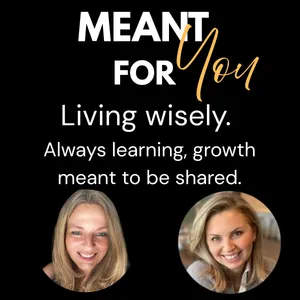
by Polina & Yelena
We believe we all have paths that are meant for us, but getting to a place where we are living a life we won't regret, while juggling the demands of our families and everything life throws at us is a daily saga. In each episode, we give you a new perspective or idea, introduce you to fascinating people, make you smile or help you realize you are never alone. When you are openminded, even the smallest shifts in mindset, can set you on a path that allows you to live your fullest life.We aim to give you the mindset shift that connects you to choices that feel meant for you. As moms, and news junkies, alongside books, philosophy, travel, culture and careers, we also cover current events. Our topics revolve around living a full life and finding the courage to reveal our true selves. Clarity comes through action, so we want to encourage you to take the next step. while not missing the beauty and lessons each day brings us. We are just getting started on our midlife adventures and excited f
Latest Episodes
The most recent episodes — sign up to get AI-powered summaries of each one.
- 1 weeks ago1h 3m
Reverend Sirico: Ruthless in the Pursuit of Truth, Gentle With People
Father Robert Sirico shares the unlikely path that led him to the priesthood — from protesting alongside Jane Fonda to a political transformation sparked by a chance encounter with a conservative friend, who handed him Bastiat, Hayek, and Milton Friedman and unraveled everything he thought he knew. Now president emeritus of the Acton Institute for the Study of Religion and Liberty, Father Sirico makes the moral case against socialism without abandoning genuine compassion for the poor. Memorable Quotes from Reverend Sirico: "if you want to feed the poor, you have to be able to build a factory that makes bread." " We must be ruthless in our pursuit of the truth always, but always gentle with people." Advocating even a soft form of anti-Semitism is by itself renouncing Jesus Christ." "If you want to feed the poor, you have to be able to build a factory that makes bread." "The socialism of the early Christians said, 'all that is mine is yours.' The socialism of today says, 'all that is yours is mine.'" — Rev. Sirico, quoting Winston Churchill Watch on Youtube: https://www.youtube.com/watch?v=oCblDlKsPVQ&t=753s Tony Sirico's Introduction of Rev. Robert A. Sirico at the Acton 20th Anniversary Dinner • Tony Sirico's Introduction of Rev. Robert ... @actoninstitute
- 2 weeks ago50 min
The Largest "Pro-Human Rights" NGOs Behave Like a Religion That Casts Out Dissenters.
Danielle Haas spent 14 years inside Human Rights Watch editing their reports before she quit and helped found Eightrights.org, an insider-led group holding the human rights sector accountable. In this episode, she walks us through how Amnesty, Human Rights Watch, and Doctors Without Borders operate with almost zero outside scrutiny, and how human rights became a civil religion for secular Westerners, complete with its own priesthood and rituals at Davos. We also get into just how much influence these NGOs hold: their reports and messaging shape mass media, academia, public policy, and the UN, and where the funding for these "neutral" organizations actually comes from. We discuss why Amnesty International suspended its own Israel chapter, a group of Israeli leftists who've worked there since 1964, for refusing to call the war a genocide. And we cover why Human Rights Watch called Hamas's casualty figures "reliable" with no way to verify them.
- 3 weeks ago53 min
Venezuela Was a Top-5 Economy. Then Came Socialism.
Germania Rodriguez was 11 years old when her family fled Venezuela . Her mother, one of the regime's most aggressive journalist critics, had just been falsely accused by Hugo Chávez's government. Two decades later, sitting in NYU lecture halls, Germania became a Bernie Sanders supporter anyway. In this episode, Germania joins The Curious Middle to explain how someone who watched socialism destroy her home country still fell for it in an Ivy League classroom — and what finally broke the spell. We get into why the New York Times and Hollywood have a decades-long blind spot for left-wing dictatorships, the actual difference between Norway's social democracy and Venezuela's socialism, why "free stuff" isn't the same thing as the government seizing the means of production, and how Cuba spent 70 years exporting revolution across Latin America. Venezuela went from a top-5 global economy in the 1960s to nearly 9 million refugees and 70%+ of households in poverty in under 30 years. Germania breaks down how that happened, and why the same playbook is showing up in New York City politics right now. Timestamps: 0:36 – Fleeing Venezuela at 11: her mother's persecution by the Chávez regime 2:00 – Quitting the Daily Mail after refusing to stay silent about the NYT calling Delcy Rodríguez a "moderate" 3:09 – Media bias: is it ideology, or access 5:17 – The NYT's long history of covering for communism 6:29 – Hollywood's blind spot: Danny Glover, Chávez, and a Peabody-winning documentary <a class=
- Aug 16, 20261h 45m
James Lindsay Shares How Bigotryphobia has Hijacked Every Institution We Depend on and Trust
James Lindsay returns for a two-hour deep dive: his own journey from lifelong Democrat to Trump voter, how Trump Derangement Syndrome became what he calls one of the most wide-ranging psychological operations in modern history, the 130-year throughline from the Protocols of the Elders of Zion to today's "Israel Derangement Syndrome," what Salafism and the book Milestones actually teach, and why he says American schools are deliberately inducing emotional crises in kids to turn them into activists. Notable Quotes "It's one of the most wide-ranging psychological operations that's ever been executed on the American public — honestly, the global public." — James Lindsay, on Trump Derangement Syndrome "The second she said 'I'm voting for Trump,' it clicked in my head. I have permission from my broader social universe to do this." — James Lindsay "You must never, ever give one drop more information than was asked for." — James Lindsay, on talking to people who disagree with you "People overestimate how well they know things. The only way to open their mind is to have them explain what they think they know but don't actually know for themselves, at length." — James Lindsay, on the illusion of explanatory depth "The idea is: we're going to do a bunch of stuff, so let's blame the Jews for doing that stuff, so that when we do it, people get mad at Jews and not at us." — James Lindsay, on the Protocols of the Elders of Zion "Anti-Zionism is a reformulation of the classic Soviet anti-imperialist narrative against Britain and against the United States." — James Lindsay "Don't let anybody ever call you a racist for objecting to Islam. It is certainly not racial in any way whatsoever to reject Islam." — James Lindsay "Have you tried voting? If Republicans who care about this country showed up in double their present numbers, almost every one of these problems we're freaking out about could be stopped." — James Lindsay "We are bigotryophobic to the point where we're so afraid that people will identify us as some social evil — specifically, some form of bigotry — that we will do anything to make sure that perception doesn't leak out." — James Lindsay "Better, in fact, is worse — because it hides the possibility of a fundamentally different world." — James Lindsay, on critical theory "This is psychological, emotional abuse on children, done intentionally, as an educational program backed by the state." — James Lindsay, on ethnic studies curricula People & Organizations to Follow RAIR Foundation USA — Amy Mek's investigative organization tracking radical mosques, imams, and Islamist funding in the US Benedict Beckeld — writer/researcher who argues "oikophobia" (hatred of one's own society), not suicidal empathy, is the real driver Gad Saad — evolutionary psychologist and author, coined/popularized "suicidal empathy" White Rose Magazine — cited for essays on Islam as a political ideology Time stamps 1:13 — James's political evolution begins (TDS backstory) 6:42 — The "very fine people" clip story 14:02 — TDS as a mass psychological operation 15:59 — No Kings rallies irony 18:11 — How to talk to people who disagree with you 19:54 — Illusion of explanatory depth / toilet study 27:05 — Israel Derangement Syndrome introduced 29:26 — History: Protocols of the Elders of Zion 34:15 — Post-WWI Middle East / British Mandate history 39:55 — 1948 War and the Nakba 42:01 — Six Day War, USS Liberty, Soviet pivot to anti-Zionism 44:25 — Anti-Zionism enters Western academia / the New Left 50:58 — Where does this go? Predictions 55:23 — Hitler Youth "March Violets" analogy — generational risk 56:50 — Will Democrats absorb the DSA? 58:49 — Milestones / Sayyid Qutb and Islamism defined 59:46 — Rair Foundation — identifying radical mosques 1:01:48 — Islamophobia vs. racism distinction 1:06:20 — Legal limits: bribery, zoning, money flows 1:10:59 — Low voter turnout math / "have you tried voting" 1:12:52 — Civics education gap 1:17:43 — California corruption / ballot harvesting 1:21:52 — Religion of peace critique / Salafism defined 1:30:15 — Terrorist attack statistics 1:32:20 — Suicidal empathy / oikophobia question 1:34:00 — Psychosocial valuation theory 1:34:55 — Bigotry
- Aug 10, 202643 min
A Book Title and a Label that Will Get You Cancelled: White, Blonde, Jew.
Alyssa Rosenheck was one of the only Jewish kids in Tulsa, Oklahoma, when a classmate stood up in class, pointed at her, and said, "The Jew took it." She pushed the girl down. Her dad's response: "My daughter has my permission to deck anyone who offends her family or faith." That courage runs hrough everything that followed: a tennis scholarship, a decade in corporate medical sales, a thyroid cancer diagnosis that scared her into finally living, a camera she picked up to heal, and a divorce that hinged on one line from her husband she "can't unhear." After October 7th, Alyssa lost a book deal, got labeled part of a literary boycott, and co-founded Artists Against Antisemitism instead of going quiet. Her new book, White Blonde Jew, is what she wrote instead. In this episode: Growing up one of the only Jews in Tulsa — and the classmate who pointed at her and said, "The Jew took it" Chasing financial security after an unstable, alcoholic childhood — tennis scholarship to 3M to spine sales The thyroid cancer scare that became her first real "life pivot" Picking up a camera as therapy — and building a 14-year photography career from it Her advice for anyone raised by an alcoholic parent The marriage, and the line from her husband she "can't unhear": "He did not want to have Jewish children" The New Southern — accidentally writing the most inclusive design book in the industry Her 2021 "light bulb moment" on Israel, BDS, and October 7th Losing a book deal 10 days into speaking out — and co-founding Artists Against Antisemitism Fighting BDS resolutions in Nashville Inside White Blonde Jew — out August 18 The Kashariyot, and why being underestimated is a weapon Quotes "I really allowed my haters to title the book. If it offends you, great, I wrote it for you. And if it doesn't, and you feel seen by it, I also wrote it for you." "Cancer gave me so much more than it took away." "When you get pushed down, you have to double down in the very thing that they don't want you to do." "It was a little bit like digital Ozempic." — on losing friends and followers after speaking out "My skin color would not have insulated me or protected me on October seventh, nor would it have protected me against the Nazis." "This project serves as historical insurance." "You can't create when you're stressed. You can't create when you're in chaos. You can't create when you're in fear." About the book: White Blonde Jew (BenBella Books / Geffen Books) releases August 18 — pre-order now. Three sections, White / Blonde / Jewish, each chapter closing with a book-club discussion prompt.
- Aug 8, 20261h 13m
James Lindsay: How to Spot Woke Left and Woke Right Psyop Tactics
James Lindsay led the 2018 Grievance Studies Affair, a hoax so effective it got a chapter of Mein Kampf rewritten as feminist theory accepted into a peer-reviewed journal. Since then he's built New Discourses around defining the woke formula of critical theory plus Leninist tactics, and how the formula appears on the left and the right. In this conversation, Lindsay traces "woke" back through Lenin's vanguard model and a 1937 Nazi corporate law that literally invented the word "stakeholder," then applies the same framework to Tucker Carlson, breaking down why he meets every box on the definition. James connects totalitarian ideology to clinical narcissism, explains why government incentive structures guarantee corruption regardless of who's in charge, and shares firsthand accounts from parents whose teenage sons are being radicalized into neo-Nazi forums. The conversation closes on JD Vance and his documented ties to post-liberal, Catholic integralist thinkers. Lindsay's books: The Marxification of Education Cynical Theories: How Activist Scholarship Made Everything About Race, Gender, and Identity - and Why This Harms Everybody Race Marxism Timestamps: 03:07 Who is James Lindsay: anti-totalitarian researcher 04:18 The Grievance Studies Affair, explained 07:08 Cynical Theories and writing from a left-wing perspective on purpose 10:42 Defining "woke" begins 12:06 Critical theory's roots, back to Marx 13:53 The two components of woke: critical theory + Leninist behavior 19:20 Woke left vs. woke right, and the "Animal Farm" stakeholder model 25:33 The Nazi Shareholder Act of 1937 — the real birth of "stakeholder" 29:54 Do people actually understand this system? 31:17 Why everyone should listen to people who escaped communism 32:08 Totalitarianism as institutionalized narcissism 35:25 Why government incentive structures guarantee corruption 40:15 Bill Gates and the "Messiah complex" 43:01 Marx's Communist Manifesto, reread through narcissism 4
- Aug 2, 20261h 3m
Historian Joseph Moore Wants You to Know It's Never Been Easier to Get Ahead in America
Dr. Joseph Moore is a historian who spent a decade testing every financial strategy Americans have ever tried: he Airbnb'd every room in his house, bought land on the moon, founded a cryptocurrency, and invested in a startup that went to zero — to write How to Get Rich in American History: 300 Years of Financial Advice That Worked and Didn't. He started the project as a "lefty humanities professor" trying to prove the American Dream was a myth. Ten years of evidence later, he'd changed his mind completely. We're all about changing your mind when you know better. We get into why the boomer playbook of saving 10% for 40 years would have failed almost half the time since the American Revolution, why health insurance companies run under 3% margins while funeral homes and self-storage run 10-15%, and the five things that actually predict getting ahead. Joseph also tells the real story of how he got rich — including the tenant who turned out to be running a human trafficking operation out of his first rental property, and the two-block real estate bet that nearly bankrupted him before it made him a multimillionaire. The opportunity was never gone, it just takes longer to find than the get-rich-quick books tell you, and it won't be easy or passive. This is an optimistic view of America from a historian who did the research in books and in his own life. Order the book: https://www.amazon.com/How-Get-Rich-American-History/dp/0063464586 Subscribe to Joe's Substack: https://www.josephmoorebooks.com Quotes "You can make five to seven times as much money holding people's junk, throwing it away, or putting them in the ground than you can keeping them healthy." — Joseph Moore "Nothing will change your political opinion so much as having to make payroll." — Joseph Moore "The rungs on the ladder to success were sawed off by the people who went ahead of you." — Joseph Moore, on 19th-century complaints about opportunity in America "It's a despair industrial complex — there's no clicks for a journalist, no votes for a politician, and no tenure for academics like me if we tell you the world is getting better." — Joseph Moore 02:14 — Where Joseph starts when people ask him how to get rich, and why most finance books say the same thing in one page 04:19 — The famous "$10,000 in 1929 becomes $10 million" chart, and why it's a lie 06:39 — Becoming a historian: the musket that hooked him at 10, and the 2005 housing bubble he didn't see coming 08:46 — Selling the house right before 2008: "the last two people off the Titanic," and the decision to write the book 11:04 — Confession: "I'm a lefty humanities professor," and why making payroll changes your politics 13:14 — What changed his mind: the American Dream "myth" as unquestioned academic dogma 15:22 — Health insurance runs under 3% margins. Funeral homes and self-storage run 10-15% <li class="font-claude
- Jul 29, 202653 min
They Are Training Teachers Not to Tell You - PragerU CEO Marissa Streit Joins us to Discuss the Fight For America
Marissa Streit, CEO of PragerU, is back! Last time, she told us serving your country can mean enlisting as an educator, a line we still bring up constantly. We cover a lot of ground in this conversation: why personal responsibility beats collective grievance, how socialism and communism sell real problems with fake solutions, a teacher's union resolution instructing teachers not to tell parents when a student is transitioning, intersectionality as what Marissa calls "victim bingo," and why PragerU ended up on the Southern Poverty Law Center's hate map alongside Charlie Kirk. Summarized timestamps 02:42 – The founding principle: personal responsibility vs. collective grievance, and "the bigger the government, the smaller the citizens 07:13 – Why socialism keeps winning young people over — real problems, fake solutions 15:57 – Case study: why a young family can't afford to raise kids in New York (rent control, tort law, regulation) 20:15 – The "education industrial complex": inside the books training teachers — Lessons in Liberation and Cultivating Genius 22:31 – The term "adultism" defined, and what it does to parental authority 24:52 – The AFT resolution: teachers told not to tell parents when a student is transitioning 27:11 – The California law letting a 12-year-old consent to gender-affirming care without parental notice 33:59 – Why parents look away: "it's not my child" and the cost of that thinking 38:34 – Intersectionality as "victim bingo" — how kids get recruited into causes that have nothing to do with their lives 45:18 – PragerU as a target: the Southern Poverty Law Center's hate map, Charlie Kirk, and repeated platform takedowns 49:36 – Is PragerU "right-wing propaganda"? Marissa's answer, and the story of the $1 million donor who set out to expose them Quotes: "The bigger the government, the smaller the citizen." — Marissa Streit "Socialism, I oftentimes say, is communism with lipstick. It's the same thing — the government's going to fix things for you by stealing everything from you, and then everybody ends up equally poor." — Marissa Streit "God wanted the Israelites who made it to the promised land to be a people who recognized that freedom isn't free. It comes with a sacrifice, but it's a sacrifice worth making." — Marissa Streit "A socialist and a communist will take a truth we all recognize, but they'll give you a solution that is a lie." — Marissa Streit "They're defining adultism as adults having power and rights to decide what young people's boundaries should be — and young people should go along with what adults say. They're defining it as tyranny." — Marissa Streit, on the term found in Lessons in Liberation "See the connection, how the unions are breaking the relationship with parents? The word 'outing' — you out somebody, you snitch on somebody. They know it's a negative thing, but they're saying the parent shouldn't know." — Marissa Streit, on the AFT resolution "It's getting worse because good people are not fighting against it." — Marissa Streit "Essentially that's what intersectionality does — it says find the victim within yourself, and now you can join the group. Once you join, there is no tolerance for diversity of ideas, only an expectation that you abide by communist and socialist values." — Marissa Streit "It's 100% a political cult. It's a cult and it has different tentacles." — Polina on intersectionality "Van Jones said recently the DSA is on the ground knocking on doors, and we're not gonna fix this until people commit." — Polina "Go to PragerU and make your own opinion. We're not in an era where you have to rely on the AFT, the NEA, or the New York Times to tell you what to think." — Marissa Streit https://www.prageru.com Books referenced: Lessons in Liberation: An Abolitionist Toolkit for Educators; Cultivating Genius (Scholastic) Follow us on Instagram @thecuriousmiddlepod Our Website: https://curiousmiddlepod.com Email us: thecuriousmiddlepod@gmail.com Substack: https://curiousmiddle.substack.com
About The Curious Middle
We believe we all have paths that are meant for us, but getting to a place where we are living a life we won't regret, while juggling the demands of our families and everything life throws at us is a daily saga. In each episode, we give you a new perspective or idea, introduce you to fascinating people, make you smile or help you realize you are never alone. When you are openminded, even the smallest shifts in mindset, can set you on a path that allows you to live your fullest life.We aim to give you the mindset shift that connects you to choices that feel meant for you. As moms, and news junkies, alongside books, philosophy, travel, culture and careers, we also cover current events. Our topics revolve around living a full life and finding the courage to reveal our true selves. Clarity comes through action, so we want to encourage you to take the next step. while not missing the beauty and lessons each day brings us. We are just getting started on our midlife adventures and excited f
Customized Recaps
AI-powered recaps with compact key takeaways, quotes, and insights.
Straight to Your Inbox
Get key takeaways from The Curious Middle in a 5-minute read.
Save Hours Every Week
Stay current on your favorite podcasts without falling behind.
Frequently Asked Questions
What is Podzilla's The Curious Middle daily summary?
It's a free AI-powered email that summarizes new episodes of The Curious Middle as soon as they're published. You get the key takeaways, notable quotes, and links & mentions — all in a quick read.
How does the The Curious Middle podcast summary work?
When a new episode drops, our AI transcribes and analyzes it, then generates a personalized summary tailored to your interests and profession. It's delivered to your inbox every morning.
Is this an official The Curious Middle product?
No. Podzilla is an independent service that summarizes publicly available podcast content. We're not affiliated with or endorsed by Polina & Yelena.
Can I get summaries of other podcasts too?
Absolutely! The free plan covers up to 3 podcasts. Upgrade to Pro for 15, or Premium for 50. Browse our full catalog at /podcasts.
How often does The Curious Middle release new episodes?
The Curious Middle publishes biweekly. Our AI generates a summary within hours of each new episode.
What topics does The Curious Middle cover?
The Curious Middle covers topics including Culture, Journals, Society & Culture, Personal Journals. Our AI identifies the specific themes in each episode and highlights what matters most to you.
Start getting The Curious Middle summaries tomorrow morning.
Free forever for up to 3 podcasts. No credit card required.
Free forever for up to 3 podcasts. No credit card required.