Free Daily Podcast Summary
Making Friends With The Lord Jesus: Daily Summaries Delivered
by Fr. Edwin
Ways of getting closer to Our Lord Jesus Christ
Latest Episodes
The most recent episodes — sign up to get AI-powered summaries of each one.
- Yesterday12 min
Hearing and Obeying the Word of God - Sept 22, 2026
This reflection examines a passage from St. Luke’s Gospel in which Jesus identifies his true family as those who hear and obey the word of God. I highlight that, although God reaches out to humanity, individuals must develop inner quiet and focus to truly receive spiritual guidance. By referencing personal challenges with modern distractions such as smartphones and social media, I demonstrate how constant noise makes it difficult to discern God’s promptings. The main point is that a deep relationship with Christ is formed by maintaining a disciplined prayer life that values openness over constant activity. This attitude serves as a vital "receiver," enabling one to understand and carry out God’s will in everyday life.
- Yesterday9 min
The Physician of Souls: The Calling of St. Matthew·Sep 21, 2026
This passage looks at the meaning behind the Feast of St. Matthew, focusing on how Jesus chose a tax collector—someone many saw as a sinner—to be his apostle. The author reminds us that God’s grace isn’t just for those who seem good; it’s actually meant to comfort people who admit their mistakes. Like a doctor helps those who are sick, Jesus welcomes those who feel unworthy. The story encourages us to be humble and to use the sacraments, especially confession, to grow in faith. In the end, the message is clear: God wants us to have an honest heart and to try to follow Him, no matter our shortcomings.
- 3 days ago10 min
The Vineyard of Grace: Preparing for Eternity ·Sep 20, 2026
This homily dives into the Parable of the Workers in the Vineyard from Matthew’s Gospel, making one thing clear: Heaven isn’t earned—it’s given by God’s grace. The landowner in the story stands for God, who invites people to join Him at all stages of life. No matter when you answer the call, everyone receives the same eternal reward.The message is direct—focus on your own spiritual journey. Don’t waste time on jealousy or comparing your blessings to others. Life is short and unpredictable, so the call is urgent: change your heart now and keep at it. At its core, this teaching celebrates God’s unmatched generosity and challenges us to be truly grateful for the chance to serve Him at all.
- 4 days ago9 min
Divine Dialogues: Seeking the Spirit in the Seed ·Sep 19, 2026
This reflection revisits the Parable of the Sower (Luke 8:4-15), showing how familiar scripture can reveal fresh insights when read with an open heart. At its core, Christianity isn't about us striving to reach God—it's about God actively seeking us out through Scripture, the Eucharist, and creation.The message warns against letting a consumer mindset crowd out spiritual realities and dull our ability to hear God's voice. Ultimately, it encourages us to slow down, stay receptive, and actively listen for God speaking through our daily lives.
- 4 days ago12 min
The Unity of Life in Proclaiming the Kingdom ·Sep 18, 2026
This homily draws its power from the Gospel of St. Luke, challenging every believer to live like Jesus—not just talk about Him. It’s not enough to speak the good news; you must embody it in every action, every day. The heart of the message is a bold call for unity of life: true Christians don’t compartmentalize their faith. Whether at home, at work, or in the world, your moral choices and spiritual habits—prayer, visiting the Blessed Sacrament—should remain unwavering.When suffering strikes, don’t just endure; rise above it with forgiveness and dignity, just as Christ did on the cross. The homily also points out that Christ’s earliest followers didn’t sit back. They put their own resources and skills to work for Him. Today’s Christians must do the same—bring your talents, your wealth, your energy to God’s service. Let your faith break through the boundaries of a secular world, transforming every corner of your life.
- 5 days ago11 min
Forgiven Much, Loving Much: The Magnetism of Mercy · Sep 17, 2026
Let’s take a moment to draw inspiration from a powerful gospel story in Luke, where Jesus shares a meal at the home of Simon, a Pharisee. In this scene, we witness two very different responses to Jesus: Simon, who sits in judgment, and a humble woman who brings her heart and tears to wash Jesus’ feet. Imagine the pull of a magnet—the way those who sense their need for grace are irresistibly drawn to the compassion of Christ. It’s not the number of mistakes we’ve made that matters most, but the depth of our love and the authenticity of our regrets that open the door to God’s forgiveness.This story reminds us that when we bravely admit our flaws, we invite healing and joy into our lives. Let’s allow our own honesty and humility to connect us with the peace that comes from being fully accepted and loved.
- 1 weeks ago13 min
The Call for Higher Responsibility and Discernment · Sep 16, 2026
Let’s transform your perspective with a fresh look at a timeless Gospel moment from St. Luke. Here, Jesus paints a vivid picture: a generation so set in its ways it’s like children in the square who refuse to join in the dance. This powerful image reminds us that, while we’re gifted with intelligence, our judgments can easily be tainted by pride or self-interest.Reflecting on how both John the Baptist and Jesus were misunderstood and dismissed, we’re challenged to recognize similar patterns in our world today—from the urge to point fingers and blame to the rise of scapegoating and mob thinking. The dangers of cancel culture and online battles are real, often tearing communities apart rather than bringing them together.But there’s a better way. The message is a call to rise above the noise and choose conversation and connection over division. We’re invited to embrace a deeper responsibility—a commitment to lead with compassion and to mirror Christ’s boundless forgiveness, refusing to participate in the quick condemnation of others. By doing so, we become agents of unity and hope, lighting the way for a more understanding and loving world.
- 1 weeks ago15 min
Compassion and the Standing Mother: Reflections on Calvary · Sep 14, 2026
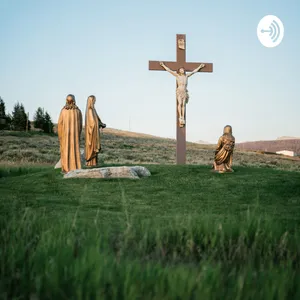
We reflect on the Memorial of Our Lady of Sorrows, which honors Mary standing beside Jesus at the Cross. Its central message is compassion: the ability to enter into another person’s suffering instead of focusing only on ourselves. In John’s Gospel, the women who stayed with Jesus during the crucifixion show great courage and faithfulness. When Jesus entrusts Mary to the beloved disciple, the Church sees this as Mary being given to all believers. Ultimately, we are invited to face our own suffering with faith and offer it to God as a path to spiritual growth.
About Making Friends With The Lord Jesus
Ways of getting closer to Our Lord Jesus Christ
Customized Recaps
AI-powered recaps with compact key takeaways, quotes, and insights.
Straight to Your Inbox
Get key takeaways from Making Friends With The Lord Jesus in a 5-minute read.
Save Hours Every Week
Stay current on your favorite podcasts without falling behind.
Frequently Asked Questions
What is Podzilla's Making Friends With The Lord Jesus daily summary?
It's a free AI-powered email that summarizes new episodes of Making Friends With The Lord Jesus as soon as they're published. You get the key takeaways, notable quotes, and links & mentions — all in a quick read.
How does the Making Friends With The Lord Jesus podcast summary work?
When a new episode drops, our AI transcribes and analyzes it, then generates a personalized summary tailored to your interests and profession. It's delivered to your inbox every morning.
Is this an official Making Friends With The Lord Jesus product?
No. Podzilla is an independent service that summarizes publicly available podcast content. We're not affiliated with or endorsed by Fr. Edwin.
Can I get summaries of other podcasts too?
Absolutely! The free plan covers up to 3 podcasts. Upgrade to Pro for 15, or Premium for 50. Browse our full catalog at /podcasts.
How often does Making Friends With The Lord Jesus release new episodes?
Making Friends With The Lord Jesus publishes daily. Our AI generates a summary within hours of each new episode.
What topics does Making Friends With The Lord Jesus cover?
Making Friends With The Lord Jesus covers topics including Religion & Spirituality, Spirituality. Our AI identifies the specific themes in each episode and highlights what matters most to you.
Start getting Making Friends With The Lord Jesus summaries tomorrow morning.
Free forever for up to 3 podcasts. No credit card required.
Free forever for up to 3 podcasts. No credit card required.