Free Daily Podcast Summary
Making Everyday Magic: The Podcast: Daily Summaries Delivered
by Shanna
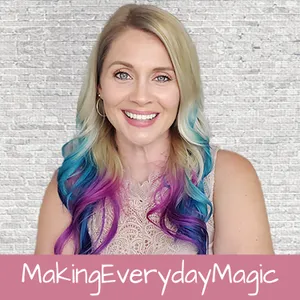
Welcome to Making Everyday Magic, the podcast where we explore the ins and outs of homeschooling, family life, and finding joy in the everyday moments. Join Shanna as she shares real-life experiences, tips, and insights on navigating homeschool with a secular perspective, making family memories, and balancing the highs and lows of home education. From practical advice to mindset shifts, each episode is designed to inspire and empower you to create a fulfilling and magical life that's uniquely your own. Tune in and let's make everyday magic together!#HomeschoolLife #FamilyJoy #MakingEverydayMagic #SecularHomeschool #Podcast
Latest Episodes
The most recent episodes — sign up to get AI-powered summaries of each one.
- 2 days ago13 min
What You Tolerate, You Endorse: Boundaries in Homeschooling and Parenting
There is one phrase I come back to over and over again in homeschooling, parenting, relationships, business, and honestly... life: What you tolerate, you endorse. And I know that might feel a little uncomfortable. Because sometimes the things causing chaos in our homeschool, our homes, and our relationships aren't things we actively chose. They're things we let slide. One more late bedtime. One more skipped lesson. One more meltdown that ends with us giving in because we're tired, embarrassed, or simply do not have the energy to deal with it right now. But what happens when "just this once" becomes the pattern? In this episode, I'm talking about consistency, boundaries, parenting, homeschool habits, people pleasing, and why being firm doesn't mean being unkind. From bedtime routines and homeschool expectations to relationships and the comment section, we're looking at the bigger picture. Because sometimes doing the hard thing now is really about doing later you a favor. You don't have to control every person around you. You don't have to be harsh. You don't have to become a jerk. But you do get to decide what you will and will not tolerate. And if you're tolerating something that is creating an outcome you don't actually want, it might be time to address it. Kindly. Firmly. Consistently.
- 3 days ago9 min
I Don't Want My Kids to Have a Normal Childhood
I don't want my kids to have a normal childhood. After 10 years of homeschooling, I'm realizing that I'm not trying to recreate the childhood I had—or the childhood society tells us our kids are supposed to have. I'm trying to build a family life that gives my girls room to learn, explore, play, ask questions, and become the people they're meant to be. In this episode, I talk about what "normal" means to me, why I'm proud of the ways our homeschool and family life are different, and why I want my girls to grow up knowing they can build a life that fits them. I also talk about the things I want them to have—and the things I want them to learn to live without. Because exceptional doesn't mean spoiled or the center of the universe. It means having opportunities, developing compassion, and knowing you have a safe place to land while you figure out who you are. If you're homeschooling, parenting differently, or simply questioning something that everyone else seems to accept, I hope this gives you a little room to think about what you actually want for your family. What is one thing that's accepted as "normal" that you've decided is just not for you? Find me on Instagram: @makingeverydaymagic #Homeschooling #IntentionalParenting #MakingEverydayMagic
- 4 days ago22 min
Building a Custom High School: Our Magnet-Style Homeschool
What happens when you stop trying to recreate traditional high school at home and start building an educational experience around the actual learner? In this episode, I'm talking about our first year of homeschooling high school and how we're creating a custom, magnet-style experience for our daughter. She's pursuing performing arts, but we're not choosing between passion and academics. We're building both into her education: advanced academics, Algebra 2 in ninth grade, a future dual-credit path, serious performance opportunities, real-life learning, and the flexibility to bring in experts and resources as needed. I'll also talk about why I think homeschool parents don't have to know exactly where their children are headed before they start building the foundation—and why I think following a child's interests and maintaining high academic expectations can coexist beautifully. This is what customized education looks like for us after ten years of homeschooling. It's not about doing less. It's about intentionally building something that fits the learner.
- 1 weeks ago13 min
Homeschool Guilt Lives Between Idealism and Reality
What did you think homeschooling would look like before you actually started? Because I can tell you... mine did not look like this. In this episode, I'm talking about the space between our ideal homeschool and our real homeschool—and why I think that space is where so much homeschool guilt lives. We see the curriculum, the classes, the field trips, the beautiful homeschool rooms, the art projects, the co-ops, and all the things our kids could do. And before we know it, we've planned approximately 14 years of homeschooling into three days. Meanwhile, reality is over here asking for snacks. And bathroom breaks. And free time. And flexibility. And reminding us that we are trying to be humans, mothers, and homeschoolers all at the same time. After nearly 10 years of homeschooling, I'm still learning this: we do not need to drag our real lives toward some impossible ideal. We need to bring our ideals closer to reality. Your homeschool doesn't have to do everything to be enough. If you have happy people, making progress, with some consistency? You might already be doing better than you think. So before you add another curriculum, activity, class, field trip, or beautifully ambitious plan to your homeschool year, maybe take one thing off instead. Let's talk about homeschool idealism, realism, overwhelm, guilt, and figuring out what actually works for your family.
- 1 weeks ago17 min
Homeschool Haters, Internet Trolls, and Why I Don't Need to Defend My Life
I recently got a hateful comment about my homeschooling, my parenting, my personality, and apparently my nose ring. And honestly? I thought it was hilarious. In this episode, I'm talking about how I handle internet trolls, homeschool criticism, and the people who become strangely confident experts on your entire life after seeing a tiny piece of it online. But this conversation is about more than one nasty comment. We're talking about boundaries, knowing who you are, sharing your life without feeling obligated to share all of it, and why you do not have to accept every invitation to defend yourself. I also share the unexpected story behind my nose ring and how one decision I made at eighteen eventually connected me to a thirteen-year-old boy who needed a bone marrow transplant. Because people don't know your full story. And they don't necessarily need to.
- 2 weeks ago20 min
The Systems That Keep Our Homeschool Running After 10 Years
After a decade of homeschooling, I have learned that sustainability doesn't come from doing more. It comes from building systems. In this episode, I'm sharing the practical systems that help our family manage homeschooling, chores, meals, laundry, planning, and everyday life. We talk about why systems work better than rigid schedules, how we divide responsibilities as a family, and the small routines that make a huge difference in reducing mental load. This isn't about creating a picture-perfect home. It's about creating a home where everyone knows their role, everyone contributes, and there is room for connection and learning.
- 3 weeks ago13 min
10 Years of Homeschooling: What Actually Matters
After ten years homeschooling two children, I'm sharing the lessons that have actually lasted. From learning styles and curriculum to consistency, socialization, college, freedom, and protecting your relationship with your children, these are the ideas I wish someone had told me when we first started homeschooling. Whether you're brand new or years into your homeschool journey, I hope this conversation helps you build a homeschool that works for your unique family.
- Aug 13, 202618 min
Things I'm Seeing That Make Me Think the Economy Is Changing
I'm not an economist, financial advisor, or market expert. I'm just a mom who's paying attention. In this episode, I share the real-world changes I've been noticing that make me wonder whether we're entering a different economic season. From empty tourist destinations and lower theme park crowds to unsold summer camps, changing travel deals, car inventories, rising prices, and shifts in family spending, these are the everyday patterns that have caught my attention. This isn't about politics or predicting the future—it's about observing what's happening in our communities and having an honest conversation about how families are adapting. I also share what I think these changes could mean for homeschooling, travel, family budgets, extracurricular activities, and everyday life in the months ahead. Whether you've been noticing similar patterns or you're simply curious about how other families are navigating today's economy, I'd love for you to join the conversation. In this episode we discuss: The everyday signs that made me stop and pay attention Why I'm seeing changes in travel, entertainment, and family spending How rising costs may affect homeschooling and extracurricular activities What I think could become more affordable again Why sharing our observations can help families prepare for whatever comes next I'd love to hear what you're seeing in your own community. What changes have you noticed that no one seems to be talking about?
About Making Everyday Magic: The Podcast
Welcome to Making Everyday Magic, the podcast where we explore the ins and outs of homeschooling, family life, and finding joy in the everyday moments. Join Shanna as she shares real-life experiences, tips, and insights on navigating homeschool with a secular perspective, making family memories, and balancing the highs and lows of home education. From practical advice to mindset shifts, each episode is designed to inspire and empower you to create a fulfilling and magical life that's uniquely your own. Tune in and let's make everyday magic together!#HomeschoolLife #FamilyJoy #MakingEverydayMagic #SecularHomeschool #Podcast
Customized Recaps
AI-powered recaps with compact key takeaways, quotes, and insights.
Straight to Your Inbox
Get key takeaways from Making Everyday Magic: The Podcast in a 5-minute read.
Save Hours Every Week
Stay current on your favorite podcasts without falling behind.
Frequently Asked Questions
What is Podzilla's Making Everyday Magic: The Podcast daily summary?
It's a free AI-powered email that summarizes new episodes of Making Everyday Magic: The Podcast as soon as they're published. You get the key takeaways, notable quotes, and links & mentions — all in a quick read.
How does the Making Everyday Magic: The Podcast podcast summary work?
When a new episode drops, our AI transcribes and analyzes it, then generates a personalized summary tailored to your interests and profession. It's delivered to your inbox every morning.
Is this an official Making Everyday Magic: The Podcast product?
No. Podzilla is an independent service that summarizes publicly available podcast content. We're not affiliated with or endorsed by Shanna.
Can I get summaries of other podcasts too?
Absolutely! The free plan covers up to 3 podcasts. Upgrade to Pro for 15, or Premium for 50. Browse our full catalog at /podcasts.
How often does Making Everyday Magic: The Podcast release new episodes?
Making Everyday Magic: The Podcast publishes weekly. Our AI generates a summary within hours of each new episode.
What topics does Making Everyday Magic: The Podcast cover?
Making Everyday Magic: The Podcast covers topics including Education, How To. Our AI identifies the specific themes in each episode and highlights what matters most to you.
Start getting Making Everyday Magic: The Podcast summaries tomorrow morning.
Free forever for up to 3 podcasts. No credit card required.
Free forever for up to 3 podcasts. No credit card required.