Free Daily Podcast Summary
LYNES Presents: Built to Divide: Daily Summaries Delivered
by LYNES // Gābl Media
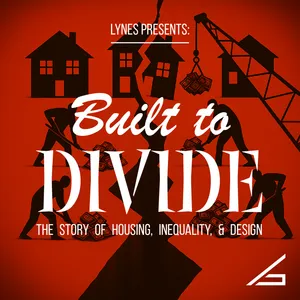
Built to Divide is a cinematic audio documentary that unearths how America’s homes became the front lines of inequality. From land giveaways to red lines, gated communities to algorithmic rent hikes—each episode reveals the forces that shaped not only where we live, but who gets to belong. Guided by host Dimitrius Lynch Jr., an award-winning architect with a storyteller’s eye for systems and design, this series traces how policy, psychology, and profit converged to build division into the very architecture of everyday life. Through vivid historical narratives, archival sound, and modern parallels, Built to Divide exposes how the dream of homeownership became both symbol and weapon—binding generations to debt, geography, and identity. Across twelve episodes, listeners journey from the dawn of land speculation to today’s algorithmic landlords, uncovering how the built environment reflects our deepest social divides—and what it will take to design something better.
Latest Episodes
The most recent episodes — sign up to get AI-powered summaries of each one.
- Feb 18, 202649 min
12: We're Not Done
In this powerful season finale of Built to Divide, Dimitrius Lynch dismantles the myths that have kept America’s housing crisis misunderstood for decades. Drawing from personal experience, economic history, and policy analysis, the episode reveals how housing transformed from shelter into one of the most powerful vehicles for wealth extraction in modern society.From restrictive zoning and financial deregulation to labor shifts, political incentives, and the collapse of social infrastructure, Lynch exposes the deeper machinery driving unaffordability — and why tidy explanations often distract from systemic truths.But this is not an episode about despair.It is about agency.Listeners are guided toward a practical path forward: legalizing more housing where opportunity exists, redesigning communities for connection rather than isolation, stabilizing vulnerable households, and reshaping financial incentives so that housing builds security instead of fragility.At its core, the episode asks a defining question for the next generation:Will we continue treating housing as a competitive asset — or reclaim it as the foundation of human stability?Because the future of our cities isn’t predetermined.It is designed.And as Lynch reminds us — we’re not done building.Episode Extras - Photos, videos, sources and links to additional content found during research.Episode Credits:Production in collaboration with Gābl MediaWritten & Executive Produced by Dimitrius LynchAudio Engineering and Sound Design by Jeff Alvarez
- Feb 11, 20261h 32m
11: The Tea Leaves of Feudalism 2.0
What if the future of America doesn’t resemble a democracy — but a modern form of feudalism?In this gripping episode of Built to Divide, Dimitrius Lynch traces a chilling throughline from 19th-century “other-ism” to the emerging architecture of concentrated power shaping today’s housing markets, financial systems, and governance models.Beginning with the displacement of Chinese and Japanese laborers and the weaponization of fear for economic gain, the episode reveals how crisis has repeatedly been used to reorganize ownership — transferring land, wealth, and opportunity upward.Then the lens shifts to the present.Faith merges with policy. Technology challenges democracy. Capital consolidates control.From Project 2025 and the modern Religious Right… to technocratic visions backed by Silicon Valley billionaires… to privately governed cities, crypto-finance ecosystems, and institutional ownership of housing — a new hierarchy begins to take shape.This isn’t about conspiracy. It’s about alignment.As financial power grows increasingly intertwined with political influence, the episode asks a sobering question:Are we witnessing the quiet construction of Feudalism 2.0 — a system where stability is privatized and dependence becomes structural?If housing is the operating system of economic security, what happens when ownership concentrates and access becomes subscription-based?Listen now to understand the forces redrawing the boundaries of belonging — and why the future of housing may depend on whether we recognize the machine before it fully locks into place.Episode Extras - Photos, videos, sources and links to additional content found during research.Episode Credits:Production in collaboration with Gābl MediaWritten & Executive Produced by Dimitrius LynchAudio Engineering and Sound Design by Jeff Alvarez
- Feb 4, 20261h 28m
10: Divide & Conquer
In this episode of Built to Divide, Dimitrius Lynch traces how crisis becomes opportunity — not for everyone, but for those positioned to acquire when others are forced to let go.From psychological influence campaigns and the weaponization of belief to pandemic-era wealth acceleration, this episode reveals how instability reshapes ownership itself. Lynch connects redlining to modern rent burdens, shows how algorithmic pricing may be rewriting competition, and examines how disasters — from COVID-19 to California wildfires — can trigger generational wealth transfers.You’ll hear how institutional investors, lobbying power, and financialization collide with housing supply constraints, why innovation alone cannot solve affordability, and how narratives shape public policy long before laws are written.This is not simply a story about housing. It is a story about power. About who gets to own the future — and who keeps paying for it.If you want to understand why the wealth gap widens after every crisis, why housing increasingly behaves like a financial instrument, and how division itself becomes strategy, this is an episode you cannot afford to miss.Additional Content:'Changing the Conversation with NIMBYs' with Chris AdamsThe Revolutionary Power of Biobased Materials with Jacob WaddellNet Zero Community: Veridian at County FarmPod Hotels: Stay OpenHyperframeEpisode Extras - Photos, videos, sources and links to additional content found during research.Episode Credits:Production in collaboration with Gābl MediaWritten & Executive Produced by Dimitrius LynchAudio Engineering and Sound Design by Jeff Alvarez
- Jan 28, 202647 min
09: Under Pressure
In this episode of Built to Divide we dissect the collision of NIMBY politics, Proposition 13 in California, environmental law, rising construction costs, and cultural status signaling that defined housing in the 2010s. Dimitrius Lynch takes listeners inside the community meeting rooms where projects die quietly, tracing how California’s tax revolt rewired local incentives, how CEQA evolved from environmental shield to procedural weapon, and why housing scarcity became fiscally rational—even when socially destructive.This episode connects Thorstein Veblen’s leisure class theory to modern zoning fights, explains why new construction skews luxury, and reveals how amenities became financial risk mitigation tools, not indulgences. From Hudson Yards and empty towers as safety-deposit boxes to YIMBY vs. NIMBY power shifts, this episode shows why the middle disappeared from the housing market—and why scarcity today is a policy choice, not a mystery.Episode Extras - Photos, videos, sources and links to additional content found during research.Episode Credits:Production in collaboration with Gābl MediaWritten & Executive Produced by Dimitrius LynchAudio Engineering and Sound Design by Jeff Alvarez
- Jan 21, 20261h 7m
08: From Ownership to Access
In this episode of Built to Divide, we pick up where the post-2008 housing machine left off—and show how the subscription economy (SaaS, streaming, “pay forever”) migrated into the built environment. Dimitrius Lynch traces the privatization movement from Milton Friedman’s voucher logic and post–Brown v. Board backlash to modern power brokers like ALEC, corporate bill-writing, and the quiet reframing of citizens into customers.Then we explore build-to-rent communities engineered for “predictable cash flow,” housing-as-a-dashboard, and the rise of rentier capitalism—profits from controlling gates, not creating value. The episode connects BlackRock’s infrastructure thesis and Aladdin risk platform, the 2008 recovery pipeline, and the long continuity from Bretton Woods → financialization → asset management dominance. Finally, we widen the lens to the next frontier: farmland financialization, where ownership detaches from stewardship and the right to live—and farm—becomes something you lease back.Episode Extras - Photos, videos, sources and links to additional content found during research.Episode Credits:Production in collaboration with Gābl MediaWritten & Executive Produced by Dimitrius LynchAudio Engineering and Sound Design by Jeff Alvarez
- Jan 14, 20261h 5m
07: Eat the Middle Class
October 13, 2008: behind closed doors in Washington, the U.S. government forces Wall Street’s biggest banks to take rescue money—no opt-outs, no stigma, no time for debate. What follows isn’t just a bailout. It’s a quiet rewrite of capitalism: stabilize the banks first, let homeowners and workers fight for air.Dimitrius Lynch traces how the TARP bailout, near-zero interest rates, and weak homeowner relief accelerated a new housing order—one where asset prices recover faster than wages, and where homes shift from shelter to portfolio. As the National Association of Realtors pushes demand-side subsidies like the $8,000 first-time homebuyer tax credit, foreclosure prevention tools like principal reduction are resisted—protecting values over people.Then comes the next extraction layer: Airbnb’s normalization of housing as income strategy, followed by private equity and corporate landlords turning foreclosed homes into rentals at scale. Blackstone and Invitation Homes pioneer the machine—buy in bulk, rent to the displaced, then bundle single-family rentals into securities. Meanwhile, policy capture tightens: carried interest survives, lobbying culture “owns” offices, and Citizens United floods politics with corporate money—reshaping who writes the rules of housing, finance, and democracy itself.This episode is a documentary-style timeline of how the middle class gets eaten—not by accident, but by incentives, institutions, and a politics increasingly engineered for capital. The crash wasn’t the end. It was a blueprint for a new future and purpose for housing.Episode Extras - Photos, videos, sources and links to additional content found during research.Episode Credits:Production in collaboration with Gābl MediaWritten & Executive Produced by Dimitrius LynchAudio Engineering and Sound Design by Jeff Alvarez
- Dec 24, 20251h 7m
06: The Fog of Identity
What do a 1970 psychology experiment and the 2008 housing crash have in common? In Episode 6 of Built to Divide, Dimitrius Lynch traces how social identity theory—the instinct to form “us vs. them” groups—became a political weapon that helped sell a bipartisan push for mass homeownership, weaken skepticism, and pave the way for subprime mortgages, mortgage-backed securities (MBS), CDOs, and a crisis engineered by incentives.We move from NAFTA-era globalization and Peter Drucker’s “core competencies” mindset, to the dot-com bust, Fed rate cuts, and the explosion of “stated income” lending. The episode spotlights Washington Mutual (WaMu)—from community-friendly bank to shareholder-driven mortgage machine—then follows the collapse, the scapegoating of low-income borrowers, and the rise of institutional investors turning foreclosures into portfolios. A story about housing, finance, and the narratives that keep us divided—even when the math says we share the same stakes.Episode Extras - Photos, videos, sources and links to additional content found during research.Episode Credits:Production in collaboration with Gābl MediaWritten & Executive Produced by Dimitrius LynchAudio Engineering and Sound Design by Jeff Alvarez
- Dec 17, 20251h 8m
05: Shock & Awe
In August 1971, Richard Nixon went on television and detonated the global financial system. By severing the U.S. dollar from gold, the Nixon Shock ended Bretton Woods, ushered in fiat money, and unleashed a new era of credit, speculation, and inequality. What followed wasn’t just inflation and currency volatility—it was a fundamental rewiring of housing, wealth, and power.In this episode of Built to Divide, Dimitrius Lynch traces how the end of the gold standard collided with housing policy, stagflation, and a rising market-first ideology. As public housing construction collapsed, Section 8 vouchers expanded, the mortgage interest deduction quietly became America’s largest housing subsidy, and real estate lobbying reshaped Washington. Jimmy Carter framed housing as a moral obligation—but crisis, inflation, and backlash undercut reform. Then came Milton Friedman, Margaret Thatcher, Ronald Reagan, and the think-tank machine, turning deregulation, tax cuts, and privatization into governing doctrine.The result? Housing shifted from shelter to leverage. Neighborhoods hardened. Inequality accelerated. McMansions replaced porches. Master-planned enclaves rose as public responsibility retreated. And the rails were laid for subprime lending, securitization, and collapse.This is the episode where money floats, housing fractures, and the modern economy takes its irreversible turn.Episode Extras - Photos, videos, sources and links to additional content found during research. Episode Credits:Production in collaboration with Gābl MediaWritten & Executive Produced by Dimitrius LynchAudio Engineering and Sound Design by Jeff Alvarez
About LYNES Presents: Built to Divide
Built to Divide is a cinematic audio documentary that unearths how America’s homes became the front lines of inequality. From land giveaways to red lines, gated communities to algorithmic rent hikes—each episode reveals the forces that shaped not only where we live, but who gets to belong. Guided by host Dimitrius Lynch Jr., an award-winning architect with a storyteller’s eye for systems and design, this series traces how policy, psychology, and profit converged to build division into the very architecture of everyday life. Through vivid historical narratives, archival sound, and modern parallels, Built to Divide exposes how the dream of homeownership became both symbol and weapon—binding generations to debt, geography, and identity. Across twelve episodes, listeners journey from the dawn of land speculation to today’s algorithmic landlords, uncovering how the built environment reflects our deepest social divides—and what it will take to design something better.
Customized Recaps
AI-powered recaps with compact key takeaways, quotes, and insights.
Straight to Your Inbox
Get key takeaways from LYNES Presents: Built to Divide in a 5-minute read.
Save Hours Every Week
Stay current on your favorite podcasts without falling behind.
Frequently Asked Questions
What is Podzilla's LYNES Presents: Built to Divide daily summary?
It's a free AI-powered email that summarizes new episodes of LYNES Presents: Built to Divide as soon as they're published. You get the key takeaways, notable quotes, and links & mentions — all in a quick read.
How does the LYNES Presents: Built to Divide podcast summary work?
When a new episode drops, our AI transcribes and analyzes it, then generates a personalized summary tailored to your interests and profession. It's delivered to your inbox every morning.
Is this an official LYNES Presents: Built to Divide product?
No. Podzilla is an independent service that summarizes publicly available podcast content. We're not affiliated with or endorsed by LYNES // Gābl Media.
Can I get summaries of other podcasts too?
Absolutely! The free plan covers up to 3 podcasts, any in the catalog. Basic raises that to 15, Pro to 40 and Max to 100. Browse our full catalog at /podcasts.
What topics does LYNES Presents: Built to Divide cover?
LYNES Presents: Built to Divide covers topics including News, Arts, Design, Politics, Culture, Society & Culture. Our AI identifies the specific themes in each episode and highlights what matters most to you.
Start getting LYNES Presents: Built to Divide summaries tomorrow morning.
Free forever for up to 3 podcasts. No credit card required.
Free forever for up to 3 podcasts. No credit card required.