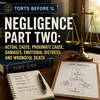
Torts Before 1L: Negligence Part Two - Actual Cause, Proximate Cause, Damages, Emotional Distress, and Wrongful Death
📘View Study GuideUnderstanding Causation and Liability in Negligence LawThis episode clarifies the complex layers of causation law, exploring how courts determine responsibility for harm amid the chaos of multiple forces, unforeseeable events, and fragile victims. It's essential listening for anyone looking to deepen their grasp of negligence, causation doctrines, and the philosophical underpinnings that shape liability.When does negligence truly turn into legal liability? Today’s deep dive unpacks the tangled, often counterintuitive world of causation—where physics meets policy, and fairness is often the first casualty. If you’ve ever wondered why a negligent bump can trigger a catastrophic train derailment in reality but not in court, this episode reveals the secrets behind how the law draws its lines: from "but-for" causation to the colorfully named "substantial factor" test, and why some collisions are so bizarre they defy all logic.In this section, we examine the fundamental principles that distinguish the physical reality of actual causation from the legal standards of liability. You'll discover how courts handle multiple independent forces, the infamous Summers v. Tice case that shifted the burden of proof, and why the law refuses to hold someone liable for unforeseeable meteor strikes. We also explore how the law recognizes that sometimes, even a "clean" chain leads to fairness dilemmas—like when tiny vulnerabilities amplify injuries under the eggshell skull rule, or why emotional distress claims are tightly rationed to prevent epidemic lawsuits.Why does the law go to such lengths—requiring real harm, foreseeable risks, and specific causation—even when moral outrage might suggest otherwise? Because the stakes are colossal: infinite liability, chaos, and undermining the very purpose of deterrence. This episode equips you with a sophisticated, approachable map through the landscape of negligence causation, showing how courts balance physics, policy, and fairness—often in ways that challenge your intuitions.Perfect for law students, legal practitioners, or anyone passionate about understanding how real-world chaos is tamed by legal principles. If you want clarity on when a careless act results in liability—and when it doesn’t—this masterclass will change how you see responsibility forever.Main insights include:The difference between physical causation (but-for test) and legal causation (proximate cause)The impact of multiple independent causes and the introduction of the substantial factor testHow the law handles cases where causation evidence is destroyed (summers v. Tice) through alternative liabilityThe conception of foreseeability in proximate cause and the boundaries of liability with intervening or superseding causesThe “eggshell plaintiff” rule emphasizing defendants’ liability for all damages resulting from foreseeable injuries, even unexpected severitySpecial rules around emotional distress (NIED), including the zone of danger, bystander, and familial relationship requirementsThe distinction between wrongful death and survival actions, and their importance in compensation for victims and their families
Podzilla Summary coming soon
Sign up to get notified when the full AI-powered summary is ready.
Free forever for up to 3 podcasts. No credit card required.
Listen to This Episode
More from Law School
Torts Before 1L: Negligence Part Three - Defenses, Multiple Defendants, Vicarious Liability, and Comparative Fault
Torts Before 1L: Negligence Part One - Duty, Breach, Reasonable Care, and Special Duty Rules
Torts Before 1L: Intentional Torts - Battery, Assault, False Imprisonment, Trespass, Conversion, and Intentional Emotional Harm
Torts Before 1L: What Is Tort Law? Civil Wrongs, Protected Interests, and the Structure of Liability
Get summaries like this every morning.
Free AI-powered recaps of Law School and your other favorite podcasts, delivered to your inbox.
Free forever for up to 3 podcasts. No credit card required.