Free Daily Podcast Summary
Landslide: Daily Summaries Delivered
by NPR
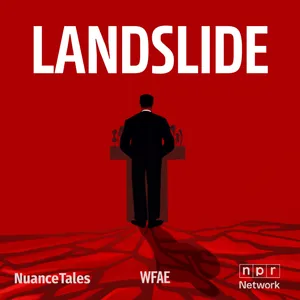
In the mid-1970s, the Republican Party looked on the verge of self-destruction. Until 1976. A political earthquake: A cutthroat, razor-close, deeply personal battle for the Republican nomination, and the party's identity. It resurrected the GOP, remade it as a conservative party, and pulled the country sharply to the right. Landslide is the story of the closest presidential primary race in American history, what followed, and how it reshaped the political parties — opening the partisan rifts that divide us today. Hosted by award-winning public radio journalist Ben Bradford.
Latest Episodes
The most recent episodes — sign up to get AI-powered summaries of each one.
- 2 weeks ago3 min
The American Storytelling collection explores the human stories behind the political headlines
Politics is the human story behind the headlines: our hopes, disagreements, choices and visions for what comes next. This fall, the American Storytelling Collection brings together six podcasts from the NPR Network that take a closer look at the people, power, conflicts and turning points behind American politics from every angle. Find the collection by searching 'American Storytelling' in Apple Podcasts or the NPR app.
- 3 weeks ago42 min
The Speaker
Nancy Pelosi never intended to run for office — but in 1987, a twist of fate thrust her into San Francisco’s political arena. In Congress, she seized power and became one of the most polarizing, effective and iconic figures in political history. From our friends at KQED: “The Speaker” is a new limited-run podcast series that builds on exclusive access to Pelosi, reflecting on her historic life and career as she exits public office. In “The Speaker,” KQED political correspondent Scott Shafer traces her rise from local volunteer to national power broker, making allies and enemies along the way — including President Donald Trump. But with faith in U.S. political institutions cratering, what can her story tell us about where the country has been, and where it’s going?
- Apr 28, 202638 min
Are we doomed?
Historically, societies fall. Civilizations collapse. But is that what’s happening now in the United States? With the help of historians, a former CIA-funded researcher on political instability, and one grumbling dad, Ben Bradford looks at the warning signs that can precede collapse — from polarization and political division to outside shocks and cascading crises. How much of that is visible in America right now? What would collapse actually look like in modern life? And if the alarms are blinking, is there still time to turn back?Listen to more of the new series from the creator of Landslide!
- Feb 10, 20261 min
Introducing the American Storytelling collection
What does it mean to be an American? There’s no one way. At NPR, we think of the American identity as a story - one that's always being rewritten by the people who live it. The American Storytelling collection gathers stories from local stations across the NPR Network - from small town struggles, to natural phenomena, to the intricate histories that build the constantly-evolving tale of our nation. These are our biggest little-known shows. Find them in the American Storytelling channel on Apple Podcasts or on the NPR App.To manage podcast ad preferences, review the links below:See pcm.adswizz.com for information about our collection and use of personal data for sponsorship and to manage your podcast sponsorship preferences.Learn more about sponsor message choices: podcastchoices.com/adchoicesNPR Privacy Policy
- Feb 27, 202528 min
Engines of Outrage Pt. 4
How does the internet work to polarize us on an individual level?As tech and media companies, battle for online engagement, they feed their users — they feed us — content that will grab attention, elicit emotion, and confirm existing beliefs. In a way, it traps everyone in their own bespoke bubble, often without our realizing it.After previous episodes analyzed the right-wing media ecosystem, Landslide: Engines of Outrage now turns to look outside of it, offering tools for all of us to diagnose our own information diets and fight back against the incentives of an internet built to polarize.Created and hosted by Ben Bradford.To manage podcast ad preferences, review the links below:See pcm.adswizz.com for information about our collection and use of personal data for sponsorship and to manage your podcast sponsorship preferences.Learn more about sponsor message choices: podcastchoices.com/adchoicesNPR Privacy Policy
- Feb 20, 202531 min
Engines of Outrage Pt. 3
Librarians in Ukraine. Rural newspapers. A tweak to social media algorithms. The infrastructure of a political campaign. All of these offer lessons about how to beat back misinformation and conspiracy theories. But are they enough to pierce the right-wing media bubble?This episode looks at solutions — from the anodyne to the unsavory — to defuse the engines of outrage and ultimately bring Americans back to a shared reality.Created and hosted by Ben Bradford.To manage podcast ad preferences, review the links below:See pcm.adswizz.com for information about our collection and use of personal data for sponsorship and to manage your podcast sponsorship preferences.Learn more about sponsor message choices: podcastchoices.com/adchoicesNPR Privacy Policy
- Feb 13, 202530 min
Engines of Outrage Pt. 2
In the early 2000s, key tech companies made a series of choices that shaped the future of the internet. They "gave away"" their products "for free." From an initial tweak to Facebook's NewsFeed to conspiracy theories about permanent markers in the 2020 election, that decision — and the relentless hunt for engagement that followed — paved the way for outrage-fueled content, viral conspiracy theories, and polarizing misinformation. And it all supercharged a right-wing media bubble inflated by the same forces.Part Two of "Landslide: Engines of Outrage" explores how the internet, profit motives, human psychology, and political benefit are fusing together to widen our political divide.To manage podcast ad preferences, review the links below:See pcm.adswizz.com for information about our collection and use of personal data for sponsorship and to manage your podcast sponsorship preferences.Learn more about sponsor message choices: podcastchoices.com/adchoicesNPR Privacy Policy
- Feb 6, 202532 min
Engines of Outrage Pt. 1
Just a few decades ago most people used — and trusted — the same news sources. Now, Americans are siloed in separate ecosystems, consuming conflicting depictions of reality. Misinformation runs rampant. Conspiracy theories flourish. And extremism grows. What can bring us back to a shared, fact-based understanding? A new miniseries from Landslide explores America's information divide — starting with a coordinated campaign in the early 1970s to undermine the press, and the alternate media ecosystem that followed.Created and hosted by Ben Bradford.To manage podcast ad preferences, review the links below:See pcm.adswizz.com for information about our collection and use of personal data for sponsorship and to manage your podcast sponsorship preferences.Learn more about sponsor message choices: podcastchoices.com/adchoicesNPR Privacy Policy
Get Landslide summaries in your inbox
Free AI-powered daily recaps. Key takeaways, quotes, and mentions — in a 5-minute read.
Get Free Summaries →Free forever for up to 3 podcasts. No credit card required.
You Might Also Like
Listeners also like.
Left, Right & Center
A political talk show examining left and right viewpoints to clarify ideological divides and challenge listeners' assumptions.
The Coming Storm
A journalist investigates the roots and rise of American conspiracy theories, from Cold War paranoia to modern claims of a Deep State.

Runaway Country with Alex Wagner
Alex Wagner explores America’s political divisions through conversations with people living through the nation’s most urgent conflicts.

Breaking News from Pod Save America
Political news and analysis from former Obama administration insiders, covering breaking stories, speeches, and underreported issues.

DSR's Words Matter
Experts in government, politics, and journalism analyze current events and uncover the truth behind the week's headlines.
The Lincoln Project
The Lincoln Project

Slow Burn
Examines pivotal political and cultural moments in American history through archival audio and firsthand accounts.

American History Tellers
Pivotal moments in American history are explored through narrative storytelling, revealing their impact on the nation and modern life.
Beyond Mount Rushmore
Explores obscure presidential scandals, strange executive decisions, and forgotten historical moments with dark humor and surprising trivia.
The NPR Politics Podcast
Daily political reporting from NPR journalists explaining major developments in Washington and on the campaign trail.

Letters from an American
Historical analysis of current political events through the lens of American history.

This Land
Rebecca Nagle investigates how conservative forces exploit Native children to undermine tribal sovereignty and advance political goals.
About Landslide
In the mid-1970s, the Republican Party looked on the verge of self-destruction. Until 1976. A political earthquake: A cutthroat, razor-close, deeply personal battle for the Republican nomination, and the party's identity. It resurrected the GOP, remade it as a conservative party, and pulled the country sharply to the right. Landslide is the story of the closest presidential primary race in American history, what followed, and how it reshaped the political parties — opening the partisan rifts that divide us today. Hosted by award-winning public radio journalist Ben Bradford.
Customized Recaps
AI-powered recaps with compact key takeaways, quotes, and insights.
Straight to Your Inbox
Get key takeaways from Landslide in a 5-minute read.
Save Hours Every Week
Stay current on your favorite podcasts without falling behind.
Frequently Asked Questions
What is Podzilla's Landslide daily summary?
It's a free AI-powered email that summarizes new episodes of Landslide as soon as they're published. You get the key takeaways, notable quotes, and links & mentions — all in a quick read.
How does the Landslide podcast summary work?
When a new episode drops, our AI transcribes and analyzes it, then generates a personalized summary tailored to your interests and profession. It's delivered to your inbox every morning.
Is this an official Landslide product?
No. Podzilla is an independent service that summarizes publicly available podcast content. We're not affiliated with or endorsed by NPR.
Can I get summaries of other podcasts too?
Absolutely! The free plan covers up to 3 podcasts, any in the catalog. Basic raises that to 15, Pro to 40 and Max to 100. Browse our full catalog at /podcasts.
How often does Landslide release new episodes?
Landslide publishes weekly. Our AI generates a summary within hours of each new episode.
What topics does Landslide cover?
Landslide covers topics including News, History, Politics. Our AI identifies the specific themes in each episode and highlights what matters most to you.
Start getting Landslide summaries tomorrow morning.
Free forever for up to 3 podcasts. No credit card required.
Free forever for up to 3 podcasts. No credit card required.