Free Daily Podcast Summary
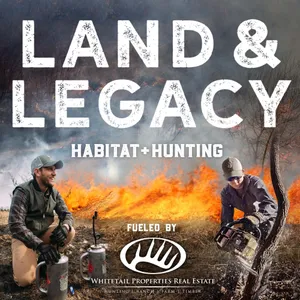
Land & Legacy - Habitat + Hunting: Daily Summaries Delivered
by Land & Legacy
The Land & Legacy podcast brings expert advice each week on everything from habitat management, hunting, and recreational land investments. We unpack real world scenarios that we experience through consulting across the country to help you become a more productive landowner and hunter. If you own land, this is the podcast for you!
Latest Episodes
The most recent episodes — sign up to get AI-powered summaries of each one.
- 4 days ago35 min
Early Season Hunting Plans
Adam and Matt discuss their early-season hunting plans and the food sources they’ll be watching closely this fall. From standing and cut corn to persimmons and brassicas, they break down how deer use these food sources and how changing conditions can influence movement.They also cover bedding, access, staging areas, hunting pressure, and how to identify the right opportunities without putting too much pressure on the property.Tune in as Adam and Matt break down their early-season strategy and what they’re looking for when it’s time to hit the woods.
- 1 weeks ago46 min
Early Velvet Season Success with Alan Summerford
This episode of the Land & Legacy Podcast is all about family, summertime preparation, and three unforgettable nights in the whitetail woods with Alan Summerford and his son, Reid.Hunting in the heat of summer, Alan and Reid focused their efforts around joint vetch food plots, putting their preparation and patience to the test. Reid struck first, taking a buck on back-to-back nights and quickly turning the hunt into a father-son adventure neither of them would forget.Then, on night three, it was Alan’s turn.Three consecutive nights. Three successful hunts. And a whole lot of memories made together.From sitting over summer food plots in the heat to putting in the work and making the most of every opportunity, this episode highlights what hunting is really about — time spent outdoors, sharing the experience with family, and making memories that last long after the season ends.Join Alan and Reid as they break down the hunts, the preparation, the strategy behind hunting joint vetch, and the moments that made this three-night stretch one to remember.
- 2 weeks ago1h 9m
Keeping it Simple with Adam Brooke from Veritas Outfitters
With most things in life, we like to complicate things. On this week's podcast we sit down with Adam Brooke of Veritas Outfitters to discuss archery setups and how to cut through the fluff. We're talking arrow setups, nocks, new bows, and all things archery!
- Aug 21, 202643 min
Tethrd Saddle Hunting w/ Josh Hillyard
Saddle Hunting: A Private-Land Advantage with Tethrd In this episode of the Land & Legacy Podcast, Adam sits down with Josh Hillyard from Tethrd Hunting to dive into saddle hunting and why this versatile hunting method can be especially valuable for private-land hunters. Saddle hunting has changed the way many hunters approach the woods, giving them the ability to hunt from trees that traditional stands simply can’t access. For private-land landowners, that mobility can be a major advantage when it comes to hunting specific deer movement patterns, accessing difficult terrain, and taking advantage of the habitat improvements they’ve worked so hard to create. Adam and Josh discuss the fundamentals of saddle hunting, what makes the system different from a traditional tree stand, and how hunters can use it to become more mobile and strategic throughout the season. They also explore how saddle hunting can fit into a broader land-management strategy—allowing hunters to adapt their setups around food plots, bedding areas, travel corridors, terrain features, and changing deer behavior. Whether you’re already hunting from a saddle or have been considering making the switch, this conversation provides practical insight into how this technique can help private-land hunters hunt smarter, minimize pressure, and make better use of the habitat they’ve created. Tune in as Adam and Josh break down saddle hunting and how private landowners can utilize this technique to become more mobile, adaptable, and effective in the deer woods.
- Aug 14, 202647 min
Deer Season Preparations - Trail Cameras
Adam and Alan sit down to discuss one of the most important parts of deer hunting that often gets overlooked: pre-season preparation. A successful hunt doesn't begin when you climb into a tree on opening morning—it begins weeks and months beforehand with understanding the property, studying deer movement, placing trail cameras strategically, and making sure your stand locations actually match the conditions you plan to hunt. The conversation starts with trail camera placement and why hunters shouldn't simply hang cameras wherever they see a good trail. Adam and Alan discuss using cameras to answer specific questions about deer movement, bedding areas, food sources, staging areas, funnels, and travel corridors. They also cover the importance of understanding when deer are moving rather than simply identifying which bucks are using the property.
- Aug 6, 202648 min
It's More Than a Fall Blend w/ these Annual Clovers
When time is limited, make wise food plot decisions. Don't worry about what others are planting or chasing a trend. Plant a crop that gives you the best chance at high quality food over the course of many months. When you begin to allow in a diverse fall mixture for the annual clovers such a balansa, bereseem, and crimson clover to fully grow and cycle you realize that this food plot blend is more than a fall crop... its a 10 month+ crop. If you plant a blend with the right annual clovers added at the right density, you can achieve an extended life of food plot varieties, increased nitrogen fixation, and some quality weed suppression without needing to plant a summer crop. Just terminate the field and plant the same crop again. Food plotting is that easy.
- Jul 31, 202647 min
Food Plot Management- Minimizing Variables
During this podcast we chat with Land & Legacy consultant Alan Summerford about the management of his properties. We discuss distinct management strategies that produce results, simplify maintenance, and ensure success despite unknown variables that any growing season can throw your way. Some of the topics we cover include pre-emergents, herbicides, mowing food plots, amending food plots, herbicide proficiency, and producing high quality forage during the hunting season. Additionally, we discuss common themes observed during recent consulting trips. Similar trends appear in successes. Its not uncommon to see some folks who excel in food plots, but struggle with native habitat as well as the inverse: those who do great with a chainsaw and a drip torch but struggle with food plots. Both are necessary skills to hone and really take your property to the next level.
- Jul 24, 202643 min
Nocturnal Bucks: No More with this Addition
On the Whitetail Properties Youtube page, weve dropped two recent videos discussing the age old problem of nocturnal bucks. We discuss in depth why this is the common thought and also solutions to fix it. There is some great interaction regarding these videos on Youtube. So, we decided to take it a step further and dive deep into the why and how of this common problem for whitetail hunters. Cover is key, not food. In these two videos, we discuss not only how to place bedding thickets on a property but also how to create them. It is key to identify the problem, diagnose it properly, and then provide the correct remedy. Bedding thickets in proper locations is key. This solution requires elbow grease, but it is long term and incredibly impactful when executed properly. Take the right steps before the season to make a long lasting impact.
Get Land & Legacy - Habitat + Hunting summaries in your inbox
Free AI-powered daily recaps. Key takeaways, quotes, and mentions — in a 5-minute read.
Get Free Summaries →Free forever for up to 3 podcasts. No credit card required.
You Might Also Like
Listeners also like.
Wired To Hunt Podcast
Explores advanced whitetail hunting strategies through expert interviews and firsthand experiences.
The Hunting Collective
Explores the ethics, conservation, and cultural values of modern hunting through conversations with prominent voices in the field.
The Origins Foundation Podcast
Discusses wildlife conservation, hunting ethics, and controversial issues in sustainable use through candid interviews.

Call of the Outdoors
Explores Pennsylvania wildlife, hunting, habitat, and conservation through stories and insights from the state’s Game Commission.
MeatEater Conservation
A podcast about outdoor news and conservation issues, featuring interviews with experts and hunters.
The Two Acre Homestead
A couple shares their experiences moving from suburban to rural homesteading, covering gardening, self-sufficiency, and country living.

Gun Talk
Discusses gun rights, recreational shooting, hunting, and Second Amendment issues across multiple firearm-focused shows.

Grassfed Life
Covers small-scale farming, grass-fed livestock, and farm-based entrepreneurship with seasonal insights and practical guidance.
The MeatEater Podcast
Explores hunting, fishing, conservation, and wild foods with experts and humor through in-depth outdoor conversations.
Pioneering Today Podcast - Homesteading in a Modern World
Homesteading skills like gardening, food preservation, livestock care, and natural remedies for a self-sufficient life in the modern world.
Blood Trails
Explores true crime cases tied to hunting and fishing, using original reporting to uncover mysteries in remote outdoor settings.

The REtipster Podcast | Land Investing & Real Estate Strategies
Teaches land investing and real estate strategies including land flipping and self-storage development.
About Land & Legacy - Habitat + Hunting
The Land & Legacy podcast brings expert advice each week on everything from habitat management, hunting, and recreational land investments. We unpack real world scenarios that we experience through consulting across the country to help you become a more productive landowner and hunter. If you own land, this is the podcast for you!
Customized Recaps
AI-powered recaps with compact key takeaways, quotes, and insights.
Straight to Your Inbox
Get key takeaways from Land & Legacy - Habitat + Hunting in a 5-minute read.
Save Hours Every Week
Stay current on your favorite podcasts without falling behind.
Frequently Asked Questions
What is Podzilla's Land & Legacy - Habitat + Hunting daily summary?
It's a free AI-powered email that summarizes new episodes of Land & Legacy - Habitat + Hunting as soon as they're published. You get the key takeaways, notable quotes, and links & mentions — all in a quick read.
How does the Land & Legacy - Habitat + Hunting podcast summary work?
When a new episode drops, our AI transcribes and analyzes it, then generates a personalized summary tailored to your interests and profession. It's delivered to your inbox every morning.
Is this an official Land & Legacy - Habitat + Hunting product?
No. Podzilla is an independent service that summarizes publicly available podcast content. We're not affiliated with or endorsed by Land & Legacy.
Can I get summaries of other podcasts too?
Absolutely! The free plan covers up to 3 podcasts. Upgrade to Pro for 15, or Premium for 50. Browse our full catalog at /podcasts.
How often does Land & Legacy - Habitat + Hunting release new episodes?
Land & Legacy - Habitat + Hunting publishes weekly. Our AI generates a summary within hours of each new episode.
What topics does Land & Legacy - Habitat + Hunting cover?
Land & Legacy - Habitat + Hunting covers topics including Leisure, Technology, Sports, Hobbies, Wilderness. Our AI identifies the specific themes in each episode and highlights what matters most to you.
Start getting Land & Legacy - Habitat + Hunting summaries tomorrow morning.
Free forever for up to 3 podcasts. No credit card required.
Free forever for up to 3 podcasts. No credit card required.