Free Daily Podcast Summary
Juke In The Back: Daily Summaries Delivered
by Matt The Cat
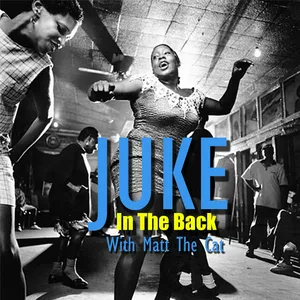
At the end of the Second World War, economics forced the big bands to trim their once great size and thus, the Jump Blues combo was born. Between 1946-1954, rhythm and blues laid the tracks for what was to become Rock n’ Roll. So how come, 75 years later, this vibrant and influential music is still so unknown to so many? Matt The Cat is going to change that with the radio program, “Juke In The Back.” These were the records that you couldn’t hear on the jukebox in the front of the establishment. To hear all this great 1950s rhythm & blues, you had to go to “Juke In The Back.”
Latest Episodes
The most recent episodes — sign up to get AI-powered summaries of each one.
- Today59 min
Episode #855 – Louis Jordan, Pt. 2 – 1942-45
Air Week: September 21-27, 2026 Louis Jordan, Pt. 2 – 1942-45 The “Juke In The Back” presents Part 2 of a mammoth, six-part series, featuring the most important musical figure of the 1940s, Louis Jordan. He was the most successful African-American artist of the decade, selling millions of records to both Black and White audiences. Jordan charted 57 singles between 1942 and 1951, scoring 18 #1 R&B hits and 56 top 10s. Several of his records even crossed over into the Pop Top 10, which was an almost unheard of feat at the time. Part 2 of our series picks up in 1942, right before Jordan’s first hit record, “I’m Gonna Leave You On The Outskirts Of Town,” and covers his first 5 #1 records, which began with “What’s The Use Of Getting Sober (When You’re Gonna Get Drunk Again” in 1943. The hits started as Decca assigned legendary jazz producer Milt Gabler to produce his sessions. Their first session together took place right before the Recording Ban of 1942 went into effect. During the ban, the musicians union refused to let artists record for any recording company until their royalty demands were met. This kept Jordan out of the studio for over a year. Once the ban ended in September of ’43, Jordan was back in the studio cutting hit record after hit record. It’s during this time that he became the “King Of The Jukeboxes.” So don’t miss one fantabulous Louis Jordan record on this week’s “Juke In The Back.” LISTEN BELOW
- 1 weeks ago59 min
Episode #854 – Louis Jordan, Pt. 1 – 1938-41
Air Week: September 14-20, 2026 Louis Jordan, Pt. 1 – 1938-41 The “Juke In The Back” begins a mammoth, multi-part series, featuring the most important musical figure of the 1940s, Louis Jordan. He was the most successful African-American artist of the decade, selling millions of records to both Black and White audiences. Jordan charted 57 singles between 1942 and 1951, scoring 18 #1 R&B hits and 56 top 10s. Several of his records even crossed over into the Pop Top 10, which was an almost unheard of feat at the time. Jordan was born in Brinkley, AR in 1908 and thanks to his musician father, began touring with the Rabbit Foot Minstrels before he was even in his teens. His love of music, performing and baseball took him to Arkansas Baptist College and soon he was playing in bands in Philadelphia and New York. He started his own band after being fired by legendary drummer Chick Webb. His first records with the Elk’s Rendezvous Band were not hits, but they cast a light on the tight arrangements, the comedic delivery and good feelin’ jump blues that was to become Louis Jordan’s trademark. Part 1 features Jordan’s earliest recordings from 1938 to 1941. There are no certified hits, but these records show the blueprint for the future superstar. Matt The Cat’s series on Louis Jordan will cover all his important records up through 1956, so don’t miss a show! LISTEN BELOW
- 2 weeks ago59 min
Episode #853 – Ike Turner
Air Week: September 7-13, 2026 Ike Turner One of Rhythm & Blues’ greatest innovators was also one of its most notorious personalities. Ike Turner was born in the same place that the blues was born, in the heart of the Mississippi Delta in Clarksdale in 1931. He learned boogie woogie piano was the legendary Pinetop Perkins and soon taught himself how to play guitar. His band, The Kings Of Rhythm, recorded what some would come to name as the “first Rock n’ Roll Record” with “Rocket 88” in 1951. The Chess label called them “Jackie Brenston & His Delta Cats,” but it didn’t matter, Ike Turner’s stamp is all over that groundbreaking record, which was based on Jimmy Liggins’ 1948 R&B classic, “Cadillac Boogie.” From there, Turner became a talent scout for both Sam Phillips at Sun Records and The Bihari Brothers at RPM Records. He played behind Howlin’ Wolf, Little Milton, Elmore James, Otis Rush and many others while also releasing his own important sides. Matt The Cat sorts through the many record labels and incarnations of The Kings Of Rhythm on this week’s “Juke In The Back,” as we honor one of music’s most tragic, but important figures, the legendary Ike Turner. LISTEN BELOW
- 3 weeks ago59 min
Episode #852 – Sun Records R&B, Pt. 2 – 1954-55
Air Week: August 31-September 6, 2026 Sun Records R&B, Pt. 2 – 1954-55 On Part 2 of “Juke In The Back”‘s 2 part series on Sun Records’ early R&B releases, Matt The Cat spotlights 1954 and ’55. This was the most important year and a half in Sun’s history. In July, 1954, a young former truck driver named Elvis Presley entered 706 Union Avenue in Memphis and laid down a song that would lead to the rock n’ roll explosion of the mid-1950s. Sun founder, the late Sam Phillips recalls that historic recording as Matt The Cat spins classic Sun R&B from the likes of Billy “The Kid” Emerson, Little Milton, James Cotton and Roscoe Gordon. This is the thrilling conclusion to the “Juke In The Back” tribute to the most important and influential label in the history of rock n’ roll. LISTEN BELOW
- 4 weeks ago59 min
Episode #851 – Sun Records R&B, Pt. 1 – 1952-53
Air Week: August 24-30, 2026 Sun Records R&B, Pt. 1 – 1952-53 This week, the “Juke In The Back” salutes the most influential and important record label of all-time, Sun Records. Sam Phillips started the legendary label in Memphis, TN in March, 1952 after successfully recording the debut sides from B.B. King, Ike Turner, Phineas Newborn and Howlin’ Wolf and selling the masters to RPM Records in LA and Chess Records in Chicago. This is part one of a two part feature, leading up to Phillips’ groundbreaking, pop culture shifting discovery of Elvis Presley in July, 1954. Matt The Cat examines nearly every rhythm & blues side that Sun Released during 1952 and ’53 on this in-depth look into one of America’s most treasured music catalogs. That little yellow label from Memphis is in the spotlight all week on the “Juke In The Back,” America’s showcase for 1940s and ’50s Rhythm & Blues. LISTEN BELOW
- Aug 16, 202659 min
Episode #850 – Elvis’ R&B Influences
Air Week: August 17-23, 2026 Elvis’ R&B Influences 49 years ago this week, we lost the “King Of Rock n’ Roll. Much has been written about Elvis’ enormous impact and popularity over the years, but it’s almost impossible to overstate the cultural shift that took place as he rose to fame in 1956. Elvis was a musical sponge. He absorbed all the music that moved him and those around him, from Country and Hillbilly to Gospel, Pop, R&B and Blues. This week’s “Juke In The Back” focuses solely on the rhythm & blues that motivated Elvis’ early career. During the end of his first session with Sam Phillips, Elvis cut into an inspired rendition of a semi-forgotten Arthur Crudup gem and rock n’ roll was literally born. From the New Orleans R&B of Smiley Lewis, to the jump blues of Wynonie Harris, Elvis dug it all and made each song uniquely his own. He wasn’t copying his R&B idols, he was merely using their material as a springboard for his own blend of the White and the Black. Sam Phillips was right when he said that it would take a White cat with an African-American feel to propel this exciting R&B music into the mainstream and lucky for us, he found that in Elvis Presley. Matt The Cat presents many surprises in this week’s “Juke In The Back,” dedicated to Elvis’ strongest musical influence: Rhythm & Blues. LISTEN BELOW
- Aug 9, 202658 min
Episode #849 – Aladdin Records, Pt. 3 – 1953-55
Air Week: August 10-16, 2026 Aladdin Records, Pt. 3 – 1953-55 The “Juke In The Back” presents part 3 in our series on Aladdin Records, one of the most important independent labels of the pre-rock era. Part 3 focuses on 1953-55, just as Rock n’ Roll was beginning to enter the mainstream. Matt The Cat digs up a great variety of styles this week as vocal groups, raw Rhythm & Blues, jump instrumentals, drinking songs and ballads take center stage. We’ll dig on some hits and misses from Amos Milburn, The Five Keys, Chuck Higgins, Gene & Eunice and Shirley & Lee. We’ll also hear some great debut records from Bobby Marchan and Sonny Knight, who would go on to greater success on other labels. A few rare vocal group sides are also featured. Grab a handful of nickels, because this week the “Juke In The Back” is loaded with Aladdin Records sides out of Beverly Hills, CA. This is the final part in our 3 part series. LISTEN BELOW
- Aug 2, 202659 min
Episode #848 – Aladdin Records, Pt. 2 – 1950-54
Air Week: August 3-9, 2026 Aladdin Records, Pt. 2 – 1950-54 The “Juke In The Back” presents part 2 in our 3 part series on Aladdin Records, one of the most important independent labels of the pre-rock era. Part 2 will pick up the Aladdin Records Story in 1950 and carry it through til rock n’ roll began hitting the mainstream in 1953-54. This week, we’ll hear more hits from Aladdin’s early hit-makers, Amos Milburn and Charles Brown. We’ll also dig some of the newcomers, like Floyd Dixon, Peppermint Harris, Calvin Boze, Shirley & Lee, the Five Keys and more. Aladdin was a rare label in that almost everything they pressed was worth hearing. If you ever see a discarded Aladdin 45 by an artist you’ve never heard before, pick it up, because chances are it’ll make you very, very happy. Next week, part 3 will close down the series on Aladdin on the “Juke In The Back” with Matt The Cat. LISTEN BELOW
About Juke In The Back
At the end of the Second World War, economics forced the big bands to trim their once great size and thus, the Jump Blues combo was born. Between 1946-1954, rhythm and blues laid the tracks for what was to become Rock n’ Roll. So how come, 75 years later, this vibrant and influential music is still so unknown to so many? Matt The Cat is going to change that with the radio program, “Juke In The Back.” These were the records that you couldn’t hear on the jukebox in the front of the establishment. To hear all this great 1950s rhythm & blues, you had to go to “Juke In The Back.”
Customized Recaps
AI-powered recaps with compact key takeaways, quotes, and insights.
Straight to Your Inbox
Get key takeaways from Juke In The Back in a 5-minute read.
Save Hours Every Week
Stay current on your favorite podcasts without falling behind.
Frequently Asked Questions
What is Podzilla's Juke In The Back daily summary?
It's a free AI-powered email that summarizes new episodes of Juke In The Back as soon as they're published. You get the key takeaways, notable quotes, and links & mentions — all in a quick read.
How does the Juke In The Back podcast summary work?
When a new episode drops, our AI transcribes and analyzes it, then generates a personalized summary tailored to your interests and profession. It's delivered to your inbox every morning.
Is this an official Juke In The Back product?
No. Podzilla is an independent service that summarizes publicly available podcast content. We're not affiliated with or endorsed by Matt The Cat.
Can I get summaries of other podcasts too?
Absolutely! The free plan covers up to 3 podcasts. Upgrade to Pro for 15, or Premium for 50. Browse our full catalog at /podcasts.
How often does Juke In The Back release new episodes?
Juke In The Back publishes weekly. Our AI generates a summary within hours of each new episode.
What topics does Juke In The Back cover?
Juke In The Back covers topics including History, Music, Commentary. Our AI identifies the specific themes in each episode and highlights what matters most to you.
Start getting Juke In The Back summaries tomorrow morning.
Free forever for up to 3 podcasts. No credit card required.
Free forever for up to 3 podcasts. No credit card required.