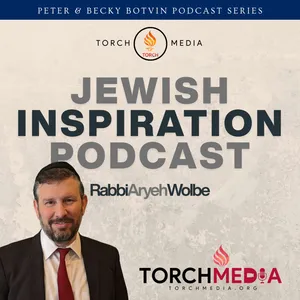
Free Daily Podcast Summary
Jewish Inspiration Podcast · Rabbi Aryeh Wolbe: Daily Summaries Delivered
by TORCH
This Jewish Inspiration Podcast is dedicated to learning, understanding and enhancing our relationship with Hashem by working on improving our G-d given soul traits and aspiring to reflect His holy name each and every day. The goal is for each listener to hear something inspirational with each episode that will enhance their life.
Latest Episodes
The most recent episodes — sign up to get AI-powered summaries of each one.
- 1 weeks ago56 min
Ten Hidden Messages of the Shofar
Rabbi Aryeh Wolbe explores ten powerful dimensions of the shofar, based on the teachings of Rav Saadia Gaon. He begins with the very pattern of the shofar sounds themselves: the firm tekiah, the broken shevarim, the shattered teruah, and finally another strong tekiah. This sequence reflects the rhythm of human life. We experience times of confidence, periods of brokenness, and moments when we feel shattered—but we can become whole again. The shofar tells us that this cycle is not a failure; it is part of the journey Hashem created for us. The first reasons for the shofar focus on our relationship with Hashem. It coronates Hashem as our personal King, awakens us to teshuvah, and recalls the revelation at Mount Sinai, when every Jewish soul experienced extraordinary closeness and clarity. The shofar also echoes the calls of the prophets, whose blasts were designed to wake the Jewish people from spiritual complacency. Hearing it should therefore never be passive; it is meant to awaken us and make the kingship of Hashem real in our lives. Other meanings connect the shofar to the destruction and future rebuilding of the Temple, the binding of Isaac, awe and humility, and the Day of Judgment. The Akeidah represents absolute dedication to Hashem, while the shofar’s call to humility reminds us that although we are tiny in comparison with the universe, Hashem still desires a personal relationship with each of us. On Rosh Hashanah, we must also prepare our case before the heavenly Judge: Why should Hashem grant us another year, and what will we do differently with the life and blessings He gives us? The final themes look toward redemption: the ingathering of the exiles and the resurrection of the dead will also be accompanied by the shofar. Rabbi Wolbe emphasizes that prayer itself can happen anywhere—not only in a synagogue or with a siddur. Prayer means opening the heart and speaking directly with Hashem, whether in Houston, on the highway, at a red light, or in a doctor’s waiting room. The shofar ultimately becomes a form of communication beyond words—a spiritual “send button” carrying our deepest message to Hashem. Rabbi Wolbe concludes by encouraging listeners to prepare before the shofar is blown. Close your eyes, stop everything else, and ask: What is my message to Hashem? Perhaps it is simply, “I want to be closer to You. Help me remove the barriers and limitations that keep me from growing.”_____________This Podcast Series is Generously Underwritten by Peter & Becky BotvinThe Episode is dedicated in honor of Ziggy GruberRecorded at TORCH Centre in the Levin Family Studios (B) to a live audience on September 8, 2026, in Houston, Texas.Released as Podcast on September 9, 2026_____________Listen, Subscribe & Share: Apple Podcasts: https://podcasts.apple.com/us/podcast/jewish-inspiration-podcast-rabbi-aryeh-wolbe/id1476610783Spotify: https://open.spotify.com/show/4r0KfjMzmCNQbiNaZBCSU7) to stay inspired! Share your questions at aw@torchweb.org or visit torchweb.org for more Torah content. _____________About the Host:Rabbi Aryeh Wolbe, Director of TORCH in Houston, brings decades of Torah scholarship to guide listeners in applying Jewish wisdom to daily life. To directly send your questions, comments, and feedback, please email: awolbe@torchweb.org_____________Support Our Mission:Our Mission is Connecting Jews & Judaism. Help us spread Judaism globally by sponsoring an episode at torchweb.org.Your support makes a HUGE difference!_____________Listen MoreOther podcasts by Rabbi Aryeh Wolbe: NEW!! Hey Rabbi! Podcast: https://heyrabbi.transistor.fm/episodesPrayer Podcast: https://prayerpodcast.transistor.fm/episodesJewish Inspiration Podcast: https://inspiration.transistor.fm/episodesParsha Review Podcast: https://parsha.transistor.fm/episodesLiving Jewishly Podcast: https://jewishly.transistor.fm/episodesThinking Talmudis
- 2 weeks ago12 min
Hashem's Blueprint Within Us [Day 195-6 - Orchos Tzaddikim | Fear of Heaven 11]
In Days 195–196 of Orchot Tzaddikim, The Ways of the Righteous, Rabbi Aryeh Wolbe continues the Gate of Fear of Heaven by developing the idea that the human being is a microcosm of the entire world. Just as creation contains trees, herbs, fruits, waters, rivers, stones, mountains, winds, and countless other systems, the human body contains parallel structures and functions. The author uses these comparisons to awaken awe at the complexity and wisdom Hashem embedded within us.The lesson moves through a series of physical parallels: the digestive system is compared to the depths of the earth, arteries to rivers, bones to the foundations of the world, kidneys and bodily ducts to waterways, and the various fluids of the body to the different waters found throughout creation. The message is not merely anatomical. It is that the human body itself reflects a larger Divine pattern and should inspire a deeper appreciation of the Creator.Day 196 expands the comparison further. The Orchot Tzaddikim parallels hot and cold winds with human breath, thunder with the human voice, lightning with the brightness of the face, mountains with the body's joints and structures, stones with teeth and bones, soil with flesh and skin, vegetation with human hair, and even the zodiac with the spinal column and its attached structures. The author also describes ancient forms of wisdom through which sages were said to discern future events from natural signs, bodily features, vegetation, and other aspects of creation.Rabbi Wolbe concludes by emphasizing the wonder of the human body. The same wisdom Hashem placed throughout the cosmos is, in miniature, embedded within each person. The point is not to become distracted by speculative worlds beyond us, but to recognize the extraordinary miracle already present within our own bodies. The more carefully we contemplate ourselves, the more opportunities we have to develop Yirat Shamayim—awareness, reverence, and awe of Hashem._____________This Podcast Series is Generously Underwritten by Peter & Becky BotvinRecorded at TORCH Centre in the Levin Family Studios (B) to a live audience on March 23, 2026, in Houston, Texas.Released as Podcast on August 31, 2026_____________This series on Orchos Tzadikim/Ways of the Righteous is produced in partnership with Hachzek.Join the revolution of daily Mussar study at hachzek.com.We are using the Treasure of Life edition of the Orchos Tzadikkim (Published by Feldheim)_____________Listen, Subscribe & Share: Apple Podcasts: https://podcasts.apple.com/us/podcast/jewish-inspiration-podcast-rabbi-aryeh-wolbe/id1476610783Spotify: https://open.spotify.com/show/4r0KfjMzmCNQbiNaZBCSU7) to stay inspired! Share your questions at aw@torchweb.org or visit torchweb.org for more Torah content. _____________About the Host:Rabbi Aryeh Wolbe, Director of TORCH in Houston, brings decades of Torah scholarship to guide listeners in applying Jewish wisdom to daily life. To directly send your questions, comments, and feedback, please email: awolbe@torchweb.org_____________Support Our Mission:Our Mission is Connecting Jews & Judaism. Help us spread Judaism globally by sponsoring an episode at torchweb.org.Your support makes a HUGE difference!_____________Listen MoreOther podcasts by Rabbi Aryeh Wolbe: NEW!! Hey Rabbi! Podcast: https://heyrabbi.transistor.fm/episodesPrayer Podcast: https://prayerpodcast.transistor.fm/episodesJewish Inspiration Podcast: https://inspiration.transistor.fm/episodesParsha Review Podcast: https://parsha.transistor.fm/episodesLiving Jewishly Podcast: https://jewishly.transistor.fm/episodesThinking Talmudist Podcast: https://talmud.transistor.fm/episodesUnboxing Judaism Podcast: https://unboxing.transistor.fm/episodes<str
- 3 weeks ago7 min
The Human Body: A Miniature Universe [Day 194 - Orchos Tzaddikim | Fear of Heaven 10]
In Day 194 of Orchot Tzaddikim, The Ways of the Righteous, Rabbi Aryeh Wolbe continues the Gate of Fear of Heaven with a fascinating comparison between the human being and the universe itself. If mankind reflects Hashem in a tiny and limited way, then the structure of the human body can likewise be understood as a miniature reflection of the greater world.The Orchot Tzaddikim draws parallels between the heavens and the human body: the skull resembles the heavenly firmament; the palate creates divisions within the body just as the firmament separates the waters; and the life-giving soul resides within and directs the body. Just as the universe is governed by the One Creator, the many organs and systems of the human body are unified and directed by one life-force.The author continues this imagery by comparing the seven openings of the head—two eyes, two ears, two nostrils, and the mouth—to the heavenly luminaries and planets. The larger message is that the human being is a remarkable microcosm of Hashem's creation. The more carefully we contemplate ourselves and the world around us, the more opportunities we have to recognize the wisdom embedded throughout creation.Rabbi Wolbe then turns from anatomy to character. Just as the animal kingdom contains gentle creatures as well as predators, human beings can develop very different qualities. Some live peacefully and compassionately, while others behave like predatory animals—using their strength to hurt or take advantage of others.The crucial difference is that we can choose. Hashem created the abilities and forces within creation, but human beings decide how those powers will be expressed. We can use what Hashem has given us constructively or destructively. Fear of Heaven therefore means not merely marveling at creation, but recognizing our responsibility within it and consciously choosing what kind of person we wish to become._____________This Podcast Series is Generously Underwritten by Peter & Becky BotvinRecorded at TORCH Centre in the Levin Family Studios (B) to a live audience on March 23, 2026, in Houston, Texas.Released as Podcast on August 28, 2026_____________This series on Orchos Tzadikim/Ways of the Righteous is produced in partnership with Hachzek.Join the revolution of daily Mussar study at hachzek.com.We are using the Treasure of Life edition of the Orchos Tzadikkim (Published by Feldheim)_____________Listen, Subscribe & Share: Apple Podcasts: https://podcasts.apple.com/us/podcast/jewish-inspiration-podcast-rabbi-aryeh-wolbe/id1476610783Spotify: https://open.spotify.com/show/4r0KfjMzmCNQbiNaZBCSU7) to stay inspired! Share your questions at aw@torchweb.org or visit torchweb.org for more Torah content. _____________About the Host:Rabbi Aryeh Wolbe, Director of TORCH in Houston, brings decades of Torah scholarship to guide listeners in applying Jewish wisdom to daily life. To directly send your questions, comments, and feedback, please email: awolbe@torchweb.org_____________Support Our Mission:Our Mission is Connecting Jews & Judaism. Help us spread Judaism globally by sponsoring an episode at torchweb.org.Your support makes a HUGE difference!_____________Listen MoreOther podcasts by Rabbi Aryeh Wolbe: NEW!! Hey Rabbi! Podcast: https://heyrabbi.transistor.fm/episodesPrayer Podcast: https://prayerpodcast.transistor.fm/episodesJewish Inspiration Podcast: https://inspiration.transistor.fm/episodesParsha Review Podcast: https://parsha.transistor.fm/episodesLiving Jewishly Podcast: https://jewishly.transistor.fm/episodesThinking Talmudist Podcast: https://talmud.transistor.fm/episodesUnboxing Judaism Podcast: https://unboxing.transistor.fm/episodesRabbi Aryeh Wolbe Podcast Collection</st
- Aug 19, 20269 min
Why Hashem Lets Us Make Mistakes [Day 193 - Orchos Tzaddikim | Fear of Heaven 9]
In Day 193 of The Ways of the Righteous (Orchot Tzaddikim), in the Gate of Fear of Heaven, Rabbi Aryeh Wolbe continues exploring the remarkable ways human beings reflect, on a limited scale, qualities Hashem placed into creation. Just as Hashem distinguishes between good and evil, human beings possess the capacity to discern between them. And just as Hashem created and formed the world, mankind has been endowed with extraordinary creative abilities—to build, plant, develop, transform, and accomplish.But human potential does not mean effortless success. Rabbi Wolbe emphasizes that there are no shortcuts. Greatness requires hard work, Torah study, understanding the ways of Hashem, and ultimately Hashem's assistance. The extraordinary capacities placed within us are possibilities that must be cultivated.The lesson also draws a fascinating parallel between Hashem and the neshamah: neither can be perceived with our physical eyes. We cannot see a soul entering the body at birth or departing at death, yet its reality defines human life. Similarly, the inner thoughts of another person remain hidden from us, while Hashem knows what lies within every heart.Rabbi Wolbe then explains the purpose of the Yetzer Tov and Yetzer Hara. Human beings were deliberately placed into a world of competing impulses so that our choices would have meaning. Our capacity to build or destroy, plant or uproot, accumulate or relinquish, exercise power or restraint creates the arena in which free will operates. The challenge is not to live without an evil inclination, but to strengthen the Yetzer Tov sufficiently to govern it.The lesson concludes with the essential balance between Divine judgment and Divine mercy. Rabbi Wolbe discusses Rashi's teaching on the opening of the Torah: creation is introduced with the Divine name Elohim, associated with judgment. Yet a world operating through strict judgment alone could not endure. Human beings need the possibility of making mistakes, repenting, growing, and trying again. Hashem therefore allows mercy to accompany judgment.Our greatness is found precisely within this system. We possess tremendous potential, but we also possess competing desires and the ability to fail. The person who repeatedly chooses the Yetzer Tov over the Yetzer Hara transforms that struggle into spiritual greatness. Such a person, Rabbi Wolbe concludes, is truly fortunate—and fortunate is the mother who brought such a person into the world._____________This Podcast Series is Generously Underwritten by Peter & Becky BotvinRecorded at TORCH Centre in the Levin Family Studios (B) to a live audience on March 23, 2026, in Houston, Texas.Released as Podcast on August 19, 2026_____________This series on Orchos Tzadikim/Ways of the Righteous is produced in partnership with Hachzek.Join the revolution of daily Mussar study at hachzek.com.We are using the Treasure of Life edition of the Orchos Tzadikkim (Published by Feldheim)_____________Listen, Subscribe & Share: Apple Podcasts: https://podcasts.apple.com/us/podcast/jewish-inspiration-podcast-rabbi-aryeh-wolbe/id1476610783Spotify: https://open.spotify.com/show/4r0KfjMzmCNQbiNaZBCSU7) to stay inspired! Share your questions at aw@torchweb.org or visit torchweb.org for more Torah content. _____________About the Host:Rabbi Aryeh Wolbe, Director of TORCH in Houston, brings decades of Torah scholarship to guide listeners in applying Jewish wisdom to daily life. To directly send your questions, comments, and feedback, please email: awolbe@torchweb.org_____________Support Our Mission:Our Mission is Connecting Jews & Judaism. Help us spread Judaism globally by sponsoring an episode at torchweb.org.Your support makes a HUGE difference!_____________Listen MoreOther podcasts by Rabbi Aryeh Wolbe: NEW!! Hey Rabbi! Podcast: https://heyrabbi.transistor.fm/episodesPrayer Podcast: https://prayerpodcast.transistor.fm/episodesJewish Inspiration Podcast: https://inspiration.transistor.fm/episodesParsha Review Podcast: <
- Aug 18, 202612 min
Unlocking Your God-Given Potential [Day 192 - Orchos Tzaddikim | Fear of Heaven 8]
In Day 192 of The Ways of the Righteous (Orchot Tzaddikim), in the Gate of Fear of Heaven, Rabbi Aryeh Wolbe explores the extraordinary greatness and potential Hashem placed within every human being. Humanity is unique among creation because we possess a neshamah capable of attaining wisdom, penetrating profound ideas, and recognizing both the physical world and the spiritual reality behind it.Rabbi Wolbe compares the Torah to life's owner's manual. A table, computer, or even a door comes with instructions explaining how it should be assembled and used. Life is infinitely more complicated, so Hashem gave us His instructions as well. The Torah teaches us how to approach marriage, raise children, develop ourselves, and understand the purpose for which we were created. If we want to know how to maximize life, we need to study the manual provided by its Creator.The lesson compares our relationship with Hashem to a king who brings trusted servants into his innermost chambers, reveals his treasures and secrets, and entrusts them with tremendous responsibility. The very fact that the king shares so much with them demonstrates how highly he regards them. Similarly, Hashem allows humanity to discover the extraordinary wisdom embedded throughout creation and gives us dominion over the physical world. This should awaken us to both our greatness and our responsibility.Rabbi Wolbe then offers a fascinating explanation for humanity's seemingly endless ambition. Our sages teach that one who has one hundred wants two hundred, and one who has two hundred wants four hundred. The soul originates from a lofty spiritual realm and naturally yearns to rise higher. But when that tremendous drive becomes redirected through the physical body, the desire for spiritual greatness can become a pursuit of bigger houses, greater wealth, higher positions, nicer possessions, and more honor.The goal, therefore, isn't to eliminate our drive for greatness—it is to redirect it upward. The closer we become to Hashem through Torah and mitzvot, the more we uncover the enormous spiritual potential already within us. Rabbi Wolbe concludes that human beings are capable of far more than we imagine. By fulfilling Hashem's will, we become increasingly connected to Him and can transform the soul's endless desire for "more" into an endless pursuit of wisdom, holiness, and closeness to God._____________This Podcast Series is Generously Underwritten by Peter & Becky BotvinRecorded at TORCH Centre in the Levin Family Studios (B) to a live audience on March 23, 2026, in Houston, Texas.Released as Podcast on August 18, 2026_____________This series on Orchos Tzadikim/Ways of the Righteous is produced in partnership with Hachzek.Join the revolution of daily Mussar study at hachzek.com.We are using the Treasure of Life edition of the Orchos Tzadikkim (Published by Feldheim)_____________Listen, Subscribe & Share: Apple Podcasts: https://podcasts.apple.com/us/podcast/jewish-inspiration-podcast-rabbi-aryeh-wolbe/id1476610783Spotify: https://open.spotify.com/show/4r0KfjMzmCNQbiNaZBCSU7) to stay inspired! Share your questions at aw@torchweb.org or visit torchweb.org for more Torah content. _____________About the Host:Rabbi Aryeh Wolbe, Director of TORCH in Houston, brings decades of Torah scholarship to guide listeners in applying Jewish wisdom to daily life. To directly send your questions, comments, and feedback, please email: awolbe@torchweb.org_____________Support Our Mission:Our Mission is Connecting Jews & Judaism. Help us spread Judaism globally by sponsoring an episode at torchweb.org.Your support makes a HUGE difference!_____________Listen MoreOther podcasts by Rabbi Aryeh Wolbe: NEW!! Hey Rabbi! Podcast: https://heyrabbi.transistor.fm/episodesPrayer Podcast: https://prayerpodcast.transistor.fm/episodesJewish Inspiration Podcast: https://inspiration.transistor.fm/episodesParsha Review Podcast: https://parsha.transistor.fm/episodes<s
- Aug 14, 202612 min
Why the Universe Was Created for You [Day 191 - Orchos Tzaddikim | Fear of Heaven 7]
In Day 191 of The Ways of the Righteous (Gate of Fear of Heaven), Rabbi Aryeh Wolbe explains that while human beings are given dominion over creation, that authority carries responsibility. Animals were created to serve mankind—not because they are unimportant, but because humanity possesses something infinitely greater: an eternal soul. We are commanded to treat animals with compassion and even feed them before ourselves, yet our unique role is to elevate creation through our relationship with Hashem.Rabbi Wolbe emphasizes the extraordinary greatness of the neshamah. Before birth, the soul exists in a realm of perfect spiritual clarity, but at birth it becomes enclosed within a physical body. The crying of a newborn symbolizes the soul's transition from unlimited closeness to Hashem into a world of confusion and physical limitations. Throughout life, the soul longs to return to that closeness, while the body constantly seeks physical gratification. Our task is to allow the soul—not the body—to direct our choices.Using the metaphor of a rider and a horse, Rabbi Wolbe teaches that the neshamah must hold the reins while the body serves merely as its vehicle. The body is necessary to perform mitzvot and acts of kindness, but it must remain subordinate to the soul's higher purpose. When the soul guides the body, every physical action becomes elevated into something eternal.The lesson also explores why Judaism teaches the future resurrection of the dead. Both the soul and the body contribute to a life of righteousness: the soul inspires holiness, while the body performs the mitzvot. Therefore, both ultimately share in the eternal reward when they are reunited in the World to Come.Finally, Rabbi Wolbe explains that the vast universe—the sun, moon, stars, and all of creation—exists not for the temporary body but for the eternal soul. Every aspect of creation is designed to inspire us to recognize Hashem's greatness and draw closer to Him. The purpose of enjoying this world is not indulgence but elevation: to use every blessing Hashem gives us as a means of strengthening our relationship with Him._____________This Podcast Series is Generously Underwritten by Peter & Becky BotvinRecorded at TORCH Centre in the Levin Family Studios (B) to a live audience on February 23, 2026, in Houston, Texas.Released as Podcast on August 14, 2026_____________This series on Orchos Tzadikim/Ways of the Righteous is produced in partnership with Hachzek.Join the revolution of daily Mussar study at hachzek.com.We are using the Treasure of Life edition of the Orchos Tzadikkim (Published by Feldheim)_____________Listen, Subscribe & Share: Apple Podcasts: https://podcasts.apple.com/us/podcast/jewish-inspiration-podcast-rabbi-aryeh-wolbe/id1476610783Spotify: https://open.spotify.com/show/4r0KfjMzmCNQbiNaZBCSU7) to stay inspired! Share your questions at aw@torchweb.org or visit torchweb.org for more Torah content. _____________About the Host:Rabbi Aryeh Wolbe, Director of TORCH in Houston, brings decades of Torah scholarship to guide listeners in applying Jewish wisdom to daily life. To directly send your questions, comments, and feedback, please email: awolbe@torchweb.org_____________Support Our Mission:Our Mission is Connecting Jews & Judaism. Help us spread Judaism globally by sponsoring an episode at torchweb.org.Your support makes a HUGE difference!_____________Listen MoreOther podcasts by Rabbi Aryeh Wolbe: NEW!! Hey Rabbi! Podcast: https://heyrabbi.transistor.fm/episodesPrayer Podcast: https://prayerpodcast.transistor.fm/episodesJewish Inspiration Podcast: https://inspiration.transistor.fm/episodesParsha Review Podcast: https://parsha.transistor.fm/episodesLiving Jewishly Podcast: https://jewishly.transistor.fm/episodesThinking Talmudist Podcast: https://talmud.transistor.fm/episodesUnboxing Judaism</str
- Aug 13, 202622 min
Feed Your Soul, Not Just Your Body [Day 190 - Orchos Tzaddikim | Fear of Heaven 5]
In Day 190 of The Ways of the Righteous (Gate of Fear of Heaven), Rabbi Aryeh Wolbe continues exploring the three dimensions of the human soul: the nefesh, ruach, and neshamah. While animals possess the drives of the nefesh and ruach, only human beings are endowed with the neshamah—the uniquely Divine intellect that enables us to discern truth from falsehood, develop wisdom, and elevate ourselves spiritually. Unlike the physical body, the wisdom acquired by the neshamah accompanies a person beyond this world.The central message of the lesson is that our lives are shaped by whichever part of ourselves we choose to nourish. Rabbi Wolbe compares the neshamah to a vacuum cleaner that is constantly searching to be filled. If we fail to satisfy it with holiness, Torah, mitzvot, and acts of kindness, it will desperately seek fulfillment elsewhere through material pursuits that can never truly satisfy. Wealth, pleasure, fame, and possessions may entertain the body, but only closeness to Hashem nourishes the soul.Rabbi Wolbe also explains that although the neshamah originates in the intellect, its goal is to transform the heart. The heart is the source of both positive and negative inclinations, and every person chooses which side to strengthen. By allowing the mind and the neshamah to guide the heart, a person redirects powerful emotions and desires toward holiness rather than selfish gratification. The same passion that can drive destructive behavior can also become the engine for tremendous righteousness.Finally, the lesson teaches that wisdom is the key to understanding both the physical and spiritual worlds. Torah enables a person to distinguish between what merely appears attractive and what genuinely brings eternal value. Every advancement, talent, and technology can be used either for holiness or for destruction. The responsibility lies with us to allow our neshamah to lead our choices so that, when we ultimately stand before Hashem, we can answer that we invested our lives in what truly mattered._____________This Podcast Series is Generously Underwritten by Peter & Becky BotvinRecorded at TORCH Centre in the Levin Family Studios (B) to a live audience on February 23, 2026, in Houston, Texas.Released as Podcast on August 13, 2026_____________This series on Orchos Tzadikim/Ways of the Righteous is produced in partnership with Hachzek.Join the revolution of daily Mussar study at hachzek.com.We are using the Treasure of Life edition of the Orchos Tzadikkim (Published by Feldheim)_____________Listen, Subscribe & Share: Apple Podcasts: https://podcasts.apple.com/us/podcast/jewish-inspiration-podcast-rabbi-aryeh-wolbe/id1476610783Spotify: https://open.spotify.com/show/4r0KfjMzmCNQbiNaZBCSU7) to stay inspired! Share your questions at aw@torchweb.org or visit torchweb.org for more Torah content. _____________About the Host:Rabbi Aryeh Wolbe, Director of TORCH in Houston, brings decades of Torah scholarship to guide listeners in applying Jewish wisdom to daily life. To directly send your questions, comments, and feedback, please email: awolbe@torchweb.org_____________Support Our Mission:Our Mission is Connecting Jews & Judaism. Help us spread Judaism globally by sponsoring an episode at torchweb.org.Your support makes a HUGE difference!_____________Listen MoreOther podcasts by Rabbi Aryeh Wolbe: NEW!! Hey Rabbi! Podcast: https://heyrabbi.transistor.fm/episodesPrayer Podcast: https://prayerpodcast.transistor.fm/episodesJewish Inspiration Podcast: https://inspiration.transistor.fm/episodesParsha Review Podcast: https://parsha.transistor.fm/episodesLiving Jewishly Podcast: https://jewishly.transistor.fm/episodesThinking Talmudist Podcast: https://talmud.transistor.fm/episodesUnboxing Judaism Podcast: http
- Aug 12, 202619 min
Why Temptation Gets Stronger When You Get Closer [Day 189 - Orchos Tzaddikim | Fear of Heaven 4]
In this lesson from the Gate of Fear of Heaven (Shaar Yirat Shamayim), Rabbi Aryeh Wolbe explores the deeper structure of the human soul through the concepts of nefesh, ruach, and neshamah. Drawing from the teachings of Orchot Tzaddikim, he explains that the nefesh is associated with physical desire, the ruach with emotion, honor, and ego, and the neshamah with the intellect and our highest spiritual aspirations. These three forces operate simultaneously within every person, creating the lifelong struggle between immediate physical gratification and the soul’s desire for closeness to Hashem.Rabbi Wolbe emphasizes that reality extends far beyond what our physical eyes can perceive. Spiritual causes and consequences may exist even when they are hidden from us. Through a story involving a businessman who sought guidance from a Kabbalistic sage, he illustrates the Torah perspective that our spiritual choices can influence aspects of life in ways that are not visible on the surface. The broader lesson is that Judaism asks us to look beyond the purely material world and recognize that our actions affect both the physical and spiritual dimensions of existence.The lesson then focuses on the central battle between intellect and emotion. The heart may crave what feels pleasurable in the moment, even when the mind knows that the choice is harmful. Rabbi Wolbe uses the example of someone warned by a doctor to avoid unhealthy food who nevertheless places himself in a tempting environment and gradually rationalizes giving in. Spiritual maturity requires training the mind to govern the heart rather than allowing emotions and impulses to dictate our choices.Rabbi Wolbe concludes by describing life as an ongoing contest between the physical forces that pursue pleasure, wealth, honor, and comfort and the neshamah that continually asks a deeper question: What will bring me closer to Hashem? Whichever side we strengthen becomes more powerful. When physical desires dominate, spiritual sensitivity weakens. When the neshamah leads, humility, wisdom, and closeness to God flourish. The struggle itself is the purpose of life—and every choice gives us another opportunity to allow the highest part of ourselves to lead._____________This Podcast Series is Generously Underwritten by Peter & Becky BotvinRecorded at TORCH Centre in the Levin Family Studios (B) to a live audience on February 23, 2026, in Houston, Texas.Released as Podcast on August 12, 2026_____________This series on Orchos Tzadikim/Ways of the Righteous is produced in partnership with Hachzek.Join the revolution of daily Mussar study at hachzek.com.We are using the Treasure of Life edition of the Orchos Tzadikkim (Published by Feldheim)_____________Listen, Subscribe & Share: Apple Podcasts: https://podcasts.apple.com/us/podcast/jewish-inspiration-podcast-rabbi-aryeh-wolbe/id1476610783Spotify: https://open.spotify.com/show/4r0KfjMzmCNQbiNaZBCSU7) to stay inspired! Share your questions at aw@torchweb.org or visit torchweb.org for more Torah content. _____________About the Host:Rabbi Aryeh Wolbe, Director of TORCH in Houston, brings decades of Torah scholarship to guide listeners in applying Jewish wisdom to daily life. To directly send your questions, comments, and feedback, please email: awolbe@torchweb.org_____________Support Our Mission:Our Mission is Connecting Jews & Judaism. Help us spread Judaism globally by sponsoring an episode at torchweb.org.Your support makes a HUGE difference!_____________Listen MoreOther podcasts by Rabbi Aryeh Wolbe: NEW!! Hey Rabbi! Podcast: https://heyrabbi.transistor.fm/episodesPrayer Podcast: https://prayerpodcast.transistor.fm/episodesJewish Inspiration Podcast: https://inspiration.transistor.fm/episodesParsha Review Podcast: https://parsha.transistor.fm/episodesLiving Jewishly Podcast: https://jewishly.transistor.fm/episodesThinking Talmudist Podcast: <a href="http
Get Jewish Inspiration Podcast · Rabbi Aryeh Wolbe summaries in your inbox
Free AI-powered daily recaps. Key takeaways, quotes, and mentions — in a 5-minute read.
Get Free Summaries →Free forever for up to 3 podcasts. No credit card required.
You Might Also Like
Listeners also like.

The Jewish History Podcast - With Rabbi Yaakov Wolbe
A podcast featuring Rabbi Yaakov Wolbe's lectures on Jewish history.

Lemaan Yishmeu - Rabbi Braun
Rabbi Yose游戏副本

Tablet Studios
Explores Jewish identity, tradition, and culture through diverse podcasts offering insight for contemporary Jewish life.
The Scriptures Are Real
Examines the Book of Mormon and LDS scriptures through historical, archaeological, and personal perspectives to deepen understanding and spiritual connection.

Achievers Therapy
Spiritual wisdom and motivational messages to inspire personal growth and purposeful living through faith.

The David Ghiyam Podcast
Spiritual teachings and guided meditations blending Kabbalistic wisdom with practical tools to align with purpose and manifest change.

Adventures with Dead Jews
Explores bizarre and darkly humorous stories from Jewish history to examine society's obsession with dead Jews.

Ask Haviv Anything
A history podcast shaped by listener questions, covering wars, identity, and cultural topics with a mix of serious and light discussion.

Unshaken Saints
A religion scholar explores scripture, doctrine, and faith crises to help strengthen belief amid cultural and spiritual change.

Something For Everybody
A former athlete explores mental health and human potential through personal stories and conversations about resilience and connection.

BibleProject
Explores the Bible and theological concepts through detailed discussions that complement animated video content.

The One You Feed | Personal Growth, Emotional Resilience & Purpose
Insightful conversations with leading thinkers on personal growth, emotional resilience, and living with purpose.
About Jewish Inspiration Podcast · Rabbi Aryeh Wolbe
This Jewish Inspiration Podcast is dedicated to learning, understanding and enhancing our relationship with Hashem by working on improving our G-d given soul traits and aspiring to reflect His holy name each and every day. The goal is for each listener to hear something inspirational with each episode that will enhance their life.
Customized Recaps
AI-powered recaps with compact key takeaways, quotes, and insights.
Straight to Your Inbox
Get key takeaways from Jewish Inspiration Podcast · Rabbi Aryeh Wolbe in a 5-minute read.
Save Hours Every Week
Stay current on your favorite podcasts without falling behind.
Frequently Asked Questions
What is Podzilla's Jewish Inspiration Podcast · Rabbi Aryeh Wolbe daily summary?
It's a free AI-powered email that summarizes new episodes of Jewish Inspiration Podcast · Rabbi Aryeh Wolbe as soon as they're published. You get the key takeaways, notable quotes, and links & mentions — all in a quick read.
How does the Jewish Inspiration Podcast · Rabbi Aryeh Wolbe podcast summary work?
When a new episode drops, our AI transcribes and analyzes it, then generates a personalized summary tailored to your interests and profession. It's delivered to your inbox every morning.
Is this an official Jewish Inspiration Podcast · Rabbi Aryeh Wolbe product?
No. Podzilla is an independent service that summarizes publicly available podcast content. We're not affiliated with or endorsed by TORCH.
Can I get summaries of other podcasts too?
Absolutely! The free plan covers up to 3 podcasts. Upgrade to Pro for 15, or Premium for 50. Browse our full catalog at /podcasts.
How often does Jewish Inspiration Podcast · Rabbi Aryeh Wolbe release new episodes?
Jewish Inspiration Podcast · Rabbi Aryeh Wolbe publishes daily. Our AI generates a summary within hours of each new episode.
What topics does Jewish Inspiration Podcast · Rabbi Aryeh Wolbe cover?
Jewish Inspiration Podcast · Rabbi Aryeh Wolbe covers topics including Education, Religion & Spirituality, Spirituality, Judaism, Self-Improvement. Our AI identifies the specific themes in each episode and highlights what matters most to you.
Start getting Jewish Inspiration Podcast · Rabbi Aryeh Wolbe summaries tomorrow morning.
Free forever for up to 3 podcasts. No credit card required.
Free forever for up to 3 podcasts. No credit card required.