Free Daily Podcast Summary
It's a Numbers Game: Daily Summaries Delivered
by Daniel Welling
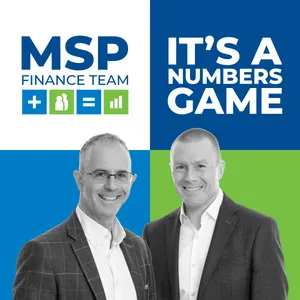
The MSP Finance Team Podcast "It's a Numbers Game" from the only financial management solution for MSPs in the UK, founded by former MSP-owners.
Latest Episodes
The most recent episodes — sign up to get AI-powered summaries of each one.
- 1 weeks ago32 min
EP142 – MSP Global, M&A, Specialisation and the Power of Meeting People with Christian Jaeger
Podcast hosts Daniel and Adam interview Christian (CloudFest/MSP Global) about parallels between cloud hosting and today's MSP M&A market, describing how private equity funding drove consolidation into a few large platforms while new niche specialists emerged and were later acquired. Christian argues MSPs should stay optimistic because customers still need trusted advisors amid security complexity and AI-driven change; MSP optimism in their "State of the MSP" report is around 4.3/5. For MSP owners, he suggests moving toward recurring subscription revenue and specialising by industry or capability to increase value to buyers. The conversation also explains why MSP Global exists: a vendor-diverse expo, strong education, and facilitated networking designed for introverts, with an international European focus (dozens of nations, including UK and US attendees). He advises attendees to use the event app, pre-plan sessions and meetings, be open about goals, and network proactively. 00:00 Pre Show Setup 00:33 Welcome And Agenda 01:09 Hosting Vs MSP Consolidation 04:53 Niche Startups After M&A 07:06 Why MSPs Stay Essential 10:59 Advice For MSP Owners 15:04 Why Another MSP Event 16:15 Event Pillars Expo Learn Network 19:45 Global Community And Partnerships 25:13 How To Maximise Attendance 28:40 Wrap Up And Final Tips Learn more and register for MSP Global at https://registration.mspglobal.com/registration?code=WELLING Connect with Christian Jaeger on LinkedIn by clicking here – <a href="https://www.linkedin.com/in/christianjae
- 3 weeks ago31 min
EP141 – How MSPs Can Turn Client Testimonials into a Marketing Engine with James Steel
In this podcast episode, Daniel interviews James Steel of MSP Testimonials about using video testimonials to create reusable marketing assets for MSPs, building on a prior episode about written case studies. They discuss common objections (not wanting to bother clients and not knowing what to do with the content) and emphasise that clients often respond positively when asked, especially with clear expectations and an easy process. James outlines a streamlined workflow: a warm intro, a simple email, a booking form (e.g., Calendly), and a recording guide focused on natural light and basic framing, with minimal gear. He explains a repeatable interview "story arc" (business context, prior pain, decision point, onboarding, results with numbers, and recommendation) and highlights the value of transcripts for repurposing into case studies, website pages, YouTube/LinkedIn posts, quotes, shorts, and SEO/chat-search visibility, encouraging MSPs to build a library of at least six stories and a company-wide culture of capturing positive feedback. 00:00 Welcome and Setup 00:29 Why Video Testimonials Matter 02:00 Overcoming the Ask Anxiety 04:08 Outreach Email and Booking Flow 06:48 Client Prep and Recording Guide 08:25 Putting Clients at Ease 11:35 Testimonial vs Case Study 13:02 On-Camera Setup and Coaching 16:13 Interview Questions Story Arc 18:24 Building a Testimonial Library 21:03 Distribution and SEO Repurposing 23:42 Tools for Shorts and Editing 26:23 Wrap Up and Resources <p class="M
- Aug 16, 202621 min
EP140 - Why MSP Security Needs to Be Simpler with Shaun Farrow of Arctic Wolf
Dan speaks with Sean Farrow of Arctic Wolf about the fast-changing MSP cybersecurity landscape and Sean's move from a 15-year MSP career, most recently as security practice lead, to the vendor side. Sean explains how gaps in an MSP's Microsoft-based SOC portfolio led him to Arctic Wolf for vendor-agnostic coverage, and discusses the pressure of keeping pace with shifting best-of-breed tools and integrations. They explore MSP commercial realities such as packaging, pricing, margin predictability, and the need to reduce operational friction by delivering outcome-driven, true-positive tickets. Sean outlines Arctic Wolf's vendor-neutral approach and security concierge service, and previews a streamlined MSP-only offering expected around September that aims to simplify scoping, improve price competitiveness, reduce requirements like a mandated network sensor, and introduce more on-demand digital concierge capabilities, while still pulling data across the attack surface. 00:00 Welcome and Setup 02:03 Sean MSP Background 03:41 Keeping Up With Security 05:07 Why Move Vendor Side 06:19 Pricing Sponsor Break 08:33 Life at Arctic Wolf MSP 11:22 Arctic Wolf MSP Model 12:55 Streamlined Offering Changes 16:10 Posture Improvement Examples 19:52 Launch Plans and Wrap Connect with Shaun Farrow on LinkedIn by clicking here – https://www.
- Aug 9, 202627 min
EP139 – The MSP Joiner-Leaver Problem Nobody Talks About with Cristian Bogdan from CooperBox
Cristian discusses how his MSP experience provisioning thousands of pandemic-era laptops exposed frequent mis-provisioned user accounts, often caused by clients submitting incomplete joiner requests (missing departments, licenses, and permissions). He highlights the larger risk on off-boarding, citing studies in the UK and USA where 50% of businesses reported former employees not being fully off-boarded, leaving residual access and ongoing licensing costs. Cristian describes a self-serve joiner/leaver platform designed to replace fragile ticket-based workflows with guided forms, integrations with HR platforms via APIs, a governance engine that validates requests against policies, an approval queue for final review, and tracking of what was provisioned to ensure consistent deprovisioning, including manual notes for non-SSO legacy apps. He explains MSP commercialisation options (embedded, add-on, hybrid), benefits for compliance evidence (e.g., ISO 2701), applicability to internal IT/co-managed environments, and notes the product was largely built using OpenAI Codex. 00:00 Welcome and Setup 00:24 MSP Origin Story 01:26 Joiner Provisioning Pain 02:36 Leavers and Residual Access 04:45 Automation and HR Integrations 08:03 Self-Serve Governance Workflow 09:41 Compliance Value and ROI 10:54 Pricing and Target Users 16:34 Governance Engine vs Scripts 18:18 AI Future and Readiness 20:19 Building with Codex 22:08 Wrap Up and Contact <sp
- Jul 28, 202632 min
EP138 – Can MSPs Really Buy and Sell Individual Clients with Matt Yesbeck from MSPX
Matt discusses MSPX, a marketplace for MSPs to buy and sell individual managed services contracts as an alternative to acquiring entire businesses. The platform helps MSPs divest non-profitable or non-strategic clients and enables buyers to shorten sales cycles by targeting specific verticals or geographies, with typical pricing around 6–8x MRR (sometimes higher with negotiation and longer remaining terms). MSPX uses escrow, a structured 30-day transition dashboard, a legally drafted customer notification email with a novation agreement requiring the buyer to honour the existing MSA, and protections if a customer declines the transfer. Sellers complete a detailed intake form; buyers can ask questions via in-platform chat. Pricing includes $149/year membership, 7% seller commission, 1–2% escrow fee for buyers, and an optional $599/year "first look" tier. The main challenge is limited awareness due to bootstrapped marketing. 00:00 Welcome and Setup 00:36 MSPX Marketplace Explained 02:06 Why Sell Contracts 03:39 Pricing Multiples and Examples 06:22 Valuation and Risk Controls 09:19 End Client Consent and Escrow 13:48 Communication and Transition Playbook 18:34 Contract Intake and Buyer Due Diligence 20:32 Growth Challenges and Pricing Plans 25:00 Global Expansion Use Cases 28:26 Wrap Up and How to Join Connect with Matt Yesbeck on LinkedIn by clicking here – <a href= "https://www.linkedin.com/
- Jul 19, 202635 min
EP137 - Why MSP Sales Decisions Aren't as Rational as You Think with Marino Vigliotti
Marino joins the podcast to discuss decision-making psychology for MSPs, emphasising that B2B buying differs from B2C because decisions require justification to others and are shaped by different goals. He describes common friction caused by misalignment between what MSPs pitch as "gains" and what business owners perceive as "losses," highlighting loss aversion, status quo bias, and sunk cost effects (including attachment to existing tools and the implied threat of admitting past mistakes). Using a probability-and-reward example, he explains biases in cognitive decision-making and how statistics can be misread without context. The conversation covers how asking too many questions increases cognitive load, why multi-quote requests often signal weak differentiation of the MSP (not just price), and why prescriptive sales scripts can feel inauthentic; trust, fit, and practice through more conversations are stressed. Marino recommends Kahneman's "Thinking, Fast and Slow" and Phil Agnew's "Nudge" 00:00 Welcome and Topic Setup 01:13 B2B vs B2C Decisions 02:26 Client Utility and Friction 06:11 Cognitive Biases Explained 10:39 Loss Aversion and Framing 14:26 Status Quo and Sunk Costs 17:47 Winning Quotes and Differentiation 20:31 Qualification and Buyer Psychology 23:38 Cognitive Load in Sales 25:44 Authenticity and Bounded Rationality 29:21 Resources and Closing Connect with Marino Vigliotti on LinkedIn b
- Jun 28, 202638 min
EP136 – How I F'd Up Three Acquisitions: Lessons From Apple MSP M&A with Justin Esgar
Justin returns to the podcast and discusses the challenges and lessons from acquiring three Apple-focused businesses since 2020 amid consolidation in the Apple consultant community and difficulty targeting Mac-using clients. He describes buying a small Iowa Apple consultancy with the seller kept on for business development, only to learn ownership doesn't equal sales skill and that ex-owners often clash as employees; the owner left after disputes, but clients were retained and served remotely. He then explains acquiring a Colorado Apple training company to build a B2C training channel, but it failed due to lack of focus, content upkeep, staff turnover, and the effort required to produce non-evergreen training. A larger Missouri consultancy/Apple authorised service provider acquisition brought clients and a strong team but also personality conflict and a payment-structure mistake that strained cash flow. Despite stress and missed pay-checks, Justin says the acquisitions ultimately improved finances, team quality, and growth, stressing the need for stronger financial position and deal-specific negotiation. 00:00 Welcome Back 01:15 M&A Episode Setup 02:06 Why Apple MSPs Consolidate 07:43 Three Acquisitions Overview 10:03 Deal One Iowa Lessons 12:02 Owner Clashes After Buyout 16:21 Deal Three Missouri Personality 18:25 Deal Two Training Misfire 27:37 Deal Structures Cash Flow Traps 32:50 Big Takeaways And Closing Connect with Justin Esgar on LinkedIn by clicking here – <span style= "font-siz
- Jun 14, 202626 min
EP135 – How MSPs Can Get Paid Faster with Tom Pope
Tom discusses Adfin as a "new, better GoCardless," arguing it offers stronger support, more competitive pricing, and a broader product: direct debits, cards (including Apple Pay/Google Pay), open banking, and bank transfers in one platform with integrated chasing and reconciliation via Xero. He says the market has lacked innovation for 15–20 years and positions Adfin's goal as getting businesses paid faster at lower cost through automation and AI-driven personalization (e.g., mandates and chasing from a user's own email domain). Adfin is UK-focused, accepts international card payments, and plans euro and USD bank transfers within six months. A key differentiator is an automated direct debit migration process that moves mandates from other providers in about five weeks without customer action beyond notification. The episode also covers VRP skepticism, configurable payment limits/rules, virtual accounts for automated bank transfer reconciliation, and optional surcharging for expensive business cards. 00:00 Are We The New GoCardless 00:42 Why Adfin Wins 02:03 Why Challenge The Incumbent 03:56 Startup Speed Vs Scale 05:16 Payments Platform Explained 05:58 International Payments Roadmap 07:07 Switching Without Risk 09:26 VRP And Open Banking Reality 13:14 MSP Workflow Examples In Xero 15:43 Chasing Emails And Payment Limits 17:47 High Value Bank Transfers 18:52 Apple Pay Fees And Surcharging 22:33 Wrap Up And How To Reach Adfin <p class="MsoNormal" style= "margin-bottom: 0cm; line-h
Get It's a Numbers Game summaries in your inbox
Free AI-powered daily recaps. Key takeaways, quotes, and mentions — in a 5-minute read.
Get Free Summaries →Free forever for up to 3 podcasts. No credit card required.
You Might Also Like
Listeners also like.

It's A Numbers Game with Ryan Girdusky
Analyzes sports betting through advanced metrics and interviews with professional gamblers and contest players.

BiggerPockets Business Podcast
Real entrepreneurs share practical advice on starting, growing, and selling businesses, covering hiring, marketing, and raising capital.
Financial Advisor Success
Real stories and strategies from top financial advisors and consultants on building and growing a successful advisory business.

The Investor's Podcast (We Study Billionaires) - The Investor’s Podcast Network
Analyzes the investment strategies of billionaire investors and explores lessons from legendary financiers on wealth, wisdom, and life.

The Money Mondays
Discusses investments, side hustles, and charity through interviews with entrepreneurs and celebrities in their homes and studios.
Proven Podcast
Charles Schwartz

Right About Now - Legendary Business Advice
Real talk from business founders and entrepreneurs about building companies, lessons learned, and what actually works in real-world ventures.

The Game with Alex Hormozi
A deep dive into scaling businesses, increasing customer value, and lessons from building wealth from $100M to $1B.

The Paul Morris Podcast
Entrepreneurs and investors share strategies for building wealth, scaling businesses, and leading high-performance teams.
Podmastery: podcasting insights and advice for indie creators
Practical podcasting advice for independent creators aiming to grow their audience and improve production.

Everyone Hates Marketers | No-BS Marketing & Brand Strategy Podcast
A marketing podcast offering practical insights on branding, strategy, and customer research from industry professionals.

The Amy Porterfield Show
Online business strategies and marketing tips from an experienced entrepreneur and industry experts to help grow sustainable digital businesses.
About It's a Numbers Game
The MSP Finance Team Podcast "It's a Numbers Game" from the only financial management solution for MSPs in the UK, founded by former MSP-owners.
Customized Recaps
AI-powered recaps with compact key takeaways, quotes, and insights.
Straight to Your Inbox
Get key takeaways from It's a Numbers Game in a 5-minute read.
Save Hours Every Week
Stay current on your favorite podcasts without falling behind.
Frequently Asked Questions
What is Podzilla's It's a Numbers Game daily summary?
It's a free AI-powered email that summarizes new episodes of It's a Numbers Game as soon as they're published. You get the key takeaways, notable quotes, and links & mentions — all in a quick read.
How does the It's a Numbers Game podcast summary work?
When a new episode drops, our AI transcribes and analyzes it, then generates a personalized summary tailored to your interests and profession. It's delivered to your inbox every morning.
Is this an official It's a Numbers Game product?
No. Podzilla is an independent service that summarizes publicly available podcast content. We're not affiliated with or endorsed by Daniel Welling.
Can I get summaries of other podcasts too?
Absolutely! The free plan covers up to 3 podcasts. Upgrade to Pro for 15, or Premium for 50. Browse our full catalog at /podcasts.
How often does It's a Numbers Game release new episodes?
It's a Numbers Game publishes weekly. Our AI generates a summary within hours of each new episode.
What topics does It's a Numbers Game cover?
It's a Numbers Game covers topics including Business, Management. Our AI identifies the specific themes in each episode and highlights what matters most to you.
Start getting It's a Numbers Game summaries tomorrow morning.
Free forever for up to 3 podcasts. No credit card required.
Free forever for up to 3 podcasts. No credit card required.