Free Daily Podcast Summary
It Turns Out: Daily Summaries Delivered
by Kara Miller
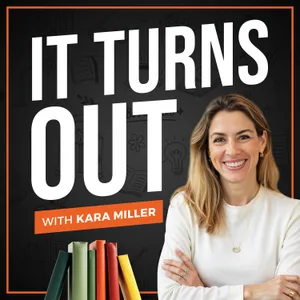
"It Turns Out" reveals the hidden realities reshaping our world—from how marriage impacts inequality to the way that the tax code has transformed wealth.Through conversations with experts who challenge conventional wisdom, award-winning journalist Kara Miller focuses each episode on groundbreaking research, changing how listeners see society, economics, technology, and human behavior. “It Turns Out” delves into data that directly impacts your life—whether you know it or not.You can reach us at info@itturnsoutshow.comWe gratefully acknowledge the support of the Alfred P. Sloan Foundation. This work was done under Grant No. G-2025-79141.
Latest Episodes
The most recent episodes — sign up to get AI-powered summaries of each one.
- Today45 min
Billionaires, popularity, and blackmail: the numbers that run your life
How popular are you? Mathematician Steven Strogatz takes us on a tour of the numbers that shape our lives - from how popular we are to how likely we are to develop cancer.We journey through Amazon warehouses and examine why extramarital affairs can prove so interesting (and useful) to an AI assistant.Strogatz is a co-author, with Alex Townsend, of Big Math: The Hidden Codes That Run Our World. And he’s a professor for the Public Understanding of Science and Mathematics at Cornell.This week, we’d love for you to fill out our listener survey, which allows you to give your input, and helps make the show better! The link is here.Please also subscribe to our Substack, which always gives you more context about our guests.Did you know you can also watch the show? Subscribe to the show on YouTube!
- 1 weeks ago28 min
Why Food Allergies Have Skyrocketed (And How to Prevent Them)
Before the 1950s, few people had allergies. But since then, allergies - and autoimmune diseases - have surged. Why?Dr. Andrew Wang from the Yale School of Medicine and the Food Allergy Science Initiative explains this enormous uptick in allergies - and the recent shift doctors made that actually helped allergies fall.Plus, the search for medicines that can help people eat the food they’re allergic to, as well as medicines that might be able to prevent allergies in the first place.If you want to know more about the research we discussed in this show - plus links to crucial studies - subscribe to our Substack, which always gives you more context about each episode.And please join Kara for a live webinar on the economics of falling immigration - in partnership with The Journalist’s Resource from Harvard and EconoFact from Tufts. November 9, 12pm Eastern. You can register here.
- 4 weeks ago44 min
Forget class differences. How age divides America.
How did the oldest Americans become so rich and powerful? Yale’s Samuel Moyn talks about the growing age divide in America.Americans over 54 now hold 70% of the nation’s wealth, while those under 40 scrape by on just 5%. Moyn - the author of Gerontocracy In America - explains how older Americans gained durable control over the economy, the housing market, and government spending.He discusses generational gridlock, low-key rage, and aging politicians. And he explains the structural shifts need to prevent younger generations from being permanently locked out of the American dream.Please write us a review, and help others discover the show.Did you know you can also watch the show? Subscribe to the show on YouTube!You can subscribe to our Substack here.Thanks to Workhuman for their support of It Turns Out. You can find their new documentary about how work has changed here.
- Oct 2, 202635 min
Elizabeth Kolbert on why we stopped talking about climate change
As heat waves, droughts, and surging insurance costs reshape American life, climate change has almost vanished from the national political debate. Why?On this episode of It Turns Out, Pulitzer-Prize–winning author and New Yorker staff writer Elizabeth Kolbert explains why politicians on both sides of the aisle are steering clear of the topic. At the EPA, Lee Zeldin has shed jobs and regulations - including on toxins like mercury. And Democrats appear to be suffering from what one lawmaker calls “climate silencing.” The physical consequences of climate change are accelerating. So why have leaders decided not to talk about it?If you're interested in our show on how climate-driven insurance costs reshape where Americans live - which gets mentioned in the conversation with Kolbert - you can find it on Apple Podcasts, Spotify, and YouTube.Please subscribe to our newsletter on Substack, if you want more info about each show.Did you know you can also watch the show? Subscribe to the show on YouTube!
- Sep 18, 202643 min
Bosses ordered people back to work. Where are they?
Despite endless corporate press releases and return-to-office mandates, the data reveals a surprising truth: the number of days worked from home has remained completely flat since 2023.Stanford economist Nick Bloom tells Kara what's going on, who's missing, and what the future holds. He also explains how work is impacting mental health, productivity, real estate prices, young workers, and - if you can believe it - fertility.In the show, we reference our show on "Should Americans have more kids?." You can find it here.You can subscribe to our Substack here.Did you know you can also watch the show? Subscribe to the show on YouTube!
- Sep 4, 202634 min
How do you get rich in America? Not the way you think.
There's a big spotlight - and a lot of resistance to - billionaires, from Elon Musk to Larry Ellison. But we’re missing an under-the-radar revolution in American wealth.The country is minting far more multimillionaires than it used to: People who make money in ways you might never think about, in amounts you can barely dream of. And these folks tend to be anonymous - but incredibly influential - urging politicians to shift the tax burden away from them. Will that pull the ladder up for the next generation?Princeton’s Owen Zidar, co-author of the new book The Everywhere Millionaire, joins Kara to talk about what we miss about wealth in America (plus, renting out Versailles for your wedding).Subscribe to our newsletter on Substack for more about this show - and every show.Did you know you can also watch the show? Subscribe to the show on YouTube!
- Aug 21, 202637 min
How the rich escaped taxation. Ray Madoff’s argument, revisited.
Over the last 40 years, many of the wealthiest Americans have effectively seceded from taxation.While regular Americans - from teachers to surgeons - often pay between 25 and 50% of their income in taxes, lots of billionaires pay 5% (or less) in taxes each year. And their heirs can inherit fortunes tax free.How have we let this happen? And why don't more people know about it?Boston College scholar Ray Madoff - author of The Second Estate - talks about what's going on.Did you know you can also watch the show? Subscribe to the show on YouTube!Subscribe to our newsletter on Substack!
- Aug 7, 202644 min
How marriage divides us. Melissa Kearney’s case, revisited
Why do affluent suburbs in Boston and Houston vote completely differently, yet share one surprising thing in common? Economist Melissa Kearney, author of The Two-Parent Privilege, reveals that one of America's most consequential divides isn't about red states versus blue states. It's about whether you're raising kids with a partner, and the economic advantages are stark and surprising. Subscribe to our newsletter on Substack, for more on Kearney and her work.Did you know you can also watch the show? Subscribe to the show on YouTube!
Get It Turns Out summaries in your inbox
Free AI-powered daily recaps. Key takeaways, quotes, and mentions — in a 5-minute read.
Get Free Summaries →Free forever for up to 3 podcasts. No credit card required.
You Might Also Like
Listeners also like.

Inquiring Minds
Explores the intersection of science and society through critical thinking and in-depth analysis.

The Uncertain Hour
Explores how U.S. economic policies and for-profit welfare programs contribute to inequality and shape financial outcomes.
Other People's Pockets
Real people share personal stories about earning, spending, and building wealth in candid financial interviews.

Good Life Project
Deep conversations about building a meaningful life through midlife reinventions, grounded in science and human experience.
Planet Money
Explains how economic forces influence everyday life and global events through storytelling and deep dives into surprising topics.
What We Spend
People from different financial backgrounds share their income, expenses, and personal relationships with money over one revealing week.

On the Media
Analyzes media narratives, misinformation, and bias to help listeners understand how news is shaped and reported.

After the Fact
Explores data and trends shaping public health, environment, and economic issues through expert analysis and nonpartisan discussion.

Interesting Times
Explores global shifts and emerging trends through interviews and analysis on the evolving world order.
Optimist Economy
Economists analyze U.S. economic challenges like housing, healthcare, and retirement, pairing data and history with practical solutions.
It's Been a Minute
Brittany Luse explores the cultural, political, and social forces shaping identity, technology, health, and pop culture.

So, Get This
iHeartPodcasts and Bubbler
About It Turns Out
"It Turns Out" reveals the hidden realities reshaping our world—from how marriage impacts inequality to the way that the tax code has transformed wealth.Through conversations with experts who challenge conventional wisdom, award-winning journalist Kara Miller focuses each episode on groundbreaking research, changing how listeners see society, economics, technology, and human behavior. “It Turns Out” delves into data that directly impacts your life—whether you know it or not.You can reach us at info@itturnsoutshow.comWe gratefully acknowledge the support of the Alfred P. Sloan Foundation. This work was done under Grant No. G-2025-79141.
Customized Recaps
AI-powered recaps with compact key takeaways, quotes, and insights.
Straight to Your Inbox
Get key takeaways from It Turns Out in a 5-minute read.
Save Hours Every Week
Stay current on your favorite podcasts without falling behind.
Frequently Asked Questions
What is Podzilla's It Turns Out daily summary?
It's a free AI-powered email that summarizes new episodes of It Turns Out as soon as they're published. You get the key takeaways, notable quotes, and links & mentions — all in a quick read.
How does the It Turns Out podcast summary work?
When a new episode drops, our AI transcribes and analyzes it, then generates a personalized summary tailored to your interests and profession. It's delivered to your inbox every morning.
Is this an official It Turns Out product?
No. Podzilla is an independent service that summarizes publicly available podcast content. We're not affiliated with or endorsed by Kara Miller.
Can I get summaries of other podcasts too?
Absolutely! The free plan covers up to 3 podcasts, any in the catalog. Basic raises that to 15, Pro to 40 and Max to 100. Browse our full catalog at /podcasts.
How often does It Turns Out release new episodes?
It Turns Out publishes biweekly. Our AI generates a summary within hours of each new episode.
What topics does It Turns Out cover?
It Turns Out covers topics including Culture, Society & Culture. Our AI identifies the specific themes in each episode and highlights what matters most to you.
Start getting It Turns Out summaries tomorrow morning.
Free forever for up to 3 podcasts. No credit card required.
Free forever for up to 3 podcasts. No credit card required.