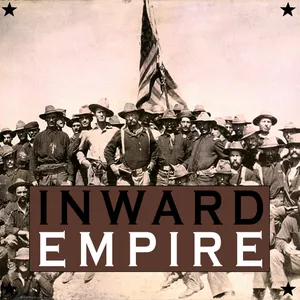
Free Daily Podcast Summary
Inward Empire: Daily Summaries Delivered
by Inward Empire
Get key takeaways, quotes, and insights from Inward Empire in a 5-minute read. Delivered straight to your inbox.
Latest Episodes
The most recent episodes — sign up to get AI-powered summaries of each one.
- Sep 1, 202559 min
Birth of the Replicant
Something strange happened in America at the turn of the 20th century: a society based on individualism began to celebrate identical, replicable people. This episode tells the story of two men who drove this profound change in American culture. One was a business consultant named Frederick Winslow Taylor. The other was an artist named Charles Dana Gibson. Each created an identical human being, a replicant who would serve the needs of the economy. Taylor's replicant was Schmidt, a worker who could be "scientifically managed" for limitless productivity. Gibson's was the Gibson Girl, a woman who would be liberated by consuming products. Together, the replicants would change forever the way Americans thought about their place in a society based on limitless consumption.
- Jun 27, 20241h 35m
Selling Out
In 1968, Jerry Rubin was sure that the baby boomers were the vanguard of a second American Revolution. A leader of the countercultural Yippies, he pioneered a new kind of absurdist political theater aimed at turning the young against the establishment: exorcising evil spirits from the Pentagon, throwing blood at ambassadors, and nominating a pig for president. But by 1980, Rubin had morphed into a New Age yuppie who believed that health foods, inner well-being, and the power of money would save America. In this episode, we'll explore Rubin's transformation - and what his story reveals about the demise of '60s idealism.
- Jul 18, 20201h 53m
The Diem Experiment (Part Five)
In November 1963, a faction of South Vietnamese generals overthrew and assassinated Ngo Dinh Diem with the support of the Kennedy administration. In the final part of this series, we'll explore how infighting, ambition, and miscommunication sealed the fate of the Diem Experiment and set South Vietnam on the path to disaster.
- Apr 12, 20201h 28m
The Diem Experiment (Part Four)
After destroying his rivals in the Battle of Saigon, President Diem sets out to build a new nation in South Vietnam. On the one hand he offers land reform and a glittering new middle class, built on a tide of American aid. On the other hand is a ruthless anti-communist campaign of denunciations, torture, and re-education camps. A sprawling cast of characters comes together in this complex chapter: Saigon oligarchs, French philosophers, American New Dealers, landlords, peasants, Viet Cong guerillas, communist double agents, and rebellious paratroopers all help to shape the fate of the Diem experiment in its tumultuous early years.
- Dec 25, 20191h 4m
The Diem Experiment (Part Three)
In the 1950s, most Americans viewed the Cold War as a battle between freedom and tyranny. There was just one problem: how to explain alliances with anti-communist authoritarians like Ngo Dinh Diem. In this episode, we'll explore how American politicians, lobbyists, and one very enterprising Navy doctor imagined the new Republic of Vietnam as a bastion of democracy and freedom led by "a mandarin in a sharkskin suit who's upsetting the Red timetable."
- Jul 17, 20191h 18m
The Diem Experiment (Part Two)
Back in Saigon in 1954, Ngo Dinh Diem becomes premier of a country shattered by war and partition. With reunification elections looming, Diem barely controls the grounds of his own palace. Hostile Frenchmen, religious militias, a crime syndicate, ex-emperor Bao Dai, and Diem's own military conspire to end his rule before it can begin. Baffled American diplomats do political triage to avert a coup, urging Diem to bring his rivals to the table. But the new premier has other plans...
- Apr 24, 20191h 29m
The Diem Experiment (Part One)
For nine years at the height of the Cold War, America's global crusade against communism rested on the shoulders of Vietnamese leader Ngo Dinh Diem. Hailed as a "miracle man" who brought the blessings of democracy and development to South Vietnam, Diem became a celebrity. But his miracles had a steep price. As his regime soaked up millions of dollars in American aid and military support, it ruthlessly suppressed its enemies, devastated villages, and failed to cope with a rising communist insurgency. As the Diem experiment began to absorb US prestige, money, and lives, Americans began to question whether their adventure in Southeast Asia was worth the cost...Part one of this series explores Diem's rise to power and the origins of America's involvement in Vietnam. Diem tries to chart a "third way" between communism and empire; French, Japanese, and Americans vie for influence; and Vietnamese factions battle for the future of their country as a hapless emperor watches.
- Jul 13, 20181h 37m
Soldiers of Capital (Part Two)
After sending the Molly Maguires to the scaffold in 1877, Pinkerton's National Detective Agency plunged headlong into America's labor conflict. At the vanguard of its war on organized labor was the Protective Patrol, an armed force that deployed to over seventy major strikes. Was the Patrol a lawkeeping elite, as the Agency and its employers claimed? Or, as labor leaders and reformers argued, was it a gang of cold-blooded, mercenary killers? After a disastrous intervention in 1892, testimony in a dramatic Congressional hearing revealed that both sides might have been wrong all along...
Get Inward Empire summaries in your inbox
Free AI-powered daily recaps. Key takeaways, quotes, and mentions — in a 5-minute read.
Get Free Summaries →Free forever for up to 3 podcasts. No credit card required.
You Might Also Like
Listeners also like.
Empire: World History
Goalhanger

The Inward
theinward
Empire Files
Empire Files
Blowback
Blowback
EMPIRE
Alex Klemmer

American Exception
Aaron Good

EXIT Podcast
Bennett's Phylactery
Around The Empire
Joanne Leon

Podcast - Geopolitics & Empire
Geopolitics & Empire

Geopolitics & Empire
Geopolitics & Empire

Inside Out
InsideOut_Podcast
The EI Podcast
Engelsberg Ideas
About Inward Empire
"The past is another country; they do things differently there."Inward Empire explores the role of ideas and ideology in American history -- how the surface of actions and events can be shaped by undercurrents of thought and belief. Accessible and thoroughly researched, each episode is a window into a world that is both profoundly foreign and strikingly similar to our own.Visit www.inwardempirepodcast.wordpress.com for pictures, maps, updates on the show, and more!
Customized Recaps
AI-powered recaps with compact key takeaways, quotes, and insights.
Straight to Your Inbox
Get key takeaways from Inward Empire in a 5-minute read.
Save Hours Every Week
Stay current on your favorite podcasts without falling behind.
Frequently Asked Questions
What is Podzilla's Inward Empire daily summary?
It's a free AI-powered email that summarizes new episodes of Inward Empire as soon as they're published. You get the key takeaways, notable quotes, and links & mentions — all in a quick read.
How does the Inward Empire podcast summary work?
When a new episode drops, our AI transcribes and analyzes it, then generates a personalized summary tailored to your interests and profession. It's delivered to your inbox every morning.
Is this an official Inward Empire product?
No. Podzilla is an independent service that summarizes publicly available podcast content. We're not affiliated with or endorsed by Inward Empire.
Can I get summaries of other podcasts too?
Absolutely! The free plan covers up to 3 podcasts. Upgrade to Pro for 15, or Premium for 50. Browse our full catalog at /podcasts.
What topics does Inward Empire cover?
Inward Empire covers topics including History. Our AI identifies the specific themes in each episode and highlights what matters most to you.
Start getting Inward Empire summaries tomorrow morning.
Free forever for up to 3 podcasts. No credit card required.
Free forever for up to 3 podcasts. No credit card required.