
States can know the truth, but can't show it | Kate Millar
In this episode of Intelligence Spotlight, Qais Alamdar speaks with Kate Millar, an intelligence and communications specialist, about how modern conflict is increasingly shaped in the grey zone, where states and non-state actors pursue strategic aims while staying below the clearest legal thresholds. They unpack why attribution has become the central battleground for accountability, and why OSINT has grown from a niche practice into a public-facing tool used to close the gap between what is suspected and what can be proven. The conversation looks at the limits of international law in hybrid warfare, the difference between evidence and usable proof, and why context matters as much as verification in open-source investigations. Millar argues for a purpose-driven approach to OSINT: not just collecting material, but building narratives and evidentiary chains that can survive scrutiny and lead to consequences. She also reflects on the grassroots energy that pushed OSINT forward, particularly as trust in traditional institutions has frayed, and closes with thoughts on where the field is heading and what keeps practitioners committed to difficult work.Note: Intel Focus is run entirely by volunteers. If you’d like to support our work, contact us at info@intelfocus.org
Podzilla Summary coming soon
Sign up to get notified when the full AI-powered summary is ready.
Free forever for up to 3 podcasts. No credit card required.
Listen to This Episode
More from Intel Focus: The Intelligence Spotlight Series

How to think like an intelligence analyst | John Hall
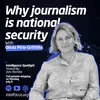
Why journalism is national security | Olivia Pirie-Griffiths

“These values are not idealistic”: can the EU still defend its principles? | Dr Berit Ebert

Why are many fact-checkers less optimistic today | Alba Tobella
Get summaries like this every morning.
Free AI-powered recaps of Intel Focus: The Intelligence Spotlight Series and your other favorite podcasts, delivered to your inbox.
Free forever for up to 3 podcasts. No credit card required.