Free Daily Podcast Summary
Instant Classics: Daily Summaries Delivered
by Vespucci
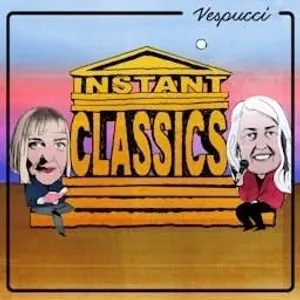
Join world-renowned classicist Mary Beard and Guardian chief culture writer Charlotte Higgins for Instant Classics — the weekly podcast that proves ancient history is still relevant. Ancient stories, modern twists… and no degree in Classics required.
Latest Episodes
The most recent episodes — sign up to get AI-powered summaries of each one.
- 3 days ago59 min
How Homer’s Odyssey Conquered the English-speaking World
Last episode, Mary and Charlotte looked at how Homer’s Odyssey was reinterpreted in the Ancient World by writers like Euripides, Virgil and Ovid. In this episode, they show how it shaped English fiction - from Shakespeare through to Madeline Miller. They are joined by Jonty Claypole - Instant Classics producer and co-host of the Secret Life of Books podcast. One of the great turning points of English literature was George Chapman’s translations of Homer in the 1590s and 1600s which introduced a new generation to Homer’s writing - including Shakespeare who seems to respond to Chapman (and Homer) in plays like Troilus and Cressida and The Tempest. A hundred years later, the novel emerges with a series of books - Daniel Defoe’s Robinson Crusoe, Jonathan Swift’s Gulliver’s Travels and Henry Fielding’s Joseph Andrews - which are implicitly, and sometimes explicitly, responses to The Odyssey. Homer also inspired some of the greatest poems in the English language, including John Keats’ On First Looking Into Chapman’s Homer and Tennyson’s Ulysses. Finally, Mary, Charlotte and Jonty look at how The Odyssey continues to inspire revision and reinterpretation - whether Toni Morrison’s Song of Solomon, Derek Walcott’s Omeros, Margaret Atwood’s Penelopiad or Madeline Miller’s Circe. Further reading: Richard Holmes’ recent book The Boundless Deep: Young Tennyson, Science and the Crisis of Belief (Harper Collins, 2025) contains a brilliant description of Tennyson’s Ulysses and the circumstances behind its competition. Several modern versions of Homer are discussed by Henry Power in his Homer-Haunted: the many after-lives of an ancient poet (Bloomsbury, 2026) Edith Hall explores how the various themes of the Odyssey have been adapted by many modern authors in The Return of Ulysses: A cultural history of Homer’s Odyssey (free online). Jonty’s podcast is Secret Life of Books, which he co-hosts with Sophie Gee. Recent episodes go into more depth on some of the topics above - including whole episodes on Tennyson’s Ulysses and James Joyce’s Ulysses. There is a free online text of Chapman’s Homer here @instaclassicpod for Insta, TikTok and YouTube @insta_classics for X email: instantclassicspod@gmail.com Instant Classics handmade by Vespucci Producer: Jonty Claypole Video Editor: Jak Ford Theme music: Casey Gibson Learn more about your ad choices. Visit podcastchoices.com/adchoices
- 1 weeks ago53 min
How Homer's Odyssey Conquered the Ancient World
Ever since the Odyssey was composed, people have retold the story, played with it or used it as a departure point for similar or related stories. In this episode, Mary and Charlotte look at what happened next. How the Odyssey inspired other writers long before Christopher Nolan thought of adapting it for the big screen. As now, the ancients were drawn to certain episodes more than others. One was the cyclops, who becomes the unlikely subject of a satyr play (think Benny Hill sex comedy) by the playwright Euripides in the 5th century BCE. two hundred years later, the poet Theocritus imagines the cyclops as an articulate, love-sick shepherd. Meanwhile, Apollonius of Rhodes responded to the epic scope of Homer’s story with the Argonautica - a famous story about Jason and his crew of Argonauts searching for the Golden Fleece. Roman authors were equally drawn to the Odyssey. Virgil used it as a template for a foundation myth for Rome - a Trojan prince leaves Troy, experiences various adventures, including a trip to the underworld, and ends by founding Rome. Ovid, who takes a rather less referential approach to the Odyssey in his Metamorphoses, has a brilliant scene where he retells the Circe story from the point of view of Odysseus’ men as they are turned into pigs. Further reading The Argonautica by Apollonius of Rhodes is available in World’s Classics and Penguin Classics English translations Plutarch’s Gryllus is available online in translation Theocritus’s Idylls are available in translation online - Idyll 11 is the Cyclops poem Ovid’s Metamorphoses can be found in many translations, and also a decent one online. Circe and her pigs appear in book 14 Virgil’s Aeneid – there are many recent translations including by Sarah Ruden from Yale and online. @instaclassicpod for Insta, TikTok and YouTube @insta_classics for X email: instantclassicspod@gmail.com Instant Classics handmade by Vespucci Producer: Jonty Claypole Video Editor: Jak Ford Theme music: Casey Gibson Learn more about your ad choices. Visit podcastchoices.com/adchoices
- 2 weeks ago54 min
The Vestal Virgins - just how virginal were they?
Few elements of ancient Rome have inspired quite such lurid speculation – by the Romans as well as ourselves – as the vestal virgins. Mary and Charlotte enter the (imaginary) temple of Vesta to separate fact from myth. The Vestal Virgins were six (at any given time) priestesses who tended the eternal flame at the Temple of Vesta - goddess of hearth, home and family. As their name suggests, they weren’t allowed to have sex, although could retire from duties (and marry) at the age of 30. Maintaining chastity was evidently a challenge of the job - or perceived as one - because several vestals were put to death for breaking their vows over the centuries. In exchange for this life of piety, they enjoyed certain privileges - such as being able to sit in the front row of the colosseum - and were power-brokers in Rome, even looking after Julius Caesar’s will (for any Dune fans, think Bene Gesserit!) Charlotte grills Mary about an early article she wrote on the Vestals in 1980, in which she argued that the role of the virgins wasn’t to adhere to traditional notions of female purity, but actually to challenge them - the vestals shared privileges unique to married women, unmarried women and men. They were both gendered and ungendered, which is what makes them so compelling. Fifteen years later, Mary wrote another article which took (slight) issue with her earlier one, questioning to what extent the Romans even had ‘traditional notions’ of gender. Further reading Mary’s landmark (this is Charlotte’s editorialising!) article on the Vestal Virgins (“The sexual status of Vestal Virgins”) was published in the Journal of Roman Studies 1980; her reassessment is in R Hawley and B Levick (eds), Women in Antiquity: New Assessments (Routledge, pb, 1995) Booklength studies of the Vestals include: Robin Wildfang, Rome’s Vestal Virgins (Routledge, pb, 2006) S. A. Takacs, Vestal Virgins, Sibyls and Matrons (UTexas Press, pb, 2008) Ariadne Staples, From Good Goddess to Vestal Virgins (Routledge, pb, 2012) For their portraits: Molly Lindner, Portraits of the Vestal Virgins (UMichigan Press, 2015) At the time she wrote her first article on the Vestals, Mary was very influenced by Mary Douglas, Purity and Danger (Routledge, pb, reissued 2002; originally published 1966) @instaclassicpod for Insta, TikTok and YouTube@insta_classics for Xemail: instantclassicspod@gmail.com Instant Classics handmade by Vespucci Producer: Jonty Claypole Video Editor: Jak Ford Theme music: Casey Gibson Learn more about your ad choices. Visit podcastchoices.com/adchoices
- 3 weeks ago54 min
Classic Chats: Robert Harris on ‘Agrippa’
Mary and Charlotte talk to best-selling author Robert Harris about his new novel ‘Agrippa’. Robert Harris has published 16 novels, of which nine have been made into films, including The Ghost Writer, Enigma and the Oscar-winning papal thriller Conclave. Five of Robert’s novels are set in Ancient Rome: the Cicero Trilogy, Pompeii and Agrippa. Robert discovered Agrippa while researching the Cicero Trilogy and became increasingly interested in this decisive, but largely forgotten figure, whose legacy is everywhere in Ancient Rome. He describes what interested him in the story: the friendship between the aristocratic Augustus and his plebeian sidekick, and the tension that inevitably developed between the two. He compares Augustus and Agrippa to Tony Blair and Gordon Brown, only with higher stakes. Further reading: We covered the history of this period in the last episode, with further reading in the shownotes. If you haven’t read Robert’s other Roman novels, they are all available in paperback: Pompeii (Arrow pb, 2009) (A younger Mary Beard “fact-checked for the hard-back version of this – though didn’t find many mistakes!) The Cicero Trilogy, Imperium, Lustrum and Dictator (Arrow pb, 2009, 2010, 2016) Aprippa is published in hardback by Hutchinson Heinemann, 27 August, 2026 @instaclassicpod for Insta, TikTok and YouTube@insta_classics for Xemail: instantclassicspod@gmail.com Instant Classics handmade by Vespucci Producer: Jonty Claypole Video Editor: Jak Ford Theme music: Casey Gibson Learn more about your ad choices. Visit podcastchoices.com/adchoices
- Aug 20, 202654 min
Marcus Agrippa: Power behind the throne
Of all the Roman Emperors, Augustus has the reputation of being the most… well… august. That is to say, competent, level-headed and judicious. Not to mention one of the few who died of natural causes. But, according to Mary and Charlotte, the main reason Augustus got anything done is because he had a secret weapon in the form of Marcus Agrippa. We don’t know much about Marcus Agrippa’s early life, because he didn’t come from the aristocracy, but by the time he was thirty Augustus couldn’t do much without him. There is evidence that Agrippa managed the battles for which Augustus is famous, including the Battle of Actium, while Augustus pulled another sickie. When not defeating Rome’s enemies, Agrippa put a great deal of energy into building works. He constructed baths, temples (including the original Pantheon) and aqueducts. There are even stories of him getting onto a boat and rowing amidst the faeces of the Cloaca Maxima - Rome’s sewage system - to oversee improvements. While Agrippa did not come from the upper classes, he ended up there. He is buried with the imperial family in the mausoleum of Augustus (which you can still visit) and his great-grandson Nero became emperor. Perhaps, when we call some great figure ‘august’, we should call them ‘agrippan’ instead! Further reading: Lindsay Powell, Marcus Agrippa: Right-hand man of Caesar Augustus (Pen and Sword, pb, 2023) is the fullest recent biography of Agrippa (otherwise, in English, you have to go back to the 1930s) For the archaeology, the Pantheon in Rome remains Agrippa’s greatest and most visible monument, with his name prominently displayed (albeit rebuilt by the emperor Hadrian, probably to a new plan). The probable residence of Agrippa and Julia in Rome lies underneath the later, Renaissance, Villa Farnesina near the Tiber bank. Both were exquisitely decorated. You can still see Raphael's designs in the later villa. Most of the major ancient paintings from Agrippa’s property have been removed to the Palazzo Massimo museum. The archaeology is briefly discussed here: https://www.digitalaugustanrome.org/records/villa-farnesina/ Paintings from another villa owned by Agrippa, at Boscotrecase outside Pompeii, can be seen in the Met Museum in New York. @instaclassicpod for Insta, TikTok and YouTube @insta_classics for X email: instantclassicspod@gmail.com Instant Classics handmade by Vespucci Producer: Jonty Claypole Video Editor: Jak Ford Theme music: Casey Gibson Learn more about your ad choices. Visit podcastchoices.com/adchoices
- Aug 18, 202647 min
BONUS Emily Wilson on translating the Odyssey
A few months back we spoke to Emily Wilson on our subscriber series Exploring the Odyssey. Emily has been in the news recently, partly because her acclaimed 2017 translation of The Odyssey inspired Christopher Nolan, and partly because her criticisms of Nolan’s film have sparked debate. So we thought we would share the episode here on Instant Classics. In the episode, Emily tells Mary and Charlotte why translating from Ancient Greek to modern English is so difficult, the choices she had to make from the outset and the challenges she encountered once underway. In a surprise revelation, Emily confesses that she enjoyed the process so much she has decided to do it all over again and will ultimately publish a SECOND translation of The Odyssey - which is the equivalent of Odysseus spending ten years getting home only to decide he enjoyed the experience so much he’s going to repeat the whole trip. Further reading: One of Mary’s favourite ancient “reflections” on the story of Odysseus (inc the Laestrygonians) is the so-called “Odyssey landscapes” found in Rome, an ancient depiction of this part of the Odyssey story. If you are interested in digging down into different translations, Patrick Reardon has a useful online essay, which compares passages of Emily’s translation with Daniel Mendelsohn’s and Richmond Lattimore’s. The Odyssey, translated by Emily Wilson, is published in paperback by Norton Her volume of essays, Crossing the Wine-dark Sea, is published by Profile Books. Instant Classics handmade by Vespucci Producer: Jonty Claypole Video Editor: Jak Ford Theme music: Casey Gibson Learn more about your ad choices. Visit podcastchoices.com/adchoices
- Aug 13, 20261h 7m
Classic Chats: Charlotte Higgins on Ukrainian Lessons
Mary talks to Charlotte about her book Ukrainian Lessons: Art in a Time of War. For the last four years, Charlotte has returned repeatedly to Ukraine to report on the cultural life of the nation as it defends itself against Russia. Part of Putin’s attempts to legitimise the war lies in an age-old argument that Ukraine is simply an extension, or part of, Russia itself. Art and culture have always played a critical role in Ukraine’s identity and self-determinism –and never more so than now. Charlotte talks about what first took her to Ukraine in 2022, some of what she has learned over the last four years, and how reading the classics, especially Homer and Greek tragedy, have helped her make sense of the current situation. And Mary and Charlotte discuss Ukraine’s classical past: histories of Ukraine often start with Herodotus and his account of the Scythians of the steppe; and the Black Sea coast, and Crimea, are dotted with some of the earliest Greek “colonies” or trading emporia. Further reading Charlotte’s book Ukrainian Lessons: Art in a Time of War (Cape) is published on 20 August. Charlotte and Mary also mentioned Oleksandr Mykhed’s book The Language of War (Penguin, paperback, 2026), and Cassandra by Lesia Ukrainka (HURI, 2023) On the classical connections of Ukraine, there is a good introduction to the ruins of Olbia. Euripides’ fifth-century play, Iphigeneia in Tauris (Iphigeneia among the Taurians) is set in the Crimean peninsula (English translations widely available in Oxford World’s Classics, Penguin Classics etc). A BBC news article about the return of Scythian artefacts to Kyiv after a decade of court hearings. @instaclassicpod for Insta, TikTok and YouTube @insta_classics for X email: instantclassicspod@gmail.com Instant Classics handmade by Vespucci Producer: Jonty Claypole Video Editor: Jak Ford Theme music: Casey Gibson Learn more about your ad choices. Visit podcastchoices.com/adchoices
- Aug 10, 202611 min
BONUS: Which Translation of the Odyssey should I read?
With the world gripped by Odyssey fever, Mary and Charlotte keep being asked the same question: which translation should I read? So here is a quick bonus episode to help you decide. Mary and Charlotte cover the waterfront of the modern translations (Emily Wilson and Daniel Mendelsohn), but also celebrate some past classics, like E.V. Rieu’s. In the end, the simple answer is don’t worry - work with what you’ve got most easily at hand. Any translation that has been printed by a major publisher has its merits. Further reading: The two recent translations we discuss at the start are: Emily Wilson (translator), The Odyssey (W. W. Norton and co) Daniel Mendelsohn (translator), The Odyssey (Chicago UP and Penguin Classics) Both are available in paperback. Earlier translations which you might enjoy, and trust, include:: Richmond Lattimore (Harper Perennial Modern Classics) Robert Fagles (Penguin Classics) Robert Fitzgerald (Farrar, Straus & Giroux) Peter Green (University of California Press) E. V. Rieu (Penguin Classics) Charlotte referred to Matthew Arnold’s lectures from the 1860s, “On Translating Homer” @instaclassicpod for Insta, TikTok and YouTube @insta_classics for X email: instantclassicspod@gmail.com Instant Classics handmade by Vespucci Producer: Jonty Claypole DOP - Ben Warburton Video Editor: Tom Green Theme music: Casey Gibson Learn more about your ad choices. Visit podcastchoices.com/adchoices
Get Instant Classics summaries in your inbox
Free AI-powered daily recaps. Key takeaways, quotes, and mentions — in a 5-minute read.
Get Free Summaries →Free forever for up to 3 podcasts. No credit card required.
You Might Also Like
Listeners also like.

HistoryExtra podcast
Covers global history from ancient to modern times through expert interviews on events, figures, and eras.
The Ancients
Explores ancient history through expert interviews, covering topics from Neolithic Britain to the fall of Rome.
Natalie Haynes Stands Up for the Classics
A comedian reimagines ancient Greek and Roman myths and figures through witty stand-up routines.

Classical Stuff You Should Know
Three hosts explore ancient history and classical culture with humor and insight.
Greeking Out from National Geographic Kids
Kid-friendly retellings of ancient Greek myths featuring gods, goddesses, monsters, and heroes.
Cost of Glory
Dramatic retellings of Plutarch’s biographies explore the lives and moral struggles of ancient leaders shaping Western civilization.
Ancient Civilisations
Explores the history, people, and achievements of ancient civilizations through narrative storytelling.

Stuff You Missed in History Class
Two hosts explore overlooked and unusual historical events and figures with detailed storytelling and research.
The History of Egypt Podcast
A chronological exploration of ancient Egyptian history from its mythological origins to the end of the pharaonic era.
Tides of History
Explores how historical events and forces have shaped modern societies, cultures, and global systems.
The History of Literature
A deep dive into world literature, exploring great works from ancient epics to modern classics.

History Unplugged Podcast
Features interviews with history authors and answers to listener questions on a wide range of historical topics.
About Instant Classics
Join world-renowned classicist Mary Beard and Guardian chief culture writer Charlotte Higgins for Instant Classics — the weekly podcast that proves ancient history is still relevant. Ancient stories, modern twists… and no degree in Classics required.
Customized Recaps
AI-powered recaps with compact key takeaways, quotes, and insights.
Straight to Your Inbox
Get key takeaways from Instant Classics in a 5-minute read.
Save Hours Every Week
Stay current on your favorite podcasts without falling behind.
Frequently Asked Questions
What is Podzilla's Instant Classics daily summary?
It's a free AI-powered email that summarizes new episodes of Instant Classics as soon as they're published. You get the key takeaways, notable quotes, and links & mentions — all in a quick read.
How does the Instant Classics podcast summary work?
When a new episode drops, our AI transcribes and analyzes it, then generates a personalized summary tailored to your interests and profession. It's delivered to your inbox every morning.
Is this an official Instant Classics product?
No. Podzilla is an independent service that summarizes publicly available podcast content. We're not affiliated with or endorsed by Vespucci.
Can I get summaries of other podcasts too?
Absolutely! The free plan covers up to 3 podcasts. Upgrade to Pro for 15, or Premium for 50. Browse our full catalog at /podcasts.
How often does Instant Classics release new episodes?
Instant Classics publishes weekly. Our AI generates a summary within hours of each new episode.
What topics does Instant Classics cover?
Instant Classics covers topics including History. Our AI identifies the specific themes in each episode and highlights what matters most to you.
Start getting Instant Classics summaries tomorrow morning.
Free forever for up to 3 podcasts. No credit card required.
Free forever for up to 3 podcasts. No credit card required.