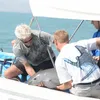
This October, an international team of scientists set out to save the vaquita, the most endangered whale in the world. This October, an international team of scientists set out to save the vaquita, the most endangered whale in the world. Recent estimates suggest that as few as 30 individuals remain in the Gulf of California, the slim body of water that separates mainland Mexico from the Baja peninsula. These numbers are considered unsustainable given that every year many vaquitas are found drowned in gill nets, the main culprit in their dwindling numbers. The ambitious, last-ditch effort, now dubbed VaquitaCPR, was designed hoped to round up the remaining vaquitas and move them into holding pens. For an intimate look at how the VaquitaCPR operation fared, we talked to one of its lead scientists, Barbara Taylor, a marine biologist with the National Oceanographic and Atmospheric Administration, and Frances Gulland, the veterinarian responsible for the care of captured vaquitas. More resources on the vaquita from NATURE on PBS: Featured Creature: The Vaquita http://www.pbs.org/wnet/nature/blog/featured-creature-vaquita/ Previous podcast interview with Barbara Taylor http://www.pbs.org/wnet/nature/blog/uncertain-future-vaquita/
Podzilla Summary coming soon
Sign up to get notified when the full AI-powered summary is ready.
Free forever for up to 3 podcasts. No credit card required.
Listen to This Episode
More from Inside NATURE on PBS
Talking Rhinos with Award-winning Journalist Rachel Nuwer
Wildlife Filmmaker Gordon Buchanan On "Animals with Cameras"

Author Helen Macdonald on "H is for Hawk: A New Chapter"
Africa's Savanna Elephants in Trouble
Get summaries like this every morning.
Free AI-powered recaps of Inside NATURE on PBS and your other favorite podcasts, delivered to your inbox.
Free forever for up to 3 podcasts. No credit card required.