Free Daily Podcast Summary
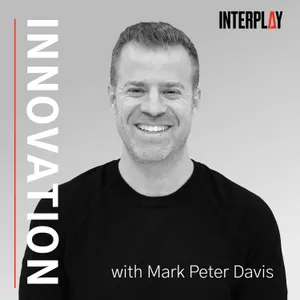
Innovation with Mark Peter Davis: Daily Summaries Delivered
by Interplay
Welcome to Innovation with Mark Peter Davis, a podcast dedicated to innovation, truth, and education.Through fireside chats with entrepreneurs, industry leading executives, and creative minded business folk, I'll highlight the society altering transformations that are happening all around us while providing crucial entrepreneurial advice.Pickup tips from founders who sold their company for hundreds of millions of dollars. Discover how everyday materials and goods are being reinvented by science. Learn about the current state of space exploration and the space industry from the CEO of a rocket company.Join him on this expedition to learn about the innovations that are changing our world and the way we exist.Don’t forget to subscribe and follow on Twitter, Facebook, YouTube, and Medium.
Latest Episodes
The most recent episodes — sign up to get AI-powered summaries of each one.
- 3 days ago35 min
Building How I Invest: Podcasting, Venture Deal Flow, and the Long Game with David Weisburd
Building something great is hard. The question is: which hard are you willing to choose?That’s something David Weisburd and I dug into on the latest episode.David chose podcasting as his hard.Three years ago, he committed to building How I Invest for at least a decade - before he knew whether it would work. There were no guarantees. Just the grind of booking guests, navigating compliance, building credibility, and showing up episode after episode. That commitment eventually turned the podcast into something much bigger: a network of investors, entrepreneurs, relationships, and venture deal flow.And that’s what I found most interesting about our conversation...The podcast wasn't just building David’s network. It was building David.We talked about:→ The power of “information alpha” and “relationship alpha”→ Why some emerging managers have a winner mindset—and others don't→ Why founder-product fit matters→ How relationships compound over time→ And why the best opportunities often come from playing the infinite gameMy biggest takeaway: You can’t make building something great easy. But you can choose a hard worth doing.Then you have to stay in the game long enough for the compounding to begin. Big thanks to David for joining the pod.Listen to the full convo here:⏱️ Chapter Markers:00:00 — Intro — why this convo is meta01:02 — Meet David Weisburd and How I Invest03:15 — Origin story: dinner with Eric Torenberg; launching the pod07:45 — Network effects and early marquee guests10:40 — The grind: LP compliance and identity risk12:10 — When it “clicked”: letting the podcast work on you16:50 — Skill-building, humility, and editing your own transcripts19:50 — Podcast as mentorship; testing yourself with elite minds22:40 — The infinite game of investing; a 10-year commitment24:35 — Information alpha, relationship alpha, parasocial effects28:10 — Why podcast convos deepen relationships; “mock podcasts”30:20 — From founder to podcaster; values-first firm-building34:30 — Weisburd Pierce: partnering on sensitive pro rata rights37:40 — Media as access: why companies want creators on cap tables39:45 — What makes a great GP: the winner vs. victim mindset43:00 — Tactics to be default-alive; example from Hustle Fund46:20 — Founder–product fit, psychology, and productizing yourself49:10 — Long-term relationships > short-term fees in private markets52:00 — Closing thoughts and thanksLINKSDavid Weisburd: LinkedInHow I Invest Podcast: WebsiteInterplay: Website, LinkedIn, XMPD: LinkedIn, X
- Aug 20, 202629 min
Rewiring Fintech: How Knot Is Transforming Financial Connectivity
Most people only see the front end of fintech. The app. The card. The payment. But underneath that experience is an enormous amount of infrastructure and some of fintech’s biggest opportunities are hiding there.Rory O’Reilly, cofounder and CEO of Knot, joined me on the pod to talk about how Knot is rewiring fintech and transforming financial connectivity.We dive into:Why keeping a card “top of wallet” is harder than it sounds.The infrastructure required to connect financial institutions with thousands of merchants.Why security and compliance are foundational, not afterthoughts, in fintech.Where blockchain and stablecoins could fit into the financial stack.Rory’s unconventional path from selling shoes with his family to building fintech companies with his brother.What I particularly enjoyed about this conversation is that Knot is tackling a problem most consumers don't even realize exists. The biggest innovations in fintech may not be the products we see, they may be the infrastructure quietly making everything work.🎙️ Listen to the full conversation with Rory O’Reilly here:⏱️ Chapter Markers:01:12 — What Knot does: card-on-file updates, top-of-wallet04:08 — The consumer pain: lost/expired cards and sticky subscriptions06:20 — Why issuers/fintechs care: interchange and activation09:05 — Go-to-market: selling to issuers; merchant API approach; 100M calls12:44 — Security/compliance first: fractional CISO Brian Costello (ex-Yodlee)16:18 — The fintech iceberg: why infra disruption is a long game19:45 — Blockchain at the gate: stablecoins, Cash App's Lightning, backend use cases24:58 — Founder origins: family hustle and resilience30:36 — Harvard, Thiel Fellowship, gifs.com virality35:52 — ICOs, ETH windfall and crash, and hard lessons41:07 — Building with his brother: roles, trust, zero drama45:30 — Closing takeawaysLINKSRory O'Reilly: LinkedIn, XKnot: Website, LinkedIn, XInterplay: Website, LinkedIn, XMPD: LinkedIn, X
- Jul 30, 202638 min
A Framework for Implementing AI Across Your Company
Every founder I know is asking the same question: "How should we actually implement AI across our company?"The reality is that every playbook will require customization, but there are clear patterns beginning to emerge.In this episode, Chetan Narain, Cofounder of Pepper, joins me and my colleague, Interplay Senior Partner Kevin Tung, to share how Pepper is integrating AI across its products and organization - and the lessons they've learned along the way.We discuss:• Where vertical SaaS ends and vertical AI begins• AI agents and guardrails• Organizational redesign• How to move fast without creating chaosIf you're building a company and thinking beyond AI features toward AI transformation, I think you'll enjoy this conversation.⏱️ Chapter Markers:00:00 — Intro — Implementing AI across your company and why it matters now01:23 — Where vertical SaaS ends and vertical AI begins: dashboards → autonomous agents03:36 — Pepper 101: the $1T food distribution opportunity05:37 — Pricing agents: moving from recommendations to action08:42 — Trust, autonomy, and guardrails for mission-critical workflows09:33 — ROI you can prove: GP lift and attribution clarity11:25 — Experiments that broke: letting non-tech teams ship code14:21 — Pepper's "product build system": AI-reviewed PRDs and prototypes19:22 — Organizational design: single-threaded ownership vs. diffusion23:03 — Speed traps: building 4 prototypes ≠ faster outcomes24:22 — Kevin Tung on logging mistakes and compounding intelligence26:10 — A/B testing as a sandboxed guardrail27:02 — Chetan's path: Google PM to first PM of Uber Eats29:37 — COVID pivot: Pepper Pantry hits $10M run rate in a week32:57 — Distributor-first model: white-labeled apps and trust34:33 — If king for a day: accelerating tech adoption in food36:31 — Early adopters and tailwinds across 20k+ distributors38:11 — Wrap and takeawaysLinks:• Chetan Narain: LinkedIn• Pepper: Website, LinkedIn• Interplay: Website, LinkedIn, X• MPD: LinkedIn, X
- Jul 9, 202626 min
The Future of Venture in the Age of AI with Jenny Fielding of Everywhere Ventures
What happens when technology evolves faster than the venture capital model built to fund it?In this episode, I sit down with my longtime friend Jenny Fielding, Cofounder and General Partner of Everywhere Ventures, to explore how venture capital is adapting to a world where competitive advantages can disappear faster than ever.We discuss what it takes to raise a pre-seed round in today’s market, why traditional assumptions around defensibility are being challenged, and how AI is reshaping the economics of software companies.Jenny also shares lessons from her time as a Managing Director at Techstars and explains why Everywhere Ventures built a community-driven approach to investing — leveraging founder networks and real-time market insight to identify breakout companies at the earliest stages.Whether you’re a founder raising capital, an investor navigating a changing market, or simply curious about where technology is headed, this conversation offers a practical look at how venture is evolving for the next generation of companies.Special thanks to Jenny for joining the show and sharing her perspective on the future of venture.⏱️ Chapter Markers:00:00 - Introduction and studio acoustics01:05 - Generalist investing shift02:09 - Redefining modern pre-seed criteria04:26 - Global Slack diligence network06:31 - Check sizing and syndicate structures07:20 - Conviction-led turnaround speeds09:21 - Venture capital's existential model crisis11:48 - Defensibility against quantum technology13:17 - Sourcing wisdom from international founders16:01 - Evaluating the accelerator landscape17:26 - Clear milestones for founder success19:39 - Moving targets in the Series A gap21:05 - Evolution of emerging tech hubs23:32 - Retaining global talent via immigration reformLinks:Jenny Fielding: LinkedIn, XEverywhere Ventures: Website, LinkedIn, XInterplay: Website, LinkedIn, XMPD: LinkedIn, X
- Jun 25, 202635 min
Building Bombas: Dave Heath on Mission, Product, and Brand Discipline
Socks are the #1 most requested item at homeless shelters. Dave Heath turned that single fact into Bombas — a one-for-one apparel brand that's donated over 200 million items of clothing and built a billion-dollar business along the way. What makes Dave a builder worth studying isn't just the scale; it's the discipline behind it: reverse-engineering an exceptional product from a mission, learning to test before betting, and protecting a brand as it grows.In this episode, I sit down with Dave to break down:• How he reverse-engineered an "exceptional product" from a donation mission — and brought athletic-sock innovation to the mass market• The Shark Tank breakout: from $800K to $2M in revenue in the six weeks after airing — and why ~20% of customers still affiliate Bombas with the show• The expensive lesson of expanding into adjacent products too fast — and the MVP-testing discipline that replaced it• Why the "obvious" extensions (underwear, t-shirts) underperformed while a sleeper bet (slippers) became 20% of the business• Radical-ish transparency: telling the whole company about a planned IPO and trusting adults to keep it quiet — and they did• The mark of a great founder: the self-awareness to evolve his own role as the company scaled, and how he screened his successor for humility• How Bombas is approaching AI — getting the whole company trained on Claude and Claude Code, and why building AI as a competency beat chasing shiny enterprise toolsBig thanks to Dave for coming on the pod and sharing the playbook — and the mindset — behind Bombas.⏱️ Chapter Markers:00:00 — Intro. An epic New York brand story01:05 — What is Bombas? The one-for-one mission and 200M+ items donated02:37 — Reverse-engineering an exceptional product. Athletic-sock innovation goes mass market04:49 — The story before the story. An entrepreneurial upbringing and the "candy dealer" founder type09:00 — The Shark Tank breakout. From $800K to $2M and the deal with Daymond11:48 — Expanding beyond socks. The costly lesson of adding complexity too fast14:27 — How to filter adjacent products. The slipper sleeper hit and MVP-testing over big bets18:00 — Radical(-ish) transparency. Trusting the team with the data and a planned IPO19:39 — Evolving the founder's role. Screening a successor for humility as the company scales24:03 — Life beyond the day-to-day. Family. Hobbies. And a retreat full of founder regrets26:14 — Staying a united front. Backing the team without undermining them27:50 — AI as a tidal wave. Training the whole company on Claude. Competency over shiny objects31:20 — The pace of change. Why this revolution moves in months not centuries31:56 — The wand question. Cutting waste out of fashion and apparel34:35 — MPD's closing thoughts. The discipline behind a brand built to lastLinks:Dave Heath: LinkedIn Bombas: Website, LinkedIn, X Interplay: Website, LinkedIn, XMPD: LinkedIn, X
- Jun 4, 202624 min
Overlooked No More: How Smalls Is Building The Brand Cats Deserve
Cats are 40% of the pet market, but are somehow still chronically overlooked. Every innovation goes to dogs first. Even your vet's office is built for dogs first. Matt Michaelson, cofounder and CEO of Smalls, and his team have built an incredible cat-first brand precisely because of that blind spot.In this episode, I sit down with Matt to break down:• Why the cat industry is structurally underinvested (which includes VCs simply saying "I don't really like cats")• What "human-grade" actually means for pet food — and the sustainability trade-offs nobody talks about• Ingredient splitting: the regulatory hack that lets pet brands disguise what's actually in the bag• "Wrestling in the mud": a feedback culture where every hire is expected to disagree• Founders Pledge, and why committing 5% early changes the giving conversation laterBig thanks to Matt for coming on the pod and sharing the playbook behind Smalls.⏱️ Chapter Markers:00:00 — Why cats keep getting overlooked01:05 — What is Smalls? Cat-first brand, human-grade nutrition02:09 — What "human-grade" actually means (and the sustainability trade-off)04:26 — Health impact: allergies, ingredient splitting, and the regulatory hack06:31 — Why Matt chose cats: the market psychology nobody's pricing in07:20 — Why every VC and pet brand defaults to dogs first09:21 — From growth marketing to founder: building demand in a commoditized stack11:48 — Emerging channels worth watching (and why DTC is just a channel, not a model)13:17 — AI-native orgs: how the team uses AI without becoming a tech company16:01 — Human-supervised AI teams and what entry-level jobs look like now17:26 — "Wrestling in the mud": the air-grievances feedback culture19:39 — Founders Pledge: committing 5% early changes the whole conversation21:05 — Ingredient transparency: percentages on the label, fixing the labeling game23:32 — MPD's closing thoughts on the cat opportunityLinks:Matt Michaelson: LinkedIn Smalls: Website, LinkedIn, X Interplay: Website, LinkedIn, XMPD: LinkedIn, X
- May 21, 202627 min
Building Companies From Scratch: Inside Interplay’s Studio
Venture studios are quietly becoming one of the most effective models for company creation, but most people still don't understand what happens inside one.For this podcast episode I sat down with Andy Bilinsky, Partner at Interplay leading our Studio, to break down exactly how we build companies from the ground up. During our conversation, we covered:What a venture studio actually is and how it differs from traditional VCWhy do we research industries deeply before ever writing a business planThe role of operating partners as true co-foundersWhy second- and third-time founders are choosing to build with a studio instead of going soloHow Interplay went from 3 new companies in Q4 2025 to targeting 10+ in 2026Big thanks to Andy for pulling back the curtain on how we build. We’re grateful to have him here at Interplay.⏱️ Chapter Markers: 00:00 Introduction to Andy Bilinsky 01:15 Andy's Entrepreneurial Background03:30 Early Career: Hyper-Growth at Haute Look05:45 BeachMint, Science Incubator & Chirp Ads08:00 Launching Lensable From Scratch09:30 Why Andy Joined Interplay13:00 What Is a Venture Studio?15:30 Interplay's Thesis-Driven Approach18:00 The Role of Operating Partners20:30 What Makes a Great Studio CEO24:00 Why Successful Founders Don't Go Solo27:30 The Value of a Firm as Co-Founder30:00 Administrative Support & De-Risking33:00 Distributed Teams & Geographic Flexibility35:00 Studio Growth: From 3 Companies to 10+Links:Andy Blinsky: LinkedInInterplay: Website, LinkedIn, TwitterMPD: LinkedIn, Twitter
- Mar 12, 202645 min
The Rise of Private Credit: How $1T in Capital Is Reshaping Finance
Private credit has exploded into a trillion-dollar asset class, but most people outside finance still don’t understand how it works.I sat down with Ivan Zinn, founder of Atalaya Capital Management and now part of Blue Owl Capital, to unpack the real mechanics behind the private credit market. Few people have a clearer view of how capital flows through the economy.During our chat we unpack:What private credit actually isWhy banks pulled back after the Global Financial CrisisHow private lenders stepped in to finance everything from consumer loans to equipment, infrastructure, and fintech platformsWhere entrepreneurs could build meaningful companies by modernizing the infrastructure behind asset management.Big thanks to Ivan for sharing such a thoughtful and practical perspective on the evolving capital markets ecosystem.⏱️ Chapter Markers00:00 Introduction to Ivan Zinn01:40 What Private Credit Actually Is03:05 Asset-Based Lending Explained04:36 Why Banks Don’t Make These Loans08:11 How Private Credit Filled the Financing Gap09:19 Ivan’s Journey into Credit Investing11:49 Why Scale Matters in Private Credit16:32 Is There Still Room for Small Credit Managers?18:35 The Rise of Fintech-Driven Lending Models19:29 Biggest Mistakes New Credit Managers Make24:46 What CEOs Get Wrong When Raising Debt29:08 Aligning Expectations Between Lenders and Founders31:16 Why Private Credit Is Still Technologically Behind35:30 Massive Opportunities for Fintech Builders40:06 Selling Atalaya Capital Management to Blue Owl42:30 Should Asset Managers Go Public?44:58 Final Advice for Fintech EntrepreneursLinks:Ivan Zinn: LinkedInInterplay: Website, LinkedIn, TwitterMPD: LinkedIn, Twitter
About Innovation with Mark Peter Davis
Welcome to Innovation with Mark Peter Davis, a podcast dedicated to innovation, truth, and education.Through fireside chats with entrepreneurs, industry leading executives, and creative minded business folk, I'll highlight the society altering transformations that are happening all around us while providing crucial entrepreneurial advice.Pickup tips from founders who sold their company for hundreds of millions of dollars. Discover how everyday materials and goods are being reinvented by science. Learn about the current state of space exploration and the space industry from the CEO of a rocket company.Join him on this expedition to learn about the innovations that are changing our world and the way we exist.Don’t forget to subscribe and follow on Twitter, Facebook, YouTube, and Medium.
Customized Recaps
AI-powered recaps with compact key takeaways, quotes, and insights.
Straight to Your Inbox
Get key takeaways from Innovation with Mark Peter Davis in a 5-minute read.
Save Hours Every Week
Stay current on your favorite podcasts without falling behind.
Frequently Asked Questions
What is Podzilla's Innovation with Mark Peter Davis daily summary?
It's a free AI-powered email that summarizes new episodes of Innovation with Mark Peter Davis as soon as they're published. You get the key takeaways, notable quotes, and links & mentions — all in a quick read.
How does the Innovation with Mark Peter Davis podcast summary work?
When a new episode drops, our AI transcribes and analyzes it, then generates a personalized summary tailored to your interests and profession. It's delivered to your inbox every morning.
Is this an official Innovation with Mark Peter Davis product?
No. Podzilla is an independent service that summarizes publicly available podcast content. We're not affiliated with or endorsed by Interplay.
Can I get summaries of other podcasts too?
Absolutely! The free plan covers up to 3 podcasts. Upgrade to Pro for 15, or Premium for 50. Browse our full catalog at /podcasts.
What topics does Innovation with Mark Peter Davis cover?
Innovation with Mark Peter Davis covers topics including Technology, Business, Entrepreneurship, Culture, Society & Culture. Our AI identifies the specific themes in each episode and highlights what matters most to you.
Start getting Innovation with Mark Peter Davis summaries tomorrow morning.
Free forever for up to 3 podcasts. No credit card required.
Free forever for up to 3 podcasts. No credit card required.